









About the Book
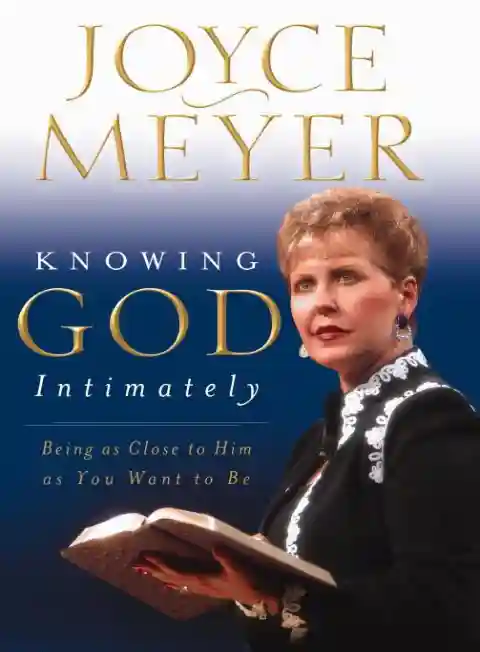
"Knowing God" by J.I. Packer is a classic exploration of the attributes and character of God. Packer delves into theological concepts such as God's sovereignty, holiness, and love, and emphasizes the importance of knowing God personally through Scripture and prayer. The book challenges readers to deepen their understanding and relationship with God.
Jeanne Guyon

Your First Years of Marriage
In many ways, we were a natural fit. My would-be husband and I both loved Jesus, studied his word, cherished worship through song, desired many children, longed to be hospitable, and valued the home and the wife’s joyful place in it. We both had Scandinavian heritage and understood the barbs that flew between Swedes and Norwegians. We both prized hard work — with an openness to risk-taking endeavors. As an engaged couple, with all we had going for us, it was hard for me to imagine what bumps we might face as we started down the road together. But that’s only because I underestimated how real and stubborn indwelling sin is. I thought external bumps in the road would be the obstacles — circumstances like finances or health issues or job difficulties — when really it was our own flesh that presented the biggest problems. Reflecting back on the first years of marriage and family, I commend three principles to ease the bumps and grease the wheels of joy in Christ in your marriage and family. 1. Let God Define ‘Normal’ We all come from unique backgrounds. Even two people who share a similar heritage, like my husband and I, have had vastly different childhoods. I grew up with 27 first cousins. I became an aunt at 14 and can’t really remember a time we didn’t have young children around our home (even though I was the youngest child in my family). My husband had four cousins and had rarely encountered an infant or toddler at close range prior to marrying into my family. This made for very different ideas of what “normal” felt and sounded like. I grew up on an acreage in a blue-collar town that bordered several rural communities. My mom grew up on a farm. My husband grew up in a first-ring suburb of a major metropolis. His dad grew up in the big city. We had very different conceptions of what the “outdoors” was for. For him, it was mainly for recreation and enjoyment — for hiking or biking or kayaking. For me, it was mainly for work — for mowing or burning the burn pile or doing animal chores. Our former “norms” can enrich our marriage, adding interest and laughter and providing opportunities to take something that’s been passed down and make it new. Or they can threaten the allegiance of our hearts. If what was normal to us in our childhood becomes the ultimate standard for our marriage, we have misplaced our loyalties. We need to be led by the only authoritative and inerrant guide to life and marriage that we have: All Scripture is breathed out by God and profitable for teaching, for reproof, for correction, and for training in righteousness, that the man of God may be complete, equipped for every good work. (2 Timothy 3:16–17) Including every good work in the sometimes thorny first years of marriage. In marriage, God is making something new: a new one-flesh union, that is, a new family. And when a husband and wife let God’s word define normal, the wife willingly comes under the leadership of her husband in submission, as Scripture directs her to reflect Christ’s church (Ephesians 5:22–25). Her family of origin may aid that process or hinder it, but in either case, a reprioritizing happens. For the husband, it means looking to Christ as the standard by which he loves and leads his wife, and adopting his previous family’s practices only inasmuch as they accord with Christ. “If God’s word is the norm, the authority, you will have solid common ground on which to stand, come what may.” When I was young, my mom gave me one primary piece of advice when it came to choosing a husband: “God’s word must be his authority.” It’s key advice for men and women, and I gladly pass it along to you. If God’s word is the norm, the authority — not the culture, not your friends’ opinions or your family’s traditions, not Netflix or social media — you will have solid common ground on which to stand, come what may. 2. Stay in Step with the Spirit Paul tells the Galatians, “If we live by the Spirit, let us also keep in step with the Spirit. Let us not become conceited, provoking one another, envying one another” (Galatians 5:25–26). It may seem unlikely for two people who love each other and have committed their lives to one another “for better or worse” to fall into conceit, envy, and provocation of one another — and yet it’s common enough in marriage. The lies of the world have primed us to believe that men and women are on two separate teams in life. Team Women must advocate for women, and Team Men (in a bit of irony) must also advocate for women (although many rebel against this). This means that, at least for those of us raised in the United States or the West, women are expected to compete with men. From a young age, girls are taught that how they rank is a function of whether or not they are beating the boys. This way of thinking infects both boys and girls. And while that attitude may lie dormant during dating or courtship, it will rear its head if not dealt with. In a husband, this can look like unrealistic expectations for his wife — treating her like another man who shouldn’t have any significant differences from him. For example, he may expect her to earn what he earns, or overlook the inherent vulnerability of pregnancy and caring for small children. In a wife, this can look like pulling out the measuring stick to keep track of all the ways she’s getting a raw deal compared to him. For example, she may envy the occasional out-to-eat work lunches while she eats with the kids at home, or she may resent that the care of small children falls mainly to her. These are deadly attitudes to maintain in a marriage. When we marry, the Spirit of God does something amazing: he makes us part of a new team. I was blessed to join Team Dodds — not Team Women, or Team Men, or Team Me. When something wonderful happens to the husband, the wife rejoices as though it has happened to her, because it has. When something difficult happens to the wife, the husband nurtures and defends her as though it has happened to him, because it has. How do we keep in step with the Spirit in marriage? By prayerfully and regularly confessing our sins, and by setting our minds on the things of the Spirit, with a special focus on Christ — his life, his words, and his ways (1 John 1:9; Romans 8:5). We walk in the Spirit of Christ when we conform to the way he’s designed the marriage: “‘a man shall leave his father and his mother and hold fast to his wife, and the two shall become one flesh.’ So they are no longer two but one flesh. What therefore God has joined together, let not man separate” (Matthew 19:5–6). 3. Share Your New Life with Others My husband and I were married in June 2002. By October, we were taking a class to join our local church. At the same time, we opened our home (the upstairs of a duplex) to host a small group of singles and couples. I was 21 and still finishing college. It may have seemed a bit premature for us to join a church we were so new to, or to host a small group made up of mostly strangers, but the church had a need and we were eager to help. We didn’t join the church or host a small group primarily as ways to establish a stronger marriage, but looking back, they were important in shaping the patterns and priorities of our life. “The hospitable people I know are hospitable with little and with much, in small spaces and in big.” Many young families think that hospitality will sprout when the timing is right — when they get a bigger place, or when the kids aren’t so little, or when the finances aren’t so tight, or when they get that one room cleaned out. I’ve never seen it happen that way. The hospitable people I know are hospitable with little and with much, in small spaces and in big, among babies and boomers, in a dirty kitchen and a clean one. Sharing your home with others — making food for them, stretching your grocery budget on their behalf, letting them into your bathroom, cleaning up after their messes, inviting them into your thoughts through conversation and listening to theirs — is shockingly intimate in a world where embodied presence is becoming rare. Paul tells the Thessalonian church that “being affectionately desirous of you, we were ready to share with you not only the gospel of God but also our own selves, because you had become very dear to us” (1 Thessalonians 2:8). When we invite others into our home, we give them a bit of “our own selves.” When a husband, wife, and their children offer their home and their “own selves” to others through hospitality, they are not robbing time or resources from each other; they are gaining by giving. Hospitality forms a family identity that is not navel-gazing, but focused on sharing the love of God in practical ways with others. I can think of little else that will form and establish a Christian family to be joyful and robust in the Lord for decades to come than to practice sharing your life with others. Don’t let your home or marriage or family be only private. “Welcome one another as Christ has welcomed you, for the glory of God” (Romans 15:7). A husband and wife who have made God’s word their norm and who are keeping in step with the Spirit will have much to share with others. Open your doors and welcome many to come taste of Christ’s goodness at your table. Article by Abigail Dodds