
Others like king's cross Features >>
-160.webp)
Revelation
The Truth War
God's Plan For Man
-160.webp)
The Justification Of God (An Exegetical And Theological Study Of Romans 91-23)
Who Made God
Fool's Gold
The Murder Of Jesus
Ancient Word, Changing Worlds
The Babylonian Captivity Of The Church, 1520
-160.webp)
The Gospel Of The Kingdom: Scriptural Studies In The Kingdom Of God
About the Book
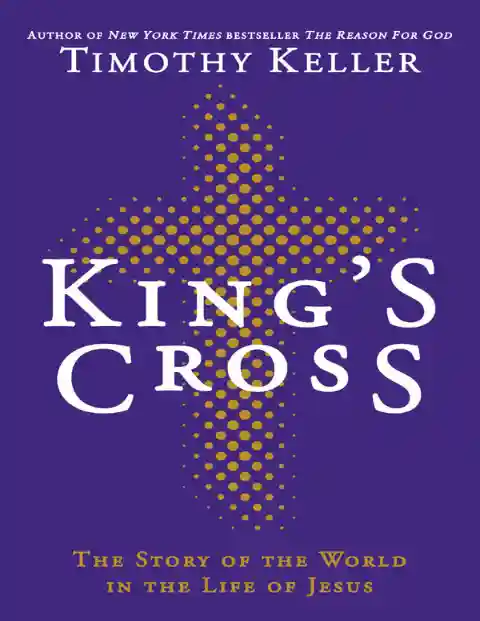
"King's Cross" by Timothy Keller explores the story of Jesus' life and ministry through the lens of the Gospel of Mark. Keller delves into the significance of Jesus' sacrifice and resurrection, and how it impacts the lives of believers today. The book challenges readers to reflect on their own faith and the implications of following Jesus.
Nick Vujicic

the millennium: one thousand years of peace
We are living in an age of complicated programs and long-range planning. We have heard a great deal about the Five Year Plan, the Ten Year Plan, and only recently Hitler's One Hundred Year Plan for World Peace and Prosperity. Agencies have multiplied like dandelions in the past few years as part of our own long-range planning in crop insurance, social reform, defense programs, soil conservation, flood control, health insurance, social security, reforestation, and long-range recovery programs. We have almost exhausted the alphabet in designating the innumerable agencies created to carry out this long-range social, economic and security program. We have used them all from W.P.A. to E.R.P. All of this activity, however, only reflects the unending search of man for an age of security and the realization of the four or more freedoms of which man has been dreaming. But none of man's programs are perfect, and in spite of all man's efforts, floods continue, famine still stalks, crops still fail, poverty continues, and the threat of war hangs darker than ever. Never before have we been more conscious of our own insecurity. And so we look away from the fallible program of man to another long-range plan, conceived in the heart of Almighty God thousands of years ago, and revealed in His Holy Book, the Bible. This program of God is the One Thousand Year Plan, God's long-range program of security, prosperity and peace. The Bible predicts that at the end of the ages, there will be an era of One Thousand Years of peace and prosperity and plenty, when wars will be utterly unknown, all manufacture of weapons will cease, famines and want be banished, sickness conquered, poverty abolished, flood, storms and hunger be forever gone, and all the world will be one great united nation under the government of one King, the Lord Jesus Christ Himself. This golden age is called in the Bible the Millennium, and the Kingdom. In our following messages we shall try to give you a broad outline of this coming age of peace. The Bible abounds with information concerning this blessed day, so we can only give you the high points of Scripture revelation, and trust that it will stimulate you to study it more thoroughly for yourself. We begin this introductory message by referring you first of all to the last book in the Bible, the book of Revelation, chapter 20, verses 4-6: "And I saw thrones, and they sat upon them, and judgment was given unto them: and I saw the souls of them that were beheaded for the witness of Jesus, and for the word of God, and which had not worshiped the beast, neither his image, neither had received his mark upon their foreheads, or in their hands; and they lived and reigned with Christ a thousand years. But the rest of the dead lived not again until the thousand years were finished. This is the first resurrection. Blessed and holy is he that hath part in the first resurrection: on such the second death hath no power, but they shall be priests of God and of Christ, and shall reign with him a thousand years." Rev. 20:4-6. In this passage the expression, One Thousand Years, is used three times. In all it is mentioned six times in this chapter alone. This thousand years is usually referred to as the Millennium, or the Kingdom, here mentioned as One Thousand Years, but fully described throughout the Bible both in the Old and the New Testaments. Before taking up some of the many many Scripture passages dealing with this coming age, we wish first to define the word. Often we hear someone objecting that the word, millennium, does not occur in the Bible. This is a misunderstanding of the word. In the passage which we read, the expression, thousand years, is used six in this chapter alone. Now the word in the Greek is "chiliad," meaning one thousand years, and is a literal translation from the original. The word, millennium, itself, happens to be the Latin equivalent of a thousand years. The word comes from two other words, "mille" meaning one thousand, and the word, "annum" meaning years, so that the expression, millennium, is merely the Latin phrase for our English equivalent, one thousand years. The Bible Doctrine The Bible doctrine concerning the millennium is that there will be period of exactly one thousand years during which Jesus Christ will reign on this earth together with His Church. During this millennium, following immediately the Second Coming of the Lord Jesus, Israel as a Nation will be re-established in the land of Palestine. The nations will be at peace. There will be no war, no preparations for war, no military training, no armies, no navies, and no military air forces of any kind. Peace and prosperity will reign throughout the earth. The Lord Jesus Himself will be the only King, and the only Ruler, and for this One Thousand Years the problems of humanity will be completely solved. Belief in the coming millennial age dates from the very beginning of the history of the nation of Israel. In the International Standard Bible Encyclopedia, we read this statement: "The doctrine of a temporary Messianic Kingdom preceding the consummation of the world's history is of pre-Christian Jewish origin." Another quotation from the same Encyclopedia reads as follows: "The great majority of evangelical Christians believe that the Kingdom of God shall have universal sway over the earth and that righteousness and peace and the knowledge of the Lord shall everywhere prevail. This happy time is commonly called the Millennium, or the One Thousand Years' Reign. Divergent views are entertained as to how it is to be brought about. Many honest and faithful men hold that it will be introduced by the agencies now at work, mainly by the preaching of the gospel of Christ and the extension of the Church over the world. However, an increasing number of men, equally honest, teach that the millennium will be established by the visible advent of the Lord Jesus Christ." I have given these two quotations because one of them is by an avowed post-millenarian and the other by one who accepts and embraces the pre-millennial teaching. Three Schools of Interpretation With regard to this golden age of peace and prosperity upon the earth, there are at least three main interpretations. First of all, we have the pre-millennial interpretation from the word, "pre," which means before, and millennium which means a thousand years. In brief, the pre-millennial interpretation teaches that this golden age will be ushered in by the personal return of the Lord. This is the reason it is called "pre-millennial," because it teaches that Christ will return to the earth before the establishment of the Kingdom upon the earth. Second, we have the post-millennial interpretation, which teaches that the Lord Jesus will not return until AFTER the millennial age. In brief, the post-millennial theory teaches that the world will become gradually better and better. Men, as the result of education, reformation, religious teaching, understanding, conferences and law, will finally succeed in abolishing war, in bringing about an age of peace, and the whole world will become converted to Christendom, and then the thousand years of peace will follow and the coming again of Christ at the end of the world to judge all men. As we shall have occasion to show, we believe this interpretation to be in conflict both with the clear teaching of the Word of God and the facts of human history. One has but to look round about him today and see that the world is not getting better, but is rapidly declining in morals and increasing in violence and crime and in wickedness, in harmony with the prophetic Word. There is a third interpretation of more recent origin, which is called the a-millennial, which as the word implies, means no millennium at all. The prefix, "a," is a negative prefix, and means simply, "no millennium." It is a flat denial of the literal reign of the Lord Jesus upon this earth, either before or after His second coming. A-millennialists, therefore, spiritualize all of the prophecies which refer to this coming Kingdom age. Pre-millennialism as Old as the Bible It may be well at this point to remind you that the pre-millennial teaching has been held by the Church of Jesus Christ from the very beginning. As we said before, it began even before the first advent of Christ. This golden Kingdom age was the hope of the Old Testament Israelite who looked forward to the coming of the Messiah, and at the coming of the Messiah the establishment of a Messianic Kingdom upon the earth. This was the hope of the disciples and John the Baptist and all the orthodox Jews in Jesus' day. It is still the hope of multitudes of orthodox Jews throughout the world at this very time. They are still looking for and expecting the coming of their Messiah who will re-establish them in their own land and bring about the Messianic Kingdom of peace and of righteousness. There is nothing in the Word of God, however, to indicate that this peace will come before the return of the Messiah, and so the pre-millennial interpretation is not only the Scriptural one, we believe, but the oldest one by centuries. The post-millennial explanation was not advanced until centuries after the establishment of the Church, and was advanced first, merely as a theory, the one who advanced it having no idea whatsoever that it would be accepted as a doctrine which could be defended or supported, but the theory was adopted by those who refused to accept the literal interpretation of Scripture. The a-millennial interpretation, we said, is of even more recent origin. A-millennialism is disillusioned post-millennialism. Post-millennialism with its doctrine of the world getting better and better received a very very rude shock during the past generation, with its two global wars, with the increase of wickedness and crime; and the honest post-millennarian was forced to admit that the world was not getting better, and if the millennium was to be ushered in by the efforts of man, it was farther away from that goal now than it had ever been before, and so rather than admitting that the pre-millennial view was the correct one, they adopted a theory of a-millennialism which is a denial of the literal reign of Christ upon the earth according to their interpretation. In this introductory message it is our main purpose, therefore, to show that this millennial age of peace and righteousness, this One Thousand Years of blessing upon the literal earth, will come after the return of our precious Lord, and that the entire body of Scripture is in harmony with this fact, and that it can only be ushered in by His imminent return. Much Confusion of Program But before taking up the details of this millennial age, we would like to give you a brief outline of the order of events as revealed in Scripture, and then in our next message go into the details of that which the Bible foretells concerning the blessings of this golden age. A great deal of confusion exists in the minds of God's people in regard to the exact pattern of future events as given in the Word. This is due partly to the fact that Christians do not always study their Bibles as they ought, and partly due to the fact that many have lost interest because of the diversity of opinion which exists among those who do study their Bible. Now for the order of events. We believe the next event in the program of God will be the coming of Christ for His Church, usually called the Rapture. When He comes, He will appear in the sky, He will shout from the air, and all believers who are asleep in Christ will arise in resurrection bodies, all living believers will be instantaneously changed and they together will be caught up to meet the Lord in the air, and then will follow a period of seven years called the Tribulation Period, during which God will judge the nations of the earth, and the Church will be prepared for the wedding of the Lamb at the judgment seat of Christ. At the close of this seven years the Lord Jesus Himself will return visibly and publicly with His church to this earth. He will destroy His enemies, will regather the nation of Israel into the land, the land of Palestine, and will usher in the millennial age of peace when Satan shall be bound for a thousand years. So we do believe with all our hearts that the next event on the program of God is the return of Christ for the Church, to take us unto Himself, and then to pour judgment upon this earth and to cleanse it from all His adversaries. In our following messages we shall bring some of the details of the Bible teaching concerning this event, but before we get into the details, it is necessary that we have a clear picture of the events as they will develop. Let me repeat them again. The next event will be the coming of Christ for His Church. After the Church is gone, the man of sin, the antichrist, will be revealed upon the earth, and there will ensue a seven-year period of the greatest tribulation and trouble, of war and bloodshed and deception which the world has ever known. This seven years will end in the battle of Armageddon. This battle of Armageddon will be suddenly interrupted by the personal return of the Lord Jesus Christ with His Church; Satan will be bound and cast into the bottomless pit; the false prophet and the antichrist will be cast into the lake of fire, and after the earth has been cleansed, the Lord Jesus Christ Himself as King will reign in Jerusalem and the millennial age will be ushered in. At the close of the millennial age Satan will be loosed for a short season to prove the incorrigibility, not only of Satan, but also the unregenerate human nature. He will be destroyed and cast into the lake of fire together with all his followers, and then the earth will be purified by fire, a new heaven and a new earth will be created by God which shall be the dwelling place of the redeemed throughout all the ages. This is God's long-range plan. This is God's program for this earth. The Bible has so much to say about this and it is so clear in its teaching, it behooves all of us to study His Word and study God's plan that we may know what He is doing and be ready for His appearing. And so, before we close this message, we want to press again upon you the question, Are you ready for this next event in God's program? It avails us nothing to know all about the program and be clear on the teaching of prophecy, if we have not personally received Him who is the King, the Lord Jesus Christ, as our personal Saviour. So we plead with you once again, in view of the brevity of life and the imminency of the return of the Lord Jesus, to flee from the wrath to come, and believe on the Lord Jesus Christ, and thou shalt be saved. Chapter Two "The wilderness and the solitary place shall be glad for them; and the desert shall rejoice, and blossom as the rose. And the parched ground shall become a pool, and the thirsty land springs of water..." Isaiah 35:1, 7. "Every valley shall be exalted, and every mountain and hill shall be made low: and the crooked shall be made straight, and the rough places plain: And the glory of the LORD shall be revealed, and all flesh shall see it together: for the mouth of the LORD hath spoken it." Isaiah 40:4-5. "And the LORD shall be king over all the earth: in that day shall there be one LORD, and his name one. All the land shall be turned as a plain from Geba to Rimmon south of Jerusalem: and it shall be lifted up, and inhabited in her place..." Zechariah 14:9-10. These are but a few of the many many passages throughout the entire Word of God which we might quote from prophecy indicating the glorious day which the Lord has promised in His Word which will come at the return of the Lord Jesus Christ. As we have pointed out in the previous message, the Bible clearly predicts that there is a coming golden age in the future when the Lord Jesus Christ will personally reign upon this earth, and all the world will be at peace. When He comes again at the close of the tribulation and destroys the armies at Armageddon, the earth and all the creation will undergo physical changes unknown before in the history of mankind. Complete Redemption It is well to remember that when Adam, our first parent, sinned, he did not sin as an individual, and when he fell he fell not alone, but he fell as the representative, federal head of God's entire earthly creation. In Adam was represented not only the whole race, that is the human race which would spring from him, but Adam was also the federal head and the representative of all that God had created on this earth, and over which Adam had received domination. So when our first parents sinned, the curse of God not only fell on him, and on his human descendants, but upon the entire world, and it all came under the curse. The mineral kingdom, the vegetable kingdom, the animal kingdom, all came unwillingly under the curse of Adam's sin, because of this headship and relationship. Here is the Word of God, as He comes to curse the earth because of Adam's sin. "...Cursed is the ground for thy sake; in sorrow shalt thou eat of it all the days of thy life; Thorns also and thistles shall it bring forth to thee; and thou shalt eat the herb of the field; In the sweat of thy face shalt thou eat bread, till thou return unto the ground; for out of it wast thou taken: for dust thou art, and unto dust shalt thou return." Genesis 3:17-19. Will you notice, please, that God cursed the ground for Adam's sake; because of Adam's sin, even the mineral creation came under the curse of God. Before sin came, the ground was perfect and one hundred percent productive. God never made a desert, God never made bad lands or waste lands, for when He had created all things, He saw all things He had made, and behold it was very good. But then sin entered, and the curse fell, and deserts appeared, and today instead of the earth willingly producing her wealth, man must wrest its stores from her by constant sweat and toil while the whole creation according to Paul in Romans 8 "travaileth and groaneth in pain together until now." The Vegetable Realm But just as the earth, the soil itself, came under Adam's curse, so too we are told that the vegetation came under the curse of God, for He said, "Thorns and thistles shall it bring forth to thee." Weeds, insects, pests and plant disease came because of sin, and the creation became restricted in its productivity and sharply limited in its ability to bring forth the needs of man. Look at the struggle which we have in nature today. What toiling and sweating as the farmer fights for his crops against the disease and the pests and the weeds which make the uninterrupted battle of God's creation against the results of sin. Man calls it the struggle for existence, and the survival of the fittest, but God says it is the curse of sin which rests on all the earth because of Adam's transgression. The Animal Creation From the mineral through the vegetable, the curse reached on through even to the animal, and God goes on to say to the serpent, then the most beautiful of all animal creation, and probably standing at the head of the beast creation: "...Thou art cursed above all cattle, and above every beast of the field; upon thy belly shalt thou go, and dust shalt thou eat all the days of thy life." Genesis 3:14. All the animals were cursed by Adam's sin, but the serpent was cursed above them all because he had been the instrument for the introduction of sin and of this curse. Will you remember that before the fall there were no carnivorous animals. Adam was a vegetarian. There was no record in the Bible of man's ever eating meat until after the flood. All the animals were docile and harmless. There was no preying the one upon the other, but all was peace and quiet and happiness among all of God's creation. And then sin entered and changed the nature of God's whole handiwork; animals, birds and fish suddenly found their appetites perverted and began preying one upon the other until truly we can say, "The whole creation groaneth and travaileth in pain together until now." Again I repeat, man calls it the struggle for existence and the survival of the fittest, but God says it is creation crying for redemption. The Last Adam Now as the first Adam brought the curse through sin, so the last Adam, the Lord Jesus Christ, came to make payment for sin and to remove the very curse which lay upon creation because of Adam's transgression. Now in order to be a complete redeemer, His redemption must reach into every realm which Adam lost. Since Adam dragged all and every realm of creation with him under the curse, the vegetable, the mineral and the animal, Jesus Christ, to be a perfect Redeemer, must also redeem all of these realms which Adam lost. We usually think of Christ's redemptive work as being limited only to fallen mankind, but it is just as true that Jesus died on the cross of Calvary to redeem the soil and the plants and the beasts and the birds and the fish from the curse which came unwillingly upon them. It may seem at first that this belittles the work of Christ, that He should not only die for men, but should actually die to redeem birds and beasts as well, but when one thinks it through, it really exalts His redemptive work, for He is a complete redeemer. In our following messages we will try to show how this animal creation will be restored, even the earth and the soil, at the coming of the Lord, for we repeat again, God never made anything waste, God never made a desert. The condition in which we find the earth in the first part of Genesis was the result of a curse which lay upon the earth because of the sin of the fallen angels before the creation of man. Then after God had restored the earth and placed man upon it, sin again entered and the curse again fell upon the entire creation. Since sin made the earth barren to a large extent, we believe that when Jesus comes He will make the earth once more like the Garden of Eden. The Bible is clear on this matter. In Isaiah 35:1 we read: "The wilderness and the solitary place shall be glad for them; and the desert shall rejoice, and blossom as the rose." The context of this entire passage shows that the prophet is speaking of that glorious golden millennial age when the Lord Jesus Christ shall come to restore that which was placed under the curse because of the sin of mankind. In Ezekiel 34 we read the following description of that wonderful, golden age: "And I will make them and the places round about my hill a blessing; and I will cause the shower to come down in his season; there shall be showers of blessing. And the tree of the field shall yield her fruit, and the earth shall yield her increase, and they shall be safe in their land, and shall know that I am the LORD..." Ezekiel 34:26-27. And the prophet Hosea in the second chapter of his prophecy voices the same glad cry as he describes that glad day of Jesus' reign on the earth by saying: "And in that day [that is, the day when Jesus rules in Jerusalem and the nation of Israel is restored in the land, as the context will show] will I make a covenant for them with the beasts of the field, and with the fowls of heaven, and with the creeping things of the ground: and I will break the bow and the sword and the battle out of the earth, and will make them to lie down safely." Hosea 2:18. New Testament Revelation But not only is this the burden of prophecy in the Old Testament, but even after the cross of Calvary we can turn to the New Testament revelation and find the same precious blessed promises concerning this golden age of peace. Many people imagine that the Old Testament only contains prophetic truth, but the New Testament too is full of it, and teaches that the Kingdom promises of blessing and peace were not fulfilled at the first coming, for they are repeated again and again after Jesus went to heaven. In the epistle of Paul to the Romans, in the eighth chapter, we have Paul speaking about the redemption of the whole creation at the coming of the Lord Jesus Christ. "For the earnest expectation of the creature waiteth for the manifestation of the sons of God. For the creature was made subject to vanity, not willingly, but by reason of him who hath subjected the same in hope, Because the creature itself also shall be delivered from the bondage of corruption into the glorious liberty of the children of God. For we know that the whole creation groaneth and travaileth in pain together until now." Romans 8:19-22. From these verses we notice that the expectation of creation is for the manifestation of the sons of God. Now the manifestation of the sons of God will occur at the close of the tribulation period when we are manifested with Christ at His glorious second coming. During the tribulation period the whole creation will be subjected to a tremendous bath of blood during that terrible time of trial and destruction, and so Paul tells us that the Creation including the vegetable as well as the animal creation are already sighing and longing for the time when Christ shall come to redeem them from under the curse and to bring about again the glorious and wonderful restoration of conditions as they were before sin entered into the world. The Animal Creation But not only does the Bible tell us that the earth will be redeemed as far as the soil is concerned, and vegetation will be redeemed so that the entire world will become again like the Garden of Eden, but even the animal creation will share in this redemption. Isaiah tells us. "The wolf also shall dwell with the lamb, and the leopard shall lie down with the kid; and the calf and the young lion and the fatling together; and a little child shall lead them. And the cow and the bear shall feed; their young ones shall lie down together: and the lion shall eat straw like the ox. And the sucking child shall play on the hole of the asp, and the weaned child shall put his hand on the cockatrice' den. They shall not hurt nor destroy in all my holy mountain: for the earth shall be full of the knowledge of the LORD, as the waters cover the sea." Isaiah 11:6-9. Now if we simply accept this passage as the clear revelation of the Word of God without attempting to place our own interpretation upon it or to twist it by spiritualizing it or calling it symbolic language, we have no difficulty, then it simply means that in that golden age which the context clearly indicates is the millennial age of Christ's reign upon the earth when Israel will be restored in the land, even the animal creation will be at peace with one another. This promise is reiterated in many passages of the Bible. In Isaiah 65 we read: "The wolf and the lamb shall feed together, and the lion shall eat straw like the bullock: and dust shall be the serpent's meat. They shall not hurt nor destroy in all my holy mountain, saith the LORD." Isaiah 65:25. Or turn to Ezekiel 34: "And I will make with them a covenant of peace, and will cause the evil beasts to cease out of the land: and they shall dwell safely in the wilderness, and sleep in the woods." Ezekiel 34:25. What a wonderful time that will be. How our hearts beat with glad anticipation when we think of that glorious age of one thousands years upon the earth with Jesus personally present reigning in Jerusalem, the very place where He was crucified, with Israel who had rejected Him saved and settled in peace in the land all according to their inheritance in the twelve tribes forever blessed and safe from their enemies, and we, the Church, the Bride of Christ, reigning with Him there. The curse will be gone; the earth shall bring forth unrestricted and in unlimited abundance. There will be no storms to destroy, no wars to devastate and kill, no wild animals to tear, but all will be peace under the righteous reign of Him Who said, He would come and will not tarry. Surely as we look round about us upon the struggle which is going on in every single realm of creation today, and the deepening clouds of coming judgment are rising higher upon the horizon, every Christian's eyes should be lifted toward heaven for that next event when the Lord Jesus Christ shall descend from heaven with a shout to take us unto Himself. How we ought to pray as we have never prayed before: "Our Father which art in Heaven, hallowed be Thy Name. Thy Kingdom come, Thy will be done, on earth as it is in heaven." That prayer which has gone up from the hearts of countless millions of Christians ever since Jesus taught it to His disciples has never yet been realized. His Kingdom has not yet come. His will is not yet being done on earth as it is in heaven, but blessed be God forever, we know that one of these days that prayer is going to be answered and fulfilled in every detail. I repeat, it has not yet been done. Is there anyone who can look upon the world today and say that God's will is being done on earth as it is in heaven? Can we look upon our own country with all of its sin and all of its failure and its corruption and immorality and sin and say this is the Kingdom and God's will is being done on earth as its is in heaven? Surely none of us are foolish enough to say that. But there is a time coming when we shall cry, the Kingdom has come. It will be the end of all tribulation when the seventh angel sounds his trumpet. In Revelation 11:15 we read: "And the seventh angel sounded; and there were great voices in heaven, saying, The kingdoms of this world are become the kingdoms of our Lord, and of his Christ; and he shall reign for ever and ever." May God haste that glad day, and in the meantime set us on fire to send forth far and wide the message, the vital message so much needed today—Jesus Christ is coming again. Chapter Three "Behold, the day of the LORD cometh, and thy spoil shall be divided in the midst of thee. For I will gather all nations against Jerusalem to battle; and the city shall be taken, and the houses rifled, and the women ravished; and half of the city shall go forth into captivity, and the residue of the people shall not be cut off from the city. Then shall the LORD go forth, and fight against those nations, as when he fought in the day of battle. And his feet shall stand in that day upon the mount of Olives, which is before Jerusalem on the east, and the mount of Olives shall cleave in the midst thereof toward the east and toward the west, and there shall be a very great valley; and half of the mountain shall remove toward the north, and half of it toward the south." Zechariah 14:1-4. "And the LORD shall be king over all the earth: in that day shall there be one LORD, and his name one. All the land shall be turned as a plain from Geba to Rimmon south of Jerusalem: and it shall be lifted up, and inhabited in her place, from Benjamin's gate unto the place of the first gate, unto the corner gate, and from the tower of Hananeel unto the king's winepresses." Zachariah 14:9-10. In our two previous messages on the coming golden age of peace, called in Scripture the Millennium, we have seen some of the high points of this wonderful future day which is so abundantly promised throughout the Scriptures. We have seen from the book of the Revelation that the Bible is clear in teaching that there is an age of one thousand years coming, the seventh day of God's great prophetic program in which will be realized all the dreams of mankind for security in domestic, social, national and international life. Not only will there be full redemption for the children of God when Jesus returns and we receive our immortal resurrection bodies, but all of the creation which God has made which came under the curse because of Adam's sin will be redeemed in that day. Paul tells us in Romans 8 that the whole creation today is waiting for the coming of the Lord. It is travailing and groaning in pain together until now. Should we as believers in the Word of God not also be waiting and crying for that glorious day which is the only hope for a world that is steeped in sorrow and trouble and misunderstanding. The Bible says that in that day the trees shall clap their hands, and all the little hills shall skip like lambs. Should we not also be happy as we anticipate that glorious golden age of peace. In our message today we want to take up especially the effect of the return of the Lord Jesus Christ upon the land of Palestine which has been the scene of so much conflict and so much horror in all the years of her checkered history, and then see what the Bible has to say in regard to the nation of Israel who have been out of their land for these many many centuries but who according to the Word of God and in the program of God will again be restored to the land never to be plucked up again. The Land of Palestine According to the Word of God the greatest changes in the world at the coming again of the Lord Jesus Christ will occur in the land of Palestine. This is the land which God gave to Abraham, and Isaac and Jacob and the Twelve Tribes of Israel, by an everlasting covenant. When God called Abraham out of the Ur of the Chaldees, He promised him, in an unconditional covenant of grace, that He would not only give him a seed which would never perish or cease to be a nation, but He also gave unto him all the land of Canaan as an everlasting possession to him and to his seed after him. For many many centuries now Israel and the land have been separated from each other. Because of her sin and disobedience unto Almighty God, the hand of the Lord has been heavy upon them in chastening, but He has never abrogated or nullified the covenant which He made with Abraham, Isaac and Jacob, and the Bible is replete with passages proving that when the Lord Jesus Christ returns again as their Messiah, He will forgive their iniquity and cleanse their hearts and restore them again to all the blessing which He has promised in days gone by. In the passage which we read at the beginning of this message, we are told that when the Lord Jesus Christ comes again, He will return to the same identical place from which He ascended, the mount of Olives, to the east of the city of Jerusalem in Palestine. As His feet touch this Mt. of Olives, there will result a tremendous earthquake which will split the Mount of Olives in twain, and cause a great valley to be formed from the Mediterranean Sea, even to the Dead Sea. At the same time that this mountain is split and this valley is formed, the low places in the land of Palestine will be raised up according to the promises given by Isaiah and the other prophets, that every valley shall be exalted, and every hill shall be made low. As a result of this tremendous earthquake and this great convulsion in the land of Palestine, the waters from the Mediterranean Sea will rush in through the valley made by the splitting of the Mount of Olives at the touch of Jesus' feet, and since the Dead Sea will be raised up, these waters will meet and the Dead Sea, instead of being Dead, will become the scene of unparalleled life and activity and the source of the greatest productivity which the world has ever seen in any area. But since the land of Canaan and seed of Abraham can never be disassociated, we find that at the same time the land undergoes its restoration, the Nation of Israel is also restored to their land. In the tribulation period between the rapture of the Church and the Second Coming of the Lord Jesus Christ, the Bible reveals that there will be a remnant, a faithful remnant of the nation of Israel, one hundred and forty-four thousand in number, twelve thousand from each one of the twelve tribes of Israel, who will be supernaturally preserved as the elect of God, and will pass through the tribulation period in preparation for their abode in the land of Palestine. David will be their King, and the twelve apostles will sit upon twelve thrones judging the twelve tribes of Israel. This one hundred and forty-four thousand will become the nucleus for the rejuvenated, restored, and converted nation of Israel who will be the praise and the glory of all the earth. Their abode will be in the land of Palestine which then will be the most beautiful and productive spot in all of the earth. They will go into the Kingdom age under the reign of their Messiah, the Lord Jesus Christ. Time would utterly fail us to give all of the Scripture passages in the Bible which substantiate this fact that this golden age which is coming will have its special effect upon this nation which will be brought back again never to be plucked up out of their land again. The Final Restoration "And in that day there shall be a root of Jesse, which shall stand for an ensign of the people; to it shall the Gentiles seek: and his rest shall be glorious. And it shall come to pass in that day, that the Lord shall set his hand again the second time to recover the remnant of his people, which shall be left, from Assyria, and from Egypt, and from Pathros, and from Cush, and from Elam, and from Shinar, and from Hamath, and from the islands of the sea. And he shall set up an ensign for the nations, and shall assemble the outcasts of Israel, and gather together the dispersed of Judah from the four corners of the earth." Isaiah 11:10-12. If there were no other passage of Scripture in the entire Bible, this would be sufficient to prove that the time is coming when the Lord will recover and bring back the remnant of His people Israel and Judah from the four corners of the earth. This passage in Isaiah forever silences the argument that all of these prophecies were fulfilled at the first return from the captivity in Babylon after the seventy years of dispersion. Here we are told that the Lord will gather them from all the countries of the earth. And the prophet Jeremiah is even more definite and more detailed in his revelation of this wonderful regathering of the nation of Israel. "And I will gather the remnant of my flock out of all countries whither I have driven them, and will bring them again to their folds; and they shall be fruitful and increase. And I will set up shepherds over them which shall feed them: and they shall fear no more, nor be dismayed, neither shall they be lacking, saith the LORD. Behold, the days come, saith the LORD, that I will raise unto David a righteous Branch, and a King shall reign and prosper, and shall execute judgment and justice in the earth. In his days Judah shall be saved, and Israel shall dwell safely: and this is his name whereby he shall be called, THE LORD OUR RIGHTEOUSNESS. Therefore, behold, the days come, saith the LORD, that they shall no more say, The LORD liveth, which brought up the children of Israel out of the land of Egypt; But, The LORD liveth, which brought up and which led the seed of the house of Israel out of the north country, and from all countries whither I had driven them; and they shall dwell in their own land." Jeremiah 23:3-8. Or listen to this word of comfort, spoken in the same connection, in Jeremiah 30: "Therefore fear thou not, O my servant Jacob, saith the LORD; neither be dismayed, O Israel: for, lo, I will save thee from afar, and thy seed from the land of their captivity; and Jacob shall return, and shall be in rest, and be quiet, and none shall make him afraid. For I am with thee, saith the LORD, to save thee: though I make a full end of all nations whither I have scattered thee, yet will I not make a full end of thee: but I will correct thee in measure, and will not leave thee altogether unpunished." Jeremiah 30:10-11. I trust that you will not become weary by the reading of these many passages of Scripture, but we must realize that they are the Word of the Lord, and since there is so much of denial of the prophetic truth that Israel will be literally restored again to their land in the millennial age, we multiply these passages trusting they will make an impression upon your heart. Here is another found in Jeremiah 31: "For thus saith the LORD; Sing with gladness for Jacob, and shout among the chief of the nations: publish ye, praise ye, and say, O LORD, save thy people, the remnant of Israel. Behold, I will bring them from the north country, and gather them from the coasts of the earth, and with them the blind and the lame, the woman with child and her that travaileth with child together: a great company shall return thither. They shall come with weeping, and with supplications will I lead them: I will cause them to walk by the rivers of waters in a straight way, wherein they shall not stumble: for I am a father to Israel, and Ephraim is my firstborn. Hear the word of the LORD, O ye nations, and declare it in the isles afar off, and say, He that scattered Israel will gather him, and keep him, as a shepherd doth his flock. For the LORD hath redeemed Jacob, and ransomed him from the hand of him that was stronger than he." "Then shall the virgin rejoice in the dance, both young men and old together: for I will turn their mourning into joy, and will comfort them, and make them rejoice from their sorrow. And I will satiate the soul of the priests with fatness, and my people shall be satisfied with my goodness, saith the LORD." Jeremiah 31:7-11; 13-14. Now we might multiply passage upon passage almost indefinitely in this same vein and along this same line to show how clearly the Lord has revealed that in this millennial age when Christ shall have dominion on this earth, Israel will be restored and be redeemed forever from her dispersion. We must needs give one more passage to drive home and clinch the certainty of this event. God says that there is more possibility of the sun ceasing to shine or the stars of heaven failing to give their light, than that He should ever cast off the seed of Israel that they should not be restored in the land. God said it would be easier to measure the heavens and the foundations of the earth to be searched out, than that Israel should ever be brought to naught. Here is the record as we have it in Jeremiah 31: "Thus saith the LORD, which giveth the sun for a light by day, and the ordinances of the moon and of the stars for a light by night, which divideth the sea when the waves thereof roar; The LORD of hosts is his name: If those ordinances depart from before me, saith the LORD, then the seed of Israel also shall cease from being a nation before me for ever. Thus saith the LORD; If heaven above can be measured, and the foundations of the earth searched out beneath, I will also cast off all the seed of Israel for all that they have done, saith the LORD." Jeremiah 31:35-37. Now we trust we have not wearied you by the multiplication of Scripture quotations which we have been giving you, but we have been exceedingly eager that you might see how clear the Word of the Lord is in regard to His plan and program in the millennial age for the land of Palestine and for His ancient people, Israel. One cannot quite understand how anyone with an open Bible can fail to see the definite and clear outline which God has given concerning His program. Way back in the book of Genesis, chapter twelve, God made an everlasting covenant of grace which cannot be broken, in which He promised to Abraham, not only a seed but a land, and the seed and the land were to be forever associated. Whenever Israel has been out of the land, the world has been in turmoil and in trouble. Only as Israel is at rest and peace in the land, acknowledging her God and serving her Messiah, can this world ever hope for peace. So as man seeks for a solution to all of his problems, he fails to realize that the entire solution lies in acknowledging God's program in regard to His ancient people and His ancient Holy Land. May God haste the day when His program shall be fulfilled, His Kingdom come, and His will be done, on earth as it is in Heaven. Pray for the peace of Jerusalem. They shall prosper that love thee. As long as Jerusalem, the city of peace, is not at peace, there can be no peace in the world. Soon the Lord Jesus Christ, however, will come, and He will put to naught all the enemies of the Lord and of His program and set up that glorious Kingdom for which every child of God is looking more and more each day. Even so come, Lord Jesus. Chapter Four "The wilderness and the solitary place shall be glad for them; and the desert shall rejoice, and blossom as the rose. It shall blossom abundantly, and rejoice even with joy and singing: the glory of Lebanon shall be given unto it, the excellency of Carmel and Sharon, they shall see the glory of the LORD, and the excellency of our God. Strengthen ye the weak hands, and confirm the feeble knees. Say to them that are of a fearful heart, Be strong, fear not: behold, your God will come with vengeance, even God with a recompence; he will come and save you. Then the eyes of the blind shall be opened, and the ears of the deaf shall be unstopped. Then shall the lame man leap as an hart, and the tongue of the dumb sing: for in the wilderness shall waters break out, and streams in the desert. And the parched ground shall become a pool, and the thirsty land springs of water: in the habitation of dragons, where each lay, shall be grass with reeds and rushes." Isaiah 35:1-7 Gauged by the present condition of this old world today, after nineteen hundred years of Christianity, the gospel of Jesus Christ is a colossal failure. After almost two millenniums of gospel preaching, there are still more pagans and infidels in the world today than in any other age in human history. Only a fraction of the two billion inhabitants of this earth [in 194-?; there are now in 2020, over 7.6 billion inhabitants] are even nominally Christian, and no one knows how many or how few of these professing Christians have ever really been born again and know the grace of God. After nineteen hundred years of Christianity the world has seen two of the most devastating and cruel wars of all time in one single generation. Crime is at an all-time high. Rumors and preparation for war fill the atmosphere. The home has degenerated and the divorce evil, now reaching one divorce for every three marriages, is sending a stream of neglected children from broken homes into a decaying society to add to the amazing volume of juvenile delinquency. Drunkenness is increasing by leaps and bounds. Moral standards are sinking lower and lower, while a jazz-crazy age is dancing its way to perdition in the very shadow of impending judgment. Has the Gospel Failed? Yes, Christianity is a colossal failure, and the gospel of grace a farce, and anything but the power of God, if we are to judge from the progress made in converting the whole world in this present dispensation. But Christianity is not a failure, and the gospel is not a farce. Righteousness and truth and the gospel will prevail and triumph in the end when the time comes for it in the long-range program of God. For there is not a single verse in the entire Bible which teaches that it is God's plan that the whole world should be converted to Christ in this present dispensation. Quite on the contrary, the Bible teaches that wickedness will increase and become worse and worse, up to the very moment of Christ's second coming again. God's program for this age is not world-conversion, but rather the taking out of a remnant of believers, a minority, to form the body of Christ and the Bride of our Lord, and when that number is full, according to God's sovereign plan, then Jesus will return, judge the earth, and then the Kingdom will be set up and world conversion result when every knee shall bow to Him and every tongue shall confess that Jesus Christ is Lord to the glory of God the Father. When the knowledge of the Lord will cover the earth as the waters cover the sea, and when all shall know Him, from the least even unto the greatest. This Kingdom, this golden future age, is called in Scripture, the Millennium, or One Thousand Years. In our previous messages we have first established the fact of this age; second, we have proven its duration, exactly one thousand years, and third, we have shown its effect upon the entire creation which fell because of Adam's sin, and last week we tried to show what it will mean especially to the land of Palestine, and the covenant nation of Israel. Today in our brief concluding message we want to mention some of the results of Christ's coming upon the social, economic and religious life during the millennium. We shall have to give only the briefest outline because of the massive material in the Bible bearing on this subject, so that we can do no better than to refer you to the only final authority, the Bible. So will you turn first of all to Isaiah chapter 65: "And I will rejoice in Jerusalem, and joy in my people: and the voice of weeping shall be no more heard in her, nor the voice of crying. There shall be no more thence an infant of days, nor an old man that hath not filled his days: for the child shall die an hundred years old; but the sinner being an hundred years old shall be accursed. And they shall build houses, and inhabit them; and they shall plant vineyards, and eat the fruit of them. They shall not build, and another inhabit; they shall not plant, and another eat: for as the days of a tree are the days of my people, and mine elect shall long enjoy the work of their hands. They shall not labour in vain, nor bring forth for trouble; for they are the seed of the blessed of the LORD, and their offspring with them." Isaiah 65:19-23. Now there are several things which are to be noted in this passage which as the context will clearly show, is a description of conditions in the world during the millennium, and especially centering in the city of Jerusalem which will be the capitol of that golden age when Jesus reigns upon the Throne of David. First of all, notice that the Lord promises that in this wonderful age, which we believe lies in the not too distant future, sorrow and weeping and crying will be forever banished. The Lord will remove those things which are causing the sorrows of this world today. Satan, of course, during that age will be bound, and cast into the bottomless pit. All men will at least nominally profess to know the Lord Jesus and bow the knee to Him, so that sorrow and troubles and trials which beset us today will be utterly unknown when Jesus reigns upon the Throne in Jerusalem. Second, this passage also teaches us that life will be greatly prolonged during the millennial age. We read in this passage a very interesting account of this very matter. "There shall be no more thence an infant of days, nor an old man that hath not filled his days; for the child shall die an hundred years old." From this and other passages of Scripture we find that life will be so tremendously lengthened that a child will not mature until he is at least an hundred years old. As a result, since a child is not responsible until he has come to the years of accountability, and this age will not be reached in the millennium until after a century of life, there will be no infant death of any kind. No one will die during the millennium under one hundred years old. That will be the minimum span of life, and only after a child has reached a hundred years and the age of responsibility and accountability, will it die, and then only in case of open rebellion against the King, the Lord Jesus Christ, so that we read that "the sinner being an hundred years old shall be accursed." There will be no death except a violent death as a result of open disobedience and rebellion against the King of Kings. In the 22nd verse of this same chapter, we read: "As the days of a tree are the days of my people, and mine elect shall long enjoy the work of their hands." A thousand years is with the Lord as one day, and one day as a thousand years. You will recall that God said to Adam in the Garden, The day thou eatest thereof, thou shalt surely die. Since a thousand years is as one day with the Lord, God told Adam that he, because of sin, could not live out the span of one thousand years upon the earth, and as a result, Adam and all of the other antediluvians died before they had reached the age of one thousand years, but at the coming of Christ and the setting up of the Kingdom, the curse will be removed and men will live out the full day of God, one thousand blessed years. Sickness Will Be Unknown We said a moment ago that the only cause of death in the millennium will be a violent death as a result of the immediate judgment of God upon open rebellion. We are further told in the Scripture that sickness will be unknown during this blessed age of one thousand years. In Isaiah 35 we read: "Then the eyes of the blind shall be opened, and the ears of the deaf shall be unstopped. Then shall the lame man leap as an hart, and the tongue of the dumb sing: for in the wilderness shall waters break out, and streams in the desert." Isaiah 35:5-6. All sickness will be banished. In Isaiah 33:24 we read: "And the inhabitant shall not say, I am sick: the people that dwell therein shall be forgiven their iniquity." It is difficult for us to imagine in this day of sorrow and sickness and suffering and death on every hand that there can be a period of one thousand years when there will be no hospitals, when there will be no clinics when there will be no ambulances screaming down out streets for there will be no sickness and no disease. According to the Word, there will be only an occasional funeral service when someone who has openly rebelled against the King of Kings will suffer the immediate judgment of Almighty God. No More Poverty The next thing we are told in this wonderful passage concerning the millennium, is that poverty and want shall be abolished forever and ever. In Isaiah 65 we read once again: "And they shall build houses, and inhabit them; and they shall plant vineyards, and eat the fruit of them. They shall not build, and another inhabit; they shall not plant, and another eat: for as the days of a tree are the days of my people, and mine elect shall long enjoy the work of their hands." Isaiah 65:21-22. And Micah, in his prophecy in the fourth chapter tells us: "But they shall sit every man under his vine and under his fig tree..." Micah 4:4. Each man will be independent, and own his own property and his own home, and provide for his own family in abundance. There will be no want, there will be no hunger, there will be no thirsting, there will be no problem of distribution, there will be no famine of any kind, but all will have enough, and shall be satisfied. Only One Religion The Bible also tells us that in this wonderful age all of the religious controversy and strife which has become such a reproach shall be forever ended. In Micah 4 we read, concerning the worship of the millennial age: "And many nations shall come, and say, Come, and let us go up to the mountain of the LORD, and to the house of the God of Jacob; and he will teach us of his ways, and we will walk in his paths: for the law shall go forth of Zion, and the word of the LORD from Jerusalem." Micah 4:2. In this same vein we read the following in Jeremiah 31:34: "And they shall teach no more every man his neighbour, and every man his brother, saying, Know the LORD: for they shall all know me, from the least of them unto the greatest of them, saith the LORD: for I will forgive their iniquity, and I will remember their sin no more." Jeremiah 31:34. And the Apostle Paul writing in the New Testament also speaks of this coming day when all the divisions of not only Christianity but all religions will be forever past, and all men shall be worshipers of the Lord Jesus Christ at least in outward profession. Paul tells us that that day is coming when, "...at the name of Jesus every knee should bow, of things in heaven, and things in earth, and things under the earth; And that every tongue should confess that Jesus Christ is Lord, to the glory of God the Father." Phil. 2:10-11. We have already touched upon the fact that during this age there will be universal peace, there will be no military training, no military camps, no war planes no battleships, no submarines; there will not even be any munitions factories, for in that day ''they shall beat their swords into plowshares and their spears into pruninghooks; nation shall not rise up against nation, neither shall they learn war any more." The time would utterly fail us to quote passage upon passage from Scripture, all of them with one accord and without contradiction speaking of that glorious millennial age for which every true child of God is looking. Truly as we look upon conditions in the world today, if we did not have this hope of Christ's returning, and we had to rely upon the power of the church and the testimony of Christians today to bring about the cessation of all hostilities and to bring in perfect righteousness, we should despair and give up hope. Personally, if I did not believe in the imminent, personal return of the Lord Jesus Christ to make right that which is wrong and to bring in the peace for which man has so long been sighing and for which he has been so long looking, I should never preach another sermon. I would have to admit that the whole thing is a failure, and that the gospel has not accomplished that which we had expected it to do, and that Christianity is nothing else but another religion, and a tremendous farce. But glory be to God, we have this assurance that He who said He would come will come and will not tarry. His last promise which He left with His disciples was "I am coming again." The last promise in the Bible, "He which testifieth these things saith, Surely I come quickly." And so we praise God that in the midst of all the darkening shadows of impending judgment and the ominous rumbles of dark days ahead when men's hearts are failing them for fear of things which are coming to pass upon the earth, we cannot only believe for ourselves that everything is going to be all right, that God is still on the Throne, that His program is being carried out in this world and that soon He will come and take away the veil and explain all that which today remains so dark to us. But we are not only happy that we can believe that for ourselves and rejoice in the infinite comfort which it brings to our own hearts, but we thank God for the blessed privilege and opportunity of being able to bring it to others, to broadcast this message to a lost world, the message of hope and cheer which the world needs so much today. What a glorious, glorious message it is to bring to a world that today is floundering about in dismay and in confusion, not knowing whither to turn, and the darker the days become, the more glorious this Blessed Hope shines in our lives, and I come to you with a message of encouragement and hope and assurance and cheer, that one of these days, just as sure as Jesus came to die on the Cross the first time He is coming again. Coming again to put a stop to all of the wickedness and all of the inequality and the inequity of this present age, to put an end to man's rule of failure and bungling, and to set up His glorious millennial Kingdom. Yes, indeed, one of these days, "For the Lord himself shall descend from heaven with a shout, with the voice of the archangel, and with the trump of God: and the dead in Christ shall rise first: Then we which are alive and remain shall be caught up together with them in the clouds, to meet the Lord in the air: and so shall we ever be with the Lord. Wherefore comfort one another with these words." 1 Thess. 4:16-18. "Why say ye not a word of bringing back the King? Why speak ye not of Jesus and His reign? Why tell ye of His Kingdom and of its glory sing, But nothing of His coming back again? Dost thou not want to look upon His loving face? Dost thou not want to see Him glorified? Wouldst thou not hear His welcome, and in that very place, Where years ago we saw Him crucified? Oh, hark, creation's groans how can thou be assuaged, How can our bodies know redemptive joy? How can the war be ended in which we are engaged, Until He come, the lawless to destroy? Come quickly, blessed Lord, our hearts a welcome hold; We long to see creation's second birth. The promise of Thy coming to some is growing cold. Oh, hasten thy returning back to earth." EVEN SO COME, LORD JESUS. From The Millennium: One Thousand Years of Peace. Four Radio Sermons by M. R. DeHaan. [Grand Rapids, Mich.: Radio Bible Class, 194-?].