
Others like joshua: god's chosen warrior Features >>
-160.webp)
God's Generals (Charles F. Parham)

Becoming
-160.webp)
50 Women Every Christian Should Know: Learning From Heroines Of The Faith
The Untold Story Of A Young Billy Graham
The Act Of The Apostle

Autobiography Of Madame Guyon

Elisabeth Elliot: Joyful Surrender
Charlie Coulson: The Christian Drummer Boy
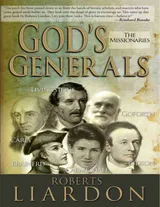
God's Generals - The Missionaries

The Keys Of This Blood: The Struggle For World Dominion Between Pope John Paul II, Mikhail Gorbachev And The Capitalist West
About the Book
"Joshua: GOD's Chosen Warrior" tells the story of Joshua, a faithful servant of God who led the Israelites into the Promised Land after the death of Moses. The book highlights Joshua's unwavering faith, courage, and obedience to God's commands as he conquers the lands of Canaan. Through Joshua's leadership, the Israelites experience God's faithfulness and provision, ultimately fulfilling His promise to give them a land flowing with milk and honey.
Gordon Lindsay
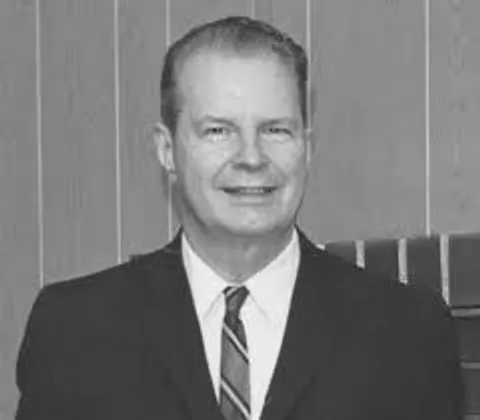 Gordon Lindsay’s Early life
Gordon Lindsay’s parents were members of J. A. Dowie’s Zion City, Illinois when he was born. The city’s financial difficulties forced the family west in 1904, where they temporarily joined another Christian-based community led by Finis Yoakum at Pisgah Grande, California. When similar problems emerged the family moved to Oregon after only a few months. From here the family moved to Portland, Oregon where Lindsay attended high school and was converted during a Charles F. Parham evangelistic campaign.
During his youth he came under the influence of John G. Lake, former resident of Zion City, missionary to South Africa, and founder of the Divine Healing missions in Spokane, Washington, and Portland, Oregon in 1920. Lindsay joined the healing and evangelistic campaigns of Lake, traveling throughout California and the southern states.
Lindsay began his own ministry in California as pastor of small churches in Avenal and San Fernando and for the next eighteen years, he travelled acros s the country holding revivals in full gospel churches. This period of travel prepared him as perhaps no other man in the nation to establish communication among a variety of Pentecostals.
When World War II began, Lindsay felt compelled to give up his evangelistic ministry because its rigorous lifestyle was taking its toll on his young family. He accepted a call to pastor a church in Ashland, Oregon.
William Branham enters Gordon Lindsay’s life
By 1947 he had witnessed the extraordinary ministry of William Branham and responded to the invitation to become Branham’s manager. His managerial skills were soon obvious in the Branham campaigns, and in April 1948, he furthered the cause of the of the revival when he produced the first issue of The Voice of Healing, specifically to promote Branham’s ministry. To Lindsay’s great surprise Branham announced that he “would not continue on the field more than a few weeks more.”
At great financial cost Lindsay decided to continue the publication of the new magazine in cooperation with his long-time friends, Jack Moore and his talented daughter Anna Jeanne Moore. He broadened the scope of the magazine by including more of the lesser known healing evangelists who were beginning to hold campaigns and were drawing large audiences.
One such evangelist was William Freeman who had been holding meetings in small churches. Lindsay visited one of his campaigns and immediately felt it was the will of God to team up with him and organise a series of meetings through 1948. The Voice of Healing featured the miracles of the Freeman campaigns.
Voice of Healing Conventions
By March 1949 The Voice of Healing circulation had grown to nearly 30,000 per month and had clearly become the voice of the healing movement. It’s pages successfully spread the message of the Salvation-Deliverance-Healing revival across the world.
In December 1949, Lindsay arranged the first convention of healing revivalists in Dallas, Texas. The assembly was addressed by Branham, Lindsay, Moore, old-timers such as F. F. Bosworth and Raymond T. Richey, and a number of rising revivalists including O. L. Jaggers, Gayle Jackson, Velmer Gardner, and Clifton Erickson. This historic conference symbolized the vitality and cohesion of the revival.
The following year, the convention, now about 1,000 strong, met in Kansas City, with virtually every important revivalist in the nation, with the notable exceptions of William Branham and Oral Roberts. Lindsay exercised great skill and wisdom exposing several points of danger and tension in the movement proposed guidelines for the future. Lindsay understood the fears of the older Pentecostal denominations and leaders and tried his utmost to deal with the offending issues.
In an article announcing “the purpose, plan and policy of the Voice of Healing Convention,” he denounced “free-lancers who violently and indiscriminately attack organization in general,” and he urged avoidance of “novel prophetic interpretations, dogmatic doctrinal assertions, sectarian predilections, theological hair-splitting.”
The Voice of Healing Association
The 1950 meeting made the Voice of Healing convention into a loose association of healing revivalists. The evangelists officially associated with The Voice of Healing magazine held “family meetings” at the conventions, at the same time maintaining their desire to “prove to the world that those associated with The Voice of Healing have no intention to organize another movement.” Through the decade the Voice of Healing conventions were showcases for healing revivalism.
The conference programs were workshops on the problems of healing evangelists. Typical topics were “prayer and fasting,” “preparation for a campaign,” “the follow-up work after a campaign,” “the system of cards for the prayer tent and the healing line” and the delicate issue of finances. As the association grew in importance in the 1950s, the program was frequently headed by Roberts or Branham; though every new revivalist aspired to be a speaker on the program.
The Voice of Healing family of evangelists flowered in the early 1950s. Lindsay continued to publicize Branham’s work, although he was not formally associated with the organization; the nucleus of the fellowship was an influential clique which included O. L. Jaggers, William Freeman, Jack Coe, T. L. Osborn, A. A. Allen, and Velmer Gardner.
Gradually major ministries began their own magazines and had no further need for Voice of Healing promotion. Nevertheless, by 1954 the “associate editors and evangelists” listed in The Voice of Healing numbered nearly fifty.
Though Lindsay became personally involved with healing evangelism from 1949, especially with other revivalists such as T. L. Osborn, he confined his best work to organization and management of the Voice of Healing magazine. By 1956 the expenses of the Voice of Healing were running $1,000 a day. In addition to the national and regional conventions sponsored by his organization, Lindsay also began to sponsor missions and a radio program.
“Lindsay was more than an advisor during the first decade of the healing revival; he was much like the director of an unruly orchestra. He tried desperately to control the proliferation of ministries in an effort to keep the revival respectable. He repeatedly advised, “It is better for one to go slow. Get your ministry on a solid foundation. . . . By all means avoid Hollywood press agent stuff.”
Many of the new leaders of the early 1950s owed their early success to the literary support of Gordon Lindsay through the Voice of Healing, but by 1958, many of the revivalists believed that Lindsay’s work was over.
An evolving ministry
Lindsay’s efforts to consolidate and coordinate the healing movement and its ministries became an impossible task. The increasing independence of ministries and the burgeoning charismatic movement caused Lindsay to reconsider his goals. He took the example of T. L. Osborn and concentrated on missionary endeavours. He remained the historian and theologian of the healing movement but began to produce teaching and evangelistic materials which were sent across the world.
The Voice of Healing ultimately became Christ for the Nations. Native church programs, literature, teaching tapes and funds were distributed to hundreds of locations. The organization had changed from one of healing revivalists into an important missionary society.
His ministry was always to those involved in the healing revival, independents and mainline Pentecostals, but the new charismatics – Lutherans, Methodists and Baptists – became his new audience. His encouragement of, and involvement with, the Full Gospel Businessmen’s Fellowship was designed to provide teaching and wisdom for charismatic leaders, many of whom held Lindsay in high regard.
His death on April 1st 1971
Suddenly, on April 1, 1973, Gordon Lindsay died. His wife, Freda, stepped into the breach and was able to stabilize and advance the ministry of Christ for the Nations. Lindsay’s death brought unparalleled financial support paying off all debts and expanding most of its programs.
David Harrel summarises the life of Gordon Lindsay perfectly: ‘The death of Gordon Lindsay closed a major chapter in the charismatic revival. No single man knew the revival and its leaders so well. No man understood its origins, its changes, and its diversity as did Lindsay. A shrewd manager and financier, Lindsay had been as nearly the coordinator of the healing revival as any man could be.
When the revival began to wane, Lindsay was faced with a crisis more severe than those of most of the evangelists themselves. Never a dynamic preacher, he found himself virtually abandoned by his most successful protégés. But Lindsay proved able to adapt. Always a balanced person, Lindsay built a balanced and enduring ministry.’
Tony Cauchi
Gordon Lindsay’s Early life
Gordon Lindsay’s parents were members of J. A. Dowie’s Zion City, Illinois when he was born. The city’s financial difficulties forced the family west in 1904, where they temporarily joined another Christian-based community led by Finis Yoakum at Pisgah Grande, California. When similar problems emerged the family moved to Oregon after only a few months. From here the family moved to Portland, Oregon where Lindsay attended high school and was converted during a Charles F. Parham evangelistic campaign.
During his youth he came under the influence of John G. Lake, former resident of Zion City, missionary to South Africa, and founder of the Divine Healing missions in Spokane, Washington, and Portland, Oregon in 1920. Lindsay joined the healing and evangelistic campaigns of Lake, traveling throughout California and the southern states.
Lindsay began his own ministry in California as pastor of small churches in Avenal and San Fernando and for the next eighteen years, he travelled acros s the country holding revivals in full gospel churches. This period of travel prepared him as perhaps no other man in the nation to establish communication among a variety of Pentecostals.
When World War II began, Lindsay felt compelled to give up his evangelistic ministry because its rigorous lifestyle was taking its toll on his young family. He accepted a call to pastor a church in Ashland, Oregon.
William Branham enters Gordon Lindsay’s life
By 1947 he had witnessed the extraordinary ministry of William Branham and responded to the invitation to become Branham’s manager. His managerial skills were soon obvious in the Branham campaigns, and in April 1948, he furthered the cause of the of the revival when he produced the first issue of The Voice of Healing, specifically to promote Branham’s ministry. To Lindsay’s great surprise Branham announced that he “would not continue on the field more than a few weeks more.”
At great financial cost Lindsay decided to continue the publication of the new magazine in cooperation with his long-time friends, Jack Moore and his talented daughter Anna Jeanne Moore. He broadened the scope of the magazine by including more of the lesser known healing evangelists who were beginning to hold campaigns and were drawing large audiences.
One such evangelist was William Freeman who had been holding meetings in small churches. Lindsay visited one of his campaigns and immediately felt it was the will of God to team up with him and organise a series of meetings through 1948. The Voice of Healing featured the miracles of the Freeman campaigns.
Voice of Healing Conventions
By March 1949 The Voice of Healing circulation had grown to nearly 30,000 per month and had clearly become the voice of the healing movement. It’s pages successfully spread the message of the Salvation-Deliverance-Healing revival across the world.
In December 1949, Lindsay arranged the first convention of healing revivalists in Dallas, Texas. The assembly was addressed by Branham, Lindsay, Moore, old-timers such as F. F. Bosworth and Raymond T. Richey, and a number of rising revivalists including O. L. Jaggers, Gayle Jackson, Velmer Gardner, and Clifton Erickson. This historic conference symbolized the vitality and cohesion of the revival.
The following year, the convention, now about 1,000 strong, met in Kansas City, with virtually every important revivalist in the nation, with the notable exceptions of William Branham and Oral Roberts. Lindsay exercised great skill and wisdom exposing several points of danger and tension in the movement proposed guidelines for the future. Lindsay understood the fears of the older Pentecostal denominations and leaders and tried his utmost to deal with the offending issues.
In an article announcing “the purpose, plan and policy of the Voice of Healing Convention,” he denounced “free-lancers who violently and indiscriminately attack organization in general,” and he urged avoidance of “novel prophetic interpretations, dogmatic doctrinal assertions, sectarian predilections, theological hair-splitting.”
The Voice of Healing Association
The 1950 meeting made the Voice of Healing convention into a loose association of healing revivalists. The evangelists officially associated with The Voice of Healing magazine held “family meetings” at the conventions, at the same time maintaining their desire to “prove to the world that those associated with The Voice of Healing have no intention to organize another movement.” Through the decade the Voice of Healing conventions were showcases for healing revivalism.
The conference programs were workshops on the problems of healing evangelists. Typical topics were “prayer and fasting,” “preparation for a campaign,” “the follow-up work after a campaign,” “the system of cards for the prayer tent and the healing line” and the delicate issue of finances. As the association grew in importance in the 1950s, the program was frequently headed by Roberts or Branham; though every new revivalist aspired to be a speaker on the program.
The Voice of Healing family of evangelists flowered in the early 1950s. Lindsay continued to publicize Branham’s work, although he was not formally associated with the organization; the nucleus of the fellowship was an influential clique which included O. L. Jaggers, William Freeman, Jack Coe, T. L. Osborn, A. A. Allen, and Velmer Gardner.
Gradually major ministries began their own magazines and had no further need for Voice of Healing promotion. Nevertheless, by 1954 the “associate editors and evangelists” listed in The Voice of Healing numbered nearly fifty.
Though Lindsay became personally involved with healing evangelism from 1949, especially with other revivalists such as T. L. Osborn, he confined his best work to organization and management of the Voice of Healing magazine. By 1956 the expenses of the Voice of Healing were running $1,000 a day. In addition to the national and regional conventions sponsored by his organization, Lindsay also began to sponsor missions and a radio program.
“Lindsay was more than an advisor during the first decade of the healing revival; he was much like the director of an unruly orchestra. He tried desperately to control the proliferation of ministries in an effort to keep the revival respectable. He repeatedly advised, “It is better for one to go slow. Get your ministry on a solid foundation. . . . By all means avoid Hollywood press agent stuff.”
Many of the new leaders of the early 1950s owed their early success to the literary support of Gordon Lindsay through the Voice of Healing, but by 1958, many of the revivalists believed that Lindsay’s work was over.
An evolving ministry
Lindsay’s efforts to consolidate and coordinate the healing movement and its ministries became an impossible task. The increasing independence of ministries and the burgeoning charismatic movement caused Lindsay to reconsider his goals. He took the example of T. L. Osborn and concentrated on missionary endeavours. He remained the historian and theologian of the healing movement but began to produce teaching and evangelistic materials which were sent across the world.
The Voice of Healing ultimately became Christ for the Nations. Native church programs, literature, teaching tapes and funds were distributed to hundreds of locations. The organization had changed from one of healing revivalists into an important missionary society.
His ministry was always to those involved in the healing revival, independents and mainline Pentecostals, but the new charismatics – Lutherans, Methodists and Baptists – became his new audience. His encouragement of, and involvement with, the Full Gospel Businessmen’s Fellowship was designed to provide teaching and wisdom for charismatic leaders, many of whom held Lindsay in high regard.
His death on April 1st 1971
Suddenly, on April 1, 1973, Gordon Lindsay died. His wife, Freda, stepped into the breach and was able to stabilize and advance the ministry of Christ for the Nations. Lindsay’s death brought unparalleled financial support paying off all debts and expanding most of its programs.
David Harrel summarises the life of Gordon Lindsay perfectly: ‘The death of Gordon Lindsay closed a major chapter in the charismatic revival. No single man knew the revival and its leaders so well. No man understood its origins, its changes, and its diversity as did Lindsay. A shrewd manager and financier, Lindsay had been as nearly the coordinator of the healing revival as any man could be.
When the revival began to wane, Lindsay was faced with a crisis more severe than those of most of the evangelists themselves. Never a dynamic preacher, he found himself virtually abandoned by his most successful protégés. But Lindsay proved able to adapt. Always a balanced person, Lindsay built a balanced and enduring ministry.’
Tony Cauchi
Every Other Way Leads to Death
A man sat along the road where one path broke into ten. A deep fog rested upon the land so no traveler could perceive each path’s end. The man’s King, before going off to his kingdom, told the man the end of each. One path led to a den of lions. One to a cliff with jagged rocks at the bottom. One through a forest with bloodthirsty beasts. Another to a swamp with inescapable quicksand. Still another to a tribe of cannibals. And the unsavory reports continued in this fashion. Only one led to the King’s kingdom. His charge was simple: warn others away from destruction and toward the path of life. A young man first crossed his path. “My friend, I have good news for you,” he said to the traveler. “The King of this world sent me to help you along. This path here, of the ten before you, alone is safe. And not only safe, but it leads directly to the King and his kingdom — a kingdom where you will be received, robed, and reconciled by his incredible mercy. The other paths — as the King has most solemnly recorded in his book — lead to certain ruin.” To his amazement, the passerby completely ignored his pleadings. A woman upon his arm held his ear, bidding him to follow another of the ten paths. “Sir! Come back! That way is the path of death! Come back!” he cried until the man faded from sight. The servant sat down in silence for hours. What should I have done differently? The second traveler, this time a young woman, paused momentarily to hear what he had to say. She considered the prescribed way, saw it was both narrow and hard, and without much more thought chose against it, telling him not to worry; she would be fine. The sight of the next travelers forced the horror of that woman’s end from his mind. A husband and wife approached (hardly speaking or looking at one another). This couple, as self-confident as they were unhappy, met his royal invitations with a sharp rebuke. “‘But what will they think of me?’ has lodged the name of Christ in many throats.” “Barbarously arrogant!” the woman scolded. “Hypocritical and judgmental,” the husband added. “Love,” the woman said without stopping, “lets others travel their own path for themselves by themselves, and does not force one’s own way upon anyone.” He tried to tell the back of their heads that it was not his way but the King’s, yet they paid no mind. Hand in hand, they walked toward the cliff, mocking such a fool upon the road. Days went by after this fashion. Each encounter weakened his pleadings. The mission that he began with a royal sense of privilege soon waned into callousness, confusion, and apathy. Family, friends, colleagues, and strangers now pass by, all stepping upon their chosen path. He gives but a feeble smile at the unsuspecting people who embark upon their preferred way to perdition. Weary in Speaking Good I have felt like this servant of the King. I have often asked with Isaiah, “Who has believed what he has heard from us? And to whom has the arm of the Lord been revealed?” (Isaiah 53:1) The temptation to compromise finds me in my defeat, whispering, “Is it really worth it?” or, “Did God really say that the gospel is the power of God for salvation?” Add to this whisper the fleshly impulse to avoid conversations that can easily lead to awkwardness or rejection. Some of us, myself included, heed the voice telling us that “going there” is neither polite nor promising, rather than the voice telling us to share the only name given under heaven by which they must be saved (Acts 4:12). But what will they think of me? has lodged the name of Christ in many throats. Now add to these challenges the sweet words in our day about “tolerance” — words that regularly convince Christians to consent to compromise while person after person passes by on the road to ruin. While Jesus didn’t blush to tell people that he alone was the way, the truth, and the life (John 14:6), we often fail to pass along the life-saving message we have been given. Word to Passersby If you are considering which path to take and desire the King’s perspective, here you have it: Jesus alone is the way, the truth, the life; he alone is the mediator between God and man (1 Timothy 2:5); he alone brings reconciliation to sinners (Colossians 1:20); he alone reveals God perfectly (Hebrews 1:3); he alone is the resurrection and the life (John 11:25); there is salvation in no one else (Acts 4:12). Two types of paths exist: the way of Christ, and the ways of condemnation (Matthew 7:13). Every path not leading to repentance and faith in Jesus for the forgiveness of sins is a path leading to never-ending death. God sent his Son into the world of condemned criminals in order to save it and give eternal life to all who believe (John 3:16–18). Jesus is the one name offered to you for your salvation. He is the only one who can take away your sins. Your good works will not spare you; your good character will not shelter you; your good intentions will not clothe your nakedness. The angel of death walks outside; only the door with Christ’s blood painted on the frame can shelter you. “Two types of paths exist: the way of Christ, and the way of condemnation.” Consider your path before it is too late. Not choosing a path is a path. Believing that no true paths exist is itself a path. Secularism, materialism, and false religions have paths. Contrast these with the only one that can lead to life, that of Jesus Christ and his gospel. Politically correct? No. Tolerant? No. Exclusive? Assuredly. Loving? Absolutely. “God shows his love for us in that while we were still sinners, Christ died for us” (Romans 5:8). Will you be a part of the us? Plea to Christians If, on the other hand, you are one of the many men or women at the crossroads, charged by the King to warn and to guide, do not give in or give up; the world needs your voice. Do not bow to the hollow statue that the world has erected and named “Love.” Compromise is love only with respect to self and sin, tolerant only toward the masses going to hell, and accepting only of a cowardice that makes us complicit in condemning those we claim to love. If we believe our King, we cannot sit silently. If we care for souls, we cannot grow mute. If we love our God’s glory, we must speak. We cannot watch family, friends, and even enemies pass by with indifference. In Due Season Eventually, this servant of the King, through considering his own relationship with the King and meditating on the words of his book, revived his trust in the King’s message. An old man made his way slowly toward him. “Sir, I have wonderful news for you — and I hope, I pray you receive it. My King has sent me with an urgent message that you, even in your old age, can find eternal life. This path, sir, though hard and with a narrow gate, is the singular path to life. Every other has something worse than death inscribed upon it. Even now, my King awaits, ready to receive you.” “Why should such a King offer me such a welcome?” “Because, in his great love, he has made a way — through highest payment to himself — to receive all who come to him in faith. . . . Yes, even you. . . . Yes, that is his promise. . . . Yes, this path.” Do not give in. Do not give up. Keep praying for your child; keep speaking the truth in love to that neighbor; keep pointing to Jesus Christ. Do not grow weary of speaking good, for in due season you will reap, if you do not give up (Galatians 6:9). Article by Greg Morse Staff writer, desiringGod.org