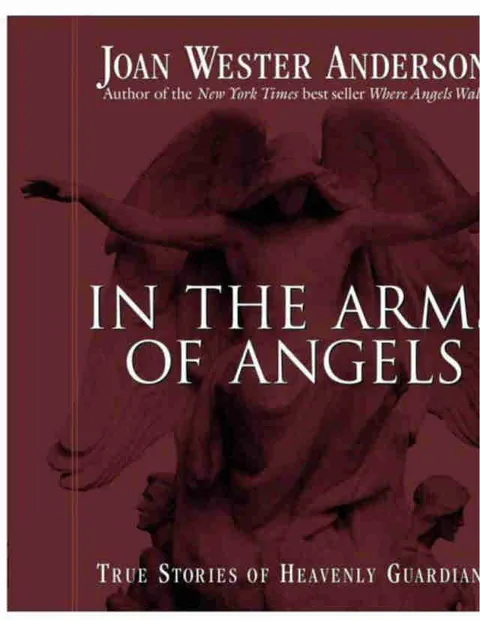

In The Arms Of Angels - True Stories Order Printed Copy
- Author: Joan Wester Anderson
- Size: 1.29MB | 185 pages
- |
Others like in the arms of angels - true stories Features >>
We Saw Heaven: True Stories Of What Awaits You On The Other Side
The Greatness Of The Soul
Tasting The Powers Of The Age To Come
Angels In The Realms Of Heaven - The Reality Of Angelic Ministry Today
Rapture, Revelation, And The End Times
Divine Revelation Of Deliverance
Deciphering End Time Prophetic Codes
-160.webp)
Proof Of Heaven: A Neurosurgeon's Journey Into The Afterlife
Angels And Demons
I Saw Heaven
About the Book
"In the Arms of Angels: True Stories" by Joan Wester Anderson is a collection of heartwarming and inspiring true stories about encounters with angels. Anderson shares accounts of ordinary people experiencing extraordinary moments of comfort, protection, and guidance from heavenly beings. These stories serve as a reminder of the presence of angels in our lives and offer hope and solace to readers in times of need.
Calvin Miller
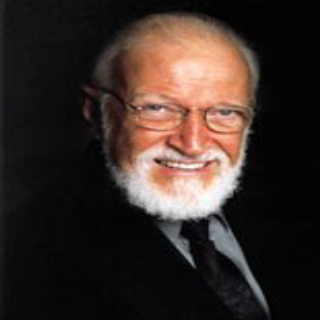 Calvin Miller was a pastor, professor and storyteller, best known for The Singer Trilogy, a mythic retelling of the New Testament story in the spirit of C. S. Lewis and J. R. R. Tolkien. Miller passed away on the afternoon of August 19, 2012, due to complications after heart surgery. He was 75.
A prolific artist and a writer's writer, Miller garnered respect and praise throughout his career from peers like Luci Shaw, Max Lucado and Philip Yancey. He was the author of more than forty books of popular theology and Christian inspiration including such recent books as Letters to Heaven, The Path of Celtic Prayer, Letters to a Young Pastor and his memoir Life Is Mostly Edges.
In addition to his twenty years of pastoral service at Westside Church in Omaha, Nebraska, Miller was also a great mentor to many students and leaders through his preaching and pastoral ministry classes at Beeson Divinity School. Calvin Miller, never one to multiply words, used just four to describe his rule of life: "Time is a gift."
RESCUE FROM THE SLUSH PILE
In October 1973 one important book was rescued from the slush pile (the stack of unsolicited manuscripts every publisher receives) by assistant editor Don Smith. He read a manuscript by a little-known Baptist pastor in Nebraska that was a poetic retelling of the life of Jesus—portraying him as a Troubadour. Both he and Linda Doll excitedly encouraged Jim Sire to take this imaginative manuscript seriously. In February 1974 Sire wrote the author, Calvin Miller, that IVP wanted to publish his book The Singer.
Months before, Miller had been waking up nights, stirred to write this tale, perhaps unconsciously inspired by the recent Broadway hits Jesus Christ Superstar and Godspell. Later Miller wrote:
When the manuscript was done, I sent it to Jim Sire at InterVarsity Press. “It’s good,” he said, “but we want to think about it a couple of weeks before we give you an answer.” So I waited until finally the letter came. They were going to do it. Jim Sire had done his Ph.D. on John Milton, and the fact that he liked it was joy immeasurable to me. “But,” he cautioned, “we’re going to print five thousand of these. They may not do well—in fact we may end up with four thousand of them on skids in our basement for the next ten years. Still, it’s a good book and deserves to be in print.”
Far more than a thousand copies sold. Actually, over three hundred times that amount sold in its first decade. It became “the most successful evangelical publication in this genre.” The Singer was followed in two years by The Song (paralleling the story of the early church in Acts) and two years after that by The Finale (inspired by the book of Revelation). Publication of The Singer changed Miller’s life. Even though he stayed in the pastorate for many years, it set him on a course of writing and speaking that he could not have imagined.
Calvin Miller was a pastor, professor and storyteller, best known for The Singer Trilogy, a mythic retelling of the New Testament story in the spirit of C. S. Lewis and J. R. R. Tolkien. Miller passed away on the afternoon of August 19, 2012, due to complications after heart surgery. He was 75.
A prolific artist and a writer's writer, Miller garnered respect and praise throughout his career from peers like Luci Shaw, Max Lucado and Philip Yancey. He was the author of more than forty books of popular theology and Christian inspiration including such recent books as Letters to Heaven, The Path of Celtic Prayer, Letters to a Young Pastor and his memoir Life Is Mostly Edges.
In addition to his twenty years of pastoral service at Westside Church in Omaha, Nebraska, Miller was also a great mentor to many students and leaders through his preaching and pastoral ministry classes at Beeson Divinity School. Calvin Miller, never one to multiply words, used just four to describe his rule of life: "Time is a gift."
RESCUE FROM THE SLUSH PILE
In October 1973 one important book was rescued from the slush pile (the stack of unsolicited manuscripts every publisher receives) by assistant editor Don Smith. He read a manuscript by a little-known Baptist pastor in Nebraska that was a poetic retelling of the life of Jesus—portraying him as a Troubadour. Both he and Linda Doll excitedly encouraged Jim Sire to take this imaginative manuscript seriously. In February 1974 Sire wrote the author, Calvin Miller, that IVP wanted to publish his book The Singer.
Months before, Miller had been waking up nights, stirred to write this tale, perhaps unconsciously inspired by the recent Broadway hits Jesus Christ Superstar and Godspell. Later Miller wrote:
When the manuscript was done, I sent it to Jim Sire at InterVarsity Press. “It’s good,” he said, “but we want to think about it a couple of weeks before we give you an answer.” So I waited until finally the letter came. They were going to do it. Jim Sire had done his Ph.D. on John Milton, and the fact that he liked it was joy immeasurable to me. “But,” he cautioned, “we’re going to print five thousand of these. They may not do well—in fact we may end up with four thousand of them on skids in our basement for the next ten years. Still, it’s a good book and deserves to be in print.”
Far more than a thousand copies sold. Actually, over three hundred times that amount sold in its first decade. It became “the most successful evangelical publication in this genre.” The Singer was followed in two years by The Song (paralleling the story of the early church in Acts) and two years after that by The Finale (inspired by the book of Revelation). Publication of The Singer changed Miller’s life. Even though he stayed in the pastorate for many years, it set him on a course of writing and speaking that he could not have imagined.
What Is Life’s Ultimate Good
Dear Dan, I agree; any view that has God as the foundation of morality — like the Christian view I described in my last letter — will have further, serious issues to address. In fact, your two objections get at the most central ones. Let me respond to both. What Makes God’s Laws Good? Your first objection has a great pedigree and can be traced all the way back to Plato. Namely, what makes God’s moral laws — his moral values — good? Does he like these laws because they are good? Or are they good because he likes them? Either way seems to spell trouble for Christianity. Take the first option. Are God’s laws good because they meet some separate standard of good, one “outside” of God? If so, God has to defer to — is beholden to — some higher authority. And that’s impossible, according to Christianity. But the alternative seems just as bad. If God’s laws are good because he likes them, it makes morality seem arbitrary, dependent merely on his personal tastes or whims. After all, what if he had preferred things like murder, rape, and torture? Would these therefore be good? Do we really want to define “good” as “what God likes,” similar to the way “coolness” is just whatever the cool kids like? Wouldn’t this rob statements like “God is good” of all significance, reducing them to saying merely that “God is the way he is”? Again, neither choice looks very promising. So, which horn of the dilemma should the Christian choose? Goodness Is Godness I think the second option is the right one: God’s laws are good because he likes them. That is, anything that God likes or values is good by definition. Goodness just is Godness. So then, is the phrase “God is good” nothing but an empty tautology, saying no more than “God is God”? “Anything that God likes or values is good by definition. Goodness just is Godness.” Well, no. In this specific context, where we’re defining “good,” “God is good” tells us something informative — namely, that God’s values are what make things morally good. But in most other contexts, when we say, “God is good” we can generally take for granted which properties or characteristics go on the “good” list. In these ordinary cases, “God is good” expresses something different — for example, “Here’s what God is like: he hates lying, murder, stealing — things we all agree are bad.” But then, if goodness is defined as whatever God likes, doesn’t my view mean that murder and rape would have been good if God had liked them? In a sense, perhaps; at least their advocacy would have been included in his moral laws. But remember that we’re currently defining “good,” and I think some of the rhetorical force of the wouldn’t-rape-therefore-be-good objection comes from ignoring this context. After all, it seems that regardless of what we say ultimately “makes” something good, if that “good-maker” were different, good would be different. And in any case, the traditional Christian view of God holds that he couldn’t have liked these things, that it’s logically impossible for God to be different than he is, just as a square couldn’t fail to have four equal sides. It turns out, therefore, that things aren’t as nearly as bad as the objection initially implied. Why Follow God’s Moral Law? Then there’s your second objection: why should we follow God’s laws? Is it because, if we don’t, he’ll submit us to everlasting punishment? Should we follow God’s laws simply to avoid pain? Does it turn out, after all, that morality is merely a matter of might makes right? Well, I think Christians should acknowledge that avoiding pain and suffering is a good reason to follow God’s moral laws. Moreover, I concede that this would be a genuine problem — if this were the only reason for obeying God. And as I said, even this reason isn’t without its virtues. After all, if we think of God as a parent — which the Bible encourages us to do — it’s a perfectly good reason, morally as well as rationally. As children we often obeyed our parents, in part, to avoid discipline. In fact, this was the reason for discipline in the first place — to help motivate us to obey. But of course, our obedience wasn’t merely motivated by a fear of discipline. We also obeyed our parents because we loved and trusted them. We knew that their requirements were an integral part of their deep love and affection for us, that they gave us these rules to benefit us. Their laws were evidence of our parents’ love. This interweaving of love and law, this close relation between our love for our parents, their love for us, and their moral values (that is, their moral loves) usually resulted in us adopting their morals; their values naturally became our values. We liked these values. And it didn’t stop with moral values; we sometimes adopted our parents’ values about sports teams, movies, and music — again, sometimes simply because we loved them. So, according to my view, we ought to follow God’s laws because, ultimately, we want to — and the main reason we want to is that we love him. In this way, morality is ultimately personal and grounded in what we love. Meaning of Life The personal aspect of value isn’t limited to moral value; it’s a component of all value, including life’s ultimate value. What we might call life’s ultimate meaning or purpose is perhaps the most important topic of all. So, what is our ultimate value, meaning, purpose, or goal in life? Well, suppose you’re right that there’s no God. The meaning of life, then, would be like all value in a godless cosmos: subjective and relative. And because each person has his own values, there would be as many meanings of life as there are persons. In such a world, there would be no objective meaning that life has. But according to Christianity, humans have been made for something, for a purpose. Moreover, this purpose does not depend on us, and so, in this sense, it’s objective, human-independent. And because we were designed for a specific purpose, humans will only truly flourish and thrive by fulfilling this purpose. Fulfilling God’s purpose for us is life’s ultimate meaning. That doesn’t mean that, in a world without God, humans could not find some measure of meaning or value in things like family, work, art, gardening, or whatever. But unless these individual goods are put into the context of the much larger, overall purpose, they will never be as meaningful (to us) as they could be. Only by fulfilling this ultimate purpose is our meaning of life maximized. What Are Humans For? What is this larger context or purpose? What were we made for? We find a hint by noticing that, for many of us, relationships and community are what we most value, where we find our greatest fulfillment. We flourish best in community with people we love. And this fact is entirely in line with the Christian view that our ultimate purpose is to know and love the ultimate Person, God himself. Christianity is of one voice on this. As one famous confession says, our ultimate purpose “is to glorify God and enjoy him forever.” Indeed, God is a loving relationship, as odd as that sounds. The mysterious doctrine of the Trinity says that the Godhead is an intimate community of three (divine) persons. That’s what he is. (This is one reason why monistic religions can’t truly make sense of the view that God is love: Who was God loving before he created persons other than himself? Such a being couldn’t essentially be love; at best, he would need creatures in order to love.) “Our ultimate purpose is to know and love the ultimate Person, God himself.” Notice that the centrality of relationships is also evident when Jesus sums up all of God’s laws in just two: love God and love your neighbor. The moral law — and, not coincidentally, life’s ultimate meaning — is about relationships, both human and divine. God, then, created humans for his own purpose. Our purpose — the meaning of life — is also importantly objective, just as morality is: it is human-independent. Yet it’s obvious that we can and do reject God’s purpose for us. In fact, the gospel message — and the entire Bible — is predicated on such rejection. But God has given us another chance to truly flourish, to find ultimate meaning through the life, death, and resurrection of Jesus Christ. He has made this possible at an immense cost to himself. Dan, I get why you would reject Christianity, viewing it as you do from the outside. I hope you’ll continue to consider all this and at least begin to sense that genuine atheism might be a lot different from your current “kinder, gentler” version. I also hope that in the process you’ll reconsider Christianity’s claims — in particular, Jesus’s offering of himself and the relationship you were made for. Article by Mitch Stokes