
Others like in my father's house Features >>

-160.webp)

About the Book
"In My Father's House" by Zola Levitt is a memoir that tells the story of Levitt's life growing up as a Jewish boy in a Christian household. The book explores his struggles with faith, identity, and belonging, and how he ultimately reconciles his Jewish heritage with his Christian beliefs. Levitt's journey is a powerful and emotional exploration of the complexities of religion and family.
Smith Wigglesworth
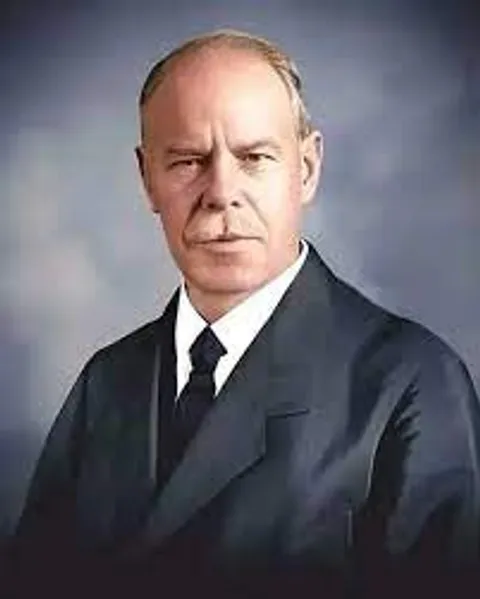 Smith Wigglesworth was born in 1859 to a very poor family. His father did manual labor, for very little pay. Smith himself went to work at the age of six to help with the family income. At six he was pulling turnips and at seven he was working in a woolen mill twelve hours a day. His parents did not know God, but Smith hungered in his heart to know Him. Even as a youngster he would pray in the fields. His grandmother was the critical Christian in his life. She was a Wesleyan Methodist and would take Smith to meetings with her. At one of these meetings there was a song being sung about Jesus as the lamb and Smith came into the realization of God's love for him and his decision to believe Christ for his salvation was decided that day. He was immediately filled with the desire to evangelize and led his own mother to Christ.
Smith has various church experiences as he was growing up. He first went to an Episcopal church and then at thirteen a Wesleyan Methodist church. When he was sixteen he became involved in the Salvation Army. He felt deeply called to fast and pray for lost souls. He saw many people come to Christ. At seventeen a mentor shared with him about water baptism and he decided to be baptized. The Salvation Army was experiencing a tremendous level of the power of God in those days. He describes meetings where "many would be prostrated under the power of the Spirit, sometimes for as long as twenty-four hours at a time." They would pray and fast and cry out for the salvation of fifty or a hundred people for the week and they would see what they had prayed for.
At eighteen Smith left the factory and became a plumber. He moved to Liverpool when he was twenty and continued to work during the day and minister during his free time. He felt called to minister to young people and brought them to meetings. These were destitute and ragged children, whom he would often feed and care for. Hundreds were saved. Smith was often asked to speak in Salvation meetings and he would break down and weep under the power of God. Many would come to repentance in those meetings through this untrained man. At twenty-three he returned back Bradford and continued his work with the Salvation Army.
In Bradford Smith met Mary Jane Featherstone, known as Polly, the daughter of a temperance lecturer. She left home and went to Bradford to take a servants job. One night she was drawn to a Salvation Army meeting. She listened to the woman evangelist, Gipsy Tillie Smith, and gave her heart to Christ. Smith was in that meeting and saw her heart for God. Polly became an enthusiastic Salvationsist and was granted a commission by General Booth. They developed a friendship, but Polly went to Scotland to help with a new Salvationist work. She eventually moved back to Bradford and married Smith, who was very much in love with her.
The couple worked together to evangelize the lost. They opened a small church in a poor part of town. Polly would preach and Smith would make the altar calls. For a season, however, Smith became so busy with his plumbing work that his evangelistic fervor began to wane. Polly continued on, bringing Smith to conviction. One day while Smith was working in the town of Leeds he heard of a divine healing meeting. He shared with Polly about it. She needed healing and so they went to a meeting, and Polly was healed.
Smith struggled with the reality of healing, while being ill himself. He decided to give up the medicine that he was taking and trust God. He was healed. They had five children, a girl and four boys. One morning two of the boys were sick. The power of God came and they prayed for the boys and they were instantly healed. Smith struggled with the idea that God would use him to heal the sick in general. He would gather up a group of people and drive them to get prayer in Leeds. The leaders of the meeting were going to a convention and left Smith in charge. He was horrified. How could he lead a meeting about divine healing? He tried to pass it off to someone else but could not. Finally he led the meeting and several people were healed. That was it. From then on Smith began to pray for people for healing.
Smith had another leap to make. He had heard about the Pentecostals who were being baptized in the Holy Spirit. He went to meetings and was so hungry for God he created a disturbance and church members asked him to stop. He went to prayer and prayed for four days. Finally he was getting ready to head home and the vicar's wife prayed for him and he fell under the power of God and spoke in tongues. Everything changed after that. He would walk by people and they would come under the conviction of the Holy Spirit and be saved. He began to see miracles and healings and the glory of God would fall when he prayed and preached.
Smith had to respond to the many calls that came in and gave up his business for the ministry. Polly unexpectedly died in 1913, and this was a real blow to Smith. He prayed for her and commanded that death release her. She did arise but said "Smith - the Lord wants me." His heartbroken response was "If the Lord wants you, I will not hold you". She had been his light and joy for all the years of their marriage, and he grieved deeply over the loss. After his wife was buried he went to her grave, feeling like he wanted to die. When God told him to get up and go Smith told him only if you "give to me a double portion of the Spirit – my wife’s and my own – I would go and preach the Gospel. God was gracious to me and answered my request.” His daughter Alice and son-in-law James Salter began to travel with him to handle his affairs.
Smith would pray and the blind would see, and the deaf were healed, people came out of wheelchairs, and cancers were destroyed. One remarkable story is when He prayed for a woman in a hospital. While he and a friend were praying she died. He took her out of the bed stood her against the wall and said "in the name of Jesus I rebuke this death". Her whole body began to tremble. The he said "in the name of Jesus walk", and she walked. Everywhere he would go he would teach and then show the power of God. He began to receive requests from all over the world. He taught in Europe, Asia, New Zealand and many other areas. When the crowds became very large he began a "wholesale healing". He would have everyone who needed healing lay hands on themselves and then he would pray. Hundreds would be healed at one time.
Over Smith's ministry it was confirmed that 14 people were raised from the dead. Thousands were saved and healed and he impacted whole continents for Christ. Smith died on March 12, 1947 at the funeral of his dear friend Wilf Richardson. His ministry was based on four principles " First, read the Word of God. Second, consume the Word of God until it consumes you. Third believe the Word of God. Fourth, act on the Word."
Smith Wigglesworth was born in 1859 to a very poor family. His father did manual labor, for very little pay. Smith himself went to work at the age of six to help with the family income. At six he was pulling turnips and at seven he was working in a woolen mill twelve hours a day. His parents did not know God, but Smith hungered in his heart to know Him. Even as a youngster he would pray in the fields. His grandmother was the critical Christian in his life. She was a Wesleyan Methodist and would take Smith to meetings with her. At one of these meetings there was a song being sung about Jesus as the lamb and Smith came into the realization of God's love for him and his decision to believe Christ for his salvation was decided that day. He was immediately filled with the desire to evangelize and led his own mother to Christ.
Smith has various church experiences as he was growing up. He first went to an Episcopal church and then at thirteen a Wesleyan Methodist church. When he was sixteen he became involved in the Salvation Army. He felt deeply called to fast and pray for lost souls. He saw many people come to Christ. At seventeen a mentor shared with him about water baptism and he decided to be baptized. The Salvation Army was experiencing a tremendous level of the power of God in those days. He describes meetings where "many would be prostrated under the power of the Spirit, sometimes for as long as twenty-four hours at a time." They would pray and fast and cry out for the salvation of fifty or a hundred people for the week and they would see what they had prayed for.
At eighteen Smith left the factory and became a plumber. He moved to Liverpool when he was twenty and continued to work during the day and minister during his free time. He felt called to minister to young people and brought them to meetings. These were destitute and ragged children, whom he would often feed and care for. Hundreds were saved. Smith was often asked to speak in Salvation meetings and he would break down and weep under the power of God. Many would come to repentance in those meetings through this untrained man. At twenty-three he returned back Bradford and continued his work with the Salvation Army.
In Bradford Smith met Mary Jane Featherstone, known as Polly, the daughter of a temperance lecturer. She left home and went to Bradford to take a servants job. One night she was drawn to a Salvation Army meeting. She listened to the woman evangelist, Gipsy Tillie Smith, and gave her heart to Christ. Smith was in that meeting and saw her heart for God. Polly became an enthusiastic Salvationsist and was granted a commission by General Booth. They developed a friendship, but Polly went to Scotland to help with a new Salvationist work. She eventually moved back to Bradford and married Smith, who was very much in love with her.
The couple worked together to evangelize the lost. They opened a small church in a poor part of town. Polly would preach and Smith would make the altar calls. For a season, however, Smith became so busy with his plumbing work that his evangelistic fervor began to wane. Polly continued on, bringing Smith to conviction. One day while Smith was working in the town of Leeds he heard of a divine healing meeting. He shared with Polly about it. She needed healing and so they went to a meeting, and Polly was healed.
Smith struggled with the reality of healing, while being ill himself. He decided to give up the medicine that he was taking and trust God. He was healed. They had five children, a girl and four boys. One morning two of the boys were sick. The power of God came and they prayed for the boys and they were instantly healed. Smith struggled with the idea that God would use him to heal the sick in general. He would gather up a group of people and drive them to get prayer in Leeds. The leaders of the meeting were going to a convention and left Smith in charge. He was horrified. How could he lead a meeting about divine healing? He tried to pass it off to someone else but could not. Finally he led the meeting and several people were healed. That was it. From then on Smith began to pray for people for healing.
Smith had another leap to make. He had heard about the Pentecostals who were being baptized in the Holy Spirit. He went to meetings and was so hungry for God he created a disturbance and church members asked him to stop. He went to prayer and prayed for four days. Finally he was getting ready to head home and the vicar's wife prayed for him and he fell under the power of God and spoke in tongues. Everything changed after that. He would walk by people and they would come under the conviction of the Holy Spirit and be saved. He began to see miracles and healings and the glory of God would fall when he prayed and preached.
Smith had to respond to the many calls that came in and gave up his business for the ministry. Polly unexpectedly died in 1913, and this was a real blow to Smith. He prayed for her and commanded that death release her. She did arise but said "Smith - the Lord wants me." His heartbroken response was "If the Lord wants you, I will not hold you". She had been his light and joy for all the years of their marriage, and he grieved deeply over the loss. After his wife was buried he went to her grave, feeling like he wanted to die. When God told him to get up and go Smith told him only if you "give to me a double portion of the Spirit – my wife’s and my own – I would go and preach the Gospel. God was gracious to me and answered my request.” His daughter Alice and son-in-law James Salter began to travel with him to handle his affairs.
Smith would pray and the blind would see, and the deaf were healed, people came out of wheelchairs, and cancers were destroyed. One remarkable story is when He prayed for a woman in a hospital. While he and a friend were praying she died. He took her out of the bed stood her against the wall and said "in the name of Jesus I rebuke this death". Her whole body began to tremble. The he said "in the name of Jesus walk", and she walked. Everywhere he would go he would teach and then show the power of God. He began to receive requests from all over the world. He taught in Europe, Asia, New Zealand and many other areas. When the crowds became very large he began a "wholesale healing". He would have everyone who needed healing lay hands on themselves and then he would pray. Hundreds would be healed at one time.
Over Smith's ministry it was confirmed that 14 people were raised from the dead. Thousands were saved and healed and he impacted whole continents for Christ. Smith died on March 12, 1947 at the funeral of his dear friend Wilf Richardson. His ministry was based on four principles " First, read the Word of God. Second, consume the Word of God until it consumes you. Third believe the Word of God. Fourth, act on the Word."
Death Is Not the End
“And they lived happily ever after. The end.” That’s a common way to end a story that begins “Once upon a time.” We call those stories fairy tales. Fairy tales are imaginary stories for children, filled with magic and with fanciful people and places. We love a good fairy tale because it echoes the real story of the Bible. God has wired us to love stories that resolve — stories that end with not only justice but with exuberant joy. “God will transform your natural, earthly body into a supernatural, heavenly body.” This conviction was held by two friends who wrote some of the most iconic fiction of the twentieth century: C.S. Lewis and J.R.R. Tolkien. After the great battle at the end of Lewis’s Chronicles of Narnia, the characters discover that the new Narnia has been their real country the whole time, and they have nothing left now but to travel further up and further in. Tolkien, in Lord of the Rings, enlists Sam Gamgee to ask, after the ring has been destroyed, whether everything sad would come untrue. Tolkien even coined a term for a sudden happy turn in the story toward this blissful resolve: eucatastrophe. We can summarize the story line of the Bible as “Kill the dragon, and get the girl.” That joyful resolution is what the final two phrases of the Apostles’ Creed capture: “the resurrection of the body” and “the life everlasting.” Resurrection of the Body God will raise the corpses of Christians. That is the main point of 1 Corinthians 15, the Bible’s most famous passage on the resurrection of believers. “How can some of you say,” Paul asks the Corinthians, “that there is no resurrection of the dead?” (1 Corinthians 15:12). The Corinthians believed that God resurrected Christ (1 Corinthians 15:1–2, 4, 11), but some of them denied that God will resurrect the corpses of Christians. “Resurrection” translates the Greek word anastasis (1 Corinthians 15:12–13, 21, 42), which does not ambiguously refer to “life after death,” as if it could be a non-bodily existence. It specifically refers to bodily life after a person has died. The idea that God would resurrect a human corpse revolted Greco-Roman pagans (Acts 17:32). They believed that the material body has no future beyond the grave and that only the immaterial soul is immortal. They valued the soul over the physical body. Consequently, some applied that philosophy to ethics — namely, that what you do now in your physical body does not matter (1 Corinthians 15:32–34). So, Paul corrects the Corinthians who had adopted worldly assumptions about resurrection from their pagan culture. He asserts that God will certainly resurrect the corpses of believers (1 Corinthians 15:12–34). Such a belief is reasonable given two analogies from nature: seeds that die and rise to life, and different kinds of bodies, like the sun and the moon, heavenly and earthly (1 Corinthians 15:35–44). He argues that the analogy of Adam and Christ proves that resurrecting the corpses of believers is certain (1 Corinthians 15:45–49). Finally, he writes that God must transform the perishable, mortal bodies of dead and living believers into imperishable, immortal bodies to triumphantly defeat death (1 Corinthians 15:50–58). God created a material universe. He created humans with physical bodies. Jesus took on flesh and will have his physical, resurrected body forever. God will transform the current physical earth into a new and better one. And God will transform your natural, earthly body into a supernatural, heavenly body. “‘The life everlasting’ is so glorious and satisfying because we get to enjoy the triune God more and more. Forever!” That is wonderful news for us believers in earthly bodies, because our bodies are deteriorating and groaning (1 Corinthians 15:42–44; Romans 8:18–25). Your earthly body is perishable, but your heavenly body will be “imperishable” (1 Corinthians 15:42, 50, 52–54). Christ’s resurrection guarantees that death will die. So, we look forward to enjoying a supernatural body like Christ’s resurrected body: “Our citizenship is in heaven, and from it we await a Savior, the Lord Jesus Christ, who will transform our lowly body to be like his glorious body, by the power that enables him even to subject all things to himself” (Philippians 3:20–21). Life Everlasting All humans will exist forever, but only some will enjoy what the Apostles’ Creed calls “the life everlasting.” That refers specifically to the resurrection life of the age to come, which believers experience in some measure now (John 3:15; 17:3). We will fully experience “the life everlasting” after Jesus says to each of us, “Well done, good and faithful servant. . . . Enter into the joy of your master” (Matthew 25:23). In his book God Is the Gospel, John Piper asks a piercing question, If you could have heaven, with no sickness, and with all the friends you ever had on earth, and all the food you ever liked, and all the leisure activities you ever enjoyed, and all the natural beauties you ever saw, all the physical pleasures you ever tasted, and no human conflict or any natural disasters, could you be satisfied with heaven, if Christ were not there? (15) The gospel is good news not merely because God will rescue us from hell and because we can enjoy the pleasures of heaven. It is good news ultimately because we can enjoy God himself like we never could in our shackles of sin. “The life everlasting” is so glorious and satisfying because we get to enjoy the triune God more and more. Forever! We can experience now what David wrote in Psalm 16:11, You make known to me the path of life; in your presence there is fullness of joy; at your right hand are pleasures forevermore. We long for the resurrection of the body and the life everlasting because then we will eternally and increasingly experience Psalm 16:11 like never before. Only the Beginning In C.S. Lewis’s The Last Battle (the seventh and final book of The Chronicles of Narnia), Aslan explains, “The term is over: the holidays have begun. The dream is ended: this is the morning.” Lewis continues, And as He spoke He no longer looked to them like a lion; but the things that began to happen after that were so great and beautiful that I cannot write them. And for us this is the end of all the stories, and we can most truly say that they all lived happily ever after. But for them it was only the beginning of the real story. All their life in this world and all their adventures in Narnia had only been the cover and the title page: now at last they were beginning Chapter One of the Great Story which no one on earth has read: which goes on forever: in which every chapter is better than the one before. (210–11) “The end” of the story of the Bible is “the beginning of a never-ending, ever-increasing happiness in the hearts of the redeemed, as God displays more and more of his infinite and inexhaustible greatness and glory for the enjoyment of his people” (Desiring God: An Affirmation of Faith 14.3). For now, we need not fear death. Indeed, we should be able to say with the apostle Paul, “My desire is to depart and be with Christ, for that is far better” (Philippians 1:23). And if it is far better even now than remaining in a natural, earthly, non-glorified body, it will be far better still to experience the resurrection of the body and the life everlasting with Christ in the new heavens and new earth. So, we pray, “Now to him who is able to keep [us] from stumbling and to present [us] blameless before the presence of his glory with great joy, to the only God, our Savior, through Jesus Christ our Lord, be glory, majesty, dominion, and authority, before all time and now and forever. Amen” (Jude 24–25). Article by Andy Naselli Professor, Bethlehem College & Seminary