
-480.webp)

Others like i am n Features >>

The Most Important Decision You Will Ever Make
Methodologies Of Multiplication
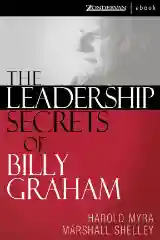
The Leadership Secrets Of Billy Graham

The Unexpected Adventure
-160.webp)
Evidence For The Resurrection (What It Means For Your Relationship With God)
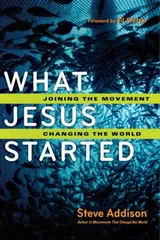
What Jesus Started: Joining The Movement
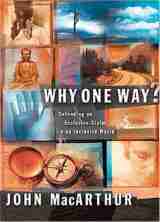
Why One Way

Outlive Your Life
Visions Of The Harvest

Connecting With Muslims
About the Book
"I am n" shares true stories of Christians around the world who have faced persecution and violence at the hands of Islamic extremists. The book provides an inspiring look at the courage and faith of these individuals as they stand firm in their beliefs despite unimaginable circumstances. It serves as a powerful reminder of the strength and resilience of those who face persecution for their faith.
A. A. Allen
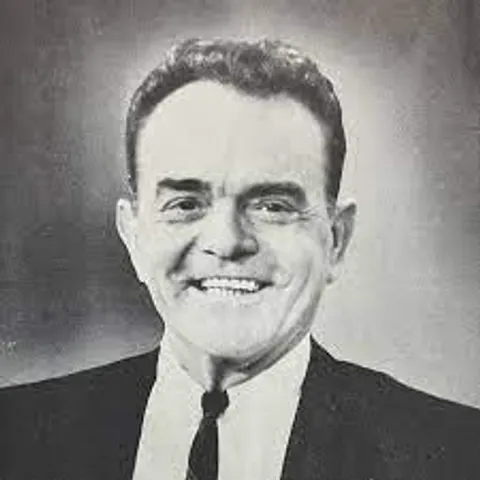 Born in Sulphur Rock, Arkansas, in 1911, he grew up with an alcoholic father and an unfaithful mother who lived with a series of men. “By the time I was twenty-one,” recalled Allen, “I was a nervous wreck. I couldn’t get a cigarette to my lip with one hand. . . . I was a confirmed drunkard.” (Lexie Allen, God’s Man of Faith and Power, p57, 1954). Two years later he served a jail sentence for stealing corn in the midst of the depression and thought of himself as “an ex-jailbird drifting aimlessly through life.” It was at this point that Allen was converted in a “tongues speaking” Methodist church in 1934 He met his wife, Lexie in Colorado and she became a powerful influence in shaping him for his future ministry.
Licensed by the Assemblies of God as a minister in 1936 began an effective evangelistic ministry at a small church in Colorado. After a two year pastorate he spent four-and-a-half years during World War II, as a full-time revivalist. He was the worship leader, musician and preacher but low finances and mediocre results took their toll on this father of four children. He left the itinerant ministry in 1947 when he was offered the security of a pastorate in a stable Assemblies of God church in Corpus Christi, Texas.
Soon after moving to Texas he heard news of the revival and read a copy of ‘The Voice of Healing’ magazine which he found incredulous and labelled the revivalists “fanatics.” However, in 1949, he attended an Oral Roberts campaign in Dallas where he was enthralled by Roberts’ power over the audience and left convinced that the revival was from God
Back in Texas, when his church board refused to sponsor a radio program, he resigned and began conducting revivals again with the hope that he too might develop a major healing ministry. In, He sent his first report to The Voice of Healing in May 1950, from Oakland, California, “Many say this is the greatest Revival in the history of Oakland” in what was to become typical AAA style.
He said, “Although I do not claim to possess the gift of healing, hundreds are being miraculously healed in this meeting of every known disease. I do not claim to possess a single gift of the Spirit nor to have the power to impart any gift to others, yet in this meeting, as well as in other recent meetings, all the gifts of the Spirit are being received and exercised night after night. (The Voice of Healing May 1950)
Observing the burgeoning ministry of others he noticed that the evangelists who were drawing the largest crowds were doing so under canvas. In the summer of 1951 joined the ranks of the tent ministries giving a down payment and commitment to pay off the remaining amount as the ministry grew – and it did. He established his headquarters in Dallas and in 1953 launched the Allen Revival Hour on radio. He conducted overseas campaigns in Cuba and Mexico regularly, and by1955 was broadcasting on seventeen Latin American radio stations as well as eighteen American ones.
Allen’s sanguine personality expressed itself in his enthusiastic reports, unparalleled showmanship and startling miraculous claims. He was a persuasive preacher, with a compelling presence and unusual empathy and rapport with the common people. He preached an old-time Pentecostal message with consummate skill. His message of holiness resonated in the hearts of those reared in austere Pentecostalism.
His stage presence and theatrical approach endeared him to the economically deprived working class and also to black communities. Ever the showman he made religion enjoyable and church-going fun.
But, above all, it was the power of God which attracted the huge audiences over the years. Thousands were converted in the midst of dramatic public healings and deliverances from evil spirits. Nothing was ‘done in a corner’ but all was employed to support the message that Jesus was alive and interested in the needs of ordinary people.
A. A. Allen considered himself the most persecuted preacher in the world. The Assemblies of God were not happy with his apparently questionable, or at least exaggerated, claims. His readiness to publicly counter-attack his accusers brought a continual stream of criticism and alienation from mainline Pentecostals.
But the accusation that he drank abusively was the straw that broke the camel’s back. In the fall 1955, he was arrested for drunken driving while conducting a revival in Knoxville, Tennessee. The local press took the opportunity to attack and expose Allen and the beleaguered minister forfeited his bail rather than stand trial on the charge.
Whatever the truth was Allen called the incident an “unprecedented persecution” aimed at ruining his ministry. As always he employed even the worst accusations to reinforce his claims that his commitment to God’s work in God’s way was truly from heaven, despite the fact that the Devil continually tried to destroy his ministry. His Miracle Magazine published his defense:
Allen declares that all this is but a trick of the devil to try to kill his ministry and his influence among his friends at a time when God has granted him greater miracles in his ministry than ever before. . . . If ministers pay the price of real MIRACLES today, they will meet with greater persecution than ever before. The only way to escape such persecution is to fold up and quit! But we are going on! Will you go on with us? (Miracle Magazine October, 1955)
Gordon Lindsay felt that the Voice of Healing had to take “a strong stand on ethics.” Allen resigned from the group, pre-empting their imminent dismissal. He immediately began publishing his own magazine, and, although he affected a cordial relationship with his former colleagues in the Voice of Healing, feelings remained strained.
In some ways independence suited Allen. His daughter recalled:
The Knoxville event also led to Allen’s separation from the Assemblies of God. It was suggested that he “withdraw from the public ministry until the matter at Knoxville be settled.” Allen’s response was to surrender his credentials as “a withdrawal from public ministry at this time would ruin my ministry, for it would have the appearance of an admission of guilt.”
By the mid-1950’s many of the more moderate ministers tried to continue to work with the Pentecostal denominations – or at least to remain friendly – but Allen repeatedly attacked organized religion and urged Pentecostal ministers to establish independent churches which would be free to support the revival. He charged that the Sunday school had replaced the altar in the Pentecostal churches and that few church members were filled with the Holy Ghost:
“Revivals are almost a thing of the past. Many pastors, and even evangelists, declare they will never try another one. They say it doesn’t work. They are holding “Sunday School Conventions,” “Teacher Training Courses,” and social gatherings. With few exceptions the churches today are leaning more and more toward dependence upon organizational strength, and natural ability, and denominational “methods.” They no longer expect to get their increase through the old fashioned revival altar bench, or through the miracle working power of God, but rather through the Sunday School.”
In fall 1956, Allen announced the formation of the Miracle Revival Fellowship, an alternative fellowship intended to license independent ministers and to support missions. Theologically, the fellowship welcomed all who accepted “the concept that Christ is the only essential doctrine.” Allen urged laymen as well as ministers to join his fellowship, through his “Every Member an Exhorter plan.” Although Allen announced that “MRF is not interested in dividing churches,” he also disclosed that “the purpose of this corporation shall be to encourage the establishing and the maintenance of independent local, sovereign, indigenous, autonomous churches.” The fellowship listed more than 500 ministers in its “first ordination
Interestingly, as other ministries were struggling and the revival was waning, Allen’s charisma and ministry skills coupled with well-staged revivals and an amazingly gifted team, enabled him to re-establish his ministry and rebuild a substantial and effective work.
Miracle Magazine was resounding success. At the end of a year’s publication in 1956, it had a paid subscription of about 200,000,and, according to Mrs. Allen, was “the fastest growing subscription magazine in the world today.” In 1957, Allen began conducting the International Miracle Revival Training Camp, an embryonic ministerial training centre. In 1958, he was given land in Arizona where he began building a permanent headquarters and training centre. At the height of the 1958 crisis in the revival, Allen announced a five-pronged program for his ministry: tent revivals, the Allen Revival Hour radio broadcast, an overseas mission program, the Miracle Valley Training Centre, and a “great number of dynamic books and faith inspiring tracts” published by the ministry. In 1958, Allen purchased Jack Coe’s old tent and proudly announced that he was moving into the “largest tent in the world.” His old-time revivalism, up-beat gospel music and anointed entertainers continued to attract the masses.
Allan died at the Jack Tar Hotel in San Francisco, California on June 11, 1970 at the age of 59. Some claim that Allen died an alcoholic because the coroner’s report concluded Allen died from liver failure brought on by acute alcoholism. Others know that he had battled with excruciating pain from severe arthritis in his knees, for over a year. It is true that Allen had undergone surgery on one of his knees and in June of 1970, was considering surgery on the other knee. They believe that the Coroner’s Report of “fatty infiltration of the liver” was a result of the few times he used alcohol in his last days to alleviate the excruciating pain of his arthritis.
Whatever is true of his death the life of A. A. Allen was one of extraordinary commitment to Jesus Christ which brought victory over the enemy of mankind. A. A. Allen was a true survivor. Even though the revival was declining in the late 1950’s and 1960’s his commitment to old-time faith-healing campaigns ensured the continuing testimony of signs and wonders to the next generation. He may have had his personal ‘quirks and foibles’ but the testimony of thousands of the blessing they received, the enduring love for God that resulted and the demonstration of the power of the Gospel are good reasons to give God thanks for such an amazing life!
Born in Sulphur Rock, Arkansas, in 1911, he grew up with an alcoholic father and an unfaithful mother who lived with a series of men. “By the time I was twenty-one,” recalled Allen, “I was a nervous wreck. I couldn’t get a cigarette to my lip with one hand. . . . I was a confirmed drunkard.” (Lexie Allen, God’s Man of Faith and Power, p57, 1954). Two years later he served a jail sentence for stealing corn in the midst of the depression and thought of himself as “an ex-jailbird drifting aimlessly through life.” It was at this point that Allen was converted in a “tongues speaking” Methodist church in 1934 He met his wife, Lexie in Colorado and she became a powerful influence in shaping him for his future ministry.
Licensed by the Assemblies of God as a minister in 1936 began an effective evangelistic ministry at a small church in Colorado. After a two year pastorate he spent four-and-a-half years during World War II, as a full-time revivalist. He was the worship leader, musician and preacher but low finances and mediocre results took their toll on this father of four children. He left the itinerant ministry in 1947 when he was offered the security of a pastorate in a stable Assemblies of God church in Corpus Christi, Texas.
Soon after moving to Texas he heard news of the revival and read a copy of ‘The Voice of Healing’ magazine which he found incredulous and labelled the revivalists “fanatics.” However, in 1949, he attended an Oral Roberts campaign in Dallas where he was enthralled by Roberts’ power over the audience and left convinced that the revival was from God
Back in Texas, when his church board refused to sponsor a radio program, he resigned and began conducting revivals again with the hope that he too might develop a major healing ministry. In, He sent his first report to The Voice of Healing in May 1950, from Oakland, California, “Many say this is the greatest Revival in the history of Oakland” in what was to become typical AAA style.
He said, “Although I do not claim to possess the gift of healing, hundreds are being miraculously healed in this meeting of every known disease. I do not claim to possess a single gift of the Spirit nor to have the power to impart any gift to others, yet in this meeting, as well as in other recent meetings, all the gifts of the Spirit are being received and exercised night after night. (The Voice of Healing May 1950)
Observing the burgeoning ministry of others he noticed that the evangelists who were drawing the largest crowds were doing so under canvas. In the summer of 1951 joined the ranks of the tent ministries giving a down payment and commitment to pay off the remaining amount as the ministry grew – and it did. He established his headquarters in Dallas and in 1953 launched the Allen Revival Hour on radio. He conducted overseas campaigns in Cuba and Mexico regularly, and by1955 was broadcasting on seventeen Latin American radio stations as well as eighteen American ones.
Allen’s sanguine personality expressed itself in his enthusiastic reports, unparalleled showmanship and startling miraculous claims. He was a persuasive preacher, with a compelling presence and unusual empathy and rapport with the common people. He preached an old-time Pentecostal message with consummate skill. His message of holiness resonated in the hearts of those reared in austere Pentecostalism.
His stage presence and theatrical approach endeared him to the economically deprived working class and also to black communities. Ever the showman he made religion enjoyable and church-going fun.
But, above all, it was the power of God which attracted the huge audiences over the years. Thousands were converted in the midst of dramatic public healings and deliverances from evil spirits. Nothing was ‘done in a corner’ but all was employed to support the message that Jesus was alive and interested in the needs of ordinary people.
A. A. Allen considered himself the most persecuted preacher in the world. The Assemblies of God were not happy with his apparently questionable, or at least exaggerated, claims. His readiness to publicly counter-attack his accusers brought a continual stream of criticism and alienation from mainline Pentecostals.
But the accusation that he drank abusively was the straw that broke the camel’s back. In the fall 1955, he was arrested for drunken driving while conducting a revival in Knoxville, Tennessee. The local press took the opportunity to attack and expose Allen and the beleaguered minister forfeited his bail rather than stand trial on the charge.
Whatever the truth was Allen called the incident an “unprecedented persecution” aimed at ruining his ministry. As always he employed even the worst accusations to reinforce his claims that his commitment to God’s work in God’s way was truly from heaven, despite the fact that the Devil continually tried to destroy his ministry. His Miracle Magazine published his defense:
Allen declares that all this is but a trick of the devil to try to kill his ministry and his influence among his friends at a time when God has granted him greater miracles in his ministry than ever before. . . . If ministers pay the price of real MIRACLES today, they will meet with greater persecution than ever before. The only way to escape such persecution is to fold up and quit! But we are going on! Will you go on with us? (Miracle Magazine October, 1955)
Gordon Lindsay felt that the Voice of Healing had to take “a strong stand on ethics.” Allen resigned from the group, pre-empting their imminent dismissal. He immediately began publishing his own magazine, and, although he affected a cordial relationship with his former colleagues in the Voice of Healing, feelings remained strained.
In some ways independence suited Allen. His daughter recalled:
The Knoxville event also led to Allen’s separation from the Assemblies of God. It was suggested that he “withdraw from the public ministry until the matter at Knoxville be settled.” Allen’s response was to surrender his credentials as “a withdrawal from public ministry at this time would ruin my ministry, for it would have the appearance of an admission of guilt.”
By the mid-1950’s many of the more moderate ministers tried to continue to work with the Pentecostal denominations – or at least to remain friendly – but Allen repeatedly attacked organized religion and urged Pentecostal ministers to establish independent churches which would be free to support the revival. He charged that the Sunday school had replaced the altar in the Pentecostal churches and that few church members were filled with the Holy Ghost:
“Revivals are almost a thing of the past. Many pastors, and even evangelists, declare they will never try another one. They say it doesn’t work. They are holding “Sunday School Conventions,” “Teacher Training Courses,” and social gatherings. With few exceptions the churches today are leaning more and more toward dependence upon organizational strength, and natural ability, and denominational “methods.” They no longer expect to get their increase through the old fashioned revival altar bench, or through the miracle working power of God, but rather through the Sunday School.”
In fall 1956, Allen announced the formation of the Miracle Revival Fellowship, an alternative fellowship intended to license independent ministers and to support missions. Theologically, the fellowship welcomed all who accepted “the concept that Christ is the only essential doctrine.” Allen urged laymen as well as ministers to join his fellowship, through his “Every Member an Exhorter plan.” Although Allen announced that “MRF is not interested in dividing churches,” he also disclosed that “the purpose of this corporation shall be to encourage the establishing and the maintenance of independent local, sovereign, indigenous, autonomous churches.” The fellowship listed more than 500 ministers in its “first ordination
Interestingly, as other ministries were struggling and the revival was waning, Allen’s charisma and ministry skills coupled with well-staged revivals and an amazingly gifted team, enabled him to re-establish his ministry and rebuild a substantial and effective work.
Miracle Magazine was resounding success. At the end of a year’s publication in 1956, it had a paid subscription of about 200,000,and, according to Mrs. Allen, was “the fastest growing subscription magazine in the world today.” In 1957, Allen began conducting the International Miracle Revival Training Camp, an embryonic ministerial training centre. In 1958, he was given land in Arizona where he began building a permanent headquarters and training centre. At the height of the 1958 crisis in the revival, Allen announced a five-pronged program for his ministry: tent revivals, the Allen Revival Hour radio broadcast, an overseas mission program, the Miracle Valley Training Centre, and a “great number of dynamic books and faith inspiring tracts” published by the ministry. In 1958, Allen purchased Jack Coe’s old tent and proudly announced that he was moving into the “largest tent in the world.” His old-time revivalism, up-beat gospel music and anointed entertainers continued to attract the masses.
Allan died at the Jack Tar Hotel in San Francisco, California on June 11, 1970 at the age of 59. Some claim that Allen died an alcoholic because the coroner’s report concluded Allen died from liver failure brought on by acute alcoholism. Others know that he had battled with excruciating pain from severe arthritis in his knees, for over a year. It is true that Allen had undergone surgery on one of his knees and in June of 1970, was considering surgery on the other knee. They believe that the Coroner’s Report of “fatty infiltration of the liver” was a result of the few times he used alcohol in his last days to alleviate the excruciating pain of his arthritis.
Whatever is true of his death the life of A. A. Allen was one of extraordinary commitment to Jesus Christ which brought victory over the enemy of mankind. A. A. Allen was a true survivor. Even though the revival was declining in the late 1950’s and 1960’s his commitment to old-time faith-healing campaigns ensured the continuing testimony of signs and wonders to the next generation. He may have had his personal ‘quirks and foibles’ but the testimony of thousands of the blessing they received, the enduring love for God that resulted and the demonstration of the power of the Gospel are good reasons to give God thanks for such an amazing life!
The Soundtrack of Heaven
The book of Revelation confuses many Christians. Filled with beasts, angels, living creatures, wars, lightning, thunder, prophecies, and visions, its story can be a bit overwhelming for any of us. Something like a Marvel movie on steroids. Not surprisingly, scholars differ widely on what it all means. Some try to tie it to actual people and events in history. Others assign most of Revelation to the future. Still others believe God is giving us repeated descriptions of what is taking place now in the church age. Wherever we land on the bigger picture, Revelation gives us a series of windows into reality that are both hard to miss and easier to understand: its songs. Woven into the fabric of the book are around a dozen choruses, both spoken and sung. That shouldn’t surprise us given how often in Scripture drawing near to God is expressed and encouraged through singing. But these songs of heaven are unique. They’re written by God himself, and they show us what singing in God’s presence will really be like. And we may be singing some form of these particular choruses forever. Even now, though, they have much to teach us. Songs of Exuberance Let’s admit it. The descriptions of the singing of heaven put the sound of any rock concert or sports stadium to shame, not to mention most churches. Myriads of myriads and thousands of thousands, saying with a loud voice . . . (Revelation 5:11–12) And I heard every creature in heaven and on earth and under the earth and in the sea . . . (Revelation 5:13) And all the angels . . . fell on their faces before the throne. (Revelation 7:11) Then I heard what seemed to be the voice of a great multitude, like the roar of many waters and like the sound of mighty peals of thunder . . . (Revelation 19:6) “The example of heaven challenges the assumption that congregational worship should be reserved and subdued.” Both audibly and visually, we’re confronted with the fact that those who truly grasp God’s nature and what he’s accomplished will be moved to sing. As Dennis Johnson writes, Revelation shows us that “those who dwell with God in heaven constantly break forth in song, overwhelmed with joy and adoration by his perfections in himself and by his awesome achievements in creation and redemption” (Triumph of the Lamb, 330). The example of heaven challenges the assumption that congregational worship should be reserved and subdued. While we cite proof texts, claim to honor tradition, and avoid looking too fanatical, might it be that we’re actually just failing to see how great God’s glory in Christ really is? Songs of Explanation Heaven’s songs give us insight into the character of God, the works of his hands, and why he does what he does. We don’t hear any of the simple, repetitious 7-11 songs (7 words repeated 11 times — or more!) that are so popular today. Rather, the lyrics shed real light on what’s happening in the world and in the heavenly throne room. ILLUMINATING HOLINESS For instance, at the beginning of Revelation 4, John is shown an open door in heaven. He paints a moving picture of what he sees and hears. A throne. An emerald-like rainbow. Flashes of lightning. Peals of thunder. But what does it all mean? Revelation 4:8 tells us: Holy, holy, holy, is the Lord God Almighty, who was and is and is to come! God is thrice holy — righteous, omnipotent, eternal, set apart. The song of verse 11 further explains that God created all things and sustains all things for his pleasure: Worthy are you, our Lord and God, to receive glory and honor and power, for you created all things, and by your will they existed and were created. (Revelation 4:11) UNFOLDING REDEMPTION At the beginning of chapter 5, John hears a new song, sung to the Lamb: Worthy are you to take the scroll and to open its seals, for you were slain, and by your blood you ransomed people for God from every tribe and language and people and nation, and you have made them a kingdom and priests to our God, and they shall reign on the earth. (Revelation 5:9–10) The Lamb could open the scroll because he was slain, a reference to his substitutionary death on the cross. His death ransomed people for God from every tribe, language, people, and nation, a reference to the international scope of the gospel invitation. The ransomed will be a kingdom and priests to God who will reign forever on earth, a statement showing that God’s promise to make Israel “a kingdom of priests and a holy nation” (Exodus 19:6) was fulfilled in the church, made up of both Jews and Gentiles. In short, despite the turmoil and tests of the present age, God will surely have a diverse people for his glory with whom he will live forever. After an outpouring of praise for the Lamb’s attributes (Revelation 5:12), we hear another song, declaring Jesus’s divinity as clearly as any passage in Scripture: “To him who sits on the throne and to the Lamb be blessing and honor and glory and might forever and ever!” (Revelation 5:13). In a similar way, our songs should be filled with the character, nature, purposes, actions, and heart of God. Words don’t get in the way of worship. They give substance and meaning to it. Songs of Encouragement When God gave John the prophecy of Revelation, Christians were already facing varying degrees of persecution, and it was expected to increase. Pressures to conform to a pagan culture, and even to participate in the idolatry of emperor worship, came at Christians from every direction. What would give John’s readers faith to endure and courage to stand against opposition? What would strengthen their resolve as they saw friends and family members taken from their homes and martyred for their allegiance to King Jesus? The knowledge that God’s throne is immovable, sovereign, and eternal. The saints needed to be reminded that, in the heavenly realms, God’s authority and rule are not only affirmed, but celebrated: The kingdom of the world has become the kingdom of our Lord and of his Christ. (Revelation 11:15) We give thanks to you, Lord God Almighty, who is and who was, for you have taken your great power and begun to reign. (Revelation 11:17) Hallelujah! Salvation and glory and power belong to our God, for his judgments are true and just; for he has judged the great prostitute who corrupted the earth with her immorality, and has avenged on her the blood of his servants. (Revelation 19:1–2) How often do our songs both detail the forces of evil arrayed against us and point us clearly to the God who has triumphed over them in Christ? David Peterson asks, Do our hymns and acclamations . . . challenge us to take a firm stand against every manifestation of Satan’s power and to bear faithful witness to the truth of the gospel in our society? It is not good enough to sing certain items merely because they make the congregation feel good! (Engaging with God, 278) “Words don’t get in the way of worship. They give substance and meaning to it.” When we sing together, our strength comes not from aiming to feel and emote, but to see and hear. We want to see God reigning on his throne with absolute justice, wisdom, and power over every terrorist, virus, dictator, and manifestation of evil in our day. And we want to hear and join in the cries of jubilation that are already ascending to the God who can do all things and whose purposes cannot be thwarted (Job 42:2). Songs of Expectation Endurance is one thing. Expectation is another. It’s possible to sing through dark seasons, discouraging outcomes, heart-wrenching losses, relentless opposition, and dwindling resources with grit, resolve, and stoicism. But that doesn’t describe the songs of heaven. Not even close. They’re marked by joy. And that joy stems from a confident expectation that God will accomplish everything he has promised. The final songs of Revelation describe God overcoming all evil, the nations bowing down in worship, and the bride of Christ finally beholding her groom, King Jesus, at a never-ending royal celebration of grace. All nations will come and worship you, for your righteous acts have been revealed. (Revelation 15:4) Hallelujah! For the Lord our God the Almighty reigns. Let us rejoice and exult and give him the glory, for the marriage of the Lamb has come, and his Bride has made herself ready; it was granted her to clothe herself with fine linen, bright and pure. (Revelation 19:6–8) Do our songs help people clearly understand that what’s yet to come is not only certain but worth celebrating now? Do we fill them with anticipation for our glorious future in Christ, when “all the waiting will be over, every sorrow will be healed, all the dreams it seemed could never be will all be real”? Our songs help bring into sharper focus the things hoped for and unseen that God has promised to us. Transformed Through Singing Will our earthly songs look and sound exactly like the songs of heaven? No. But can the songs of heaven motivate us to sing with greater passion, understanding, confidence, and anticipation now? Absolutely. G.K. Beale writes, Is it possible . . . that, as we declared the same truths about God as the heavenly beings do, the same Holy Spirit who is pictured as being before the throne would deepen and transform our understanding of God and his glory in a way that touches our whole being, in its spiritual, intellectual, emotional, and even physical components? (Revelation: A Shorter Commentary, 108) It’s not only possible. It’s God’s intention. So, may we joyfully model our singing after the songs of heaven until, by the grace of God, they are no longer just a worthy goal, but the sound of present reality. Article by Bob Kauflin
-480.webp)
-480.webp)