

Others like how to trouble your trouble Features >>

Now That You Are Born Again
-160.webp)
God's Love For You! (A Revelation Of The Eternal Heart Of God)

A Sweet And Bitter Providence

A Covenant Of Blood
-160.webp)
Labour To Be Blessed (...Labour Not To Be Rich)
-160.webp)
The Great Exchange (My Sin For His Righteousness)
-160.webp)
Agony Of Wasted Grace

I Believe In Visions

A Broken Vessel

Grace Abounding
About the Book
"How to Trouble Your Trouble" by Creflo Dollar is a guide to overcoming life's challenges and troubles by turning to God for help and following biblical principles. The book offers practical advice and strategies for handling difficult situations and finding peace and strength through faith. It encourages readers to trust in God's plan and to take control of their thoughts and emotions in order to overcome obstacles and experience lasting transformation in their lives.
William Carey
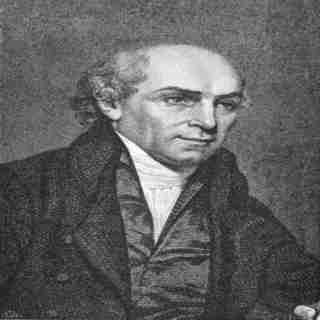 "Expect great things; attempt great things."
At a meeting of Baptist leaders in the late 1700s, a newly ordained minister stood to argue for the value of overseas missions. He was abruptly interrupted by an older minister who said, "Young man, sit down! You are an enthusiast. When God pleases to convert the heathen, he'll do it without consulting you or me."
That such an attitude is inconceivable today is largely due to the subsequent efforts of that young man, William Carey.
Plodder Carey was raised in the obscure, rural village of Paulerpury, in the middle of England. He apprenticed in a local cobbler's shop, where the nominal Anglican was converted. He enthusiastically took up the faith, and though little educated, the young convert borrowed a Greek grammar and proceeded to teach himself New Testament Greek.
When his master died, he took up shoemaking in nearby Hackleton, where he met and married Dorothy Plackett, who soon gave birth to a daughter. But the apprentice cobbler's life was hard—the child died at age 2—and his pay was insufficient. Carey's family sunk into poverty and stayed there even after he took over the business.
"I can plod," he wrote later, "I can persevere to any definite pursuit." All the while, he continued his language studies, adding Hebrew and Latin, and became a preacher with the Particular Baptists. He also continued pursuing his lifelong interest in international affairs, especially the religious life of other cultures.
Carey was impressed with early Moravian missionaries and was increasingly dismayed at his fellow Protestants' lack of missions interest. In response, he penned An Enquiry into the Obligations of Christians to Use Means for the Conversion of the Heathens. He argued that Jesus' Great Commission applied to all Christians of all times, and he castigated fellow believers of his day for ignoring it: "Multitudes sit at ease and give themselves no concern about the far greater part of their fellow sinners, who to this day, are lost in ignorance and idolatry."
Carey didn't stop there: in 1792 he organized a missionary society, and at its inaugural meeting preached a sermon with the call, "Expect great things from God; attempt great things for God!" Within a year, Carey, John Thomas (a former surgeon), and Carey's family (which now included three boys, and another child on the way) were on a ship headed for India.
Stranger in a strange land
Thomas and Carey had grossly underestimated what it would cost to live in India, and Carey's early years there were miserable. When Thomas deserted the enterprise, Carey was forced to move his family repeatedly as he sought employment that could sustain them. Illness racked the family, and loneliness and regret set it: "I am in a strange land," he wrote, "no Christian friend, a large family, and nothing to supply their wants." But he also retained hope: "Well, I have God, and his word is sure."
He learned Bengali with the help of a pundit, and in a few weeks began translating the Bible into Bengali and preaching to small gatherings.
When Carey himself contracted malaria, and then his 5-year-old Peter died of dysentery, it became too much for his wife, Dorothy, whose mental health deteriorated rapidly. She suffered delusions, accusing Carey of adultery and threatening him with a knife. She eventually had to be confined to a room and physically restrained.
"This is indeed the valley of the shadow of death to me," Carey wrote, though characteristically added, "But I rejoice that I am here notwithstanding; and God is here."
Gift of tongues
In October 1799, things finally turned. He was invited to locate in a Danish settlement in Serampore, near Calcutta. He was now under the protection of the Danes, who permitted him to preach legally (in the British-controlled areas of India, all of Carey's missionary work had been illegal).
Carey was joined by William Ward, a printer, and Joshua and Hanna Marshman, teachers. Mission finances increased considerably as Ward began securing government printing contracts, the Marshmans opened schools for children, and Carey began teaching at Fort William College in Calcutta.
In December 1800, after seven years of missionary labor, Carey baptized his first convert, Krishna Pal, and two months later, he published his first Bengali New Testament. With this and subsequent editions, Carey and his colleagues laid the foundation for the study of modern Bengali, which up to this time had been an "unsettled dialect."
Carey continued to expect great things; over the next 28 years, he and his pundits translated the entire Bible into India's major languages: Bengali, Oriya, Marathi, Hindi, Assamese, and Sanskrit and parts of 209 other languages and dialects.
He also sought social reform in India, including the abolition of infanticide, widow burning (sati), and assisted suicide. He and the Marshmans founded Serampore College in 1818, a divinity school for Indians, which today offers theological and liberal arts education for some 2,500 students.
By the time Carey died, he had spent 41 years in India without a furlough. His mission could count only some 700 converts in a nation of millions, but he had laid an impressive foundation of Bible translations, education, and social reform.
His greatest legacy was in the worldwide missionary movement of the nineteenth century that he inspired. Missionaries like Adoniram Judson, Hudson Taylor, and David Livingstone, among thousands of others, were impressed not only by Carey's example, but by his words "Expect great things; attempt great things." The history of nineteenth-century Protestant missions is in many ways an extended commentary on the phrase.
"Expect great things; attempt great things."
At a meeting of Baptist leaders in the late 1700s, a newly ordained minister stood to argue for the value of overseas missions. He was abruptly interrupted by an older minister who said, "Young man, sit down! You are an enthusiast. When God pleases to convert the heathen, he'll do it without consulting you or me."
That such an attitude is inconceivable today is largely due to the subsequent efforts of that young man, William Carey.
Plodder Carey was raised in the obscure, rural village of Paulerpury, in the middle of England. He apprenticed in a local cobbler's shop, where the nominal Anglican was converted. He enthusiastically took up the faith, and though little educated, the young convert borrowed a Greek grammar and proceeded to teach himself New Testament Greek.
When his master died, he took up shoemaking in nearby Hackleton, where he met and married Dorothy Plackett, who soon gave birth to a daughter. But the apprentice cobbler's life was hard—the child died at age 2—and his pay was insufficient. Carey's family sunk into poverty and stayed there even after he took over the business.
"I can plod," he wrote later, "I can persevere to any definite pursuit." All the while, he continued his language studies, adding Hebrew and Latin, and became a preacher with the Particular Baptists. He also continued pursuing his lifelong interest in international affairs, especially the religious life of other cultures.
Carey was impressed with early Moravian missionaries and was increasingly dismayed at his fellow Protestants' lack of missions interest. In response, he penned An Enquiry into the Obligations of Christians to Use Means for the Conversion of the Heathens. He argued that Jesus' Great Commission applied to all Christians of all times, and he castigated fellow believers of his day for ignoring it: "Multitudes sit at ease and give themselves no concern about the far greater part of their fellow sinners, who to this day, are lost in ignorance and idolatry."
Carey didn't stop there: in 1792 he organized a missionary society, and at its inaugural meeting preached a sermon with the call, "Expect great things from God; attempt great things for God!" Within a year, Carey, John Thomas (a former surgeon), and Carey's family (which now included three boys, and another child on the way) were on a ship headed for India.
Stranger in a strange land
Thomas and Carey had grossly underestimated what it would cost to live in India, and Carey's early years there were miserable. When Thomas deserted the enterprise, Carey was forced to move his family repeatedly as he sought employment that could sustain them. Illness racked the family, and loneliness and regret set it: "I am in a strange land," he wrote, "no Christian friend, a large family, and nothing to supply their wants." But he also retained hope: "Well, I have God, and his word is sure."
He learned Bengali with the help of a pundit, and in a few weeks began translating the Bible into Bengali and preaching to small gatherings.
When Carey himself contracted malaria, and then his 5-year-old Peter died of dysentery, it became too much for his wife, Dorothy, whose mental health deteriorated rapidly. She suffered delusions, accusing Carey of adultery and threatening him with a knife. She eventually had to be confined to a room and physically restrained.
"This is indeed the valley of the shadow of death to me," Carey wrote, though characteristically added, "But I rejoice that I am here notwithstanding; and God is here."
Gift of tongues
In October 1799, things finally turned. He was invited to locate in a Danish settlement in Serampore, near Calcutta. He was now under the protection of the Danes, who permitted him to preach legally (in the British-controlled areas of India, all of Carey's missionary work had been illegal).
Carey was joined by William Ward, a printer, and Joshua and Hanna Marshman, teachers. Mission finances increased considerably as Ward began securing government printing contracts, the Marshmans opened schools for children, and Carey began teaching at Fort William College in Calcutta.
In December 1800, after seven years of missionary labor, Carey baptized his first convert, Krishna Pal, and two months later, he published his first Bengali New Testament. With this and subsequent editions, Carey and his colleagues laid the foundation for the study of modern Bengali, which up to this time had been an "unsettled dialect."
Carey continued to expect great things; over the next 28 years, he and his pundits translated the entire Bible into India's major languages: Bengali, Oriya, Marathi, Hindi, Assamese, and Sanskrit and parts of 209 other languages and dialects.
He also sought social reform in India, including the abolition of infanticide, widow burning (sati), and assisted suicide. He and the Marshmans founded Serampore College in 1818, a divinity school for Indians, which today offers theological and liberal arts education for some 2,500 students.
By the time Carey died, he had spent 41 years in India without a furlough. His mission could count only some 700 converts in a nation of millions, but he had laid an impressive foundation of Bible translations, education, and social reform.
His greatest legacy was in the worldwide missionary movement of the nineteenth century that he inspired. Missionaries like Adoniram Judson, Hudson Taylor, and David Livingstone, among thousands of others, were impressed not only by Carey's example, but by his words "Expect great things; attempt great things." The history of nineteenth-century Protestant missions is in many ways an extended commentary on the phrase.
Today Is Just in Time
His circumstances were a nightmare. Not only did he live in the land of whoredom, standing on the brink of national judgment, but his job seemed more like a sick joke than a divine commission. Go marry a prostitute and get her pregnant, God told Hosea, because I have a message to send my sinful people (Hosea 1:2). No prophet of Israel received convenient instructions, but this was about as rough as it ever got. Not to mention, all this drama — this real-life theater — was for a faithless people. Israel had it good from God, until they coopted his blessing to serve Baal, doubling down their opulence, partying hard, and forgetting all about the One who had called them out of slavery. The relationship between ancient Israel’s sin and their forgetfulness is not ironic. If sin makes people stupid (and it does), spiritual adultery makes us oblivious: She did not know that it was I who gave her the grain, the wine, and the oil, and who lavished on her silver and gold, which they used for Baal. . . . [Israel] went after her lovers and forget me, declares the Lord. (Hosea 2:8; 4:6, 10–12) They were filled, and their heart was lifted up; therefore they forgot me. (Hosea 13:6) I took them up by their arms, but they did not know that I healed them. (Hosea 11:3) Grace on the Edge Now the time had come to reap God’s wrath — hence the prophetic work of Hosea. “I will punish them for their ways and repay them for their deeds” (Hosea 4:9). The charges had piled up. Judgment was breathing down their necks. Any day now, we’d be saying if we were there, and things are about to blow. Wholesale captivity is right around the corner, and before that, an invading Assyrian army. But then there’s a call to repentance. The context is so pervasively negative, commentators have debated whether it’s serious or sarcasm. Come, let us return to the Lᴏʀᴅ; for he has torn us, that he may heal us; he has struck us down, and he will bind us up. After two days he will revive us; on the third day he will raise us up, that we may live before him. Let us know; let us press on to know the Lᴏʀᴅ; his going out is sure as the dawn; he will come to us as the showers, as the spring rains that water the earth. (Hosea 6:1–3) Hosea is for real. He means it. This book is laced with surprising words of grace; even in the midst of accusation, mercy is busting at the seams (Hosea 2:14–23; 3:1–5; 10:12; 11:1–12; 12:9; 14:1–9). In the rubble of Israel’s wickedness, in the aftermath of their apostasy, the plea still goes forth: Let us know him; Let us press on to know the Lord. Mighty in His Mercy It is a plea for us as much as for them. Know the Lord, Hosea says. Even in their mess, even in their shambled condition, when the icky-ness of their past sin is corroding the present, Hosea holds out the invitation: Today, would you turn? Will you press on to know him now? There is a theological fact to grasp here — or perhaps more, a divine emotion to feel. Just when all we can imagine is stern, hard, cold; there is warmth, eyes of hope, hands held forth. God is not like us, after all. Maybe one shot and we’re done. Maybe a few more here and there, depending on our mood, differing measures of grace, or various personalities. But not with God. How can I give you up, O Ephraim? How can I hand you over, O Israel? . . . My heart recoils within me; my compassion grows warm and tender. I will not execute my burning anger; I will not again destroy Ephraim; for I am God and not a man, the Holy One in your midst, and I will not come in wrath. (Hosea 11:8–9) As he told Moses so many years before, God tells us again: he is holy by his mercy — and it is always available to his people if they would but turn and trust him. Turning Today Which means, no matter what your yesterday looked like, the invitation is open still. Today is just in time. Like Puddleglum told Eustace and Jill, after they had muffled their obedience, while they were clearly frustrated, feeling like idiots, assuming they’d ruined everything, “Aslan’s instructions always work: there are no exceptions. But how to do it now — that’s another matter” (Silver Chair, 121). Stop for a moment, and think. It does not matter what happened yesterday, or last year, or that one time back then. What matters is this moment, now, when the mercy of God in Jesus is extended to you. All is not calloused. Remember, Jesus died in your place and took the wrath that belongs to you, if you would but trust him. As sure as the sun comes up, as sure as it rains, God has promised mercy to his people when they repent (1 John 1:9; 2 Chronicles 7:14). God’s mercy is always available to his people if they would but turn and trust him. Whatever wreck your life might be, however nightmarish your circumstances seem, Jesus is ready to embrace you. His righteousness is ready to clothe you. The mighty wave of his mercy is growing higher and higher, soon to crash over your soul, if you would just turn, if you would but seek him. Would you? Even in the midst of your mess, would you turn to him? Let us know; let us press on to know the Lord. Article by Jonathan Parnell Pastor, Minneapolis, Minnesota
-480.webp)