
Others like how heaven invades earth Features >>
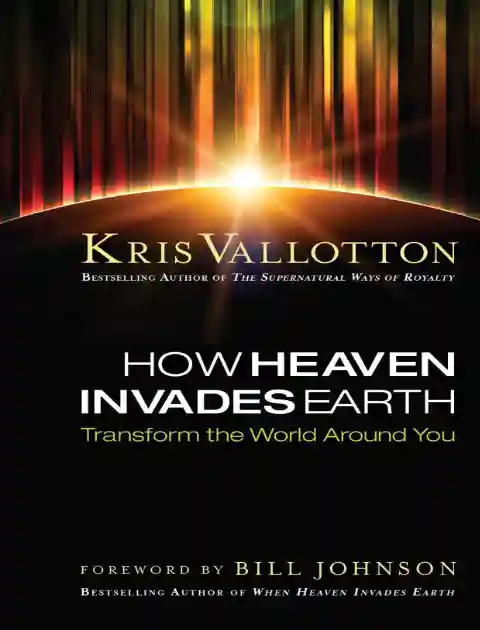
About the Book
"How Heaven Invades Earth" by Kris Vallotton explores the concept of bringing heaven's supernatural power and presence into everyday life on earth. The author discusses how individuals can tap into the supernatural realm through faith, prayer, and spiritual giftings to bring about positive change and transformation in the world around them. Through personal stories, biblical teaching, and practical insights, Vallotton encourages readers to live in alignment with God's kingdom and invite heaven's power to impact their lives and communities.
Jackie Hill Perry
Jackie Hill Perry has a way with words, and people canât stop listening. A gifted poet, rapper, writer, and teacher, she has written books and Bible studies, released hip-hop albums, and taught at events, conferences, colleges, and coliseums all over the nation. Inspired by her powerful testimony of salvation and deliverance from a gay lifestyle and her teaching on the holiness of God, the word is out: God is good, He is Lord, and those who surrender to Him are made new.
The Power of God
Itâs a message Jackie is passionate about because she knows firsthand the transformational power of Jesus Christ. She and her husband â fellow spoken-word artist, Preston Perry â met in 2009 while performing at an artistâs showcase. Impressed with Jackieâs poetry, Preston struck up a friendship that deepened over the years. Eventually, they began dating, which presented significant challenges but also great rewards. The Lord used Preston as a source of healing, and marriage forced Jackie to deal with hurts and fears sheâd been reluctant to give to God. The couple, who reside in Atlanta, married in 2014. They are now the parents of three daughters: Eden, Autumn, and Sage; and are expecting a son.
A decade ago, Jackie could never have imagined marriage, motherhood, and ministry in her future. Violated and abandoned by men who should have loved and protected her, Jackie was hurting. Fear and distrust kept watch over her heart. Surrender wasnât an option, even when a loving God promised her new life. Despite some exposure to church and to Scripture, Jackie was adamant that she would never submit to Jesus as Lord.
Her attraction to women started in early childhood and intensified during adolescence. Jackie finally gave in to same-sex desires, along with drugs and other habits that brought comfort, pleasure, and an emotional escape. Suppressing her femininity by wearing menâs clothing and assuming the male role in dating relationships, Jackie says every area of her life was characterized by sin and rebellion against God.
Then one evening, 19-year-old Jackie felt the conviction of the Holy Spirit. Recalling the experience, she says, âIt was a God thing. No one can ever tell me that I saved myself. I had some understanding of Jesus and obedience and Christianity. But I sincerely wanted nothing to do with God on His terms.â
Even as she resisted, Jackie clearly sensed the Lord speaking to her. âWhen He showed me that all of my sin would be the death of me â that it was true that the wages of sin is death, but it was equally true that God offered eternal life if I would repent and believe â I was compelled to trust Him. For the first time in my life, I knew that God was real and He was worth it. Just the day before, my heart was hard as a rock, and now I wanted Jesus. Only the Holy Spirit could have done that.â
âFor the first time in my life, I knew that God was real and He was worth it. Just the day before, my heart was hard as a rock, and now I wanted Jesus. Only the Holy Spirit could have done that.â
The Power of Words
Jackie dove into Godâs Word and began discovering the woman He designed her to be â mind, body, and spirit. Seeking to express herself in deeper, more artistic ways, she began writing poetry. Jackie didnât shy away from revealing her past or the ongoing struggle with temptation and sin. Her poems unflinchingly spoke gospel truth and glorified God as the ultimate source of love and life. After connecting with the Passion for Christ Movement (P4CM), Jackie was asked to write a poem about being an ex-lesbian. Hesitant at first, she felt the Lord prompting her to move forward. Through its confessional lyrics and rock-solid theology, My Life as a Stud shined a spotlight on Jackieâs conversion and marked the beginning of her public ministry.
âWhen My Life As a Stud came out in 2009, so many gay and lesbian people who didnât go to church, didnât trust Christians, and didnât want to have anything to do with the Bible clicked on the poem and suddenly wanted Jesus. I realized God had given me this art form where Iâm able to speak to peopleâs hearts.â
Since then, she has taken the message of Godâs love to artist showcases, faith-based conferences, college campuses, and major media outlets. The foundation of her message is always the Word of God: In His goodness, God created male and female. As the perfect designer of gender and sexuality, God is worthy of trust and obedience. Although same-sex attraction is central to her testimony, Jackie emphasizes that the church should approach the LGBTQ community the same way it approaches other people. Everyone is created to be an image-bearer of the living God with a unique identity and great worth. Rather than labeling someone as âa gay friend,â itâs important to develop genuine, one-on-one relationships the same way Jesus did. By investing in authentic friendships, Christians will be able to share the gospel because theyâre actually modeling it.
The Power of Redemption
Jackie points out that being âdead in sinâ goes far beyond someoneâs sexual preference. Without Christ, people are lost in every way. But when Jesus gives new life, He forgives and redeems the whole person. She says, âGod saved me from sin, not just my sexuality. I was an all-around sinful person. In essence, sin was my lord. As much as I loved women in a lustful way, I also loved pornography and drugs, bitterness and unforgiveness.â
Through discipleship, Jackie recognized the holistic nature of Godâs redemption. âIâve learned that pride is one of my greatest struggles, even more so than same-sex attraction,â she explains. âPride manifests itself in so many areas of my life, itâs hard to keep up. God didnât just rescue me from being gay. He saved me from believing Iâm a better lord than He is.â In response to the growing debate over same-sex attraction and the frequent questions she receives when people hear her testimony, Jackie wrote her first book, Gay Girl, Good God, to serve three core groups: people seeking to help and understand those within the LGBTQ community; people within the community who may disagree with some of her conclusions but are still intrigued; and people who are believers, yet have same-sex attraction and are trying to figure out how to love Jesus while dealing with those feelings.
When asked what she hopes the church learns from the book, she says, âI want people to see that how you reach the LGBTQ community is the same way you reach anybody â with the gospel. The gospel is about God. The method shouldnât be any different when youâre speaking to someone who is dealing with gluttony or lying or lust. Itâs all the same. God is Lord, Heâs Master, Heâs King, Heâs able to save. And the problem with sin is always a problem between us and God.â
"God is Lord, Heâs Master, Heâs King, Heâs able to save. And the problem with sin is always a problem between us and God."
The Power of Community
Jackie hopes the church will develop greater empathy for same-sex individuals and recognize how difficult it is to walk away from the gay lifestyle. She says, âItâs not a random sin that is easily put off. The feelings are real, and it takes time and work and a long process of dying to self.â Without a supportive church family to encourage and affirm her, the author might have fallen away. The first couple of years as a Christian were the hardest. Jackie had to learn to put off the old nature and put on Christ. The process required spiritual and physical discipline. She had to shop for womenâs clothing, an experience that made her feel strange, vulnerable, and afraid.
Temptation was a constant source of condemnation, at times pushing Jackie into depression and doubt as she grieved over her sinful nature. After a decade of growing in Christ, Jackie still faces temptations but says theyâre more subtle and easier to flee. Instead of looking at women as objects of lust, she chooses to see them as image-bearers of God. In evaluating her walk with the Lord, she considers whether she is loving people well, growing in holiness, and bearing good fruit. And she looks to Jesus, who endured the horror of the cross because He loved God with all of His heart. Knowing Jesus didnât want the cup of suffering, yet accepted it with humility, helps Jackie run the Christian race with endurance.
Endurance and spiritual growth became the inspiration for Jackieâs second album, Crescendo, which was hailed as âstunning,â âflawless,â and arguably âthe best hip-hop album of the year.â Although she began experimenting with rap simply for creative expression, Jackie soon saw it as another platform to share the gospel. When asked about the albumâs title, the talented artist says, âIn music theory, âcrescendoâ means the increase in sound. So I wanted to apply that to faith. When youâre in Christ, as your faith increases, your fruit should get louder. You love more, youâre more generous, more attentive to the needs of people. You listen well. Things begin to change as your faith becomes more evident.â
She wrote the album to mimic that spiritual progression. The first track begins on a low note with âLamentations,â a rap about the reality of sin and the tendency for Jackie to forget sheâs been forgiven. Taking listeners through an honest exploration of spiritual growth, Crescendo ends on a high note, celebrating how the Lord saved Jackie through His gospel, initiated her Christian walk, and sustains her to this day.
The Power of Legacy
A gifted communicator and lyricist, Jackie isnât just impacting culture with wordcraft. Sheâs also building a spiritual legacy for her children. Because of her childhood trauma, the idea of raising daughters was terrifying. But sheâs found so much joy in becoming a mom. Jackie says, âWhen I think of parenthood, I know Iâm only called to steward these children and disciple them and hope they will love the Lord with all their hearts, souls, minds, and strength. When I was carrying Eden, Titus 2 really spoke to me about the older women teaching the younger women.
"Once I realized what a privilege it would be to raise up a woman in my home, I welcomed the challenge.â As Jackie reflects on the last decade, she gives God all the glory and praise. Without Christ, she wouldnât have her precious daughters, would have missed out on beautiful friendships, and would never have experienced being loved by a man for the first time in her life. âIf God hadnât rescued me, none of this would be possible,â Jackie says. âLife still has its challenges, for sure. But itâs better. Itâs so much better.â
This article courtesy of HomeLife magazine.
hero in an unmarked grave - the unusual modesty of john calvin
On May 27, 1564, just after eight oâclock in the evening, a nurse urgently summoned Theodore Beza (1519â1605) to Calvinâs bedside. âWe found he had already died,â Calvinâs friend and fellow pastor later wrote. âOn that day, then, at the same time with the setting sun, this splendid luminary was withdrawn from us.â 1  Calvin was 54 years old. Calvinâs death sent a shock wave throughout Geneva and beyond. Beza writes, âThat night and the following day there was a general lamentation throughout the city . . . all lamenting the loss of one who was, under God, a common parent and comfort.â He records that two days later âthe entire cityâ gathered at the St. Pierre Cathedral to honor their beloved pastor. Despite Calvinâs prominence, the funeral was unusually simple, âwith no extraordinary pomp.â 2  But Calvinâs burial was particularly unusual. Unmarked Grave Eighteen years earlier, on February 18, 1546, fellow Reformer Martin Luther died at the age of 63. As was common practice for ministers, Lutherâs remains were interred inside the church where he had faithfully served. His casket lies in Wittenbergâs Castle Church, near the pulpit, seven feet below the floor of the nave. Lutherâs successor and fellow Reformer, Philip Melanchthon (1490â1560), is buried beside him. So also William Farel (1489â1565), who first called Calvin to Geneva in 1536, is buried in the cathedral of NeuchĂątel, where he spent the final years of his ministry. When Calvinâs friend and successor Theodore Beza died in 1605, he was buried next to the pulpit of St. Pierre, the Genevan church in which he and Calvin ministered together. But Calvinâs remains lie elsewhere. Rather than being interred in St. Pierre, Calvinâs body was carried outside the city wall to a marshy burial ground for commoners called Plainpalais. With close friends in attendance, Calvinâs body was wrapped in a simple shroud, enclosed in a rough casket, and lowered into the earth. Beza writes that Calvinâs plot was unlisted and, âas he [had] commanded, without any gravestone.â 3 Why did Calvin command that he be buried, contrary to common practice, in an unmarked grave? Some speculate that he wanted to discourage religious pilgrims from visiting his resting place or to prevent accusations from the Roman church that he desired veneration as a saint. 4  But the answer lies somewhere deeper â in Calvinâs understanding of Christian modesty. Forgotten Meaning of Modesty When we speak of modesty today, we most often mean dressing or behaving in such a way as to avoid impropriety or indecency. But modesty more generally refers to the quality of being unassuming or moderate in the estimation of oneself. For centuries, the church understood the connection. Immodest dress was not simply ostentatious or sexually suggestive; it reflected an overemphasis on appearance. As Jesus warned, outward appearance can mask impiety (Matthew 6:16) or pride (Luke 18:12). This is why both Gentile women converts in Ephesus and the Jewish Christians addressed in Hebrews are urged to consider how their outward appearance relates to the disposition of the heart. Excessive adornment could be evidence of self-importance (1 Timothy 2:9). Acceptable worship requires a posture of reverence, not pretension (Hebrews 12:28). Thus, a modest person represents himself neither too highly nor too meanly because he understands both the dignity and the humility of being transformed by the grace of God. âModesty is simply the outward reflection of true Christian humility.â Modesty, then, is simply the outward reflection of true Christian humility. It obliterates pride by embracing the reality that a Christian is both creaturely and beloved. In this light, self-importance becomes absurd. Grandiosity becomes laughable. Celebrity becomes monstrous. We Are Not Our Own For Calvin, the gospel radically reshapes our view of self. As those created in Godâs image, provisioned by his goodness, redeemed by his mercy, transformed by his grace, and called to his mission, those who belong to Christ no longer live for themselves. âNow the great thing is this,â Calvin writes, âwe are consecrated and dedicated to God in order that we may thereafter think, speak, meditate, and do, nothing except to his glory.â Calvin continues, If we, then, are not our own but the Lordâs, it is clear what error we must flee and whither we must direct all the acts of our life. We are not our own : let not our reason nor our will, therefore, sway our plans and deeds. We are not our own : let us not therefore see it as our goal to seek what is expedient for us according to the flesh. We are not our own : in so far as we can, let us therefore forget ourselves and all that is ours. Conversely, we are Godâs : let us therefore live for him and die for him. We are Godâs : let his wisdom and will therefore rule all our actions. We are Godâs : let all the parts of our life accordingly strive toward him as our only lawful goal. Oh how much has that man profited who, having been taught that he is not his own, has taken away dominion and rule from his own reason that he may yield it to God! For, as consulting our self-interest is the pestilence that most effectively leads to our destruction, so the sole haven of salvation is to be wise in nothing through ourselves but to follow the leading of the Lord alone . 5 âModesty blossoms when we experience the freedom from having to prove ourselves to God or one another.â Modesty and humility flow from a heart transformed by the Spirit of Christ. âAs soon as we are convinced that God cares for us,â Calvin writes, âour minds are easily led to patience and humility.â 6  The Spirit shapes us with a kind of moderation that âgives the preference to othersâ and that guards us from being âeasily thrown into agitation.â 7  Modesty blossoms when we experience the freedom from having to prove ourselves to God or one another. âModesty, His Constant Friendâ Calvinâs life reflected this reality. Despite the doors that were opened to him through his writing and network of connections, he was committed to âstudiously avoiding celebrity.â 8  When the Institutes  was published in 1536, he was so successful in his object to ânot acquire fameâ that no one in Basel knew that he was its author. For the rest of his life, wherever he went, he took care to âconceal that I was the author of that performance.â 9  Calvin even sought to avoid a wider ministry in Geneva, having âresolved to continue in the same privacy and obscurity.â He was drawn into the limelight only when William Farel warned him âwith a dreadful imprecationâ that turning down the post would be refusing Godâs call to service. 10  In brief autobiographical comments he wrote the year that he died, we see a glimmer of his own surprise over Godâs sovereign hand through his life. God so led me about through different turnings and changes that he never permitted me to rest in any place, until, in spite of my natural disposition, he brought me forth to public notice. . . . I was carried, I know not how, as it were by force to the Imperial assemblies, where, willing or unwilling, I was under the necessity of appearing before the eyes of many. 11 It is no surprise, then, that a few days before his death, Calvin exhorted his friends to not be those who âostentatiously display themselves and, from overweening confidence, insist that all their opinions should be approved by others.â Instead, he pleaded with them to âconduct themselves with modesty, keeping far aloof from all haughtiness of mind.â 12  For Beza, Calvinâs modesty â forged by his vision of Godâs glory, Christâs redeeming love, and the Spiritâs animating power â was his defining characteristic. After Calvinâs burial, Beza captured it in verse: Why in this humble and unnoticed tomb Is Calvin laid â the dread of falling Rome; Mournâd by the good, and by the wicked fearâd By all who knew his excellence revered? From whom evân virtueâs self might virtue learn, And young and old its value may discern? âTwas modesty, his constant friend on earth, That laid this stone, unsculptured with a name; Oh! happy ground, enrichâd with Calvinâs worth, More lasting far than marble is thy fame! 13 Free to Be Forgotten In old Geneva, on the grounds of the college Calvin founded, stands an immense stone memorial to four leaders of the Protestant Reformation. At its center are towering reliefs of Calvin, Beza, Farel, and John Knox (1513â1572). Calvin would surely detest it. But the monument is a metaphor. We live in a culture that fears obscurity and irrelevance. We measure ourselves against others and build our own platforms in the hope that we will not be forgotten. We attempt to distinguish ourselves at the expense of the humility and modesty that honors Christ. Calvin would have us be free from such striving. For however anyone may be distinguished by illustrious endowments, he ought to consider with himself that they have not been conferred upon him that he might be self-complacent, that he might exalt himself, or even that he might hold himself in esteem. Let him, instead of this, employ himself in correcting and detecting his faults, and he will have abundant occasion for humility. In others, on the other hand, he will regard with honor whatever there is of excellences and will, by means of love, bury their faults. The man who will observe this rule, will feel no difficulty in preferring others before himself. And this, too, Paul meant when he added, that they ought not to have everyone a regard to themselves, but to their neighbors, or that they ought not to be devoted to themselves. Hence it is quite possible that a pious man, even though he should be aware that he is superior, may nevertheless hold others in greater esteem. 14 We may rightly regard Calvin as a hero of the faith, but he didnât ultimately see himself that way. Humility had taught him to walk modestly before God and others â and, in the end, the freedom to lie down in a forgotten grave. Theodore Beza, âThe Life of John Calvinâ in Tracts Related to the Reformation  (Edinburgh: Calvin Translation Society, 1844), 1:xcv. ⩠Beza, Tracts , 1:xcvi. ⩠Beza, Tracts , 1:xcvi. ⩠Eighteenth-century guidebooks indeed list the disused Plainpalais cemetery as an important stop for tourists, though they warn that pilgrims will search for Calvinâs resting place in vain. By the nineteenth century, keepers of the burial ground staked out a âlikely-enoughâ site for Calvinâs grave (complete with a rudimentary marker) simply to avoid the irritation of being so frequently asked. ⩠John Calvin, Institutes of the Christian Religion , ed. John T. McNeill, trans. Ford Lewis Battles (Louisville, KY: Westminster John Knox Press, 2011), 3.7.1 (emphasis mine). ⩠John Calvin, Commentaries on the Catholic Epistles , trans. John Owen (Edinburgh: T. Constable,1855), 149. ⩠John Calvin, Commentaries on the Epistles of Paul the Apostle to the Philippians, Colossians, and Thessalonians , trans. John Pringle (Edinburgh: T. Constable, 1851) 52â53. ⩠John Calvin, Commentary on the Psalms , trans. James Anderson (Edinburgh: Edinburg Printing Company, 1845), 1:xli, xlii. ⩠Calvin, Psalms , 1:xlii. ⩠Calvin, Psalms , 1:xlii. ⩠Calvin, Psalms , 1:xli, xliii. ⩠Beza, Tracts , 1:xci. ⩠Beza was widely known for his literary works. As a humanist, he became famous for his collection of Latin poems in Juvenilia , published just before his conversion in 1548. He continued to write poetry, satires, and dramas until the end of his life. Francis Sisbonâs nineteenth-century translation attempts to capture the sense of the Latin in a more familiar poetic form (Theodore Beza, The Life of John Calvin , trans. Francis Sibson, [Philadelphia: J. Whetham, 1836], 94). For the original text, see Calvin and Beza, Tracts , 1:xcvi. ⩠Calvin, Commentaries on the Epistles of Paul , 53. â©