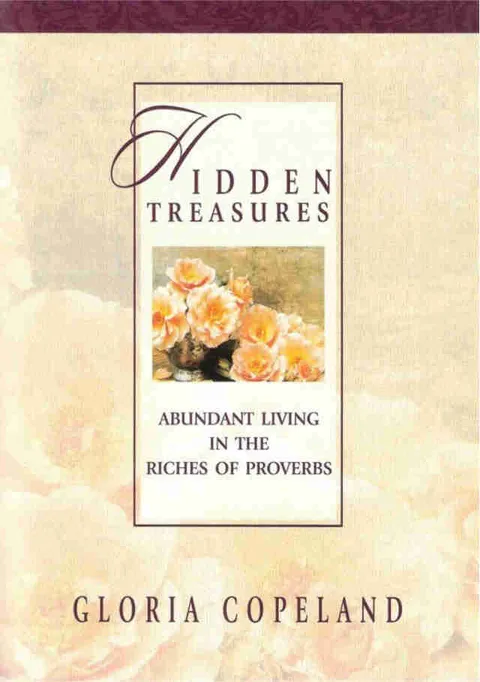

Hidden Treasures: Abundant Life Order Printed Copy
- Author: Gloria Copeland
- Size: 1.02MB | 255 pages
- |
Others like hidden treasures: abundant life Features >>
Living In The Balance Of Grace And Faith
Grace Is Greater
Saved By Grace
The Priesthood And The Blood
10 Things Jesus Never Said: And Why You Should Stop Believing Them
Knowing What Belongs To Us
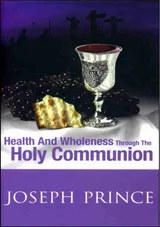
Health And Wholeness Through The Communion
Living The Better Covenant
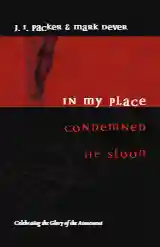
In My Place Condemned He Stood
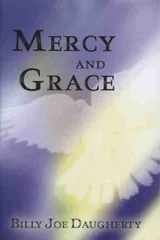
Mercy And Grace
About the Book
"Hidden Treasures: Abundant Life" by Gloria Copeland is a book that explores the idea of living a fulfilling and abundant life through discovering hidden treasures within oneself. Copeland encourages readers to tap into their spiritual gifts and abilities to overcome challenges and experience a life of greater joy, peace, and prosperity. Through personal anecdotes and biblical teachings, she provides practical strategies for unlocking these hidden treasures and living a life that is truly abundant.
Johnny Cash
Johnny Cash, the Man in Black, was a singer, guitarist and songwriter whose music innovatively mixed country, rock, blues and gospel influences.
Who Was Johnny Cash?
Johnny Cash grew up in a poor farming community and joined the Air Force in 1950. He co-founded a band following his discharge, and within a few years Johnny Cash and the Tennessee Two had scored hits with songs like "Walk the Line." Cash's career was nearly derailed in the 1960s by a serious substance-abuse problem, but his marriage to June Carter and acclaimed album Johnny Cash at Folsom Prison (1968) put him back on track. In later years, Cash joined the country supergroup the Highwaymen and released a series of recordings with producer Rick Rubin.
Early Life
Cash was born on February 26, 1932, in Kingsland, Arkansas. The son of poor Southern Baptist sharecroppers, Cash, one of seven children born to Ray and Carrie Rivers Cash, moved with his family at the age of 3 to Dyess, Arkansas, so that his father could take advantage of the New Deal farming programs instituted by President Franklin Roosevelt. There, the Cash clan lived in a five-room house and farmed 20 acres of cotton and other seasonal crops.
Cash spent much of the next 15 years out in the fields, working alongside his parents and siblings to help pay off their debts. It wasn't an easy life, and music was one of the ways the Cash family found escape from some of the hardships. Songs surrounded the young Cash, be it his mother's folk and hymn ballads, or the working music people sang out in the fields.
From an early age Cash, who began writing songs at age 12, showed a love for the music that enveloped his life. Sensing her boy's gift for song, Carrie scraped together enough money so that he could take singing lessons. However, after just three lessons his teacher, enthralled with Cash's already unique singing style, told him to stop taking lessons and to never deviate from his natural voice.
Religion, too, had a strong impact on Cash's childhood. His mother was a devout member of the Pentecostal Church of God, and his older brother Jack seemed committed to joining the priesthood until his tragic death in 1944 in an electric-saw accident. The experiences of his early farming life and religion became recurring themes in Cash's career.
Military Service and Musical Aspirations
In 1950, Cash graduated high school and left Dyess to seek employment, venturing to Pontiac, Michigan, for a brief stint at an auto body plant. That summer he enlisted in the U.S. Air Force as "John R. Cash"—military regulations required a full first name—and he was sent for training at Lackland Air Force Base in San Antonio, Texas, where he met future wife Vivian Liberto. For the bulk of his four years in the Air Force, Cash was stationed in Landsberg, West Germany, where he worked as a radio intercept officer, eavesdropping on Soviet radio traffic.
It was also in Germany that Cash began to turn more of his attention toward music. With a few of his Air Force buddies, he formed the Landsberg Barbarians, giving Cash a chance to play live shows, teach himself more of the guitar and take a shot at songwriting. "We were terrible," he said later, "but that Lowenbrau beer will make you feel like you're great. We'd take our instruments to these honky-tonks and play until they threw us out or a fight started."
After his discharge in July 1954, Cash married Vivian and settled with her in Memphis, Tennessee, where he worked, as best he could, as an appliance salesman. Pursuing music on the side, Cash teamed up with a couple of mechanics, Marshall Grant and Luther Perkins, who worked with Cash's older brother Roy. The young musicians soon formed a tight bond, with the crew and their wives often heading over to one of their houses to play music, much of it gospel.
Cash, who banged away on an old $5 guitar he'd purchased in Germany, became the frontman for the group, and they honed their unique synthesis of blues and country-and-western music through live performances. "He was a decent singer, not a great one," wrote Marshall Grant, in his 2006 autobiography, I Was There When it Happened: My Life with Johnny Cash. "But there was power and presence in his voice."
Johnny Cash and the Tennessee Two
In July 1954, another Memphis musician, Elvis Presley, cut his first record, sparking a wave of Elvis-mania as well as an interest in the local producer, Sun Records owner Sam Phillips, who had issued the record. Later that year Cash, Grant and Perkins made an unannounced visit to Sun to ask Phillips for an audition. The Sun Records owner gave in and Cash and the boys soon returned to show off their skills. Phillips liked their sound but not their gospel-driven song choices, which he felt would have a limited market, and asked them to return with an original song.
The trio did just that, beginning work on the Cash-written "Hey Porter," shortly that first Sun session. Phillips liked that song, as well as the group's follow-up effort, "Cry, Cry, Cry," and signed the newly branded Johnny Cash and the Tennessee Two. "Hey Porter" was released in May 1955 and later that year "Cry, Cry, Cry" peaked at No. 14 on the Billboard charts.
Other hits followed, including the Top 10 tracks "So Doggone Lonesome" and "Folsom Prison Blues." But true fame arrived in 1956 when Cash wrote and released "I Walk The Line," which catapulted to No. 1 on the country music charts and sold 2 million copies. He released his debut album, Johnny Cash with His Hot & Blue Guitar in 1957, and cemented his fame with chart-toppers like "Ballad of a Teenage Queen" and "Don't Take Your Guns to Town."
Drugs and Divorce
By the early 1960s, Cash, who had relocated his family to California and left Sun for Columbia Records, was a musical superstar. On the road for 300 nights a year with the group now known as the Tennessee Three, he was often accompanied by June Carter, who co-wrote what became one of the Man in Black's signature songs, "Ring of Fire" (1963). Cash also sought to establish himself as an actor, starring in the movie Five Minutes to Live (1961) and a few Western-themed TV programs.
But the schedule and the pressures that faced him took a toll on his personal life. Drugs and alcohol were frequent tour companions while Vivian, left home to take care of their family, which now included daughters Rosanne (b. 1955), Kathy (b. 1956), Cindy (b. 1959) and Tara (b. 1961) grew increasingly frustrated with her husband's absence. In 1966, she finally filed for divorce.
Cash's personal life continued to spiral out of control. The following year, after a serious drug binge, Cash was discovered in a near-death state by a policeman in a small village in Georgia. There were other incidents, too, including an arrest for smuggling amphetamines into the United States across the Mexican border, and for starting a forest fire in a California park. "I took all the drugs there are to take, and I drank," Cash recalled. "Everybody said that Johnny Cash was through 'cause I was walkin' around town 150 pounds. I looked like walking death."
Remarriage and Revival
Cash got the lifeline he needed from his old touring companion, June Carter, who helped him refocus on his Christian faith and get the drug addiction treatment he needed. The two were married on March 1, 1968.
With his new wife, Cash embarked on a remarkable turnaround. In 1969, he began hosting The Johnny Cash Show, a TV variety series that showcased contemporary musicians ranging from Bob Dylan to Louis Armstrong. It also provided a forum for Cash to explore a number of social issues, tackling discussions that ranged from the war in Vietnam to prison reform to the rights of Native Americans.
The same year his show debuted, Cash also took home two Grammy Awards for the live album Johnny Cash at Folsom Prison (1968). A critical and commercial success, the album was credited with helping to revive the artist's popularity. In early 1970, Cash and Carter experienced more joy with the birth of their first and only child, John Carter Cash.
The ensuing decade offered up more success for the artist, as Cash's music career flourished with the release of hit singles like "A Thing Called Love" (1972) and "One Piece at a Time" (1976). He also co-starred with Kirk Douglas in A Gunfight (1970), wrote music for the feature Little Fauss and Big Halsy (1970) and published a best-selling autobiography, Man in Black (1975). In 1980, he became the youngest living person to be elected to the Country Music Hall of Fame.
Cash continued to maintain a busy schedule, and he increasingly teamed up with other musicians. In 1986, he banded with old Sun Records colleagues Carl Perkins, Jerry Lee Lewis and Roy Orbison to record the widely popular compilation The Class Of '55. Meanwhile, he joined forces with fellow country stalwarts Kris Kristofferson, Willie Nelson and Waylon Jennings to form the Highwaymen, which released three studio albums between 1985 and 1995. In the early 1990s, Cash stepped into the studio with U2 to record The Wanderer, a track that would appear on the group's 1993 release, Zooropa.
Throughout this time, though, Cash's health problems and his continued battles with addiction were nearby. After undergoing abdominal surgery in 1983, he checked himself into the Betty Ford Clinic. In 1988, Cash again went under the knife, this time for double-bypass heart surgery.
But, like always, Cash pushed on. He was inducted into the Rock and Roll Hall of Fame in 1992, and in 1994 he teamed with music producer Rick Rubin to release American Recordings. A 13-track acoustic album that mixed traditional ballads with modern compositions, American Recordings earned Cash a new audience and a 1995 Grammy Award for Best Contemporary Folk Album. He followed with another Rubin-produced album, Unchained (1996), and in 1997 he published his second memoir, Cash: The Autobiography.
Final Years, Death and Legacy
Cash's physical health became more of an issue in the late 1990s. He was diagnosed with the neurodegenerative disease Shy-Drager syndrome—a misdiagnosis that was later corrected to autonomic neuropathy—and was hospitalized for pneumonia in 1998.
Still, the artist continued making music. In 2002, he released American IV: The Man Comes Around, a mix of originals and covers, including songs from the Beatles to Trent Reznor of Nine Inch Nails. The album, recorded at the Cash Cabin Studio in Hendersonville, Tennessee, was the fourth Cash-Rubin compilation.
Over the next year, Cash's health continued to decline. He was devastated when his longtime love, June Carter, died in May 2003, but he continued to work. With Rubin at his side, the singer recorded what would become American V: A Hundred Highways. Just a week before his death on September 12, 2003, from complications associated with diabetes, Cash wrapped up his final track.
"Once June passed, he had the will to live long enough to record, but that was pretty much all," Rubin later recalled. "A day after June passed, he said, 'I need to have something to do every day. Otherwise, there's no reason for me to be here.'"
That November, Cash was posthumously honored at the CMA annual awards, winning best album for American IV, best single and best video. In 2005, the story of his life and career through the late 1960s was made into a feature film, Walk the Line, starring Joaquin Phoenix as Cash and Reese Witherspoon as Carter.
In 2006, fans were treated to new music from the late artist. May brought Personal File, a two-CD set of unreleased material recorded decades earlier. In July, American V: A Hundred Highways was unveiled. Starkly arranged and sometimes mournful, the songs highlighted Cash's older and rougher sounding voice, which seared with a raw honesty.
Not surprisingly, Cash's influence continued to resonate. In 2007, the community of Starkville, Mississippi, paid honor to the performer and his arrest there in 1965 for public intoxication with the Johnny Cash Flower Pickin' Festival. The following year, the late artist won another Grammy, for Best Short Form Music Video for God's Gonna Cut You Down.
"I think he'll be remembered for the way he grew as a person and an artist," wrote Kris Kristofferson in 2010, upon Cash's selection by Rolling Stone magazine as the 31st greatest artist of all time. "He went from being this guy who was as wild as Hank Williams to being almost as respected as one of the fathers of our country. He was friends with presidents and with Billy Graham. You felt like he should've had his face on Mount Rushmore."
In 2010, additional material from recording sessions with Rubin were released as American VI: Ain't No Grave. In December 2013, it was revealed that another album from Cash had been unearthed. Out Among the Stars, which had been recorded in the early 1980s but never released by Columbia Records, was discovered by John Carter Cash in his father's archives. Underscoring the singer's sustained popularity, the album became a chart-topper following its release in March 2014.
The Martyred Lover - The Story Behind Saint Valentine’s Day
Of the multitude of feasts celebrated in the popular culture of medieval Europe — wherein lie some of the key roots of the modern West — only two remain in popular North American culture today: Saint Patrick’s Day (March 17) and Saint Valentine’s Day (February 14). With Saint Patrick, we have two important texts by Patrick himself that reveal the true man. But who was Saint Valentine? The name was a popular one in the Roman world, for the adjective valens expressed the idea of being vigorous and robust. In fact, we know of about a dozen early Christians who bore this name. Our Saint Valentine was an Italian bishop who was martyred on February 14, 269, after a trial before the Roman emperor Claudius Gothicus (reign 268–270). According to the meager accounts that we have, Valentine’s body was hastily buried, but a few nights later some of his associates retrieved it and returned it to his home town of Terni in central Italy. Other accounts list him as an elder in Rome. One embellishment has him writing a letter before his death and signing it, “your Valentine.” “Saint Valentine was a martyr — yes, a lover, but one who loved the Lord Jesus to the point of giving his life.” What seems clear, though, from all that we can determine, is that Saint Valentine was a martyr — yes, a lover, but one who loved the Lord Jesus to the point of giving his life for his commitment to Christ. For Christians to adequately remember Saint Valentine, then, we would do well to consider what it meant to be a martyr in the early church. Witnesses and Martyrs Our word martyr is derived from the Greek martys, originally a juridical term that was used of a witness in a court of law. Such a person was one “who has direct knowledge or experience of certain persons, events or circumstances and is therefore in a position to speak out and does so.”1 In the New Testament, the term and its cognates are frequently applied to Christians, who bear witness to Christ, often in real courts of law, when his claims are disputed and their fidelity is tested by persecution. The transition of this word within the early Christian communities from witness to what the English term martyr” entails serves as an excellent gauge of what was happening to Christians as they bore witness to Christ. In Acts 1:8, Jesus tells the apostles that they are to be his “witnesses” (martyres) in Jerusalem, Judea, Samaria, and to the end of the earth. At this point, the word does not have the association of death, although in Acts 22:20 we do read of the “blood of Stephen,” the Lord’s “witness” (Greek martyros), being shed. But it is really not until the end of the writing of the New Testament canon that the term martys acquires the association with death.2 At the very close of the apostolic era, the risen Christ in Revelation 2 commends his servant Antipas, his “faithful witness,” who was slain for his faith at Pergamum, “where Satan dwells” (Revelation 2:12–13). Pergamum, it should be noted, was a key center of emperor worship in Asia Minor, and the first town in that area to build a temple to a Roman emperor, Augustus Caesar. It may well have been Antipas’s refusal to confess Caesar as Lord and worship him that led to his martyrdom.3 It has been estimated that by the mid-first century, eighty or so cities in Asia Minor had erected temples devoted to the cult of the emperor.4 The word martys seems thus to have acquired its future meaning first in the Christian communities in Asia Minor, where the violent encounter between church and empire was particularly intense.5 In this regard, it was certainly not fortuitous that Asia Minor was “unusually fond” of the violent entertainment of the gladiatorial shows. There was, in fact, a training school for gladiators at Pergamum. Along with fascination with such violence, there would have been a demand for victims over and above the requisite gladiators. Thus, recourse was had to Christians, among others.6 And so, the word martys became restricted in its usage to a single signification: bearing witness to the person and work of Christ to the point of death. Stephen and Antipas were the first of many such martyrs in the Roman Empire. Neronian Persecution One of the most memorable clashes between church and empire was what has come to be called the Neronian persecution. In mid-July 64, a fire began in the heart of Rome that raged out of control for nearly a week and gutted most of the city. After it had been extinguished, it was rumored that the emperor Nero (reign 54–68) himself had started it, for it was common knowledge that Nero wanted to level the capital of the empire in order to rebuild the city in a style in keeping with his conception of his own greatness. Conscious that he had to allay suspicions against him, Nero fixed the blame on the Christians. The fullest description that we have of this violence against the church is from the Roman historian Tacitus (about 55–117), who describes the execution of these Christians as follows: To scotch the rumour [that he had started the fire], Nero substituted as culprits, and punished with the utmost refinements of cruelty, a class of men, loathed for their vices, whom the crowd styled Christians. Christus, from whom they got their name, had been executed by sentence of the procurator Pontius Pilate when Tiberius was emperor; and the pernicious superstition was checked for a short time, only to break out afresh, not only in Judaea, the home of the plague, but in Rome itself, where all the horrible and shameful things in the world collect and find a home. First of all, those who confessed were arrested; then, on their information, a huge multitude was convicted, not so much on the ground of incendiarism as for hatred of the human race. Their execution was made a matter of sport: some were sewn up in the skins of wild beasts and savaged to death by dogs; others were fastened to crosses as living torches, to serve as lights when daylight failed. Nero made his gardens available for the show and held games in the Circus, mingling with the crowd or standing in his chariot in charioteer’s uniform. Hence, although the victims were criminals deserving the severest punishment, pity began to be felt for them because it seemed that they were being sacrificed to gratify one man’s lust for cruelty rather than for the public weal.7 A number of Christians — including the apostle Peter, according to an early Christian tradition that seems to be genuine8 — were arrested and executed. Their crime was ostensibly arson. Tacitus seems to doubt the reality of this accusation, though he does believe that Christians are rightly “loathed for their vices.” Tacitus’s text mentions only one vice explicitly: “hatred of the human race.” Why would Christians, who preached a message of divine love and who were commanded to love even their enemies, be accused of such a vice? Well, if one looks at it through the eyes of Roman paganism, the logic seems irrefutable. It was, after all, the Roman gods who kept the empire secure. But the Christians refused to worship these gods — thus the charge of “atheism” that was sometimes leveled at them.9 Therefore, many of their pagan neighbors reasoned, they cannot love the emperor or the empire’s inhabitants. Christians thus were viewed as fundamentally anti-Roman and so a positive danger to the empire.10 ‘Blood of Christians Is Seed’ This attack on the church was a turning-point in the relationship between the church and the Roman state in these early years. It set an important precedent. Christianity was now considered illegal, and over the next 140 years the Roman state had recourse to sporadic persecution of the church. It is noteworthy, though, that no emperor initiated an empire-wide persecution until the beginning of the third century, and that with Septimius Severus (reign 193–211).11 Nonetheless, martyrdom was a reality that believers had to constantly bear in mind during this period of the ancient church. “Instead of stamping out Christianity, persecution often caused it to flourish.” But persecution did not always have the effect the Romans hoped for. Instead of stamping out Christianity, persecution often caused it to flourish. As Tertullian (born about 155), the first Christian theologian to write in Latin, put it, “The more you mow us down, the more we grow: the blood of Christians is seed.”12 And as he said on another occasion: “whoever beholds such noble endurance [of the martyrs] will first, as though struck by some kind of uneasiness, be driven to enquire what is the matter in question, and, then, when he knows the truth, immediately follow the same way.”13 Surpassing All Earthly Loves It was during the Middle Ages that the various stories of Saint Valentine circulated and were embellished, solidifying the remembrance of him as a martyr. But it was a medieval writer, Geoffrey Chaucer (1340s–1400), who explicitly linked romantic love to Saint Valentine in a poem entitled “Parliament of Fowls” that described the gathering of a group of birds on “seynt valentynes day” to choose their mates. To what degree Chaucer influenced the later link between Saint Valentine’s Day and lovers is not exactly clear, but as early as the fifteenth century lovers were sending each other love notes on Saint Valentine’s Day. Of course, with the rise of the commercial cultures of the West in the eighteenth and nineteenth centuries, this practice was commodified and became an important part of the commercial world we see today. There is nothing inherently wrong with modern commercial traditions, but Saint Valentine’s Day is a good day to also remember that there is a love that surpasses all earthly loves: our love for our great God and our Savior, his dear divine Son, Jesus. Allison A. Trites, The New Testament Concept of Witness (Cambridge: Cambridge University Press, 1977), 9. ↩ G.W. Bowersock, Martyrdom and Rome (Cambridge: Cambridge University Press, 1995), 1–21. ↩ Paul Keresztes, “The Imperial Roman Government and the Christian Church. I. From Nero to the Severi” in Aufstieg und Niedergang der römischen Welt, ed. Hildegard Temporini and Wolfgang Haase (Berlin: Walter de Gruyter, 1979), II.23.1, 272; G.K. Beale, The Book of Revelation (Grand Rapids: Eerdmans, 1999), 246. ↩ Christopher A. Frilingos, Spectacles of Empire: Monsters, Martyrs, and the Book of Revelation (Philadelphia: University of Pennsylvania Press, 2004), 22–23. ↩ Theofried Baumeister, “Martyrdom and Persecution in Early Christianity,” trans. Robert Nowell, in Martyrdom Today, ed. Johannes-Baptist Metz and Edward Schillebeeckx (Edinburgh: T&T Clark, 1983), 4. ↩ Bowersock, Martyrdom and Rome, 17–18; Keresztes, “Imperial Roman Government and the Christian Church,” 272. ↩ Tacitus, Annals 15.44.3–8, trans. F.F. Bruce, Paul: Apostle of the Heart Set Free (Grand Rapids: Eerdmans, 1977), 442. ↩ See Tertullian, Scorpiace 15.3. ↩ See Justin Martyr, 2 Apology 3. ↩ W.H.C. Frend, “Persecutions,” in Encyclopedia of the Early Church, ed. Angelo Di Berardino, trans. Adrian Walford (New York: Oxford University Press, 1992), II, 673. Christians were also charged with incest, seemingly a misunderstanding of the common Christian statement about loving their brothers and sisters in Christ, and with cannibalism, a misunderstanding of the Lord’s Table. See, in this regard, Justin Martyr, 2 Apology 12; Theophilus, To Autolycus 3.4, 15; Minucius Felix, Octavius 9.2, 5; 28.2; 30–31. ↩ Some scholars see the first empire-wide persecution initiated by an emperor to be that of Decius (reign 249–251) in the late 240s. ↩ Tertullian, Apology 50.13. ↩ Tertullian, To Scapula 5, in Tertullian: Apologetical Works and Minucius Felix: Octavius, trans. Rudolph Arbesmann, Emily Joseph Daly, and Edwin A. Quain (New York: Fathers of the Church, Inc., 1950), 161. ↩ Article by Michael A.G. Haykin