
Others like heaven: your real home Features >>
-160.webp)
A New Heaven And A New Earth: Reclaiming Biblical Eschatology
-160.webp)
Heaven Is For Real: A Little Boy's Astounding Story Of His Trip To Heaven And Back

Afterlife
Prophetic Guide To The End Time

Guardian Angels

Four Blood Moons: Something Is About To Change
100 Days In Heaven
-160.webp)
Proof Of Heaven: A Neurosurgeon's Journey Into The Afterlife

Divine Revelation Of Gods Holiness And Judgement

23 Minutes In Hell
About the Book
"Heaven: Your Real Home" by Joni Eareckson Tada explores the concept of heaven as a real and tangible place, offering hope and comfort to believers. Through personal anecdotes and biblical insights, Tada provides a glimpse of the eternal joys and rewards that await those who put their faith in God. The book encourages readers to focus on the promise of heaven as a source of strength and motivation in their daily lives.
Steven Curtis Chapman
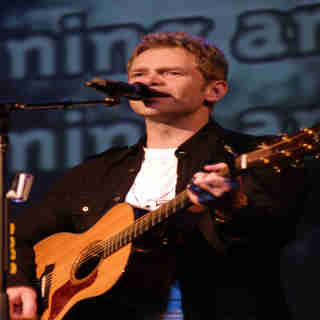 Steven Curtis Chapman is an American Christian musician, singer, song writer, record producer, actor, author and social activist. He is the only artist in the history of music to have won 56 Gospel Music Association Dove Awards and is also a proud receiver of 5 Grammy Awards. His music is known for being a unique cross between country music, soft rock and orchestrated pop, which made him a prominent artist in the contemporary Christian music circuit of the 1980s. Chapman grew up in a humble environment where he found his calling for music, owing to his father’s inclination towards country music. He learnt to play instruments like guitar and piano just by hanging around in his father’s music store, listening to him play along with his friends. He took up music seriously when he moved to Nashville and got recognized by Sparrow Records, a company he stayed with for a long period in his career. He has released 19 studio albums and has sold over 10 million albums until now. Chapman is a family oriented person just like his father and has a big family comprising of his wife Mary Beth and 3 biological and 2 adopted children. He is a vocal advocate for adoption and has worked socially to eradicate the problem of youth violence.
Childhood & Early Life
Steven Curtis Chapman was born on November 21, 1962 in Paducah, Kentucky, to Herb and Judy Chapman. His father was a country singer and songwriter, who turned down opportunities to become a successful singer to concentrate on his family. His mother was a stay-at-home mom.
His father owned a music store, a business he managed from his basement and used to play music with his friends. Such creative environment at home influenced Chapman’s life from very early on and he bought his first guitar at 6.
Chapman joined as a pre-med student at Georgetown College in Kentucky but after few semesters he moved to Anderson College, Indiana. But he ultimately dropped the idea of studying and went to Nashville to pursue his first love, music.
During 1980s, he wrote a song ‘Built to Last’, which gained huge popularity after getting recorded by a gospel group ‘The Imperials’. The success of the song fetched Chapman a songwriting deal with Sparrow Records.
Career
Chapman’s first official album ‘First Hand’ was released in 1987. The album was an instant hit with singles like ‘Weak Days’ and topped at number 2 on the Contemporary Christian Music chart. The album had a mix of country music with soft rock and pop.
In 1988, following the success of his first album, Chapman released ‘Real Life Conversations’. Its hit single ‘His Eyes’ received the ‘Contemporary Recorded Song of the Year’ award from the ‘Gospel Music Association’. He co-wrote it with James Isaac Elliot.
After a few years, he made a swift turn to mainstream music with his album ‘The Great Adventure’ in 1992. It earned him two Grammy awards for the album and for the title song of the album.
After gaining consistent success with albums like ‘Heaven in the Real World (1994), ‘Signs of Life (1996) and ‘Speechless (1999), Chapman’s next great album ‘Declaration’ came out in 2001, for which he toured 70 cities.
In 2003, ‘All About Love’ was released and it ranked at Top 15 on the Christian Music charts. It was released under Sparrow Records and Chapman very humbly credited his wife Mary Beth for being the inspiration for his album.
‘All Things New’ was released in 2004 and the album added another Grammy to Chapman’s proud award collection. This time he received it in the category of Best Pop/Contemporary Gospel Album. It was also nominated for the Dove Award.
In 2005, ‘All I Really Want for Christmas’ was released, which was Chapman’s another successful Christmas album after ‘The Music of Christmas’. It had traditional holiday tunes and favorites like ‘Go Tell It on the Mountain’ and Silver Bells’.
Chapman took his music to greater levels by taking his concert to South Korea for the U.S. troops who were serving there in 2006. It was the first Christian concert that ever performed for the American army in that country.
In 2007, he released ‘This Moment’ which included hit singles like ‘Cinderella’, for which he was chosen for WOW Hits 2009. He also went on his ‘Winter Jam’ tour and took his sons’, Caleb and Will’s band along.
‘Beauty Will Rise’, Chapman’s seventeenth album, was released in 2009. It is said that he wrote the songs of the album after getting inspired by his daughter Maria Sue’s sad and untimely demise. It included songs like ‘Meant to Be’ and ‘Re:creation’.
In 2012, Chapman finally parted ways with Sparrow Records, the record company that he remained loyal to for so many years. He was signed on by Sony’s Provident Label Group and came out with a Christmas album called ‘JOY’.
‘The Glorious Unfolding’ was released in 2013 under Reunion Records and it peaked on number 27 on the Billboard 200 and was number 1 Top Christian Album. The album was produced by Chapman himself and Brent Milligan.
Major Works
Chapman’s ‘The Great Adventure’ in 1992 was a turning point in his musical career because until now he was making soft and contemporary country music but with ‘The Great Adventure’ he targeted the mainstream audience and tasted huge commercial success for the first time.
Awards & Achievements
Chapman is the winner of five Grammy awards for albums like ‘For the Sake of the Call’ ‘The Great Adventure’ ‘The Live Adventure’, ‘Speechless’ and ‘All Things New’. He has also received 56 Gospel Music Association Dove Awards, more than any other artist.
Personal Life & Legacy
Chapman got married to Mary Beth in 1984 after they first met at Anderson University in Indiana. They have three biological children: Emily, Caleb and Will and three adopted children: Shaohannah, Stevey and Maria, together.
In 2008, Chapman’s youngest son Will ran over his car by accident on his adopted daughter Maria Sue Chunxi Chapman. She was running towards him to meet him but he did not see her and she was pronounced dead on arrival at the hospital.
Trivia
Chapman’s wife Mary Beth Chapman has written and released a book about losing her youngest daughter called ‘Choosing to SEE: A Journey of Struggle and Hope’.
Chapman and his wife have written three children's books with adoption themes: ‘Shaoey And Dot: Bug Meets Bundle’ (2004), ‘Shaoey and Dot: The Christmas Miracle’ (2005), and ‘Shaoey and Dot: A Thunder and Lightning Bug Story’ (2006).
He has received an Honorary Doctorate of Music from Anderson University.
Steven Curtis Chapman is an American Christian musician, singer, song writer, record producer, actor, author and social activist. He is the only artist in the history of music to have won 56 Gospel Music Association Dove Awards and is also a proud receiver of 5 Grammy Awards. His music is known for being a unique cross between country music, soft rock and orchestrated pop, which made him a prominent artist in the contemporary Christian music circuit of the 1980s. Chapman grew up in a humble environment where he found his calling for music, owing to his father’s inclination towards country music. He learnt to play instruments like guitar and piano just by hanging around in his father’s music store, listening to him play along with his friends. He took up music seriously when he moved to Nashville and got recognized by Sparrow Records, a company he stayed with for a long period in his career. He has released 19 studio albums and has sold over 10 million albums until now. Chapman is a family oriented person just like his father and has a big family comprising of his wife Mary Beth and 3 biological and 2 adopted children. He is a vocal advocate for adoption and has worked socially to eradicate the problem of youth violence.
Childhood & Early Life
Steven Curtis Chapman was born on November 21, 1962 in Paducah, Kentucky, to Herb and Judy Chapman. His father was a country singer and songwriter, who turned down opportunities to become a successful singer to concentrate on his family. His mother was a stay-at-home mom.
His father owned a music store, a business he managed from his basement and used to play music with his friends. Such creative environment at home influenced Chapman’s life from very early on and he bought his first guitar at 6.
Chapman joined as a pre-med student at Georgetown College in Kentucky but after few semesters he moved to Anderson College, Indiana. But he ultimately dropped the idea of studying and went to Nashville to pursue his first love, music.
During 1980s, he wrote a song ‘Built to Last’, which gained huge popularity after getting recorded by a gospel group ‘The Imperials’. The success of the song fetched Chapman a songwriting deal with Sparrow Records.
Career
Chapman’s first official album ‘First Hand’ was released in 1987. The album was an instant hit with singles like ‘Weak Days’ and topped at number 2 on the Contemporary Christian Music chart. The album had a mix of country music with soft rock and pop.
In 1988, following the success of his first album, Chapman released ‘Real Life Conversations’. Its hit single ‘His Eyes’ received the ‘Contemporary Recorded Song of the Year’ award from the ‘Gospel Music Association’. He co-wrote it with James Isaac Elliot.
After a few years, he made a swift turn to mainstream music with his album ‘The Great Adventure’ in 1992. It earned him two Grammy awards for the album and for the title song of the album.
After gaining consistent success with albums like ‘Heaven in the Real World (1994), ‘Signs of Life (1996) and ‘Speechless (1999), Chapman’s next great album ‘Declaration’ came out in 2001, for which he toured 70 cities.
In 2003, ‘All About Love’ was released and it ranked at Top 15 on the Christian Music charts. It was released under Sparrow Records and Chapman very humbly credited his wife Mary Beth for being the inspiration for his album.
‘All Things New’ was released in 2004 and the album added another Grammy to Chapman’s proud award collection. This time he received it in the category of Best Pop/Contemporary Gospel Album. It was also nominated for the Dove Award.
In 2005, ‘All I Really Want for Christmas’ was released, which was Chapman’s another successful Christmas album after ‘The Music of Christmas’. It had traditional holiday tunes and favorites like ‘Go Tell It on the Mountain’ and Silver Bells’.
Chapman took his music to greater levels by taking his concert to South Korea for the U.S. troops who were serving there in 2006. It was the first Christian concert that ever performed for the American army in that country.
In 2007, he released ‘This Moment’ which included hit singles like ‘Cinderella’, for which he was chosen for WOW Hits 2009. He also went on his ‘Winter Jam’ tour and took his sons’, Caleb and Will’s band along.
‘Beauty Will Rise’, Chapman’s seventeenth album, was released in 2009. It is said that he wrote the songs of the album after getting inspired by his daughter Maria Sue’s sad and untimely demise. It included songs like ‘Meant to Be’ and ‘Re:creation’.
In 2012, Chapman finally parted ways with Sparrow Records, the record company that he remained loyal to for so many years. He was signed on by Sony’s Provident Label Group and came out with a Christmas album called ‘JOY’.
‘The Glorious Unfolding’ was released in 2013 under Reunion Records and it peaked on number 27 on the Billboard 200 and was number 1 Top Christian Album. The album was produced by Chapman himself and Brent Milligan.
Major Works
Chapman’s ‘The Great Adventure’ in 1992 was a turning point in his musical career because until now he was making soft and contemporary country music but with ‘The Great Adventure’ he targeted the mainstream audience and tasted huge commercial success for the first time.
Awards & Achievements
Chapman is the winner of five Grammy awards for albums like ‘For the Sake of the Call’ ‘The Great Adventure’ ‘The Live Adventure’, ‘Speechless’ and ‘All Things New’. He has also received 56 Gospel Music Association Dove Awards, more than any other artist.
Personal Life & Legacy
Chapman got married to Mary Beth in 1984 after they first met at Anderson University in Indiana. They have three biological children: Emily, Caleb and Will and three adopted children: Shaohannah, Stevey and Maria, together.
In 2008, Chapman’s youngest son Will ran over his car by accident on his adopted daughter Maria Sue Chunxi Chapman. She was running towards him to meet him but he did not see her and she was pronounced dead on arrival at the hospital.
Trivia
Chapman’s wife Mary Beth Chapman has written and released a book about losing her youngest daughter called ‘Choosing to SEE: A Journey of Struggle and Hope’.
Chapman and his wife have written three children's books with adoption themes: ‘Shaoey And Dot: Bug Meets Bundle’ (2004), ‘Shaoey and Dot: The Christmas Miracle’ (2005), and ‘Shaoey and Dot: A Thunder and Lightning Bug Story’ (2006).
He has received an Honorary Doctorate of Music from Anderson University.
host as you are - practicing hospitality as a family
Love God and love your neighbor . This is the Butterfield family motto. It makes us humble, messy, and on the frontline in our neighborhood. And being on the frontline isn’t pretty. “Hospitality means being profoundly unselfish, and small children need help to see the blessing in this.” Take for example last March, when the pandemic hit. We were supposed to batten down the hatches, disinfect everything, including the family cat, and remain socially distanced at all times, but schools closed before parents were home from work. So after the first week of lockdown, I looked like the little old lady who lived in the shoe. Our house was open, boisterous, noisy, and full of students who would have been in class. I could visualize getting arrested in my apron for violating governor’s stay-at-home and social-distancing orders. While that hasn’t happened, other things have happened that have made me realize that children play a vital and central role in Christian hospitality. Indeed, I couldn’t practice hospitality without them. Consider six touch points for children’s central role in Christian hospitality. 1. Hospitality is a mission of the church. Sometimes we American Christians privatize hospitality in false ways. Hospitality isn’t a Butterfield thing. It’s a church thing. And children are a blessed part of our church. Jesus loves children and so do we. As the church seeks to evangelize the world, the homes of church members become gospel outposts, places where we bring the gospel to the neighborhood. This is very good news for people with young children. It means that the burden is not on you to be different. It means that your unsaved neighbors will benefit from seeing that you also decorate with plastic dinosaurs and LEGOs. And it also means that you do not always have to be in hospitality mode. As Edith Schaeffer said, doors have hinges for a reason. 2. Hospitality puts the church on the frontline. When inviting unsaved neighbors over, Kent and I always invite our church family, too. The more the merrier, especially in the summer. Your unsaved neighbors will benefit from seeing many different models of the covenant family, including singles (whose church membership renders them a covenant family) and older people. Many Christian hands make the care of little ones easier. Also, with the church family on deck, your children will not feel neglected or isolated as they participate in hospitality. Hospitality means being profoundly unselfish, and small children need help to see the blessing in this. 3. Hospitality puts hot-button topics on the frontline. Our family is made by adoption and all of our children are biracial. Christians know that oppression, violence, and discrimination are sin, but we do not believe that racism, for example, is itself a “meta-narrative” — a paradigm that declares all white people are racists, all black people victims, all social structures complicit in a white hegemonic hatred machine, and any white family who has adopted children of color as colonizing micro-aggressionists. If these things were true, then the Butterfield family doesn’t exist. And yet here we stand, opening the door to everyone. When your family is on the frontline, it has the opportunity to showcase the love of Christ, the purpose of natural law, the harmony of the biblical callings of male and female, and the shallowness of the modern social construction of race. It exposes idols and tears down strongholds and reveals how the love of Christ transcends sociology (shocking as this may be). 4. Hospitality builds relationships within the family. Hospitality is a joy for small children when they get to have some agency in the process. Especially when you are opening your home to others in the neighborhood with small children, your children should be enlisted as hosts. They can set the kids’ table and make the kids’ menu. And with platters of chicken nuggets, watermelon, and popsicles, don’t be surprised if some of the neighborhood dads are found sampling the children’s fare. Your children can also be prepared to think like Jesus would about having children over who haven’t gone to church and don’t (yet) know Jesus. Your children need to be guided in how to be good hosts who lead and set examples (and don’t follow bad ones). And you should set clear boundaries for safety. In our house, there is no playing in children’s bedrooms. Ever. We have a big back yard with a trampoline, and we think that a knock on the head is safer than anything that happens behind a closed door. Working together to have a hospitable home also puts all hands on deck — from the smallest to the largest. Children can’t clean the house as well as you can, but even a small child can sweep up tumbleweeds of dog hair and throw trash in the kitchen can. Value their contributions. 5. Hospitality cares about what neighbors care about. When you open your home to neighbors, you set a table that welcomes them. You ask them about food allergies and other sensitivities. You remember these things and you go out of your way to care about what they care about. You practice becoming all things to all people in the hopes of saving some (1 Corinthians 9:22). You help your children to respect differences that they don’t understand (yet). 6. Hospitality is all for one and one for all. If you have small children whose bedtime is 7:30, consider having neighbors over for Saturday lunch instead of Saturday dinner. Don’t think of your children as a burden — ever. Work with the capacities, limitations, and skills of each member of your family. Be a team. Be in sync with each other’s rhythms and needs. “Hospitality isn’t a performance. It’s a Christian grace that involves the whole family.” And when guests arrive, don’t segregate the children, but integrate them. We live in a world that segregates everything. Show the beauty in working together. And at the end of the meal, the older children can put the dishes in the sink and distribute the Bibles. The little children can play with LEGOs on the floor while the family patriarch opens the Bible to the watching world and prays for the power of the resurrected Christ to guide, encourage, correct, and save. Your children will grow up watching you plead for your neighbors to put their faith in Christ. They will inherit an integrated faith, not a compartmentalized one, where parents act like Christians from ten to noon on Sunday, but the rest of the time operate in an orbit of selfish ambition. Hospitality isn’t a performance. It’s a Christian grace that involves the whole family.
-by-james-stuart-bell.webp)