
Gospel - Recovering The Power That Made Christianity Revolutionary Order Printed Copy
- Author: J.D. Greear
- Size: 1.68MB | 236 pages
- |
Others like gospel - recovering the power that made christianity revolutionary Features >>
Your Power In The Holy Spirit
-160.webp)
Friend Of Sinners (Why Jesus Cares More About Relationship Than Perfection)
-160.webp)
Out Of Commission (Getting Every Christian Back To The Great Commission)

Don't Drop The Mic - The Power Of Your Words Can Change The World
Defending Your Faith

He Came To Set The Captives Free

How To Bring Men To Christ
-160.webp)
Living As Salt And Light (God's Call To Transform Your World)

Whom Shall I Send

God's Outrageous Claims
About the Book
"Gospel" by J.D. Greear explores the transformative power of the gospel in Christianity and how it has the potential to revolutionize individual lives and communities. Greear emphasizes the importance of recovering the true message of the gospel and living it out in our daily lives, ultimately leading to a more authentic and impactful expression of the Christian faith.
John G. Lake
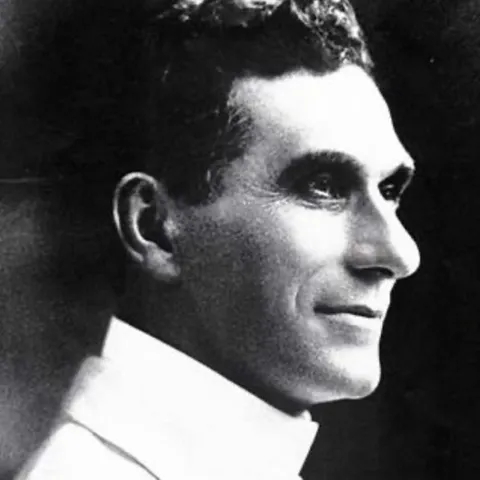 John G. Lake was born in Ontario, Canada on March 18th, 1870. He was a family man, person of integrity, honor, a savvy businessman and a good father. If you knew him you wouldn’t otherwise know that he would soon become one of the greatest men of God the world would ever know. He had a genuine love for the Lord Jesus and was known by his friends as a man who dedicated himself to intimacy with The Lord. It was out of this place that he loved his wife, was a man of integrity and built a very successful business career. To give you perspective, by 1905 John G Lake was making $50,000 per year this sum would be like upwards of 1.3 million dollars per year annually today. John grew up in a family environment which was plagued with sickness and death, it is said that his earliest memories were of sickness, death and funerals. Lake was from a large family, he had 16 siblings, 8 of which tragically died of various diseases. It is no coincidence that “the man of healing” was tormented from a young age with death and disease. The enemy will often oppose destinies with radical circumstances through a distortion of the very thing that we are called to walk in. Lake Was exposed to dramatic healing when he visited John Alexander Dowie’s ministry and was, in prayer, instantly healed of a rheumatism which had caused his legs to grow incorrectly. Just two short years into their marriage, Jennie Lake was diagnosed with tuberculosis and heart disease. Over the next couple of years, the condition worsened and the doctors resigned to the fact that it was only a matter of time before she would die. John allowed this situation to provoke him into faith, after being exposed to such death and disease from a young age he had a hatred for such things. When he would read the word of God he saw that his Christian experience was less than the promised “power of the Holy Spirit”. As Jennie was on her deathbed and perhaps taking her final breaths Lake was overcome with anger over sickness and threw his bible against the fireplace mantle! When he went to pick up his bible it was opened to Acts chapter 10:38 which says: "God anointed Jesus of Nazareth with the Holy Ghost and with power: who went about doing good, and healing all that were oppressed of the devil; for God was with him.” Lake had a surge of faith in that moment and sent a telegram to Dowie asking him to pray. Within an hour of Dowie praying she was fully healed! Not long after Jennie was healed, God began to speak to Lake about going into full time ministry. After some time of contemplation and seeking the Lord, God confirmed to John and Jennie separately that they were to move to South Africa to begin their life of ministry. John and Jennie then gave away all that they had, John forsook his mega-salary and they went on their way alongside some of their friends as ministry partners.
When they arrived in South Africa, they had no money. The problem was, that they needed at least $125 in order to clear customs. they nervously waited for their turn in line, rehearsing what they would say to the immigration officer They were in desperate need of a miracle, as the law read that they would be subject to deportation as quickly as they arrived in South Africa. Just as they were about the get to the front of the line, John felt a tap on his shoulder… A man was standing behind John and said “excuse me sir, can I have a word with you?” John nervously steps out of line at the man’s request and the man said “when I saw you and your family in line, the Lord told me to give you $200 cash”. The Lord provided just enough money for John and his family to enter the country. But their needs didn’t stop there. The Lakes and their crew had no ministry contact in Johannesburg. Soon after they cleared customs, a woman approached John’s friends and asked how many people are in their family, when they told her, she responded “no, not you” and went over to John and asked the same question. John replied “9” and she said “you’re the ones!” She went on to tell John that the Lord had spoken to her last night that she was to give her home to a family of 9 people who are coming from America to do God’s work. John, Jennie and their crew rejoiced in the dramatic provision of the Lord. Their time in South Africa was marked with waves of revival, there were multitudes saved, healed and delivered over the course of their 5 year ministry tour in South Africa.
By far my favorite story from this season of Revival takes place shortly after the Lake family and their team arrived in South Africa. A mighty plague was sweeping through the nation, the death count was climbing dramatically. So much so that there was a surplus of corpses who were victims of the plague and there was no one to bury the dead; if someone was to come in contact with a dead body they would most certainly become infected and their death sentence would immediately begin. John G. Lake astounded the medical officials because he, without any gloves or protective clothing began burying the dead. Physicians in a panic approached John and rebuked him for coming in contact with the dead, John boldly responded "when the disease comes in contact with my skin, you can watch it die". The doctors thought he was insane, so he challenged them to put a drop of the plague on his skin and watch it under a microscope. When they did so, John was right! The plague cells literally burned up the second they came in contact with his skin!
It is tough to understand what would happen towards the end of the Lake’s missionary journey in Africa. One day while John was away on a ministry trip, his wife Jennie suddenly passed away. The cause of her death was malnutrition and exhaustion. It wasn’t uncommon for the sick and broken to line the lawn of John G Lake’s home and Jennie, as an act of sacrifice, gave away all their food and any resources she could to the broken which frequented their house.
Although John and Jennie’s faith and sacrifice is commendable we must learn from this fatal mistake. John’s priorities clearly became altered as the demand for ministry raged on. He failed to guard and keep the very precious gift that God had given him, he allowed the demands of ministry to distract him from the needs of his family unto the tragic and preventable death of his wife. In the wake of Jennie’s death their children became bitter with John and subsequently God. Some of his children left the faith and the most recent accounts of them suggest that they died not following Christ. To this day some of John’s great grandchildren do not follow the Lord. John’s failure to obey the basic command of scripture for “husbands to love their wives as Christ loves the church” and his preoccupation with the demands of ministry opened up the door for the enemy to ravage his family. After Jennie’s death John moved back to the United States and remarried. He would then pioneer his famous healing ministry based out of Spokane Washington. Unfortunately John did not learn his lesson the first time, in the midst of more flames of revival he continued to be a poor father, emotionally disconnected from his children.
John G. Lake was born in Ontario, Canada on March 18th, 1870. He was a family man, person of integrity, honor, a savvy businessman and a good father. If you knew him you wouldn’t otherwise know that he would soon become one of the greatest men of God the world would ever know. He had a genuine love for the Lord Jesus and was known by his friends as a man who dedicated himself to intimacy with The Lord. It was out of this place that he loved his wife, was a man of integrity and built a very successful business career. To give you perspective, by 1905 John G Lake was making $50,000 per year this sum would be like upwards of 1.3 million dollars per year annually today. John grew up in a family environment which was plagued with sickness and death, it is said that his earliest memories were of sickness, death and funerals. Lake was from a large family, he had 16 siblings, 8 of which tragically died of various diseases. It is no coincidence that “the man of healing” was tormented from a young age with death and disease. The enemy will often oppose destinies with radical circumstances through a distortion of the very thing that we are called to walk in. Lake Was exposed to dramatic healing when he visited John Alexander Dowie’s ministry and was, in prayer, instantly healed of a rheumatism which had caused his legs to grow incorrectly. Just two short years into their marriage, Jennie Lake was diagnosed with tuberculosis and heart disease. Over the next couple of years, the condition worsened and the doctors resigned to the fact that it was only a matter of time before she would die. John allowed this situation to provoke him into faith, after being exposed to such death and disease from a young age he had a hatred for such things. When he would read the word of God he saw that his Christian experience was less than the promised “power of the Holy Spirit”. As Jennie was on her deathbed and perhaps taking her final breaths Lake was overcome with anger over sickness and threw his bible against the fireplace mantle! When he went to pick up his bible it was opened to Acts chapter 10:38 which says: "God anointed Jesus of Nazareth with the Holy Ghost and with power: who went about doing good, and healing all that were oppressed of the devil; for God was with him.” Lake had a surge of faith in that moment and sent a telegram to Dowie asking him to pray. Within an hour of Dowie praying she was fully healed! Not long after Jennie was healed, God began to speak to Lake about going into full time ministry. After some time of contemplation and seeking the Lord, God confirmed to John and Jennie separately that they were to move to South Africa to begin their life of ministry. John and Jennie then gave away all that they had, John forsook his mega-salary and they went on their way alongside some of their friends as ministry partners.
When they arrived in South Africa, they had no money. The problem was, that they needed at least $125 in order to clear customs. they nervously waited for their turn in line, rehearsing what they would say to the immigration officer They were in desperate need of a miracle, as the law read that they would be subject to deportation as quickly as they arrived in South Africa. Just as they were about the get to the front of the line, John felt a tap on his shoulder… A man was standing behind John and said “excuse me sir, can I have a word with you?” John nervously steps out of line at the man’s request and the man said “when I saw you and your family in line, the Lord told me to give you $200 cash”. The Lord provided just enough money for John and his family to enter the country. But their needs didn’t stop there. The Lakes and their crew had no ministry contact in Johannesburg. Soon after they cleared customs, a woman approached John’s friends and asked how many people are in their family, when they told her, she responded “no, not you” and went over to John and asked the same question. John replied “9” and she said “you’re the ones!” She went on to tell John that the Lord had spoken to her last night that she was to give her home to a family of 9 people who are coming from America to do God’s work. John, Jennie and their crew rejoiced in the dramatic provision of the Lord. Their time in South Africa was marked with waves of revival, there were multitudes saved, healed and delivered over the course of their 5 year ministry tour in South Africa.
By far my favorite story from this season of Revival takes place shortly after the Lake family and their team arrived in South Africa. A mighty plague was sweeping through the nation, the death count was climbing dramatically. So much so that there was a surplus of corpses who were victims of the plague and there was no one to bury the dead; if someone was to come in contact with a dead body they would most certainly become infected and their death sentence would immediately begin. John G. Lake astounded the medical officials because he, without any gloves or protective clothing began burying the dead. Physicians in a panic approached John and rebuked him for coming in contact with the dead, John boldly responded "when the disease comes in contact with my skin, you can watch it die". The doctors thought he was insane, so he challenged them to put a drop of the plague on his skin and watch it under a microscope. When they did so, John was right! The plague cells literally burned up the second they came in contact with his skin!
It is tough to understand what would happen towards the end of the Lake’s missionary journey in Africa. One day while John was away on a ministry trip, his wife Jennie suddenly passed away. The cause of her death was malnutrition and exhaustion. It wasn’t uncommon for the sick and broken to line the lawn of John G Lake’s home and Jennie, as an act of sacrifice, gave away all their food and any resources she could to the broken which frequented their house.
Although John and Jennie’s faith and sacrifice is commendable we must learn from this fatal mistake. John’s priorities clearly became altered as the demand for ministry raged on. He failed to guard and keep the very precious gift that God had given him, he allowed the demands of ministry to distract him from the needs of his family unto the tragic and preventable death of his wife. In the wake of Jennie’s death their children became bitter with John and subsequently God. Some of his children left the faith and the most recent accounts of them suggest that they died not following Christ. To this day some of John’s great grandchildren do not follow the Lord. John’s failure to obey the basic command of scripture for “husbands to love their wives as Christ loves the church” and his preoccupation with the demands of ministry opened up the door for the enemy to ravage his family. After Jennie’s death John moved back to the United States and remarried. He would then pioneer his famous healing ministry based out of Spokane Washington. Unfortunately John did not learn his lesson the first time, in the midst of more flames of revival he continued to be a poor father, emotionally disconnected from his children.
A Great Marriage-Wrecking Lie
I met my aunt Margaret for the first time when I was ten. She was in a wheelchair in the middle of the front room, drooling uncontrollably, unaware of my presence, incontinent, and unable to take care of herself. And yet my uncle Gale cared for her, and he did so tenderly. They were high school sweethearts, but now she was dying of brain cancer after only fifteen years together. My uncle didn’t abandon her. He didn’t get a mistress. No, he had publicly vowed, “in sickness and in health, till death do us part” — and he was faithful to his word. A few years later, she died. This is a biblical picture of marriage: joy through servanthood, faithfulness, and self-denial. But times have changed. Our societal expectations for marriage have gone through a radical transformation, and those changes have affected many in the church. Changing Expectations One commentator describes the transformation this way: “The old attitude was that one must work for the marriage. The new attitude is that the marriage had better work for me” (Jonah Goldberg, Suicide of the West, 267). My uncle worked for his marriage. He was willing to forgo short-term pleasure for the sake of his wife, his children, and the glory of God. He believed that keeping his marriage vows would enhance his joy in this life and in the world to come. But those who expect marriage to “work for me” often assume that “God just wants me to be happy” in the thin and predictable ways. Their focus is on me and my immediate needs. They will most likely bail when any significant, protracted marital trouble comes. Here is how University of Virginia sociologist W. Bradford Wilcox sums up our new marital expectations: Prior to the late 1960s, Americans were more likely to look at marriage and family through the prisms of duty, obligation, and sacrifice. . . . But the psychological revolution’s focus on individual fulfillment and personal growth changed all that. Increasingly, marriage was seen as a vehicle for a self-oriented ethic of romance, intimacy, and fulfillment. In this new psychological approach to married life, one’s primary obligation was not to one’s family but to oneself; hence, marital success was defined not by successfully meeting obligations to one’s spouse and children but by a strong sense of subjective happiness in marriage — usually to be found in and through an intense, emotional relationship with one’s spouse. The 1970s marked the period when, for many Americans, a more institutional model of marriage gave way to the “soul-mate model” of marriage. Professor Wilcox’s “soul-mate model” is a fruit of expressive individualism. The assumptions behind this model are a moral solvent, dissolving the covenant bond of marriage. At its center is a potent, marriage-wrecking lie: God just wants me to be happy — and that is “happiness” as I choose to define it. Couples have used this lie to justify abortion, divorce, adultery, abandonment, and all kinds of selfishness. “God wants couples to pursue a greater long-term marital happiness through Christlike self-denial.” The problem with this lie is that it twists an important truth. God does want us to be happy, but he defines the terms, and immediate happiness is not God’s primary goal. God wants couples to pursue a greater long-term marital happiness through Christlike self-denial. God expects us to deny self — to defer immediate marital gratification — in order to experience greater long-term happiness. There are times in marriage when such self-denial takes great faith. Beneath the Lie This lie is a deeply rooted cultural assumption, and assumptions can be difficult to address because they are often subconscious. They seep into us through television, movies, literature, media, music, and our educational system. For instance, one way they rise to the surface and become visible is through consumer advertising. Ad agencies get paid to identify the assumptions that motivate us. Here are some examples — each, if internalized a certain way, could be devastating to a marriage: Outback Steakhouse invites us to eat at their restaurants because there are “No rules. Just right.” McDonalds tells us to buy French fries because “You deserve a break today.” Reebok urges us to buy their running shoes “Because you’re worth it.” And Nike, throwing all restraint to the wind, urges us to “Just do it!” The assumptions expressed by the mind of Christ, however, are strikingly different. Do we “deserve a break today”? Are we really “worth it”? And above all, should we give into sinful passion and “just do it”? No, we live by a deeper logic that counters the selfishness and presumption of the world around us: the logic of the cross. We deserved eternal death, but Christ humbled himself and died so that we might experience the full and abundant life. “Jesus found joy through self-denial, and so will husbands and wives.” The deepest marital happiness comes through self-denial, humility, unselfishness, patience, kindness, and the crucifixion of our me mentality. Ultimately, the wise Christian couple pursuing a happy, God-glorifying union will model their marriage on Christ and him crucified. Jesus found joy through self-denial (Hebrews 12:2), and so will husbands and wives. Deny Yourself for Her Again and again, Scripture gives us glimpses into the mind of Christ. After predicting his death and resurrection, Jesus turns to his disciples and says, If anyone would come after me, let him deny himself and take up his cross and follow me. For whoever would save his life will lose it, but whoever loses his life for my sake will find it. (Matthew 16:24–25) “Take up a cross? Are you kidding?” The cross was an instrument of torture, death, suffering, and shame. But Jesus urges us to save our lives by doing just that — taking up our cross. We save our marriages through denying ourselves — making our spouse’s happiness as important as our own. We apply the principle of the cross. We do this with the conviction that happiness deferred in patient obedience to God is much greater than happiness immediately gratified. Whoever would be great among you must be your servant, and whoever would be first among you must be your slave, even as the Son of Man came not to be served but to serve, and to give his life as a ransom for many. (Matthew 20:26–28) Happy, fruitful marriages do not think mainly in terms of rights. They think from the mind of Christ. Jesus died to his rights to give us ours before God. Husbands and wives who follow him do the same. Do nothing from selfishness or vain conceit, but in humility consider others more significant [or important] than yourself. (Philippians 2:3) The closest “other” in your life is your spouse — the person that sleeps with you, eats with you, worships with you, and raises your children with you. Applying this principle gets really practical. The Lie’s Fruit As the lie proliferates in North America and beyond, the fruits are painfully obvious. Self-denial is an indispensable part of the glue that makes the marital covenant work. Without a willingness to deny self, people are less willing to marry, or they don’t stay married. In 1970, about 70 percent of Americans over age 18 were married. Today, for the first time in U.S. history, that number is 50 percent and falling. “Marriage isn’t changing,” notes sociologist Mark Regnerus. “It’s receding. In an era of increasing options, technology, gender equality, ‘cheap’ sex, and secularization, fewer people — including fewer practicing Christians — actually want what marriage is. That’s the bottom line.” Collapsing marriage also means collapsing fertility. We are not producing enough children to replace ourselves. Were it not for immigration, the population in North America would be shrinking. Thankfully, fertility rates in the evangelical church are better than the national average. Rejecting the Lie What can we do to reject the lie? We can start with the assumption that we don’t deserve to be happy. As we have already noted, the cross shows each of us what we deserve — death, and that is the bottom line. Therefore, no matter how bad our marital circumstances, we are always getting better than we deserve. Those who believe this can continually thank God for his kindness, in spite of their marital problems. We can also reject the lie by believing that holy people are happy people, and marriage is one of God’s primary tools to produce personal holiness. “To be holy as he is holy,” notes Bruce Milne, “is the prescription for true and endless happiness. To be holy is to be happy . . . there is no joy like that of holiness” (The Message of Heaven and Hell, 52). I have found it helpful to think of marriage as a spiritual gymnasium in which I strengthen personal holiness. Marriage toughens the muscle of forgiveness. It strengthens the willingness to love an enemy. It enhances the ability to humble myself and receive criticism. Marriage also teaches the crucial words, “I’m sorry. Would you please forgive me?” In the marital gym, I also strengthen the crucial muscle of perseverance. Most marriages face a moment when the couple would like to call it quits but, if they persevere, almost always later admit that would have been a mistake. Focus on the Family once did a study of couples who persevered through the desire to divorce, only to find that five years later, most of those who persevered now described themselves as happy in their marriage. Persevering when the going gets tough requires self-denial, but it often solves many lesser problems. Two Slaves Become One Ambrose Bierce, a nineteenth-century short-story writer, not known for being a Christian, nevertheless summed up marriage with these insightful words: “Marriage is a community consisting of a master, a mistress, and two slaves, making in all, one person.” My insightful wife sums up the mind of Christ in marriage this way: “Every fruitful, happy marriage begins with two funerals.” This is how the mind of Christ thinks. It thinks like my uncle Gale. Reject the lie that immediate happiness is the goal. Yes, God does want us to be happy, but the deepest, most lasting happiness comes only to those who deny themselves and take up their cross daily. They serve unselfishly, consider their spouse more significant than themselves, persevere through marital troubles, practice forgiveness, and grow in humility. These are the marriages that maximize long-term happiness, and in such a way that God gets the glory. Article by William Farley