Others like god and empire Features >>
The Seven Church Ages
God The Father, God The Son, God The Holy Spirit
Truth And The New Kind Of Christian
Fool's Gold
A Peculiar Glory: How The Christian Scriptures Reveal Their Complete Truthfulness
-160.webp)
Genesis 1-4 (A Linguistic, Literary, And Theological Commentary)
Equality In Christ: Galatians 3:28 And The Gender Dispute
Hard Sayings Of The Bible

In The Beginning
An Exposition Of The Seven Church Ages
About the Book
In "God And Empire," John Dominic Crossan explores the intersection of religion and politics in the Roman Empire, focusing on how Christianity emerged as a resistance movement against the imperial domination. He argues that Jesus' message of love and justice was a challenge to the oppressive structures of power and violence in the Roman Empire, and offers insights into the role of religion in shaping social justice movements today.
Gregory Thaumaturgus
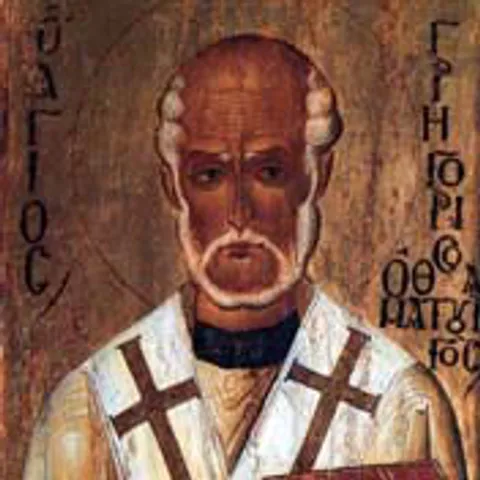 Gregory the Wonderworker’s Early life
Gregory was born in a Pontus, a region on the southern coast of the Black Sea, located in the modern-day eastern Black Sea Region of Turkey, around 212-13. His was a wealthy home and his parents named him Theodore (Gift of God) despite their pagan beliefs. When he was 14 years old his father died and soon after, he and his brother, Athenodorus, were anxious to study law at Beirut, Lebanon, then one of the four of five famous schools in the Hellenic world.
Influence of Origen
However, on the way, they first had to escort their sister to rejoin her husband, who was a government official assigned to Caesarea in Palestine (modern Haifa, Israel). When they arrived they learned that the celebrated scholar Origen, head of the catechetical school of Alexandria, lived there.
Inquisitiveness led them to hear and speak with the Origen and his irresistible charm quickly won their hearts. They soon dropped their desires for a life in Roman law, became Christian believers and pupils of Origen, learning philosophy and theology, for somewhere between five and eight years. Origen also baptised Gregory.
Pastor (then Bishop) of Neoceasarea
Gregory returned to his native Pontus with the intention of practicing oratory, but also to write a book proving the truth of Christianity, revealing his evangelistic heart. But his plans were disrupted when locals noticed his passion for Christ and his spiritual maturity. There were just seventeen Christians in Neoceasarea when Gregory arrived and this small group persuaded him to lead them as their bishop. (‘bishop’ simply meant a local overseer). At the time, Neocaesarea was a wicked, idolatrous province.
Signs of the Spirit
By his saintly life, his direct and lively preaching, helping the needy and settling quarrels and complaints, Gregory began to see many converts to Christ. But it was the signs and wonders that particularly attracted people to Christ.
En route to Neocaesarea from Amasea, Gregory expelled demons from a pagan temple, its priest converted to Christ immediately.
Once, when he was conversing with philosophers and teachers in the city square, a notorious harlot came up to him and demanded payment for the sin he had supposedly committed with her. At first Gregory gently remonstrated with her, saying that she perhaps mistook him for someone else.
But the loose woman would not be silenced. He then asked a friend to give her the money. Just as the woman took the unjust payment, she immediately fell to the ground in a demonic fit, and the fraud became evident. Gregory prayed over her, and the devil left her. This was the beginning of Gregory’s miracles. It was at this time he became known as ‘Gregory Thaumaturgus,’ ‘Gregory the Miracle Worker’ (or Wonderworker).
At one point Gregory wanted to flee from the worldly affairs into which influential townsmen persistently sought to push him. He went into the desert, where by fasting and prayer he developed an intimacy with God and received gifts of knowledge, wisdom and prophecy. He loved life in the wilderness and wanted to remain in solitude with God until the end of his days, but the Lord willed otherwise.
His theological contribution
Though he was primarily an evangelist and pastor, Gregory also had a deep theological understanding.
His principal work ‘The Exposition of Faith’, was a theological apology for Trinitarian belief. It incorporated his doctrinal instructions to new believers, expressed his arguments against heretical groups and was widely influential amongst leaders in the Patristic period: Basil the Great, Gregory the Theologian, and Gregory of Nyssa (The Cappadocian Fathers). It was the forerunner of the Nicene Creed that was to appear in the early 4th century.
In summary
He gave himself to the task of the complete conversion of the population of his diocese. The transformation in Neocaesarea was astonishing. Persuasive preaching, numerous healings and miraculous signs had a powerful effect. Such was his success that it was said that when Gregory became bishop (c 240) he found only seventeen Christians in his diocese; when he died only seventeen remained pagan (Latourette 1953:76).
Basil the Great’s Testimony
Basil the Great (330-379, Bishop of Caesarea, in his work ‘On the Spirit’ wrote the following account of Gregory the wonder-worker.
“But where shall I rank the great Gregory, and the words uttered by him? Shall we not place among Apostles and Prophets a man who walked by the same Spirit as they; who never through all his days diverged from the footprints of the saints; who maintained, as long as he lived, the exact principles of evangelical citizenship?
I am sure that we shall do the truth a wrong if we refuse to number that soul with the people of God, shining as it did like a beacon in the Church of God: for by the fellow-working of the Spirit the power which he had over demons was tremendous, and so gifted was he with the grace of the word ‘for obedience to the faith among. . .the nations.’ that, although only seventeen Christians were handed over to him, he brought the whole people alike in town and country through knowledge to God.
He too by Christ’s mighty name commanded even rivers to change their course, and caused a lake, which afforded a ground of quarrel to some covetous brethren, to dry up. Moreover, his predictions of things to come were such as in no wise to fall short of those of the great prophets. To recount all his wonderful works in detail would be too long a task. By the superabundance of gifts, wrought in him by the Spirit, in all power and in signs and in marvels, he was styled a second Moses by the very enemies of the Church.
Thus, in all that he through grace accomplished, alike by word and deed, a light seemed ever to be shining, token of the heavenly power from the unseen which followed him. To this day he is a great object of admiration to the people of his own neighborhood, and his memory, established in the churches ever fresh and green, is not dulled by length of time. (Schaff and Wace nd., Series 2. 8:46-47).
“Gregory was a great and conspicuous lamp, illuminating the church of God.” —Basil the Great.
Gregory the Wonderworker’s Early life
Gregory was born in a Pontus, a region on the southern coast of the Black Sea, located in the modern-day eastern Black Sea Region of Turkey, around 212-13. His was a wealthy home and his parents named him Theodore (Gift of God) despite their pagan beliefs. When he was 14 years old his father died and soon after, he and his brother, Athenodorus, were anxious to study law at Beirut, Lebanon, then one of the four of five famous schools in the Hellenic world.
Influence of Origen
However, on the way, they first had to escort their sister to rejoin her husband, who was a government official assigned to Caesarea in Palestine (modern Haifa, Israel). When they arrived they learned that the celebrated scholar Origen, head of the catechetical school of Alexandria, lived there.
Inquisitiveness led them to hear and speak with the Origen and his irresistible charm quickly won their hearts. They soon dropped their desires for a life in Roman law, became Christian believers and pupils of Origen, learning philosophy and theology, for somewhere between five and eight years. Origen also baptised Gregory.
Pastor (then Bishop) of Neoceasarea
Gregory returned to his native Pontus with the intention of practicing oratory, but also to write a book proving the truth of Christianity, revealing his evangelistic heart. But his plans were disrupted when locals noticed his passion for Christ and his spiritual maturity. There were just seventeen Christians in Neoceasarea when Gregory arrived and this small group persuaded him to lead them as their bishop. (‘bishop’ simply meant a local overseer). At the time, Neocaesarea was a wicked, idolatrous province.
Signs of the Spirit
By his saintly life, his direct and lively preaching, helping the needy and settling quarrels and complaints, Gregory began to see many converts to Christ. But it was the signs and wonders that particularly attracted people to Christ.
En route to Neocaesarea from Amasea, Gregory expelled demons from a pagan temple, its priest converted to Christ immediately.
Once, when he was conversing with philosophers and teachers in the city square, a notorious harlot came up to him and demanded payment for the sin he had supposedly committed with her. At first Gregory gently remonstrated with her, saying that she perhaps mistook him for someone else.
But the loose woman would not be silenced. He then asked a friend to give her the money. Just as the woman took the unjust payment, she immediately fell to the ground in a demonic fit, and the fraud became evident. Gregory prayed over her, and the devil left her. This was the beginning of Gregory’s miracles. It was at this time he became known as ‘Gregory Thaumaturgus,’ ‘Gregory the Miracle Worker’ (or Wonderworker).
At one point Gregory wanted to flee from the worldly affairs into which influential townsmen persistently sought to push him. He went into the desert, where by fasting and prayer he developed an intimacy with God and received gifts of knowledge, wisdom and prophecy. He loved life in the wilderness and wanted to remain in solitude with God until the end of his days, but the Lord willed otherwise.
His theological contribution
Though he was primarily an evangelist and pastor, Gregory also had a deep theological understanding.
His principal work ‘The Exposition of Faith’, was a theological apology for Trinitarian belief. It incorporated his doctrinal instructions to new believers, expressed his arguments against heretical groups and was widely influential amongst leaders in the Patristic period: Basil the Great, Gregory the Theologian, and Gregory of Nyssa (The Cappadocian Fathers). It was the forerunner of the Nicene Creed that was to appear in the early 4th century.
In summary
He gave himself to the task of the complete conversion of the population of his diocese. The transformation in Neocaesarea was astonishing. Persuasive preaching, numerous healings and miraculous signs had a powerful effect. Such was his success that it was said that when Gregory became bishop (c 240) he found only seventeen Christians in his diocese; when he died only seventeen remained pagan (Latourette 1953:76).
Basil the Great’s Testimony
Basil the Great (330-379, Bishop of Caesarea, in his work ‘On the Spirit’ wrote the following account of Gregory the wonder-worker.
“But where shall I rank the great Gregory, and the words uttered by him? Shall we not place among Apostles and Prophets a man who walked by the same Spirit as they; who never through all his days diverged from the footprints of the saints; who maintained, as long as he lived, the exact principles of evangelical citizenship?
I am sure that we shall do the truth a wrong if we refuse to number that soul with the people of God, shining as it did like a beacon in the Church of God: for by the fellow-working of the Spirit the power which he had over demons was tremendous, and so gifted was he with the grace of the word ‘for obedience to the faith among. . .the nations.’ that, although only seventeen Christians were handed over to him, he brought the whole people alike in town and country through knowledge to God.
He too by Christ’s mighty name commanded even rivers to change their course, and caused a lake, which afforded a ground of quarrel to some covetous brethren, to dry up. Moreover, his predictions of things to come were such as in no wise to fall short of those of the great prophets. To recount all his wonderful works in detail would be too long a task. By the superabundance of gifts, wrought in him by the Spirit, in all power and in signs and in marvels, he was styled a second Moses by the very enemies of the Church.
Thus, in all that he through grace accomplished, alike by word and deed, a light seemed ever to be shining, token of the heavenly power from the unseen which followed him. To this day he is a great object of admiration to the people of his own neighborhood, and his memory, established in the churches ever fresh and green, is not dulled by length of time. (Schaff and Wace nd., Series 2. 8:46-47).
“Gregory was a great and conspicuous lamp, illuminating the church of God.” —Basil the Great.
Will I Trust God
Had you been there that very moment, watching from a distance, you wouldn’t have observed anything dramatic. I’m talking about the moment Abraham (still called Abram at the time) stepped out of his tent and gazed into the heavens, looking at the stars. You may have heard him muttering something or other, perhaps at some point raising his hands or bowing to the ground. These gestures wouldn’t have seemed out of character to you because everyone knew Abram was a deeply pious man. And being tired, since it was the middle of the night and all, you probably would have left Abram to whatever he was doing and headed to bed. You would not have known that this was a defining moment in Abram’s life. You certainly wouldn’t have guessed this was a defining moment in world history that would impact billions of people. Because it would have seemed so undramatic. But that’s the way moments like these — moments that powerfully direct and shape the arc of history — often appear at first. And in this case, what made the world-changing minutes of stargazing so quietly monumental was that this old man, in the deep recesses of his heart, believed God. Pushed Nearly Beyond Belief To understand the profundity of this defining moment, however, we need to see how this old man’s belief had been pushed to the very brink. It all began in Genesis 12, where God delivered to Abram a promise that would have been incredible on its own, quite apart from the fact that Abram, at age 75, and Sarai, at age 66, as yet had no children: Now the Lord said to Abram, “Go from your country and your kindred and your father’s house to the land that I will show you. And I will make of you a great nation, and I will bless you and make your name great, so that you will be a blessing. I will bless those who bless you, and him who dishonors you I will curse, and in you all the families of the earth shall be blessed.” (Genesis 12:1–3) So, “by faith Abraham obeyed,” packing up his household and setting out, though “not knowing where he was going” (Hebrews 11:8). And when he and his small tribe arrived at Shechem, God spoke to him again and said, “To your offspring I will give this land” (Genesis 12:7). Time passed. God’s blessing rested on Abram and his tribe, which included his nephew Lot’s household, and their combined possessions and herds grew larger — so large, in fact, that Abram and Lot had to separate into two tribes. Still, Abram had no offspring — the key to the fulfillment of the Lord’s greatest promise to him. Nonetheless, the Lord once again affirmed his promise (Genesis 13:14–16). More time passed. God continued to prosper whatever Abram did. And once again, the Lord appeared to him and said, Fear not, Abram, I am your shield; your reward shall be very great. (Genesis 15:1) But for Abram, now in his eighties, and Sarai in her seventies, there was still the same glaring problem. Amid all the abundant blessing of prosperity God had showered on him, there was one conspicuous, crucial place of poverty: Abram still had no offspring. Desperate Prayer of a Man of Faith It was at this point that Abram could not contain his anguished perplexity over the ongoing void at the core of God’s promises, and it poured out in a desperate prayer: “O Lord God, what will you give me, for I continue childless, and the heir of my house is Eliezer of Damascus?” And Abram said, “Behold, you have given me no offspring, and a member of my household will be my heir.” (Genesis 15:2–3) The apostle Paul later wrote, “No unbelief made [Abram] waver concerning the promise of God, but he grew strong in his faith as he gave glory to God, fully convinced that God was able to do what he had promised” (Romans 4:20–21). But in this prayer, do we overhear Abram’s faith wavering? No. What we’re hearing is not unbelief, but sincere perplexity. And there’s a difference. Abram’s perplexity is similar to the young virgin Mary’s perplexity when Gabriel tells her that she will “conceive in [her] womb and bear a son.” She responds, “How will this be, since I am a virgin?” (Luke 1:30, 34). It’s a reasonable question; virgins don’t get pregnant. Abram’s question is also reasonable with regard to nature; barren women past childbearing years do not get pregnant. God was not offended or dishonored by Mary’s or Abraham’s sincere perplexity, which is why he responds to both with gracious kindness. And God’s answers are also reasonable, even if his reasonableness often extends far beyond the limits of human reason (“Is anything too hard for the Lord?” Genesis 18:14). So, in answer to Abram’s sincerely desperate prayer, God graciously invites him to step outside. Starry, Starry Night God says to Abram, “Look toward heaven, and number the stars, if you are able to number them.” Then he said to him, “So shall your offspring be.” (Genesis 15:5) Here, suddenly, is a defining moment for Abram. God’s answer doesn’t include how Abram is going to obtain descendants. All God does is reaffirm, and even expand the scope of, what he has already promised. In other words, “I’m going to give you more offspring than you can count or even imagine. Do you believe me?” And old Abram, with an old wife and a childless tent, looking up into the night sky so full of stars that in some places they looked like clouds of light, with the word of the Lord ringing in his mind, realizes that whatever God is doing is about something much bigger than he has yet grasped, and so he resolves to trust “that God [is] able to do what he [has] promised” (Romans 4:21). [Abram] believed the Lord, and he counted it to him as righteousness. (Genesis 15:6) “The world would never be the same because of that moment on that starry, starry night.” No one, not even Abram, could have seen just how history-shaping, how destiny-determining, this moment was, when a man was justified — counted righteous — in the eyes of God simply because he believed God. Because a man believed God’s promises over his own perceptions. Because a man trusted God and did not lean on his own understanding (Proverbs 3:5). The world would never be the same after that moment on that starry, starry night. Joy Beyond Belief I’m not saying it was smooth faith-sailing from then on for the man God renamed Abraham, “the father of a multitude of nations” (Genesis 17:5). It wasn’t. The Hagar and Ishmael event, as well as others, were still in the future. Isaac, the first of the promised offspring, wouldn’t be born for another fifteen years or so. And God had another defining moment in store for Abraham on the slopes of Mount Moriah. The path of faith is a rugged one, and almost always more demanding than we expect. But after that night, Abraham did not waver in his belief that God would, somehow, do what he had promised. And God did. He made both Abraham and Sarah, and all who knew them, laugh for joy — “joy inexpressible and full of glory” (1 Peter 1:8) — when Isaac was finally born. For that’s where the rugged path of faith, the hard way that leads to life (Matthew 7:14), ultimately leads: to “fullness of joy and . . . pleasures forevermore” (Psalm 16:11). “The path of faith is a rugged one, and almost always more demanding than we expect.” God leads most of his children, who are Abraham’s children because they share Abraham’s faith (Romans 4:16), to defining moments of faith, moments when our faith is pushed nearly to a point beyond belief, or so it seems to us. These moments may not appear dramatic to others. But to us, in the deep recesses of our hearts, everything is on the line. And at these moments, everything comes down to a simple but profound, and perhaps anguishing, question: Will I trust God? What usually isn’t apparent to us is how significant the moment is for an untold number of others. For it is often true that in “obtaining [as] the outcome of [our] faith, the salvation of [our] souls” (1 Peter 1:9), what also results in the years and centuries that follow is the salvation of others — so many, perhaps, that they would boggle our minds if we could see them. When you believe God, he counts it to you as righteousness, as full acceptance from God himself. And when you believe God, it leads to the Isaac-laughter of inexpressible joy as you at last see God do for you what he has promised. And when you believe God, you will share inexpressible joy with a host of others who, because you believed, will be laughing in joy with you. Article by Jon Bloom