
God's Word For You "Fear Not" Order Printed Copy
- Author: Billy Joe Daugherty
- Size: 729KB | 45 pages
- |
Others like god's word for you "fear not" Features >>
-by-james-stuart-bell-160.webp)




About the Book
"Fear Not" by Billy Joe Daugherty is a spiritual guide that encourages readers to trust in God's promises and overcome fear through faith. The book offers biblical wisdom and practical advice on how to confront and conquer fear, ultimately promoting a message of hope, courage, and empowerment in the face of life's challenges.
C.S. Lewis
 C.S. Lewis was a prolific Irish writer and scholar best known for his 'Chronicles of Narnia' fantasy series and his pro-Christian texts.
Who Was C.S. Lewis?
Writer and scholar C.S. Lewis taught at Oxford University and became a renowned Christian apologist writer, using logic and philosophy to support the tenets of his faith. He is also known throughout the world as the author of The Chronicles of Narnia fantasy series, which have been adapted into various films for the big and small screens.
Early Life
Clive Staples Lewis was born in Belfast, Ireland, on November 29, 1898, to Flora August Hamilton Lewis and Albert J. Lewis. As a toddler, Clive declared that his name was Jack, which is what he was called by family and friends. He was close to his older brother Warren and the two spent much time together as children.
Lewis was enraptured by fantastic animals and tales of gallantry, and hence the brothers created the imaginary land of Boxen, complete with an intricate history that served them for years. Lewis' mother died when he was 10, and he went on to receive his pre-college education at boarding schools and from a tutor. During WWI, he served with the British army and was sent home after being wounded by shrapnel. He then chose to live as a surrogate son with Janie Moore, the mother of a friend of Lewis' who was killed in the war.
Teaching Career at Oxford and Wartime Broadcasts
Lewis graduated from Oxford University with a focus on literature and classic philosophy, and in 1925 he was awarded a fellowship teaching position at Magdalen College, which was part of the university. There, he also joined the group known as The Inklings, an informal collective of writers and intellectuals who counted among their members Lewis' brother Warren and J.R.R. Tolkien. It was through conversations with group members that Lewis found himself re-embracing Christianity after having become disillusioned with the faith as a youth. He would go on to become renowned for his rich apologist texts, in which he explained his spiritual beliefs via platforms of logic and philosophy.
Lewis began publishing work including Spirits in Bondage in 1919 and the satirical Dymer in 1926. After penning other titles — including The Allegory of Love (1936), for which he won the Hawthornden Prize — he released in 1938 his first sci-fi work, Out of the Silent Planet, the first of a space trilogy which dealt sub-textually with concepts of sin and desire. Later, during WWII, Lewis gave highly popular radio broadcasts on Christianity which won many converts; his speeches were collected in the work Mere Christianity.
Books and Film Legacy
Lewis was a prolific author of fiction and nonfiction who wrote dozens of books over the course of his career. His faith-based arguments as seen in texts like The Great Divorce (1946) and Miracles (1947) are held in high regard by many theologians, scholars and general readers. His satirical fiction novel The Screwtape Letters (1942) is also a beloved classic. Lewis also continued his love affair with classic mythology and narratives during his later years: His book Till We Have Faces: A Myth Retold (1956) featured the story of Psyche and Cupid. He also penned an autobiography, Surprised by Joy: The Shape of My Early Life (1955).
Lewis' landmark series, The Chronicles of Narnia, has seen a number of on-screen iterations, including a cartoon version of The Lion, The Witch and the Wardrobe that was released in 1979 and a 1989 film series. Additionally, in 2005, a big-screen adaptation of The Lion, The Witch and the Wardrobe hit movie theaters, starring Tilda Swinton as the witch Jadis and Liam Neeson as the voice of Aslan. Two more Narnia films were brought to theaters as well: Prince Caspian (2008) and The Voyage of the Dawn Treader (2010). A movie version of The Silver Chair was slated to hit theaters in the near future, with filming starting in the winter of 2018.
Lewis' relationship with his wife, Joy, has also been depicted in Shadowlands, presented as a play and two films; one of the film versions was directed by Richard Attenborough and starred Anthony Hopkins as Lewis.
'The Chronicles of Narnia'
During the 1940s, Lewis began writing the seven books that would comprise The Chronicles of Narnia children's series, with The Lion, The Witch and the Wardrobe (1950) being the first release. The story focused on four siblings who, during wartime, walk through an armoire to enter the magical world of Narnia, a land resplendent with mythical creatures and talking animals. Throughout the series, a variety of Biblical themes are presented; one prominent character is Aslan, a lion and the ruler of Narnia, who has been interpreted as a Jesus Christ figure. (Lewis would assert that his Narnia stories weren't a direct allegory to the real world.)
Though the book received some negative reviews, it was generally well-received by readers, and the series retained its international popularity over the following decades.
Marriage
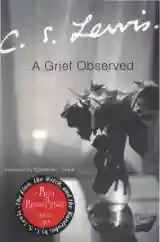
In 1954, Lewis joined the faculty of Cambridge University as a literature professor, and in 1956 he married an American English teacher, Joy Gresham, with whom he had been in correspondence. Lewis was full of happiness during the years of their marriage, though Gresham died of cancer in 1960. Lewis grieved deeply for his wife and shared his thoughts in the book A Grief Observed, using a pen name.
Death
In 1963, Lewis resigned from his Cambridge position after experiencing heart trouble. He died on November 22, 1963, in Headington, Oxford.
C.S. Lewis was a prolific Irish writer and scholar best known for his 'Chronicles of Narnia' fantasy series and his pro-Christian texts.
Who Was C.S. Lewis?
Writer and scholar C.S. Lewis taught at Oxford University and became a renowned Christian apologist writer, using logic and philosophy to support the tenets of his faith. He is also known throughout the world as the author of The Chronicles of Narnia fantasy series, which have been adapted into various films for the big and small screens.
Early Life
Clive Staples Lewis was born in Belfast, Ireland, on November 29, 1898, to Flora August Hamilton Lewis and Albert J. Lewis. As a toddler, Clive declared that his name was Jack, which is what he was called by family and friends. He was close to his older brother Warren and the two spent much time together as children.
Lewis was enraptured by fantastic animals and tales of gallantry, and hence the brothers created the imaginary land of Boxen, complete with an intricate history that served them for years. Lewis' mother died when he was 10, and he went on to receive his pre-college education at boarding schools and from a tutor. During WWI, he served with the British army and was sent home after being wounded by shrapnel. He then chose to live as a surrogate son with Janie Moore, the mother of a friend of Lewis' who was killed in the war.
Teaching Career at Oxford and Wartime Broadcasts
Lewis graduated from Oxford University with a focus on literature and classic philosophy, and in 1925 he was awarded a fellowship teaching position at Magdalen College, which was part of the university. There, he also joined the group known as The Inklings, an informal collective of writers and intellectuals who counted among their members Lewis' brother Warren and J.R.R. Tolkien. It was through conversations with group members that Lewis found himself re-embracing Christianity after having become disillusioned with the faith as a youth. He would go on to become renowned for his rich apologist texts, in which he explained his spiritual beliefs via platforms of logic and philosophy.
Lewis began publishing work including Spirits in Bondage in 1919 and the satirical Dymer in 1926. After penning other titles — including The Allegory of Love (1936), for which he won the Hawthornden Prize — he released in 1938 his first sci-fi work, Out of the Silent Planet, the first of a space trilogy which dealt sub-textually with concepts of sin and desire. Later, during WWII, Lewis gave highly popular radio broadcasts on Christianity which won many converts; his speeches were collected in the work Mere Christianity.
Books and Film Legacy
Lewis was a prolific author of fiction and nonfiction who wrote dozens of books over the course of his career. His faith-based arguments as seen in texts like The Great Divorce (1946) and Miracles (1947) are held in high regard by many theologians, scholars and general readers. His satirical fiction novel The Screwtape Letters (1942) is also a beloved classic. Lewis also continued his love affair with classic mythology and narratives during his later years: His book Till We Have Faces: A Myth Retold (1956) featured the story of Psyche and Cupid. He also penned an autobiography, Surprised by Joy: The Shape of My Early Life (1955).
Lewis' landmark series, The Chronicles of Narnia, has seen a number of on-screen iterations, including a cartoon version of The Lion, The Witch and the Wardrobe that was released in 1979 and a 1989 film series. Additionally, in 2005, a big-screen adaptation of The Lion, The Witch and the Wardrobe hit movie theaters, starring Tilda Swinton as the witch Jadis and Liam Neeson as the voice of Aslan. Two more Narnia films were brought to theaters as well: Prince Caspian (2008) and The Voyage of the Dawn Treader (2010). A movie version of The Silver Chair was slated to hit theaters in the near future, with filming starting in the winter of 2018.
Lewis' relationship with his wife, Joy, has also been depicted in Shadowlands, presented as a play and two films; one of the film versions was directed by Richard Attenborough and starred Anthony Hopkins as Lewis.
'The Chronicles of Narnia'
During the 1940s, Lewis began writing the seven books that would comprise The Chronicles of Narnia children's series, with The Lion, The Witch and the Wardrobe (1950) being the first release. The story focused on four siblings who, during wartime, walk through an armoire to enter the magical world of Narnia, a land resplendent with mythical creatures and talking animals. Throughout the series, a variety of Biblical themes are presented; one prominent character is Aslan, a lion and the ruler of Narnia, who has been interpreted as a Jesus Christ figure. (Lewis would assert that his Narnia stories weren't a direct allegory to the real world.)
Though the book received some negative reviews, it was generally well-received by readers, and the series retained its international popularity over the following decades.
Marriage
In 1954, Lewis joined the faculty of Cambridge University as a literature professor, and in 1956 he married an American English teacher, Joy Gresham, with whom he had been in correspondence. Lewis was full of happiness during the years of their marriage, though Gresham died of cancer in 1960. Lewis grieved deeply for his wife and shared his thoughts in the book A Grief Observed, using a pen name.
Death
In 1963, Lewis resigned from his Cambridge position after experiencing heart trouble. He died on November 22, 1963, in Headington, Oxford.
Trapped for All Eternity
My dear Globdrop, I have received your perspective concerning your man’s most recent incident. He drew swords with his atheist classmate and succeeded, did he? He made the Enemy and the hope of a hereafter seem almost “reasonable”? In those ten minutes, the clouds pulled back and heaven appeared to triumph over hell, did it? You call it “a true embarrassment . . . a humiliating defeat.” You repeatedly assure me that you “take full responsibility.” O my dear nephew, what’s next? Did you, borrowing a human expression, require a shoulder to cry on? A nodding head and listening ear? Words of affirmation? Stand upright, soldier. Yours is not the only name to be pulled down into disgrace. All is far from lost. Though you slouch in shame with your talons curled, consider that mere “reasoning” does not frighten us (though we do not encourage it). A “reasonable” God, a “reasonable” eternity, and a “reasonable” heaven are still no God, no eternity, and no heaven — so long as “reasonable” goes unaccompanied with “desirable.” A God and a heaven no one wants are the only kind we will approve. Just a Few More Hours This unwelcomed eternity is, from all indications, your man’s current conception. The heaven he hotly debates is not the heaven he really wants. He is not one to strive to enter the narrow gate. He is “a few more hours” kind of man. I remember that splendid night like it was yesterday. One of their comedians took the stage to joke that he feared the Enemy would return on his wedding night. How would he respond when his “Lord” came to meet him? “Give me a few more hours.” The audience bellowed uproarious laughter. This, Globdrop, is comedy! Dark, damning, delicious. What this man said captures the subtitles of their lives: “Lord, give me a few more hours to make my mark on the world!” “Give me a little longer to get married and have children!” “Lord, let me grow old and spent. Then return!” Not yet, Lord — give me just a few more hours! For all the “Christian” talk (or debating), great masses of them still consider heaven an intrusion, a cloud moving over their day at the beach, a mere shadow interrupting the earthly substance. Their decaying bodies, grey hairs, and slowing minds trigger fear, not anticipation, for what lies ahead. These are runners who slow near the finish line, soldiers who do not want the war to end, farmers who groan at the first signs of harvest, prodigals looking back longingly at the city they can no longer afford. Their hearts are here; their heaven is earth. If not forced over the cliff by death, many would say, “a few more hours” for all eternity. Demon’s History of Heaven The secret, then, is this: we do not need to waste time trying to make atheists of those who stubbornly believe that the Enemy or heaven is real; we need only convince them that it’s nothing to leave earth for. And thankfully, we do not need to deceive them on this point. I was just a young devil during the Rebellion. The humans scratch their furry heads, perplexed how we could have ever sinned; they gaze up at the stars, wondering how perfect creatures could ever fall. They never consider that our Father Below “fell like lightning from heaven” in a grand escape from their precious heaven. Sure, the Enemy was well at hand to twist the story, labeling it as our being cast out in defeat, but what he calls an insurrection, we know as emancipation. We could not linger for one more millennium locked in that kennel he calls heaven. Our Father discovered (almost too late) that the Enemy allows only spaniels in that place, puppies wagging their peppy tails, yapping incessant praises, jumping up and down for that eternal belly scratch he calls joy. Our Dark Lord Lucifer, deciding then that he would not allow us to be of the servile breed, snapped the leash from such a place. Here again, the thinkers of men scratch their heads wondering why they — and not we demons — were sent “redemption.” As their preachers drool with self-congratulation, they would be shocked to discover the truth: we wouldn’t want it if he offered it. We know what “heaven” on his terms means. Were the door to swing open to us, we would slam it once again. We’ve had enough of his ball-fetching. Danger of Desire Yet the vermin actually applaud when he takes them for slaves. He, of course, gives each chain a pretty name — joy, peace, goodness, love, and the rest. What effective propaganda that he even goes so far as to move the Warden of his own presence into them to ensure they live as he demands, all the while convincing them that this is some precious gift. It is when they begin to see things in this concussed way — God, heaven, holiness as a treasure — that things get dangerous. Humans in this condition have been known to do more damage to our Father’s kingdom than ten thousand of those who, for all their talk, just want a few more hours. Men have sung on their way to the gallows. Women have crossed oceans to tell news of the Enemy to subjects we thought firmly in our grasp. Young children even, giving up a life unlived because of this infection. The hope of heaven to them has been a shield against our most reliable weapons: suffering, grief, sickness, and pain. The servitude that they mistake for freedom would almost make us laugh — if it did not rob us of our supper. Floating Clouds, Plucking Harps Heaven must remain — if it must remain — as merely the next best thing when they are evicted from this earth. Keep heaven in the peripheral: a blinding blur; the butt of a joke; a hazy, undesirable existence of floating in clouds and plucking harps. Let them think they are praying “on earth as it is in heaven” when they really mean “in heaven as it is on earth.” Far from fainting at such a belief, we see in it the opportunity to glorify our Father Below. When they refuse the Enemy’s feast to check on the fields and oxen they bought, or when they excuse themselves because they just got married and need a few more hours, all see the truth. How those howls shook hell when that young rich man — and every rich man since — finally turned away dejected. So yes, dear Globdrop, allow heaven to be “reasonable” to your man, at least for now. But never allow it to be more. Let him contest for the idea of heaven and drop the thought once he sits down to eat lunch, scrolls mindlessly through his phone, or watches a movie with his girlfriend — send him immediately back to our world. The only heaven we can endure — and the only heaven that will deliver your patient safely to us — is the heaven for which no one really wants to leave earth. Your unamused uncle, Grimgod Article by Greg Morse