-480.webp)

God's Power Through Laying On Of Hands Order Printed Copy
- Author: Novel Hayes
- Size: 402KB | 29 pages
- |
Others like god's power through laying on of hands Features >>

God's Power To Change Your Life

God's Way Of Holiness

God's Power: A Way Of Living Every Day

The Power To Change The World

God's Master Plan For Your Life
-160.webp)
God's Medicine Of Faith: The Word
God’s Answers To Life’s Difficult Questions
The Worship Leader’s Handbook
Freedom From Depression
The Results Of Neglect
About the Book
"God's Power Through Laying on of Hands" by Novel Hayes discusses the spiritual practice of laying on of hands as a means of receiving God's power and healing. The book delves into biblical examples and guidance on the significance and effectiveness of this practice in strengthening one's faith and experiencing divine intervention. Hayes explores the transformative impact of laying on of hands in individuals' lives and offers practical advice on how to incorporate this form of prayer into one's spiritual journey.
Steven Curtis Chapman
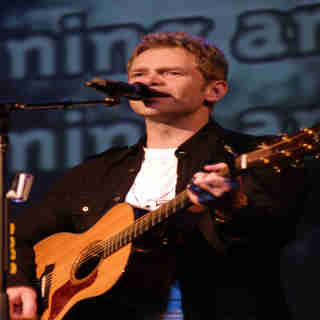 Steven Curtis Chapman is an American Christian musician, singer, song writer, record producer, actor, author and social activist. He is the only artist in the history of music to have won 56 Gospel Music Association Dove Awards and is also a proud receiver of 5 Grammy Awards. His music is known for being a unique cross between country music, soft rock and orchestrated pop, which made him a prominent artist in the contemporary Christian music circuit of the 1980s. Chapman grew up in a humble environment where he found his calling for music, owing to his father’s inclination towards country music. He learnt to play instruments like guitar and piano just by hanging around in his father’s music store, listening to him play along with his friends. He took up music seriously when he moved to Nashville and got recognized by Sparrow Records, a company he stayed with for a long period in his career. He has released 19 studio albums and has sold over 10 million albums until now. Chapman is a family oriented person just like his father and has a big family comprising of his wife Mary Beth and 3 biological and 2 adopted children. He is a vocal advocate for adoption and has worked socially to eradicate the problem of youth violence.
Childhood & Early Life
Steven Curtis Chapman was born on November 21, 1962 in Paducah, Kentucky, to Herb and Judy Chapman. His father was a country singer and songwriter, who turned down opportunities to become a successful singer to concentrate on his family. His mother was a stay-at-home mom.
His father owned a music store, a business he managed from his basement and used to play music with his friends. Such creative environment at home influenced Chapman’s life from very early on and he bought his first guitar at 6.
Chapman joined as a pre-med student at Georgetown College in Kentucky but after few semesters he moved to Anderson College, Indiana. But he ultimately dropped the idea of studying and went to Nashville to pursue his first love, music.
During 1980s, he wrote a song ‘Built to Last’, which gained huge popularity after getting recorded by a gospel group ‘The Imperials’. The success of the song fetched Chapman a songwriting deal with Sparrow Records.
Career
Chapman’s first official album ‘First Hand’ was released in 1987. The album was an instant hit with singles like ‘Weak Days’ and topped at number 2 on the Contemporary Christian Music chart. The album had a mix of country music with soft rock and pop.
In 1988, following the success of his first album, Chapman released ‘Real Life Conversations’. Its hit single ‘His Eyes’ received the ‘Contemporary Recorded Song of the Year’ award from the ‘Gospel Music Association’. He co-wrote it with James Isaac Elliot.
After a few years, he made a swift turn to mainstream music with his album ‘The Great Adventure’ in 1992. It earned him two Grammy awards for the album and for the title song of the album.
After gaining consistent success with albums like ‘Heaven in the Real World (1994), ‘Signs of Life (1996) and ‘Speechless (1999), Chapman’s next great album ‘Declaration’ came out in 2001, for which he toured 70 cities.
In 2003, ‘All About Love’ was released and it ranked at Top 15 on the Christian Music charts. It was released under Sparrow Records and Chapman very humbly credited his wife Mary Beth for being the inspiration for his album.
‘All Things New’ was released in 2004 and the album added another Grammy to Chapman’s proud award collection. This time he received it in the category of Best Pop/Contemporary Gospel Album. It was also nominated for the Dove Award.
In 2005, ‘All I Really Want for Christmas’ was released, which was Chapman’s another successful Christmas album after ‘The Music of Christmas’. It had traditional holiday tunes and favorites like ‘Go Tell It on the Mountain’ and Silver Bells’.
Chapman took his music to greater levels by taking his concert to South Korea for the U.S. troops who were serving there in 2006. It was the first Christian concert that ever performed for the American army in that country.
In 2007, he released ‘This Moment’ which included hit singles like ‘Cinderella’, for which he was chosen for WOW Hits 2009. He also went on his ‘Winter Jam’ tour and took his sons’, Caleb and Will’s band along.
‘Beauty Will Rise’, Chapman’s seventeenth album, was released in 2009. It is said that he wrote the songs of the album after getting inspired by his daughter Maria Sue’s sad and untimely demise. It included songs like ‘Meant to Be’ and ‘Re:creation’.
In 2012, Chapman finally parted ways with Sparrow Records, the record company that he remained loyal to for so many years. He was signed on by Sony’s Provident Label Group and came out with a Christmas album called ‘JOY’.
‘The Glorious Unfolding’ was released in 2013 under Reunion Records and it peaked on number 27 on the Billboard 200 and was number 1 Top Christian Album. The album was produced by Chapman himself and Brent Milligan.
Major Works
Chapman’s ‘The Great Adventure’ in 1992 was a turning point in his musical career because until now he was making soft and contemporary country music but with ‘The Great Adventure’ he targeted the mainstream audience and tasted huge commercial success for the first time.
Awards & Achievements
Chapman is the winner of five Grammy awards for albums like ‘For the Sake of the Call’ ‘The Great Adventure’ ‘The Live Adventure’, ‘Speechless’ and ‘All Things New’. He has also received 56 Gospel Music Association Dove Awards, more than any other artist.
Personal Life & Legacy
Chapman got married to Mary Beth in 1984 after they first met at Anderson University in Indiana. They have three biological children: Emily, Caleb and Will and three adopted children: Shaohannah, Stevey and Maria, together.
In 2008, Chapman’s youngest son Will ran over his car by accident on his adopted daughter Maria Sue Chunxi Chapman. She was running towards him to meet him but he did not see her and she was pronounced dead on arrival at the hospital.
Trivia
Chapman’s wife Mary Beth Chapman has written and released a book about losing her youngest daughter called ‘Choosing to SEE: A Journey of Struggle and Hope’.
Chapman and his wife have written three children's books with adoption themes: ‘Shaoey And Dot: Bug Meets Bundle’ (2004), ‘Shaoey and Dot: The Christmas Miracle’ (2005), and ‘Shaoey and Dot: A Thunder and Lightning Bug Story’ (2006).
He has received an Honorary Doctorate of Music from Anderson University.
Steven Curtis Chapman is an American Christian musician, singer, song writer, record producer, actor, author and social activist. He is the only artist in the history of music to have won 56 Gospel Music Association Dove Awards and is also a proud receiver of 5 Grammy Awards. His music is known for being a unique cross between country music, soft rock and orchestrated pop, which made him a prominent artist in the contemporary Christian music circuit of the 1980s. Chapman grew up in a humble environment where he found his calling for music, owing to his father’s inclination towards country music. He learnt to play instruments like guitar and piano just by hanging around in his father’s music store, listening to him play along with his friends. He took up music seriously when he moved to Nashville and got recognized by Sparrow Records, a company he stayed with for a long period in his career. He has released 19 studio albums and has sold over 10 million albums until now. Chapman is a family oriented person just like his father and has a big family comprising of his wife Mary Beth and 3 biological and 2 adopted children. He is a vocal advocate for adoption and has worked socially to eradicate the problem of youth violence.
Childhood & Early Life
Steven Curtis Chapman was born on November 21, 1962 in Paducah, Kentucky, to Herb and Judy Chapman. His father was a country singer and songwriter, who turned down opportunities to become a successful singer to concentrate on his family. His mother was a stay-at-home mom.
His father owned a music store, a business he managed from his basement and used to play music with his friends. Such creative environment at home influenced Chapman’s life from very early on and he bought his first guitar at 6.
Chapman joined as a pre-med student at Georgetown College in Kentucky but after few semesters he moved to Anderson College, Indiana. But he ultimately dropped the idea of studying and went to Nashville to pursue his first love, music.
During 1980s, he wrote a song ‘Built to Last’, which gained huge popularity after getting recorded by a gospel group ‘The Imperials’. The success of the song fetched Chapman a songwriting deal with Sparrow Records.
Career
Chapman’s first official album ‘First Hand’ was released in 1987. The album was an instant hit with singles like ‘Weak Days’ and topped at number 2 on the Contemporary Christian Music chart. The album had a mix of country music with soft rock and pop.
In 1988, following the success of his first album, Chapman released ‘Real Life Conversations’. Its hit single ‘His Eyes’ received the ‘Contemporary Recorded Song of the Year’ award from the ‘Gospel Music Association’. He co-wrote it with James Isaac Elliot.
After a few years, he made a swift turn to mainstream music with his album ‘The Great Adventure’ in 1992. It earned him two Grammy awards for the album and for the title song of the album.
After gaining consistent success with albums like ‘Heaven in the Real World (1994), ‘Signs of Life (1996) and ‘Speechless (1999), Chapman’s next great album ‘Declaration’ came out in 2001, for which he toured 70 cities.
In 2003, ‘All About Love’ was released and it ranked at Top 15 on the Christian Music charts. It was released under Sparrow Records and Chapman very humbly credited his wife Mary Beth for being the inspiration for his album.
‘All Things New’ was released in 2004 and the album added another Grammy to Chapman’s proud award collection. This time he received it in the category of Best Pop/Contemporary Gospel Album. It was also nominated for the Dove Award.
In 2005, ‘All I Really Want for Christmas’ was released, which was Chapman’s another successful Christmas album after ‘The Music of Christmas’. It had traditional holiday tunes and favorites like ‘Go Tell It on the Mountain’ and Silver Bells’.
Chapman took his music to greater levels by taking his concert to South Korea for the U.S. troops who were serving there in 2006. It was the first Christian concert that ever performed for the American army in that country.
In 2007, he released ‘This Moment’ which included hit singles like ‘Cinderella’, for which he was chosen for WOW Hits 2009. He also went on his ‘Winter Jam’ tour and took his sons’, Caleb and Will’s band along.
‘Beauty Will Rise’, Chapman’s seventeenth album, was released in 2009. It is said that he wrote the songs of the album after getting inspired by his daughter Maria Sue’s sad and untimely demise. It included songs like ‘Meant to Be’ and ‘Re:creation’.
In 2012, Chapman finally parted ways with Sparrow Records, the record company that he remained loyal to for so many years. He was signed on by Sony’s Provident Label Group and came out with a Christmas album called ‘JOY’.
‘The Glorious Unfolding’ was released in 2013 under Reunion Records and it peaked on number 27 on the Billboard 200 and was number 1 Top Christian Album. The album was produced by Chapman himself and Brent Milligan.
Major Works
Chapman’s ‘The Great Adventure’ in 1992 was a turning point in his musical career because until now he was making soft and contemporary country music but with ‘The Great Adventure’ he targeted the mainstream audience and tasted huge commercial success for the first time.
Awards & Achievements
Chapman is the winner of five Grammy awards for albums like ‘For the Sake of the Call’ ‘The Great Adventure’ ‘The Live Adventure’, ‘Speechless’ and ‘All Things New’. He has also received 56 Gospel Music Association Dove Awards, more than any other artist.
Personal Life & Legacy
Chapman got married to Mary Beth in 1984 after they first met at Anderson University in Indiana. They have three biological children: Emily, Caleb and Will and three adopted children: Shaohannah, Stevey and Maria, together.
In 2008, Chapman’s youngest son Will ran over his car by accident on his adopted daughter Maria Sue Chunxi Chapman. She was running towards him to meet him but he did not see her and she was pronounced dead on arrival at the hospital.
Trivia
Chapman’s wife Mary Beth Chapman has written and released a book about losing her youngest daughter called ‘Choosing to SEE: A Journey of Struggle and Hope’.
Chapman and his wife have written three children's books with adoption themes: ‘Shaoey And Dot: Bug Meets Bundle’ (2004), ‘Shaoey and Dot: The Christmas Miracle’ (2005), and ‘Shaoey and Dot: A Thunder and Lightning Bug Story’ (2006).
He has received an Honorary Doctorate of Music from Anderson University.
the courage you need in life’s uncertainty
“Jump! I’ll catch you!” When my son was young, getting him from the side of the pool into the water was difficult. His eyes darted side to side, quickly losing confidence, as his imagination surmised all the horrors associated with jumping. Only when I could get him to fix his attention on me would he find the confidence to bend his knees and spring off the side of the pool. Like my son, we are regularly confronted with situations that are overwhelming, unknown, or threatening. What does it look like for us to spring with confidence into every situation that the Lord brings into our lives? Four Ways to Walk in Faith Isaiah 7 tells the story of a king in crisis. When the Judean King Ahaz heard that Syria and Israel created an alliance to withstand the advancing Assyrian threat, his heart shook with fear (Isaiah 7:2). Seeking to strengthen their hand against Assyria, the Syro-Ephraimite coalition intended to use military force to depose Ahaz and coerce Judah to join them, as well. Ahaz responded to the imminent threat like a good king. He inspected the city’s water supply. How long can the city withstand a siege? Ahaz had been conditioned to believe that military threats require military responses. Yet, God responds to Ahaz by sending the prophet Isaiah, who relayed four commands from the Lord, each of which recalls other parts of the Old Testament: be careful, be quiet, do not fear, do not let your heart be faint. These four commands echo down the halls of Israel’s collective memory with the intention of reminding Ahaz of the provisions of faith. These commands are helpful for us too as we fight for faith amidst the challenges of our lives. 1. Be Mindful Moses instructed the Israelites before they entered the Promised Land: they will live in houses they did not build, drink wine from vineyards they did not plant, eat until they are full. But, Moses warns them in Deuteronomy 6:12, “take care lest you forget the Lord, who brought you out of the land of Egypt, out of the house of slavery.” At the moment of crisis, God acknowledged that Ahaz’s battle was not just outside the city walls, but also in his mind. It was essential for Ahaz to remember who he was and the history he had with God. In the same way, during times of uncertainty, cultivating memory and identity as those who are in Christ is essential for accessing the resources of faith to respond to present challenges. 2. Be Quiet This is an important theme in Isaiah. In Isaiah 30:15, God says, “In quietness and in trust shall be your strength.” Quietness in Isaiah does not mean the absence of noise, but the absence of agitation. In fact, peace and joyful shouting are themes that merge together in Isaiah 14:7 and 55:12. At the moment of crisis, Ahaz needed to find calm and certain confidence in God — something his water supply could never fully provide. 3. Do Not Fear The phrase recalls God’s providence, promises, and purposes. God uses these words when he appears to Abram, Moses, Joshua, and Elijah. It may seem trite to tell Ahaz not to fear. But the rationale is implicit: God was with him, for him, and had made promises to him. Ahaz, then, needed to respond on the basis of that conviction. Similarly, I need to recalibrate my perspective around God when faced with uncertain circumstances. John Oswalt summarizes, “If we can believe that the transcendent One is really immanent, and the immanent One truly transcendent, then there is reason to live courageously and unselfishly” ( Isaiah, 211). 4. Do Not Faint This is an exact quotation from Deuteronomy 20:3–4, where Moses prepares the Israelites for facing their enemies in battle. The priest was to come to the front of the line of soldiers and say, “let not your heart faint. Do not fear or panic or be in dread of them, for the Lord your God is he who goes with you to fight for you.” At the moment of crisis, with a mind that remembers, a soul free from agitation, and a renewed conviction that God is for me and with me, I can respond with courageous faith. A Picture of Courageous Faith In southwest Rwanda, along the shores of Lake Kivu, is a peninsula, where missionaries from the region have gathered annually since 1942 for spiritual renewal. On the far end of the peninsula is a cliff, into which thrill-seeking missionaries from a previous generation lodged a long, rigid, slab of wood — called “the plank” — thirty feet off the surface of the water. I have approached the plank many times. I stand looking, hearing my children behind me. “Come on, Dad!” “He won’t jump!” I am distracted by local children gathering in canoes to watch. I think about others who have jumped — and hurt themselves. I feel certain that I will fall off the cliff by even getting near the plank! I have never jumped. I have a friend named Jeff, who does not blink at the threats imposed by the plank. He steps onto the plank, walks a few paces, pulls himself up into an overhanging tree, climbs even higher, turns backward, and launches into a backflip as he springs out over the water. This is a picture of how I want to live — not carelessly, but confidently — springing with confidence into every situation that the Lord brings into my life — not simply conditioned to respond according to my own resources, but convinced that the provisions of faith provide all that I need to respond with confidence in any situation.