
Others like god's armor bearer Features >>

God's Law Of Attraction

God's Power To Change Your Life

God's Master Plan For Your Life

God's Timing For Your Life
-160.webp)
God's Will For Your Life

God’s Answers To Life’s Difficult Questions
-160.webp)
God's Power Through Laying On Of Hands

God's Power: A Way Of Living Every Day

The Conquest Of The Mind

Suffering And The Sovereignty Of God
About the Book
"God's Armor Bearer" by Terry Nance is a guide for understanding the role of a spiritual servant in supporting and covering a leader. It emphasizes the importance of loyalty, faithfulness, and servanthood in fulfilling God's calling and includes practical strategies for fulfilling this vital role within the church or ministry.
David Brainerd
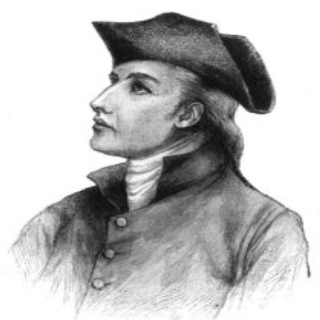 Born to a farming family in Haddam, Connecticut, Brainerd soon turned his aspirations to the clergy and a life of study. The early death of his parents, combined with a naturally melancholy personality, caused him to be morose and to fixate on the brevity of life, so that his religious life was characterized by prolonged depressions punctuated by ecstatic experiences of God. He began to study for the ministry at Yale College in 1739. During his first year he showed signs of the tuberculosis that was to end his life prematurely. During the following year, the New Light preaching of George Whitefield and other itinerants such as Gilbert Tennent and James Davenport gained many adherents at the college, including Brainerd, and he became involved in a separate church founded by students. In November 1741 he was reported as saying that one of the local ministers who was a college tutor had “no more grace than a chair.” Determined to snuff out the New Light among the students, the Yale Corporation, led by its rector, Thomas Clap, expelled Brainerd for refusing to make a public confession.
Officially barred from the ministry, Brainerd nonetheless became an itinerant preacher, filling pulpits of New Light sympathizers throughout New England and New York. In the process he gained the admiration of many clergymen, including Jonathan Dickinson, a Presbyterian minister of New Jersey and commissioner of the Society in Scotland for Propagating Christian Knowledge. Dickinson in 1742 first proposed that Brainerd become a missionary. To prepare himself, in 1743 Brainerd went to work with John Sargeant, missionary to the Stockbridge Indians. He was ordained by the Presbytery of New York in 1744. From 1743 to 1747 he ministered to the Indians in western Massachusetts, eastern New York, the Lehigh region of Pennsylvania, and central New Jersey. At the New Jersey Bethel mission (near Cranbury), he achieved his most notable successes. Out of his experiences here came the publication of two installments of his journals that described both the revivals among the Delaware Indians and his own spiritual turmoil and exultation.
Brainerd preaching to the Indians for all of his zeal, however, Brainerd’s constitution could not stand up to the hardships of wilderness living. In April 1747, seriously weakened by tuberculosis, he left New Jersey for the home of his friend Jonathan Edwards in Northampton, Massachusetts, where he died in October.
In 1749 Edwards published An Account of the Life of the Late Reverend Mr. David Brainerd, drawn from Brainerd’s extensive diaries and supplemented by Edwards’s own commentary. Edwards sought to portray Brainerd as a model of Christian saintliness who manifested his faith in good works and self-sacrifice, expurgating many passages that recorded Brainerd’s depressions and enthusiasms. Over the centuries, this work has achieved international fame, has gone through countless printings, and has inspired many missionaries in pursuing their call.
Minkema, Kenneth P., “Brainerd, David,” in Biographical Dictionary of Christian Missions, ed. Gerald H. Anderson (New York: Macmillan Reference USA, 1998), 84-5.
This article is reprinted from Biographical Dictionary of Christian Missions, Macmillan Reference USA, copyright © 1998 Gerald H. Anderson, by permission of Macmillan Reference USA, New York, NY. All rights reserved.
Born to a farming family in Haddam, Connecticut, Brainerd soon turned his aspirations to the clergy and a life of study. The early death of his parents, combined with a naturally melancholy personality, caused him to be morose and to fixate on the brevity of life, so that his religious life was characterized by prolonged depressions punctuated by ecstatic experiences of God. He began to study for the ministry at Yale College in 1739. During his first year he showed signs of the tuberculosis that was to end his life prematurely. During the following year, the New Light preaching of George Whitefield and other itinerants such as Gilbert Tennent and James Davenport gained many adherents at the college, including Brainerd, and he became involved in a separate church founded by students. In November 1741 he was reported as saying that one of the local ministers who was a college tutor had “no more grace than a chair.” Determined to snuff out the New Light among the students, the Yale Corporation, led by its rector, Thomas Clap, expelled Brainerd for refusing to make a public confession.
Officially barred from the ministry, Brainerd nonetheless became an itinerant preacher, filling pulpits of New Light sympathizers throughout New England and New York. In the process he gained the admiration of many clergymen, including Jonathan Dickinson, a Presbyterian minister of New Jersey and commissioner of the Society in Scotland for Propagating Christian Knowledge. Dickinson in 1742 first proposed that Brainerd become a missionary. To prepare himself, in 1743 Brainerd went to work with John Sargeant, missionary to the Stockbridge Indians. He was ordained by the Presbytery of New York in 1744. From 1743 to 1747 he ministered to the Indians in western Massachusetts, eastern New York, the Lehigh region of Pennsylvania, and central New Jersey. At the New Jersey Bethel mission (near Cranbury), he achieved his most notable successes. Out of his experiences here came the publication of two installments of his journals that described both the revivals among the Delaware Indians and his own spiritual turmoil and exultation.
Brainerd preaching to the Indians for all of his zeal, however, Brainerd’s constitution could not stand up to the hardships of wilderness living. In April 1747, seriously weakened by tuberculosis, he left New Jersey for the home of his friend Jonathan Edwards in Northampton, Massachusetts, where he died in October.
In 1749 Edwards published An Account of the Life of the Late Reverend Mr. David Brainerd, drawn from Brainerd’s extensive diaries and supplemented by Edwards’s own commentary. Edwards sought to portray Brainerd as a model of Christian saintliness who manifested his faith in good works and self-sacrifice, expurgating many passages that recorded Brainerd’s depressions and enthusiasms. Over the centuries, this work has achieved international fame, has gone through countless printings, and has inspired many missionaries in pursuing their call.
Minkema, Kenneth P., “Brainerd, David,” in Biographical Dictionary of Christian Missions, ed. Gerald H. Anderson (New York: Macmillan Reference USA, 1998), 84-5.
This article is reprinted from Biographical Dictionary of Christian Missions, Macmillan Reference USA, copyright © 1998 Gerald H. Anderson, by permission of Macmillan Reference USA, New York, NY. All rights reserved.
The Fruitful Empty Nest - Lessons for When the Kids Leave Home
We hugged, said our goodbyes and “I love you.” He walked with us to the car, turned, and walked away. And as we sat there looking at his back, I cried my heart out. Our firstborn child was launched, and I felt like my insides were being ripped out. Two years later, we had a repeat. Once again, after goodbyes, “We love you,” and hugs, another son walked us to the car. Watching him as he turned and walked away, those same deep heart cries rose up in me. One last time, a few years later, goodbyes and “I love you” were said, and hugs were given. We went to the car and watched as our youngest son turned and walked away into his new life. And yes, we sat there looking at his back and I cried my heart out. Not that I would never see our sons again, of course. But when our kids left home, I was keenly aware that my life would dramatically change. For years I had anticipated this day and often thought I couldn’t survive the emotion of it all, but I did. It’s been many years now since those goodbyes. And today I am so grateful to God for his sustaining grace, and for the surprisingly sweet joys he’s given in each season of life since. New Strength After Kids I had been a “full-time” mom, and so obviously when our sons left home, the whole structure of my life altered. No more hurried breakfasts to get out the door in the mornings. No games to go to late in the day. No large meals to prepare that would satisfy teenage boys. No kids hanging out at the house or event-planning with other parents. Oh, yes, life was going to be different, and I wasn’t at all sure I was going to like that! Early on after the kids left, I found myself on my knees before God with a kind of blank, empty feeling, when I found these words: For this reason I bow my knees before the Father, from whom every family in heaven and on earth is named, that according to the riches of his glory he may grant you to be strengthened with power through his Spirit in your inner being. (Ephesians 3:14–16) That good word assured me that God would fill me with his strength for the new season ahead. Six Lessons for Empty Nests We moms want to be good mothers, and we give everything we have to our children. As Christian moms, we feel a special calling to raise our children to love Jesus and follow him, which can seem especially weighty. And on top of it all, our identity can get so wrapped up in our children that we forget who we are. So when it comes time for the kids to leave home, it’s hard! And it’s sad. But we need not stay stuck in sadness. We can move forward into adult relationships with our children which have a sweetness all their own. “Our identity can get so wrapped up in our children that we forget who we are.” If you are in the transition years, anticipating the day when your kids leave home, or are already adjusting to an empty nest, here are some practical steps that have been a great help to me. 1. Pray fervently. No doubt you have prayed for your children since before they were born. Keep praying! As you pray for your child who is no longer under your daily care, you will discover your prayers will become deeper and your relationship with both God and your child will be enriched. Remember, you can cast your anxieties on God, because he cares about you — and your child (1 Peter 5:7). 2. Place your child in the arms of God. I never understood what it meant to “let go” of my children. Then someone suggested, rather than letting go of my children to float out into some kind of never-never land, I can deliberately place them into the strong and loving arms of God where they are protected and cared for. “The eternal God is your dwelling place, and underneath are the everlasting arms” (Deuteronomy 33:27). This has been a great comfort. 3. Perspective helps. The aim of parenting is to raise little humans to become productive adults. Throughout the child-raising years, we want to create a nurturing environment so our children will develop and mature. We want our children to be adults. In a sense, we raise them to leave. 4. Prioritize your husband. While our kids are home, they often require the biggest chunk of our time and energy, but the priority still should be our husband. Make time for him when the kids are home, so you’ll know each other when they leave. Have fun together now, so that you will enjoy each other later. 5. Personal development is essential. Take care of yourself — physically, emotionally, intellectually, and spiritually. Develop an interest or involvement while your kids are home that will carry over into the empty-nest years. One way to do this is to cultivate friendships and fellowship with other women in your church. 6. Plant yourself by streams of water. “A tree planted by streams of water yields its fruit in its season, and its leaf does not wither” (Psalm 1:3). Get rooted, and stay rooted, in God’s word, take delight in God’s Son, maintain fellowship with God’s people. When you do this over the years, you will be fruitful in every season of your life. Enjoy Being a Child Again Most Christian moms, like me, focus on God’s love for our children. We remind ourselves that God loves our kids more than we do — and he does. We help our children understand and accept God’s love for them. But I discovered, when my boys left home, I’d nearly forgotten that God loves me, too. He cares about me. He knows my needs. He wants to bless me because I am his child. “I discovered, when my boys left home, I’d nearly forgotten that God loves me, too.” Mom, if your kids have just left home — or are soon to leave — you are about to enter a new season with great potential for fruitfulness. As young women we bore the fruit of the womb. Then the childrearing years were full of great blessing, energy, and vitality. These years were times of hope, of spring and the warm summer sunshine. But, surprisingly, the empty-nest years can be a very productive and fruit-filled season, too. When kids leave home, parenting takes on new and rewarding dimensions. Daily life is different, for sure, but you are still, and always will be, your kids’ mom. In fact, you no doubt will discover as I have, that as the years move on and you and your kids grow older, your relationships will deepen and enrich on many levels. At the same time, fruit that you bear in this new season of life can have an even wider impact now as you stay connected to your local church. Look for ways to be involved with the younger women in your church. You are a seasoned woman who can nourish the upcoming generation of women. Be encouraged, dear mom. God is with you and loves you through every season of life. He will not forsake you. He wants to bless you and make you a blessing! O God, from my youth you have taught me, and I still proclaim your wondrous deeds. So even to old age and gray hairs, O God, do not forsake me, until I proclaim your might to another generation, your power to all those to come. (Psalm 71:17–18) Article by Linda Linder