
-480.webp)

Friend Of Sinners (Why Jesus Cares More About Relationship Than Perfection) Order Printed Copy
- Author: Rich Wilkerson Jr.
- Size: 1.25MB | 174 pages
- |
Others like friend of sinners (why jesus cares more about relationship than perfection) Features >>

Encounters With Jesus
-160.webp)
Evidence For The Resurrection (What It Means For Your Relationship With God)
-160.webp)
Stealing From God: Why Atheists Need God To Make Their Case

Taking Action
Be Light: Shining God's Beauty

Time Is Running Out
The Gospel Commission
A Lesson From The Arabs

God Can Do It Again

The Case For Christ
About the Book
In "Friend of Sinners", Rich Wilkerson Jr. explores how Jesus values relationships over perfection, emphasizing the importance of genuine connection and compassion. He challenges readers to prioritize loving others and building meaningful connections, rather than focusing solely on following rigid rules or achieving perfection. Wilkerson Jr. highlights Jesus' example of befriending sinners and outcasts, showing that true transformation comes through grace, love, and authentic relationships.
A. A. Allen
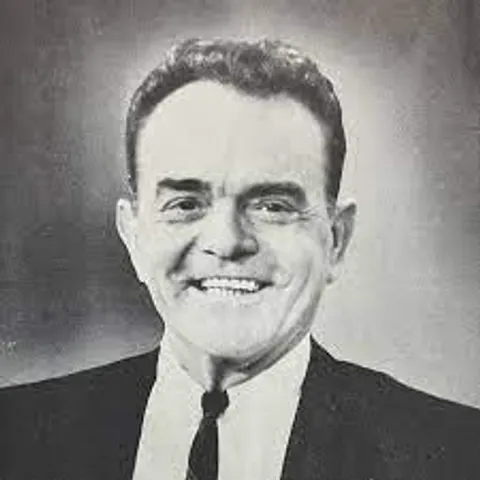 Born in Sulphur Rock, Arkansas, in 1911, he grew up with an alcoholic father and an unfaithful mother who lived with a series of men. “By the time I was twenty-one,” recalled Allen, “I was a nervous wreck. I couldn’t get a cigarette to my lip with one hand. . . . I was a confirmed drunkard.” (Lexie Allen, God’s Man of Faith and Power, p57, 1954). Two years later he served a jail sentence for stealing corn in the midst of the depression and thought of himself as “an ex-jailbird drifting aimlessly through life.” It was at this point that Allen was converted in a “tongues speaking” Methodist church in 1934 He met his wife, Lexie in Colorado and she became a powerful influence in shaping him for his future ministry.
Licensed by the Assemblies of God as a minister in 1936 began an effective evangelistic ministry at a small church in Colorado. After a two year pastorate he spent four-and-a-half years during World War II, as a full-time revivalist. He was the worship leader, musician and preacher but low finances and mediocre results took their toll on this father of four children. He left the itinerant ministry in 1947 when he was offered the security of a pastorate in a stable Assemblies of God church in Corpus Christi, Texas.
Soon after moving to Texas he heard news of the revival and read a copy of ‘The Voice of Healing’ magazine which he found incredulous and labelled the revivalists “fanatics.” However, in 1949, he attended an Oral Roberts campaign in Dallas where he was enthralled by Roberts’ power over the audience and left convinced that the revival was from God
Back in Texas, when his church board refused to sponsor a radio program, he resigned and began conducting revivals again with the hope that he too might develop a major healing ministry. In, He sent his first report to The Voice of Healing in May 1950, from Oakland, California, “Many say this is the greatest Revival in the history of Oakland” in what was to become typical AAA style.
He said, “Although I do not claim to possess the gift of healing, hundreds are being miraculously healed in this meeting of every known disease. I do not claim to possess a single gift of the Spirit nor to have the power to impart any gift to others, yet in this meeting, as well as in other recent meetings, all the gifts of the Spirit are being received and exercised night after night. (The Voice of Healing May 1950)
Observing the burgeoning ministry of others he noticed that the evangelists who were drawing the largest crowds were doing so under canvas. In the summer of 1951 joined the ranks of the tent ministries giving a down payment and commitment to pay off the remaining amount as the ministry grew – and it did. He established his headquarters in Dallas and in 1953 launched the Allen Revival Hour on radio. He conducted overseas campaigns in Cuba and Mexico regularly, and by1955 was broadcasting on seventeen Latin American radio stations as well as eighteen American ones.
Allen’s sanguine personality expressed itself in his enthusiastic reports, unparalleled showmanship and startling miraculous claims. He was a persuasive preacher, with a compelling presence and unusual empathy and rapport with the common people. He preached an old-time Pentecostal message with consummate skill. His message of holiness resonated in the hearts of those reared in austere Pentecostalism.
His stage presence and theatrical approach endeared him to the economically deprived working class and also to black communities. Ever the showman he made religion enjoyable and church-going fun.
But, above all, it was the power of God which attracted the huge audiences over the years. Thousands were converted in the midst of dramatic public healings and deliverances from evil spirits. Nothing was ‘done in a corner’ but all was employed to support the message that Jesus was alive and interested in the needs of ordinary people.
A. A. Allen considered himself the most persecuted preacher in the world. The Assemblies of God were not happy with his apparently questionable, or at least exaggerated, claims. His readiness to publicly counter-attack his accusers brought a continual stream of criticism and alienation from mainline Pentecostals.
But the accusation that he drank abusively was the straw that broke the camel’s back. In the fall 1955, he was arrested for drunken driving while conducting a revival in Knoxville, Tennessee. The local press took the opportunity to attack and expose Allen and the beleaguered minister forfeited his bail rather than stand trial on the charge.
Whatever the truth was Allen called the incident an “unprecedented persecution” aimed at ruining his ministry. As always he employed even the worst accusations to reinforce his claims that his commitment to God’s work in God’s way was truly from heaven, despite the fact that the Devil continually tried to destroy his ministry. His Miracle Magazine published his defense:
Allen declares that all this is but a trick of the devil to try to kill his ministry and his influence among his friends at a time when God has granted him greater miracles in his ministry than ever before. . . . If ministers pay the price of real MIRACLES today, they will meet with greater persecution than ever before. The only way to escape such persecution is to fold up and quit! But we are going on! Will you go on with us? (Miracle Magazine October, 1955)
Gordon Lindsay felt that the Voice of Healing had to take “a strong stand on ethics.” Allen resigned from the group, pre-empting their imminent dismissal. He immediately began publishing his own magazine, and, although he affected a cordial relationship with his former colleagues in the Voice of Healing, feelings remained strained.
In some ways independence suited Allen. His daughter recalled:
The Knoxville event also led to Allen’s separation from the Assemblies of God. It was suggested that he “withdraw from the public ministry until the matter at Knoxville be settled.” Allen’s response was to surrender his credentials as “a withdrawal from public ministry at this time would ruin my ministry, for it would have the appearance of an admission of guilt.”
By the mid-1950’s many of the more moderate ministers tried to continue to work with the Pentecostal denominations – or at least to remain friendly – but Allen repeatedly attacked organized religion and urged Pentecostal ministers to establish independent churches which would be free to support the revival. He charged that the Sunday school had replaced the altar in the Pentecostal churches and that few church members were filled with the Holy Ghost:
“Revivals are almost a thing of the past. Many pastors, and even evangelists, declare they will never try another one. They say it doesn’t work. They are holding “Sunday School Conventions,” “Teacher Training Courses,” and social gatherings. With few exceptions the churches today are leaning more and more toward dependence upon organizational strength, and natural ability, and denominational “methods.” They no longer expect to get their increase through the old fashioned revival altar bench, or through the miracle working power of God, but rather through the Sunday School.”
In fall 1956, Allen announced the formation of the Miracle Revival Fellowship, an alternative fellowship intended to license independent ministers and to support missions. Theologically, the fellowship welcomed all who accepted “the concept that Christ is the only essential doctrine.” Allen urged laymen as well as ministers to join his fellowship, through his “Every Member an Exhorter plan.” Although Allen announced that “MRF is not interested in dividing churches,” he also disclosed that “the purpose of this corporation shall be to encourage the establishing and the maintenance of independent local, sovereign, indigenous, autonomous churches.” The fellowship listed more than 500 ministers in its “first ordination
Interestingly, as other ministries were struggling and the revival was waning, Allen’s charisma and ministry skills coupled with well-staged revivals and an amazingly gifted team, enabled him to re-establish his ministry and rebuild a substantial and effective work.
Miracle Magazine was resounding success. At the end of a year’s publication in 1956, it had a paid subscription of about 200,000,and, according to Mrs. Allen, was “the fastest growing subscription magazine in the world today.” In 1957, Allen began conducting the International Miracle Revival Training Camp, an embryonic ministerial training centre. In 1958, he was given land in Arizona where he began building a permanent headquarters and training centre. At the height of the 1958 crisis in the revival, Allen announced a five-pronged program for his ministry: tent revivals, the Allen Revival Hour radio broadcast, an overseas mission program, the Miracle Valley Training Centre, and a “great number of dynamic books and faith inspiring tracts” published by the ministry. In 1958, Allen purchased Jack Coe’s old tent and proudly announced that he was moving into the “largest tent in the world.” His old-time revivalism, up-beat gospel music and anointed entertainers continued to attract the masses.
Allan died at the Jack Tar Hotel in San Francisco, California on June 11, 1970 at the age of 59. Some claim that Allen died an alcoholic because the coroner’s report concluded Allen died from liver failure brought on by acute alcoholism. Others know that he had battled with excruciating pain from severe arthritis in his knees, for over a year. It is true that Allen had undergone surgery on one of his knees and in June of 1970, was considering surgery on the other knee. They believe that the Coroner’s Report of “fatty infiltration of the liver” was a result of the few times he used alcohol in his last days to alleviate the excruciating pain of his arthritis.
Whatever is true of his death the life of A. A. Allen was one of extraordinary commitment to Jesus Christ which brought victory over the enemy of mankind. A. A. Allen was a true survivor. Even though the revival was declining in the late 1950’s and 1960’s his commitment to old-time faith-healing campaigns ensured the continuing testimony of signs and wonders to the next generation. He may have had his personal ‘quirks and foibles’ but the testimony of thousands of the blessing they received, the enduring love for God that resulted and the demonstration of the power of the Gospel are good reasons to give God thanks for such an amazing life!
Born in Sulphur Rock, Arkansas, in 1911, he grew up with an alcoholic father and an unfaithful mother who lived with a series of men. “By the time I was twenty-one,” recalled Allen, “I was a nervous wreck. I couldn’t get a cigarette to my lip with one hand. . . . I was a confirmed drunkard.” (Lexie Allen, God’s Man of Faith and Power, p57, 1954). Two years later he served a jail sentence for stealing corn in the midst of the depression and thought of himself as “an ex-jailbird drifting aimlessly through life.” It was at this point that Allen was converted in a “tongues speaking” Methodist church in 1934 He met his wife, Lexie in Colorado and she became a powerful influence in shaping him for his future ministry.
Licensed by the Assemblies of God as a minister in 1936 began an effective evangelistic ministry at a small church in Colorado. After a two year pastorate he spent four-and-a-half years during World War II, as a full-time revivalist. He was the worship leader, musician and preacher but low finances and mediocre results took their toll on this father of four children. He left the itinerant ministry in 1947 when he was offered the security of a pastorate in a stable Assemblies of God church in Corpus Christi, Texas.
Soon after moving to Texas he heard news of the revival and read a copy of ‘The Voice of Healing’ magazine which he found incredulous and labelled the revivalists “fanatics.” However, in 1949, he attended an Oral Roberts campaign in Dallas where he was enthralled by Roberts’ power over the audience and left convinced that the revival was from God
Back in Texas, when his church board refused to sponsor a radio program, he resigned and began conducting revivals again with the hope that he too might develop a major healing ministry. In, He sent his first report to The Voice of Healing in May 1950, from Oakland, California, “Many say this is the greatest Revival in the history of Oakland” in what was to become typical AAA style.
He said, “Although I do not claim to possess the gift of healing, hundreds are being miraculously healed in this meeting of every known disease. I do not claim to possess a single gift of the Spirit nor to have the power to impart any gift to others, yet in this meeting, as well as in other recent meetings, all the gifts of the Spirit are being received and exercised night after night. (The Voice of Healing May 1950)
Observing the burgeoning ministry of others he noticed that the evangelists who were drawing the largest crowds were doing so under canvas. In the summer of 1951 joined the ranks of the tent ministries giving a down payment and commitment to pay off the remaining amount as the ministry grew – and it did. He established his headquarters in Dallas and in 1953 launched the Allen Revival Hour on radio. He conducted overseas campaigns in Cuba and Mexico regularly, and by1955 was broadcasting on seventeen Latin American radio stations as well as eighteen American ones.
Allen’s sanguine personality expressed itself in his enthusiastic reports, unparalleled showmanship and startling miraculous claims. He was a persuasive preacher, with a compelling presence and unusual empathy and rapport with the common people. He preached an old-time Pentecostal message with consummate skill. His message of holiness resonated in the hearts of those reared in austere Pentecostalism.
His stage presence and theatrical approach endeared him to the economically deprived working class and also to black communities. Ever the showman he made religion enjoyable and church-going fun.
But, above all, it was the power of God which attracted the huge audiences over the years. Thousands were converted in the midst of dramatic public healings and deliverances from evil spirits. Nothing was ‘done in a corner’ but all was employed to support the message that Jesus was alive and interested in the needs of ordinary people.
A. A. Allen considered himself the most persecuted preacher in the world. The Assemblies of God were not happy with his apparently questionable, or at least exaggerated, claims. His readiness to publicly counter-attack his accusers brought a continual stream of criticism and alienation from mainline Pentecostals.
But the accusation that he drank abusively was the straw that broke the camel’s back. In the fall 1955, he was arrested for drunken driving while conducting a revival in Knoxville, Tennessee. The local press took the opportunity to attack and expose Allen and the beleaguered minister forfeited his bail rather than stand trial on the charge.
Whatever the truth was Allen called the incident an “unprecedented persecution” aimed at ruining his ministry. As always he employed even the worst accusations to reinforce his claims that his commitment to God’s work in God’s way was truly from heaven, despite the fact that the Devil continually tried to destroy his ministry. His Miracle Magazine published his defense:
Allen declares that all this is but a trick of the devil to try to kill his ministry and his influence among his friends at a time when God has granted him greater miracles in his ministry than ever before. . . . If ministers pay the price of real MIRACLES today, they will meet with greater persecution than ever before. The only way to escape such persecution is to fold up and quit! But we are going on! Will you go on with us? (Miracle Magazine October, 1955)
Gordon Lindsay felt that the Voice of Healing had to take “a strong stand on ethics.” Allen resigned from the group, pre-empting their imminent dismissal. He immediately began publishing his own magazine, and, although he affected a cordial relationship with his former colleagues in the Voice of Healing, feelings remained strained.
In some ways independence suited Allen. His daughter recalled:
The Knoxville event also led to Allen’s separation from the Assemblies of God. It was suggested that he “withdraw from the public ministry until the matter at Knoxville be settled.” Allen’s response was to surrender his credentials as “a withdrawal from public ministry at this time would ruin my ministry, for it would have the appearance of an admission of guilt.”
By the mid-1950’s many of the more moderate ministers tried to continue to work with the Pentecostal denominations – or at least to remain friendly – but Allen repeatedly attacked organized religion and urged Pentecostal ministers to establish independent churches which would be free to support the revival. He charged that the Sunday school had replaced the altar in the Pentecostal churches and that few church members were filled with the Holy Ghost:
“Revivals are almost a thing of the past. Many pastors, and even evangelists, declare they will never try another one. They say it doesn’t work. They are holding “Sunday School Conventions,” “Teacher Training Courses,” and social gatherings. With few exceptions the churches today are leaning more and more toward dependence upon organizational strength, and natural ability, and denominational “methods.” They no longer expect to get their increase through the old fashioned revival altar bench, or through the miracle working power of God, but rather through the Sunday School.”
In fall 1956, Allen announced the formation of the Miracle Revival Fellowship, an alternative fellowship intended to license independent ministers and to support missions. Theologically, the fellowship welcomed all who accepted “the concept that Christ is the only essential doctrine.” Allen urged laymen as well as ministers to join his fellowship, through his “Every Member an Exhorter plan.” Although Allen announced that “MRF is not interested in dividing churches,” he also disclosed that “the purpose of this corporation shall be to encourage the establishing and the maintenance of independent local, sovereign, indigenous, autonomous churches.” The fellowship listed more than 500 ministers in its “first ordination
Interestingly, as other ministries were struggling and the revival was waning, Allen’s charisma and ministry skills coupled with well-staged revivals and an amazingly gifted team, enabled him to re-establish his ministry and rebuild a substantial and effective work.
Miracle Magazine was resounding success. At the end of a year’s publication in 1956, it had a paid subscription of about 200,000,and, according to Mrs. Allen, was “the fastest growing subscription magazine in the world today.” In 1957, Allen began conducting the International Miracle Revival Training Camp, an embryonic ministerial training centre. In 1958, he was given land in Arizona where he began building a permanent headquarters and training centre. At the height of the 1958 crisis in the revival, Allen announced a five-pronged program for his ministry: tent revivals, the Allen Revival Hour radio broadcast, an overseas mission program, the Miracle Valley Training Centre, and a “great number of dynamic books and faith inspiring tracts” published by the ministry. In 1958, Allen purchased Jack Coe’s old tent and proudly announced that he was moving into the “largest tent in the world.” His old-time revivalism, up-beat gospel music and anointed entertainers continued to attract the masses.
Allan died at the Jack Tar Hotel in San Francisco, California on June 11, 1970 at the age of 59. Some claim that Allen died an alcoholic because the coroner’s report concluded Allen died from liver failure brought on by acute alcoholism. Others know that he had battled with excruciating pain from severe arthritis in his knees, for over a year. It is true that Allen had undergone surgery on one of his knees and in June of 1970, was considering surgery on the other knee. They believe that the Coroner’s Report of “fatty infiltration of the liver” was a result of the few times he used alcohol in his last days to alleviate the excruciating pain of his arthritis.
Whatever is true of his death the life of A. A. Allen was one of extraordinary commitment to Jesus Christ which brought victory over the enemy of mankind. A. A. Allen was a true survivor. Even though the revival was declining in the late 1950’s and 1960’s his commitment to old-time faith-healing campaigns ensured the continuing testimony of signs and wonders to the next generation. He may have had his personal ‘quirks and foibles’ but the testimony of thousands of the blessing they received, the enduring love for God that resulted and the demonstration of the power of the Gospel are good reasons to give God thanks for such an amazing life!
letter to a friend engaged to a nonbeliever
Dear Kelly, I was surprised by the recent news of your engagement. While I wish I could celebrate with you without reservation, I admit I have some. My greatest concern is that your fiancé does not know or love Christ. Because I love you and care about your future, I feel compelled to speak now rather than to hold my peace, knowing full well how you might receive my “peace.” I expect that, if you’re honest, you may have your own reservations about the upcoming ceremony. I hope you will heed those reservations and reconsider. As I have watched people walk down this road, I have noticed several common ways people justify marrying a nonbeliever. I want to address them in hope that you might experience grace to trust God and his word regarding marriage. “Others Are Doing It.” “Let me be clear: to marry an unbeliever is to sin against God (1 Corinthians 7:39).” You know my story. My wife began dating me as an unbeliever. But as much as I love her and our marriage, it was wrong for her to do so. While God was gracious to us, and brought me to a saving knowledge of Christ prior to our wedding date, let me be clear: to marry an unbeliever is to sin against God (1 Corinthians 7:39). Furthermore, the difficult path to my own conversion and then to our wedding ceremony is not one I would wish upon others. I fear you’ve latched onto God’s grace in my marriage (and others like mine) as a sort of promise for your own. God has made no such promise. While God was merciful to bring me to himself despite my wife’s disobedience, we are the exception and not the rule — certainly not the model. I know far more stories that did not play out like ours. The Bible gives us more stories like that (Exodus 34:16; Ezra 9:1–15). Solomon says, “Whoever walks with the wise becomes wise, but the companion of fools will suffer harm” (Proverbs 13:20). Don’t let the mistakes of others serve as a justification for repeating them. “He’s a Good Guy.” While I do think your fiancé is a great guy by earthly standards, it’s his standing before God that matters most for marriage. You mentioned how important it was to you that he respected your boundaries, particularly after your last boyfriend pushed the boundaries, even while claiming to be Christian. I agree that he certainly seems to outshine your last suitor, but it’s easy to fall into the trap of lateral comparison. We must be careful about making choices today based solely on setting them next to bad choices in the past. Look for a man striving to imitate Jesus (1 Corinthians 11:1). Why did you put your faith in Jesus, and choose to follow him? Are you absolutely sure you won’t regret committing yourself until death to someone who might never help you see or love Jesus more? If he does not share your captivation with Christ, you and he will always stand on unlevel and unsteady ground as you carry out your vows in marriage. “Give Him a Chance.” You’ve mentioned that your boyfriend is “warming up” to the idea of spiritual things. You’ve even thought at times he might be on the verge of conversion. Beware of your heart, which is prone to lie to you (Jeremiah 17:9), and of the butterflies in your stomach that often flutter louder than the Spirit within us. Until you are absolutely sure that he has also been born again by the same Spirit alive in you (John 3:5), heed the warning and conviction the Spirit brings (John 16:8). “If he has no interest in the things of Christ now, what makes you think things will change after the wedding?” Don’t be fooled into thinking he is simply “spiritual, but not religious.” There is no such thing as spiritual neutrality. We are always either with Jesus or against him (Matthew 12:30). Despite his warmth toward you, any attempt to have God on his own terms is an attempt to reject the true God over your life and heart. If he has no interest in the things of Christ now, what makes you think things will change after the wedding? “I’ll Die Alone.” I know it can be hard to see other couples getting married, holding hands, and having kids while you remain single. Don’t let this serve as a reason to try and seize marriage at the first opportunity. I wish you could see a glimpse of a future in which you remained faithful to your vows to a man who remained faithless toward your Savior. Worse than attending church alone your entire life, while your husband remained at home, is the haunting thought that the man you gave yourself to might spend eternity separated from you and God. Worse yet is the thought that he might lead you or your children down the same path (Matthew 7:13). It really is possible to be more isolated and alone within a marriage than without. Marriage is no savior. It will not ultimately save anyone from sin or loneliness or unhappiness. It cannot bear the weight of those needs and longings. While the single life is not without trials, remember you are not alone. So long as you cling to Jesus, he will be with you (Matthew 28:20). He will never leave you nor forsake you (Hebrews 13:5). He’s also given you community in the church. Even if your hope for a husband is never fulfilled in this life, you are promised a seat at the great wedding supper of the Lamb (Revelation 19:7), and he will far surpass everything you might have experienced with an earthly husband. “I Already Said ‘Yes.’” I know that backing out of your engagement at this point may cost you, financially and otherwise. I know it might feel embarrassing. But it would be far better in the long run to lose some money and gain a few months of heartache than to commit the rest of your life to a marriage God does not want for you. Until you say, “I do,” it is not too late to wait. God may even redeem the situation in a surprising way for his glory if it is handled well. Would it not speak volumes about your faith if you told him you were deciding to entrust your future to God? If you were to say, “The Lord gave, and the Lord has taken away; blessed be the name of the Lord” (Job 1:21)? Tell him you will settle for nothing less than being married “in the Lord.” Confess your disobedience to God and the sin of misleading him. Your repentance and faith could, by God’s mysterious grace, be the vehicle God uses to bring him to himself. “If you truly love him, your concern for his soul should outweigh your hopes for marriage.” Even then, you must make clear to him that a future with you is not promised. Should he come to saving faith, it must be to have God, not to have a wife. Otherwise, he risks making an idol out of you and using Jesus as a means to something else. If you truly love him, your concern for his soul should outweigh your hopes for marriage. I trust that, if you are willing to listen, the Holy Spirit will lead you into the truth that gaining a husband while forsaking your soul is a trade you do not want to make (Mark 8:36). I also pray that you would eventually see any wounds I have caused you as the faithful wounds of a friend (Proverbs 27:6), and not as those of an enemy. As you seek God’s will, hide yourself in him and his will, and wait with patience for the day he will wipe away every tear. With love and grace, Your Pastor
-480.webp)
-480.webp)