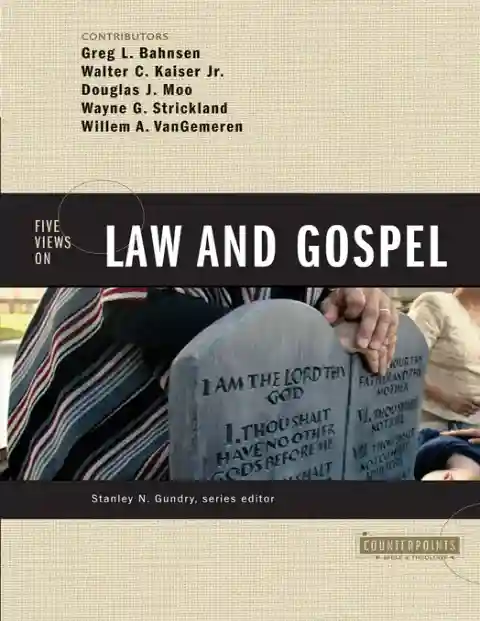

Others like five views on law and gospel Features >>

African Christian Theology

Romans Commentary
%20(Library%20of%20Christian%20Classics)%20by%20John%20Calvin-160.webp)
Library Of Christian Classics

King's Cross
With Calvin In The Theatre Of God
The Seven Church Ages
.mobi-160.webp)
Jesus Of Nazareth Part Two

Good Or God: Why Good Without God Isn't Enough
At The Origins Of Christian Worship

A Testimony Of Jesus Christ: A Commentary On The Book Of Revelation, Vol. 1
About the Book
"Five Views on Law and Gospel" by Greg L. Bahnsen presents five different perspectives on the relationship between law and gospel in Christianity. Each view is presented and critiqued by various contributors, offering readers a comprehensive understanding of the debate surrounding this theological issue.
Jim Elliot
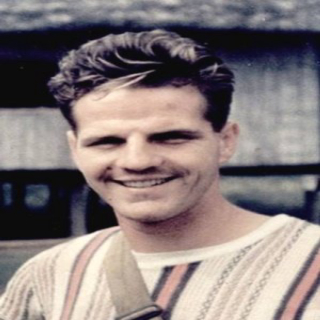 EARLY LIFE
Jim Elliot began his life in Portland, Oregon in the USA. His mother, Clara, was a chiropractor and his father, Fred, was a minister. They married and settled in Seattle, WA where they welcomed their first son, Robert in 1921.
Later they relocated the family to Portland where Herbert arrived in 1924, Jim in 1927, and Jane in 1932.
Jim knew Christ from an early age and was never afraid to speak about Him to his friends. At age six Jim told his mother, “Now, mama, the Lord Jesus can come whenever He wants. He could take our whole family because I’m saved now, and Jane is too young to know Him yet.”
THE YEARS THAT CEMENTED HIS DESIRE TO SERVE THE LORD IN MISSIONS
Jim entered Benson Polytechnic High School in 1941. He carried a small Bible with him and, an excellent speaker; he was often found speaking out for Christ. He and his friends were not afraid to step out and find adventure. One thing Jim didn’t have time for in those early years were girls. He was once quoted as telling a friend, “Domesticated males aren’t much use for adventure.”
In 1945 Jim traveled to Wheaton, IL to attend Wheaton College. His main goal while there was to devote himself to God. He recognized the importance of discipline in pursuing this goal. He would start each morning with prayer and Bible study. In his journal he wrote, “None of it gets to be ‘old stuff’ for it is Christ in print, the Living Word. We wouldn’t think of rising in the morning without a face-wash, but we often neglect the purgative cleansing of the Word of the Lord. It wakes us up to our responsibility.”
Jim’s desire to serve God by taking His gospel to unreached people of the world began to grow while at Wheaton. The summer of 1947 found him in Mexico and that time influenced his decision to minister in Central America after he finished college.
Jim met Elisabeth Howard during his third year at Wheaton. He did ask her for a date which she accepted and then later cancelled. They spent the next years as friends and after she finished at Wheaton they continued to correspond. As they came to know each other there was an attraction, but Jim felt he needed to unencumbered by worldly concerns in order to devote himself completely to God.
In addition to his hope to one day travel to a foreign country to share Christ with the unchurched of the world, he also felt the need to share with people in the United States. On Sundays while at Wheaton he would often ride the train into Chicago and talk to people in the train station about Christ. He often felt ineffective in his work as the times of knowingly leading people to Christ were few. He once wrote, “No fruit yet. Why is that I’m so unproductive? I cannot recall leading more than one or two into the kingdom. Surely this is not the manifestation of the power of the Resurrection. I feel as Rachel, ‘Give me children, or else I die.’”
After college with no clear answer as to working for the Lord in a foreign country, Jim returned home to Portland. He continued his disciplined Bible study as well as correspondence with Elisabeth Howard whom he called Betty.
They both felt a strong attraction to each other during this time, but also felt that the Lord may have been calling them to be unmarried as they served Him.
In June of 1950 he travelled to Oklahoma to attend the Summer Institute of Linguistics. There he learned how to study unwritten languages. He was able to work with a missionary to the Quichuas of the Ecuadorian jungle. Because of these lessons he began to pray for guidance about going to Ecuador and later felt compelled to answer the call there.
Elisabeth Elliot wrote in Shadow of the Almighty:
“The breadth of Jim’s vision is suggested in this entry from the journal:
August 9. “God just now gave me faith to ask for another young man to go, perhaps not this fall, but soon, to join the ranks in the lowlands of eastern Ecuador. There we must learn: 1) Spanish and Quichua, 2) each other, 3) the jungle and independence, and 4) God and God’s way of approach to the highland Quichua. From thence, by His great hand, we must move to the Ecuadorian highlands with several young Indians each, and begin work among the 800,000 highlanders. If God tarries, the natives must be taught to spread southward with the message of the reigning Christ, establishing New Testament groups as they go. Thence the Word must go south into Peru and Bolivia. The Quichuas must be reached for God! Enough for policy. Now for prayer and practice.
THE ECUADOR YEARS
In February 1952 Jim finally left America to travel to Ecuador with Pete Fleming. In May Elisabeth moved to Quito and though they didn’t feel the need to get engaged she and Jim did begin a courtship.
In August Jim left Elisabeth in Quito and travelled with Pete to Shell Mera. At the Mission Aviation Fellowship headquarters in Shell Mera, Jim and Pete learned more about the Acua Indians, a people group that was largely unreached and very savage.
Leaving Shell Mera, Pete and Jim moved on to Shandia where Jim was captivated by the Quichua. He felt very strongly that this was exactly where God intended for him to work to spread the Gospel.
While Jim was in Shandia, Elisabeth was working to learn more about the Colorado Indians near Santa Domingo. In January of 1953 he went to Quito and she met him there and they were finally engaged. They married in October of that year and their only child Valerie was born in 1955.
They settled in Shandia and continued their work with the Quichua Indians. It was Jim’s desire to be able to reach the Waodoni tribe that lived deep in the jungles and had little contact with the outside world. A Waodoni woman who had left the tribe was taken in by the missionaries and helped them to learn the language.
Jim, along with Pete, Ed McCully, Roger Youderian, and their pilot Nate Saint began to search by plane in hopes of finding a way to contact the Waodoni. The found a sandbar in the middle of the Curaray River that worked as a landing strip for the plane and it was there that they first made contact with the Waodoni. They were elated to be able to finally be able to attempt to share the love of Christ with this people group.
After their first meeting, one of the tribe, a man they called George lied to the tribe about the men’s intentions. This lie led the Waodoni warriors to plan an attack for when the missionaries returned. The men did return on January 8, 1956 and were surprised by ten members of the tribe who massacred the missionaries.
Jim’s short life that was filled with the desire to share God’s love can be summed up by a quote that is attributed to him. “He is no fool who gives that which he cannot keep, to gain what he cannot lose.”
EARLY LIFE
Jim Elliot began his life in Portland, Oregon in the USA. His mother, Clara, was a chiropractor and his father, Fred, was a minister. They married and settled in Seattle, WA where they welcomed their first son, Robert in 1921.
Later they relocated the family to Portland where Herbert arrived in 1924, Jim in 1927, and Jane in 1932.
Jim knew Christ from an early age and was never afraid to speak about Him to his friends. At age six Jim told his mother, “Now, mama, the Lord Jesus can come whenever He wants. He could take our whole family because I’m saved now, and Jane is too young to know Him yet.”
THE YEARS THAT CEMENTED HIS DESIRE TO SERVE THE LORD IN MISSIONS
Jim entered Benson Polytechnic High School in 1941. He carried a small Bible with him and, an excellent speaker; he was often found speaking out for Christ. He and his friends were not afraid to step out and find adventure. One thing Jim didn’t have time for in those early years were girls. He was once quoted as telling a friend, “Domesticated males aren’t much use for adventure.”
In 1945 Jim traveled to Wheaton, IL to attend Wheaton College. His main goal while there was to devote himself to God. He recognized the importance of discipline in pursuing this goal. He would start each morning with prayer and Bible study. In his journal he wrote, “None of it gets to be ‘old stuff’ for it is Christ in print, the Living Word. We wouldn’t think of rising in the morning without a face-wash, but we often neglect the purgative cleansing of the Word of the Lord. It wakes us up to our responsibility.”
Jim’s desire to serve God by taking His gospel to unreached people of the world began to grow while at Wheaton. The summer of 1947 found him in Mexico and that time influenced his decision to minister in Central America after he finished college.
Jim met Elisabeth Howard during his third year at Wheaton. He did ask her for a date which she accepted and then later cancelled. They spent the next years as friends and after she finished at Wheaton they continued to correspond. As they came to know each other there was an attraction, but Jim felt he needed to unencumbered by worldly concerns in order to devote himself completely to God.
In addition to his hope to one day travel to a foreign country to share Christ with the unchurched of the world, he also felt the need to share with people in the United States. On Sundays while at Wheaton he would often ride the train into Chicago and talk to people in the train station about Christ. He often felt ineffective in his work as the times of knowingly leading people to Christ were few. He once wrote, “No fruit yet. Why is that I’m so unproductive? I cannot recall leading more than one or two into the kingdom. Surely this is not the manifestation of the power of the Resurrection. I feel as Rachel, ‘Give me children, or else I die.’”
After college with no clear answer as to working for the Lord in a foreign country, Jim returned home to Portland. He continued his disciplined Bible study as well as correspondence with Elisabeth Howard whom he called Betty.
They both felt a strong attraction to each other during this time, but also felt that the Lord may have been calling them to be unmarried as they served Him.
In June of 1950 he travelled to Oklahoma to attend the Summer Institute of Linguistics. There he learned how to study unwritten languages. He was able to work with a missionary to the Quichuas of the Ecuadorian jungle. Because of these lessons he began to pray for guidance about going to Ecuador and later felt compelled to answer the call there.
Elisabeth Elliot wrote in Shadow of the Almighty:
“The breadth of Jim’s vision is suggested in this entry from the journal:
August 9. “God just now gave me faith to ask for another young man to go, perhaps not this fall, but soon, to join the ranks in the lowlands of eastern Ecuador. There we must learn: 1) Spanish and Quichua, 2) each other, 3) the jungle and independence, and 4) God and God’s way of approach to the highland Quichua. From thence, by His great hand, we must move to the Ecuadorian highlands with several young Indians each, and begin work among the 800,000 highlanders. If God tarries, the natives must be taught to spread southward with the message of the reigning Christ, establishing New Testament groups as they go. Thence the Word must go south into Peru and Bolivia. The Quichuas must be reached for God! Enough for policy. Now for prayer and practice.
THE ECUADOR YEARS
In February 1952 Jim finally left America to travel to Ecuador with Pete Fleming. In May Elisabeth moved to Quito and though they didn’t feel the need to get engaged she and Jim did begin a courtship.
In August Jim left Elisabeth in Quito and travelled with Pete to Shell Mera. At the Mission Aviation Fellowship headquarters in Shell Mera, Jim and Pete learned more about the Acua Indians, a people group that was largely unreached and very savage.
Leaving Shell Mera, Pete and Jim moved on to Shandia where Jim was captivated by the Quichua. He felt very strongly that this was exactly where God intended for him to work to spread the Gospel.
While Jim was in Shandia, Elisabeth was working to learn more about the Colorado Indians near Santa Domingo. In January of 1953 he went to Quito and she met him there and they were finally engaged. They married in October of that year and their only child Valerie was born in 1955.
They settled in Shandia and continued their work with the Quichua Indians. It was Jim’s desire to be able to reach the Waodoni tribe that lived deep in the jungles and had little contact with the outside world. A Waodoni woman who had left the tribe was taken in by the missionaries and helped them to learn the language.
Jim, along with Pete, Ed McCully, Roger Youderian, and their pilot Nate Saint began to search by plane in hopes of finding a way to contact the Waodoni. The found a sandbar in the middle of the Curaray River that worked as a landing strip for the plane and it was there that they first made contact with the Waodoni. They were elated to be able to finally be able to attempt to share the love of Christ with this people group.
After their first meeting, one of the tribe, a man they called George lied to the tribe about the men’s intentions. This lie led the Waodoni warriors to plan an attack for when the missionaries returned. The men did return on January 8, 1956 and were surprised by ten members of the tribe who massacred the missionaries.
Jim’s short life that was filled with the desire to share God’s love can be summed up by a quote that is attributed to him. “He is no fool who gives that which he cannot keep, to gain what he cannot lose.”
the courage you need in life’s uncertainty
“Jump! I’ll catch you!” When my son was young, getting him from the side of the pool into the water was difficult. His eyes darted side to side, quickly losing confidence, as his imagination surmised all the horrors associated with jumping. Only when I could get him to fix his attention on me would he find the confidence to bend his knees and spring off the side of the pool. Like my son, we are regularly confronted with situations that are overwhelming, unknown, or threatening. What does it look like for us to spring with confidence into every situation that the Lord brings into our lives? Four Ways to Walk in Faith Isaiah 7 tells the story of a king in crisis. When the Judean King Ahaz heard that Syria and Israel created an alliance to withstand the advancing Assyrian threat, his heart shook with fear (Isaiah 7:2). Seeking to strengthen their hand against Assyria, the Syro-Ephraimite coalition intended to use military force to depose Ahaz and coerce Judah to join them, as well. Ahaz responded to the imminent threat like a good king. He inspected the city’s water supply. How long can the city withstand a siege? Ahaz had been conditioned to believe that military threats require military responses. Yet, God responds to Ahaz by sending the prophet Isaiah, who relayed four commands from the Lord, each of which recalls other parts of the Old Testament: be careful, be quiet, do not fear, do not let your heart be faint. These four commands echo down the halls of Israel’s collective memory with the intention of reminding Ahaz of the provisions of faith. These commands are helpful for us too as we fight for faith amidst the challenges of our lives. 1. Be Mindful Moses instructed the Israelites before they entered the Promised Land: they will live in houses they did not build, drink wine from vineyards they did not plant, eat until they are full. But, Moses warns them in Deuteronomy 6:12, “take care lest you forget the Lord, who brought you out of the land of Egypt, out of the house of slavery.” At the moment of crisis, God acknowledged that Ahaz’s battle was not just outside the city walls, but also in his mind. It was essential for Ahaz to remember who he was and the history he had with God. In the same way, during times of uncertainty, cultivating memory and identity as those who are in Christ is essential for accessing the resources of faith to respond to present challenges. 2. Be Quiet This is an important theme in Isaiah. In Isaiah 30:15, God says, “In quietness and in trust shall be your strength.” Quietness in Isaiah does not mean the absence of noise, but the absence of agitation. In fact, peace and joyful shouting are themes that merge together in Isaiah 14:7 and 55:12. At the moment of crisis, Ahaz needed to find calm and certain confidence in God — something his water supply could never fully provide. 3. Do Not Fear The phrase recalls God’s providence, promises, and purposes. God uses these words when he appears to Abram, Moses, Joshua, and Elijah. It may seem trite to tell Ahaz not to fear. But the rationale is implicit: God was with him, for him, and had made promises to him. Ahaz, then, needed to respond on the basis of that conviction. Similarly, I need to recalibrate my perspective around God when faced with uncertain circumstances. John Oswalt summarizes, “If we can believe that the transcendent One is really immanent, and the immanent One truly transcendent, then there is reason to live courageously and unselfishly” ( Isaiah, 211). 4. Do Not Faint This is an exact quotation from Deuteronomy 20:3–4, where Moses prepares the Israelites for facing their enemies in battle. The priest was to come to the front of the line of soldiers and say, “let not your heart faint. Do not fear or panic or be in dread of them, for the Lord your God is he who goes with you to fight for you.” At the moment of crisis, with a mind that remembers, a soul free from agitation, and a renewed conviction that God is for me and with me, I can respond with courageous faith. A Picture of Courageous Faith In southwest Rwanda, along the shores of Lake Kivu, is a peninsula, where missionaries from the region have gathered annually since 1942 for spiritual renewal. On the far end of the peninsula is a cliff, into which thrill-seeking missionaries from a previous generation lodged a long, rigid, slab of wood — called “the plank” — thirty feet off the surface of the water. I have approached the plank many times. I stand looking, hearing my children behind me. “Come on, Dad!” “He won’t jump!” I am distracted by local children gathering in canoes to watch. I think about others who have jumped — and hurt themselves. I feel certain that I will fall off the cliff by even getting near the plank! I have never jumped. I have a friend named Jeff, who does not blink at the threats imposed by the plank. He steps onto the plank, walks a few paces, pulls himself up into an overhanging tree, climbs even higher, turns backward, and launches into a backflip as he springs out over the water. This is a picture of how I want to live — not carelessly, but confidently — springing with confidence into every situation that the Lord brings into my life — not simply conditioned to respond according to my own resources, but convinced that the provisions of faith provide all that I need to respond with confidence in any situation.