
GIP Library icon

LOG IN TO REVIEW

This book 'Finishing strong' is massively exceptional. I was blessed,cautioned and tailored to always walk in alignment with God's will. It's a tough/slippery path-Life, but it's easy to finish strong as long as I stay on the Lord.

- suurschi lee (8 months ago)

1

It was an experience worthwhile. Excellent book. Keep up the good work. God bless you immeasurably.

- suleman daniel (8 months ago)

1

Inspiring, I was much impacted.

- ochoo ouma (10 months ago)

2

Inspiring, I was much impacted.

- nkechi fakoya (2 years ago)

2
About the Book


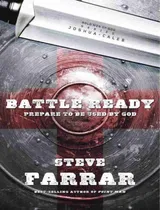
"Finishing Strong" by Steve Farrar offers practical advice and inspiration for men to finish their lives with strength and purpose. Drawing from biblical principles and real-life examples, Farrar challenges readers to prioritize their faith, relationships, and legacy, ultimately encouraging them to live a life that honors God and leaves a lasting impact on the world.

William Wilberforce

William Wilberforce William Wilberforce was born in 1759 in Hull, East Yorkshire. He graduated from Cambridge University with the intention of following a political career, and became Member of Parliament (MP) for Hull in 1780, aged 21. Four years later he became MP for the whole of Yorkshire. It was at this time that he began to work for the abolition of the British trade in enslaved people. Wilberforce was a deeply spiritual man and later became an Evangelical Christian. He was a popular figure and was known to be charming and witty and a great public speaker. He campaigned for a number of causes: for legislation to improve the lives of the poor, education reform, prison reforms and ending child labour. He was also one of the founders of the Royal Society of the Prevention of Cruelty to Animals (RSPCA). A Committed Abolitionist With the backing of his friend William Pitt, who became Prime Minister, Wilberforce became leader of The Society for the Abolition of Slavery. The society campaigned for almost 20 years to bring an end to British involvement in the Transatlantic Slave Trade. The abolition campaign made them many enemies, especially among those who had made huge profits from the trade in enlsaved African people. Wilberforce left Hull in 1792 and moved to Clapham, London to be closer to his work in Westminster. Within the local community he found friends who shared his interests in religion and politics. They became known as the Clapham Sect and they actively supported the anti-slavery abolitionists. William Wilberforce, oil painting by Karl Anton Hickel, 1793 . Willima has a white scarf tied at his neck and wearing a dark blue coat with a folded collar. William Wilberforce by Karl Anton Hickel, 1793 Wilberforce married Barbara Spooner in 1797 and they had six children. Historical acounts show that he was a loving and devoted husband and father, and was proud that three of his sons became clergyman. The Slavery Abolition Bill Wilberforce attempted several times to bring private members' bills before Parliament to end Britain’s involvement in the slave trade, but the Bill was defeated many times. It was finally passed on 25 March, 1807. However, this only went as far as banning British people from engaging in the slave trade, it did not ban slavery itself. Wilberforce retired from politics in 1825 due to ill health, but he continued to campaign for the abolition of slavery. Finally, on 26 July 1833, as Wilberforce lay on his deathbed, he was told that the Slavery Abolition Bill, granting freedom to all enslaved people within the British Empire, had been passed by Parliament. He died three days later. As a mark of respect for his achievements, his body was buried in Westminster Abbey. Childhood and Education William Wilberforce was born on 24 August, 1759, at 25 High Street, Hull (which is now known as Wilberforce House) to Robert and Elizabeth Wilberforce. He had three sisters, Elizabeth, Ann and Sarah (known as Sally). Of the four children, only William and Sally survived to adulthood. The Wilberforce family were successful merchants, who traded in imported goods, like wood and cloth, from northern Europe and the Baltic states. The family home reflected the family's wealth and was decorated with fashionable architecture of the day. William was a small, sickly child with poor eyesight, but this did not stop him from attending Hull Grammar School or taking part in musical activities or sports. William was known to have a beautiful singing voice and had a reputation for telling funny stories and playing practical jokes. When William was only eight years old, his father died. William's mother then became ill and so she sent him to live with his aunt and uncle, Hannah and William Wilberforce, in London. They sent him to study at a small boarding school in Putney, which he disliked, complaining about the food. Hannah and William were Evangelical Methodists and they took William to church regularly, where he enjoyed listening to bible stories and sermons by prominent figures within the Methodist movement. William's mother worried about his exposure to such a strong religious influence and arranged for him to come home to Hull. William was sent to board at Pocklington Grammar School, where he studied hard and did well at Latin, English and History. Aged 17 he went to Cambridge University, where he met William Pitt the Younger, who became a lifelong friend. Wilberforce took full advantage of the social life on offer at university, and was well known for attending dinners, gambling, and playing cards. Despite his busy social life, Wilberforce managed to graduate from Cambridge in 1781, determined to have a career as a Member of Parliament. Religious Beliefs and Influences William Wilberforce became a deeply religious man who dedicated his life and his work to acting on his beliefs. He had many religious and political influences during his lifetime. His mother was staunchly Church of England. However, after the death of his father, William spent two years living with his aunt and uncle in London, who were keen Methodists. They took the young William to church regularly, where he heard important figures like George Whitefield preach. At that time, Methodism was known as a branch within the Church of England that was particularly concerned with social welfare. However, his mother became alarmed at his growing interest in evangelical Christianity, and she brought the young William home again. Wilberforce's second major religious influence was Isaac Milner, who was a young teacher when Wilberforce attended Hull Grammar School. They were to become lifelong friends and in 1784 they travelled together through Europe. During the months they spent together, Milner introduced William to his own religious beliefs and encouraged him to read an essay entitled 'The Rise and Progress of Religion in the Soul'. The whole experience had a profound affect on William and he returned home to England a changed man and devout Methodist. Another influence on William was John Newton, his Aunt Hannah’s half-brother who had previously been involved in the slave trade. Newton was one of the wealthiest men in Europe and a great humanitarian and philanthropist, and gave many gifts to the Evangelical church. Following William's tour of Europe with Milner, he met up with John Newton to discuss his new-found faith. William wrote in secret to Newton: Sir, there is no need of apology for intruding on you, when the errand is religion. I wish to have some serious conversation with you… the earlier the more agreeable to me. I have ten thousand doubts within myself, whether or not I should discover myself to you; but every argument against doing it has its foundation in pride. I am sure you will hold yourself bound to let no one living know of this application, or of my visit, till I release you for the obligation… P.S. Remember that I must be secret, and that the gallery of the House is now so universally attended, that the face of a member of Parliament is pretty well known. William stuck with his conversion to Methodism and wrote a best-selling book A Practical View of Christianity thirteen years later. Early Political Life and Influences After graduating from Cambridge University, William Wilberforce chose to follow a career in politics and stood as Independent candidate, in an election for Hull's Member of Parliament. He won by an overwhelming majority and was elected to represent the citizens of Hull, at the age of just 21. The young Wilberforce was a natural politician. Following the deaths of his father and his uncle he had inherited enough money to financially support his political career. He was also well liked among Hull's merchant families, who hoped that he would represent their business interests in parliament. Two of Wilberforce's most appealing qualities were his engaging personality and his eloquent speaking voice - useful traits for a politician. He was so famous for his public speaking that he was nicknamed the 'Nightingale of the Commons'. On taking up his seat in the House of Commons, Wilberforce met up with his university friend, William Pitt the Younger, who had also chosen a political career. Pitt and Wilberforce spent much time studying the more experienced Members of Parliament from the Commons gallery, and listening to heated political debates of the day. Pitt enjoyed a very sucessful political career, becoming Prime Minister and the new Tory party leader in 1783, aged just 24. Although not quite as ambitious as Pitt, Wilberforce took the decision to stand as candidate for Member of Parliament for Yorkshire. This was one of only two county seats and on winning it, Wilberforce became a more influential politician. Following his conversion to Methodism in 1785, Wilberforce considered leaving politics. Yet, Pitt and John Newton convinced him to persevere and use his political work as a way of serving God. Wilberforce saw the campaign to abolish the Transatlantic Slave Trade as a way of following his religious and humanitarian beliefs, as well as his moral conscience.

three classes of men

There is an obvious difference in the character and quality of the daily life of Christians. This difference is acknowledged and defined in the New Testament. There is also a possible improvement in the character and quality of the daily life of many Christians. This improvement is experienced by all such Christians who fulfill certain conditions. These conditions, too, form an important theme in the Word of God. The Apostle Paul, by the Spirit, has divided the whole human family into three groups: (1) The "natural man," who is unregenerate, or unchanged spiritually; (2) the "carnal man," who is a "babe in Christ," and walks "as a man"; and (3) the "spiritual" man. These groups are classified by the Apostle according to their ability to understand and receive a certain body of Truth, which is of things "revealed" unto us by the Spirit. Men are vitally different one from the other as regards the fact of the new birth and the life of power and blessing; but their classification is made evident by their attitude toward things revealed. In 1 Cor. 2:9 to 3:4 this threefold classification is stated. The passage opens as follows: "But as it is written, Eye hath not seen, nor ear heard, neither have entered into the heart of man, the things which God hath prepared for them that love him. But God hath revealed them unto us by his Spirit." A distinction is here drawn between those general subjects of human knowledge which are received through the eye-gate, the ear-gate, or the "heart" (the power to reason), and other subjects which are said to have been "revealed" unto us by His Spirit. There is no reference here to any revelation other than that which is already contained in the Scriptures of Truth, and this revelation is boundless, as the passage goes on to state: "For the Spirit [who reveals] searcheth all things, yea, the deep things of God." Men are classified according to their ability to understand and receive the "deep things of God." Into these "deep things of God" no unaided man can go. "For what man knoweth the things of a man, save the spirit of man which is in him? even so the things of God knoweth no man, but the Spirit of God" (knows them). An unaided man may enter freely into the things of his fellow man because of "the spirit of man which is in him." He cannot extend his sphere. He cannot know experimentally the things of the animal world below him, and certainly he cannot enter a higher sphere and know experimentally the things of God. Even though man, of himself, cannot know the things of God, the Spirit knows them, and a man may be so related to the Spirit that he too may know them. The passage continues: "Now we have received, not the spirit of the world, but the Spirit which is of God; that we may know the things [the "deep things of God," which eye hath not seen, etc.] that are freely given us of God." "We [that is, all saved, excluding none] have received the Spirit which is of God." Here is a great potentiality. Being so vitally related to the Spirit of God as to have Him abiding within, it is possible, because of that fact, to come to know "the things that are freely given to us of God." We could never know them of ourselves: the Spirit knows, He indwells, and He reveals. This divine revelation is transmitted to us in "words" which the Holy Spirit teacheth, as the Apostle goes on to state: "Which things also we speak, not in the words which man's wisdom teacheth, but which the Holy Spirit teacheth; comparing spiritual things with spiritual." God's Book is a Book of words and the very words which convey "man's wisdom" are used to convey things which "eye hath not seen, nor ear heard, neither have entered into the heart of man." Nevertheless unaided man cannot understand these "deep things of God," though couched in words most familiar to man, except as they are "revealed" by the Spirit. Just so, in coming to know these revealed things, progress is made only as one spiritual thing is compared with another spiritual thing. Spiritual things must be communicated by spiritual means. Apart from the Spirit there can be no spiritual understanding. The Natural Man "But the natural man receiveth not the things [the revealed or deep things] of the Spirit of God: for they are foolishness unto him: neither can he know them, because they are spiritually discerned." In this passage the natural man is not blamed for his inability. It is simply an accurate statement of the fact of his limitations. The passage also goes on to assign the exact cause of these limitations. We have just been told that revelation is by the Spirit. It therefore follows that the "natural man" is helpless to understand things revealed because he has not received "the Spirit which is of God." He has received only "the spirit of man which is in him." Though he may, with "man's wisdom," be able to read the words, he cannot receive their spiritual meaning. To him the revelation is "foolishness." He cannot "receive" it, or "know" it. The preceding verses of the context (1 Cor. 1:18,23) have defined a part of the divine revelation which is said to be "foolishness" to the "natural man": "For the preaching of the cross is to them that perish foolishness; but unto us which are saved it is the power of God." "But we preach Christ crucified, unto the Jews a stumbling block, and unto the Greeks [Gentiles] foolishness," Much more than the mere historical fact of the death of Christ is here meant. It is the divine unfolding of redemption through grace and includes all the eternal relationships that are made possible thereby. The moral principles and many of the religious teachings of the Bible are within the range of the capacity of the "natural man." From these sources he may eloquently preach; yea, and most seriously, not even knowing that "the deep things of God" exist. Satan, in his counterfeit systems of truth, is said to have "deep things" to reveal (Rev. 2:24) and "doctrines of devils" (1 Tim. 4:1-2) which things, on the other hand, are as certainly not received by the true child of God; for it is said, "And a stranger will they not follow, but will flee from him: for they know not the voice of strangers" (John 10:5). Yet the "deep things" of Satan are strangely adapted to the blinded, "natural man" and are, therefore, received by him. Every modern cult is evidence establishing the truthfulness of this statement. The unsaved man, though educated with all of "man's wisdom," and though religious and attentive, is blind to the gospel (2 Cor. 4:3-4) and if called upon to formulate a doctrinal statement, will naturally formulate a "new theology" which is so "re-stated" as to omit the real meaning of the cross with its unfolding of the "deep things of God." The cross, as a substitutionary sacrifice for sin, is "foolishness" unto him. His very limitations as a "natural man" demand that this shall be so. Human wisdom cannot help him, for "the world by wisdom knew not God." On the other hand, the boundless "deep things of God" are to be "freely" given to the one who has received "the Spirit which is of God." The true child of God may, therefore, be taught the divine revelation, having received the Spirit. A trained mind, it may be added, will greatly assist; but apart from the presence of the indwelling Teacher, a trained mind avails nothing in coming to know the spiritual meaning of the revealed things of God. Measureless evil has arisen through the supposition that because a man is well advanced in the "wisdom of this world," his opinions are of value in spiritual matters. The "natural man," with all his learning and sincerity, will find nothing but "foolishness" in the things which are revealed by the Spirit. The knowledge of science cannot be substituted for the indwelling of, and right relation to, the Holy Spirit of God. Apart from the Spirit there can be no regeneration, and the "deep things of God" are unknowable. When an unregenerate teacher openly rejects the vital saving truths of God's Word, those truths will usually be discredited and discarded by the pupil. This is the colossal blunder of many students in universities and colleges today. It is too generally assumed that the teacher or preacher who is an authority in some branch or branches of human knowledge is, by virtue of that knowledge, equally capable of discernment in spiritual things. It is not so. An unregenerate person (and who is more assuredly unregenerate than the one who denies the foundation and reality of the new birth?) will always be incapable of receiving and knowing the simplest truths of revelation. God is not a reality to the natural man. "God is not in all his thoughts." The unsaved man is therefore distressed and burdened to dispose of the supernatural. A baseless theory of evolution is his best answer to the problem of the origin of the universe. To the regenerate man, God is real and there is satisfaction and rest in the confidence that God is Creator and Lord of all. The ability to receive and know the things of God is not attained through the schools, for many who are unlearned possess it while many who are learned do not possess it. It is an ability which is born of the indwelling Spirit. For this reason the Spirit has been given to those who are saved that they might know the things which are freely given to them of God. Yet among Christians there are some who are under limitations because of their carnality. They are unable to receive "meat" because of carnality, rather than ignorance. There are no divine classifications among the unsaved, for they are all said to be "natural" men. There are, however, two classifications of the saved, and in the text under consideration, the "spiritual" man is named before the "carnal" man and is thus placed in direct contrast with the unsaved. This is fitting because the "spiritual" man is the divine ideal. "HE THAT IS SPIRITUAL" (1 Cor. 2:15) is the normal, if not the usual, Christian. But there is a "carnal" man and he must be considered. The Carnal Man The Apostle proceeds in chapter 3:1-4 with the description of the "carnal" man: "And I, brethren, could not speak unto you as unto spiritual, but as unto carnal, even as unto babes in Christ. I have fed you with milk, and not with meat: for hitherto ye were not able to bear it, neither yet now are ye able. For ye are yet carnal: for whereas there is among you envying, and strife, and divisions, are ye not carnal, and walk as men? For while one saith, I am of Paul; and another, I am of Apollos; are ye not carnal?" Some Christians, thus, are said to be "carnal" because they can receive only the milk of the Word, in contrast to the strong meat; they yield to envy, strife and divisions, and are walking as men, while the true child of God is expected to "walk in the Spirit" (Gal. 5:16), to "walk in love" (Eph. 5:2), and to "keep the unity of the Spirit" (Eph. 4:3). Though saved, the carnal Christians are walking "according to the course of this world." They are "carnal" because the flesh is dominating them (See Rom. 7:14). A different description is found in Rom. 8:5-7. There the one referred to is "in the flesh," and so is unsaved; while a "carnal" Christian is not "in the flesh," but he has the flesh in him. "But ye are not in the flesh, but in the Spirit if so be that the Spirit of God dwell in you. Now if any man have not the Spirit of Christ, he is none of his." The "carnal" man, or "babe in Christ," is not "able to bear" the deep things of God. He is only a babe; but even that, it is important to note, is a height of position and reality which can never be compared with the utter incapacity of the "natural man." The "carnal" man, being so little occupied with true spiritual meat, yields to envy and strife which lead to divisions among the very believers. No reference is made here to the superficial fact of outward divisions or various organizations. It is a reference to envy and strife which were working to sunder the priceless fellowship and love of the saints. Different organizations may often tend to class distinctions among the believers, but it is not necessarily so. The sin which is here pointed out is that of the believer who follows human leaders. This sin would not be cured were all the religious organizations instantly swept from the earth, or merged into one. There were present the "Paulites," the "Cephasites," the "Apollosites" and the "Christites" (cf. 1:12). These were not as yet rival organizations, but divisions within the Corinthian church that grew out of envy and strife. History shows that such divisions end in rival organizations. The fact of division was but the outward expression of the deeper sin of loveless, carnal lives. For a Christian to glory in sectarianism is "baby talk" at best, and reveals the more serious lack of true Christian love which should flow out to all the saints. Divisions will fade away and their offense will cease when the believers "have love one for the other." But the "carnal" Christian is also characterized by a "walk" that is on the same plane as that of the "natural" man. "Are ye not carnal, and walk as men (cf. 2 Cor. 10:2-5). The objectives and affections are centered in the same unspiritual sphere as that of the "natural" man. In contrast to such a fleshly walk, we read: "This I say then, Walk in the Spirit, and ye shall not fulfill the lust of the flesh." This is spirituality. The Spiritual Man The second classification of believers in this passage is of the spiritual man. He, too, is proven to be all that he is said to be by one test of his ability to receive and know the divine revelation. "He that is spiritual discerneth all things." The progressive order of this whole context is evident: First, the divine revelation is now given. It is concerning things which, "eye hath not seen, nor ear heard, neither have entered into the heart of man." It is revealed by the Spirit (1 Cor. 2:9-10). Second, the revelation is of the "deep things of God," which no man can know. However the Spirit knows them (1 Cor. 2:10). Third, believers have received the Spirit who knows, in order that they too may know the deep things of God (1 Cor. 2:12). Fourth, the divine wisdom is hidden in the very words of God's Book; but the spiritual content of these words is understood only as one is able to compare spiritual things with spiritual (1 Cor. 2:13). Fifth, the "natural man" cannot receive the things of the Spirit of God, for they are foolishness unto him, neither can he know them, because they are only by the Spirit discerned. He has not received the Spirit which is of God (1 Cor. 2:14). Sixth, a carnal Christian is born again and possesses the indwelling Spirit; but his carnality hinders the full ministry of the Spirit (1 Cor. 3:1-4). Seventh, "HE THAT IS SPIRITUAL" discerneth all things. There is no limitation upon him in the realm of the things of God. He can "freely" receive the divine revelation and he glories in it. He, too, may enter, as any other man, into the subjects which are common to human knowledge. He discerneth all things; yet he is discerned, or understood by no man. How could it be otherwise since he has "the mind of Christ?" There are two great spiritual changes which are possible to human experience—the change from the "natural" man to the saved man, and the change from the "carnal" man to the " spiritual" man. The former is divinely accomplished when there is a real faith in Christ; the latter is accomplished when there is a real adjustment to the Spirit. Experimentally the one who is saved through faith in Christ, may at the same time wholly yield to God and enter at once a life of true surrender. Doubtless this is often the case. It was thus in the experience of Saul of Tarsus (Acts 9:4-6). Having recognized Jesus as his Lord and Saviour, he also said, "Lord, what wilt thou have me to do?" There is no evidence that he ever turned from this attitude of yieldedness to Christ. However, it must be remembered that many Christians are carnal. To these the word of God gives clear directions as to the steps to be taken that they may become spiritual. There is then a possible change from the carnal to the spiritual state. The "spiritual" man is the divine ideal in life and ministry, in power with God and man, in unbroken fellowship and blessing. To discover these realities and the revealed conditions upon which all may be realized is the purpose of the following pages. From He That Is Spiritual by Lewis Sperry Chafer. New edition, rev. and enl. Philadelphia: Sunday School Times Company, ©1918.

Feedback
Suggestionsuggestion box
x