

Others like finding hope after divorce Features >>

Finding Home - An Imperfect Path To Faith And Family

God's Blueprint For A Happy Home

Learning

Celebrating Marriage
-160.webp)
52 Uncommon Dates: A Couple's Adventure Guide For Praying, Playing, And Staying Together
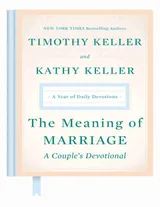
The Meaning Of Marriage: A Couple’s Devotional

Marriage As A Covenant Part 1

A Marriage Without Regrets

Paul, Women And Wives: Marriage And Women’s Ministry In The Letters Of Paul
-160.webp)
Love Must Be Tough: New Hope For Marriages In Crisis
About the Book
"Finding Hope After Divorce" by Kay Arthur offers practical guidance and biblical wisdom for those navigating the challenges of divorce. Arthur addresses the pain, loss, and confusion that often accompany divorce and provides steps for finding healing, restoration, and hope through faith in God. Through personal stories, practical advice, and a focus on biblical principles, this book offers a path towards finding joy and fulfillment in life after divorce.
Lecrae Moore

why join a church
One of the most counter-cultural things you can do is become an engaged member of a faithful local church. In our flighty and noncommittal age, neither non-Christians nor Christians are naturally inclined to find a place to put down roots and make longstanding, objective commitments for the good of others. We want to keep our options open and, above all, preserve our own freedom of choice, rather than make a covenant for the long haul and embrace a framework for real life in all its ups and downs. But what if you went against the grain and became part of the solution to the modern problem of being so noncommittal? What if you joined the rebellion, and pledged your loyalty and engagement to a Bible-believing, gospel-cherishing local church? Does the Bible Even Mention Membership? Most of us have raised eyebrows at some point about the concept of church membership. “Membership” — where do we see that in the New Testament? Is it really essential to join a church? Can’t I get everything I need as a Christian from being a regular attender? “One of the most counter-cultural things you can do is become an engaged member of a faithful local church.” It’s true that the New Testament makes no direct argument for our modern concept of membership. The gospel’s initial advance into a pagan and pre-Christian world was a different situation than we find today in our increasingly post-Christian society. The complexities of life two millennia later make church-belonging as difficult, and as important, as ever. Not only are we less inclined to make firm commitments, but our cities and towns are much bigger, and church options more diverse. But whether you call it “membership,” “partnership,” or something else, the New Testament assumes some form of committed, accountable belonging as a reality for every true follower of Jesus. Each Christian has a definite place of local belonging. To be baptized is to become part of a particular local body. “In the New Testament,” John Piper observes, “to be excluded from the local church was to be excluded from Christ.” Six Reasons to Put Down Roots Here, then, are six reasons, among many, to go against the noncommittal grain, put down roots, join a particular local church, and be as involved as possible in the life of that church. 1. Your Own Assurance Being accepted into membership in a Bible-believing, responsibly-led church rightly gives affirmation and reinforces confidence that your faith is real, that it’s not your own private, self-made religion, but part of “the faith that was once for all delivered to the saints” (Jude 3). Jesus gives his church “the keys of the kingdom of heaven,” and according to Matthew 16:19, “whatever you bind on earth shall be bound in heaven, and whatever you loose on earth shall be loosed in heaven.” It is no small thing for a solid local church to find your profession of faith to be credible, and your lifestyle and conduct not disqualifying, and to accept you into membership. There is more grace to be experienced in this, for our assurance, than most of us know. 2. The Good of Others This is perhaps the most often overlooked reason for joining a church. In our proclivity to self-focus, we consider the reasons relating directly to us, but overlook how our membership relates to others. Our belonging somewhere establishes a base from which we can reliably care for others. There are two sides to church membership, and we can’t keep others accountable for their good to a covenant we ourselves haven’t taken. True love is not only manifest in affection and action, but also allegiance. We do not fully love our brothers and sisters in Christ if we withhold pledging our allegiance to them by covenanting with them in local-church life. Love doesn’t say, “I love these people and don’t need to covenant with them.” Rather, it says, “I love these people enough to covenant with them.” Living the Christian life in community is more than just loose associations, but committing to each other to be there for each other when life is hard, in sickness and in sorrow. 3. Your Own Good On the flip side, it is for your own good to have others committed to genuinely caring for you in Christ. And the people who will care for you best in the long run are those who are willing to commit to it. “The people who will care for you best in the long run are those who are willing to commit to it.” Joining the church also formally identifies you as part of “the flock” which the church’s pastors and elders should “shepherd” (1 Peter 5:2) and to which they should “pay careful attention” (Acts 20:28). It is for your own good to be intentionally thought of and cared for by the leadership. 4. The Good of Your Leaders Connected, then, is the clarity it brings the leadership about who is in their “lot,” who is “in their charge” (1 Peter 5:3), who in particular are they called to serve and shepherd. In other words, your formally joining the church helps the pastors and elders do their job. How are they to shepherd the flock if they don’t know who is in that flock and who is not? It is difficult, if not impossible, to respect and esteem your leaders (1 Thessalonians 5:12–13), and honor them (1 Timothy 5:17), and obey and submit to them (Hebrews 13:17) without identifying yourself to them and submitting to the membership structure that allows them to know and care best for those in their charge. 5. The Good of Unbelievers Another good reason for joining a church is the good of those who are not there yet — even those who don’t yet know Jesus. Because we reach out and show Christ better as part of a committed, stable community. “By this all people will know that you are my disciples, if you have love for one another” (John 13:35). A lone-ranger Christian doesn’t make the best witness for Christ. Rather, someone who is grounded, has a home, and is part of a solid covenant community of support is best prepared to draw others into the kingdom. “The complexities of life in the 21st century make belonging to a local church as difficult, and important, as ever.” Community is increasingly important in our witness today. As Christians who are truly faithful to the voice of Christ find themselves more and more in the minority of society, we need other believers to point to, that we’re not alone in our seemingly strange views, both in history and today. And the whole community together serves to put Christ on display better than individual Christians alone. This happens best not in fly-by-night, uncommitted associations, but in deep, committed, long-standing, life-together relationships in this time-tested arrangement called “the local church,” established and upheld in the wisdom and power of Jesus himself. 6. Your Own Perseverance Finally, covenanting with others now not to let you wander from the gospel, without pressing hard to bring you back, may one day prove priceless for your perseverance in the faith — and your eternity with Christ. It is, after all, as Jesus said, the one who endures to the end who will be saved (Matthew 24:13). In a good church covenant, we yoke ourselves to accountability while we’re in our right minds, in case someday sin gets a foothold in our hearts and blinds us to the truth. Church discipline is hard, but so good. The purpose is always restoration, and God often has been pleased to use this difficult means to pour out his striking grace. My brothers, if anyone among you wanders from the truth and someone brings him back, let him know that whoever brings back a sinner from his wandering will save his soul from death and will cover a multitude of sins. (James 5:19–20)