

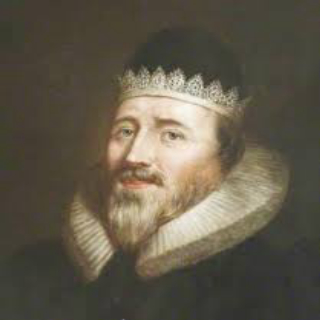
Cornelius Van Til
Cornelius Van Til (May 3, 1895 – April 17, 1987) was a Dutch-American reformed philosopher and theologian, who is credited as being the originator of modern presuppositional apologetics.
Biography
Van Til (born Kornelis van Til in Grootegast, Netherlands) was the sixth son of Ite van Til, a dairy farmer, and his wife Klasina van der Veen. At the age of ten, he moved with his family to Highland, Indiana. He was the first of his family to receive a higher education. In 1914 he attended Calvin Preparatory School, graduated from Calvin College, and attended one year at Calvin Theological Seminary, where he studied under Louis Berkhof, but he transferred to Princeton Theological Seminary and later graduated with his PhD from Princeton University.
He began teaching at Princeton Seminary, but shortly went with the conservative group that founded Westminster Theological Seminary, where he taught for forty-three years. He taught apologetics and systematic theology there until his retirement in 1972 and continued to teach occasionally until 1979. He was also a minister in the Christian Reformed Church in North America and in the Orthodox Presbyterian Church from the 1930s until his death in 1987, and in that denomination, he was embroiled in a bitter dispute with Gordon Clark over God's incomprehensibility known as the Clark–Van Til Controversy.
Work
Van Til drew upon the works of Dutch Calvinist philosophers such as D. H. Th. Vollenhoven, Herman Dooyeweerd, and Hendrik G. Stoker and theologians such as Herman Bavinck and Abraham Kuyper to devise a novel Reformed approach to Christian apologetics, one that opposed the traditional methodology of reasoning on the supposition that there is a neutral middle-ground, upon which the non-Christian and the Christian can agree. His contribution to the Neo-Calvinist approach of Dooyeweerd, Stoker and others, was to insist that the "ground motive" of a Christian philosophy must be derived from the historical terms of the Christian faith. In particular, he argued that the Trinity is of indispensable and insuperable value to a Christian philosophy.
In Van Til: The Theologian, John Frame, a sympathetic critic of Van Til, claims that Van Til's contributions to Christian thought are comparable in magnitude to those of Immanuel Kant in non-Christian philosophy. He indicates that Van Til identified the disciplines of systematic theology and apologetics, seeing the former as a positive statement of the Christian faith and the latter as a defense of that statement – "a difference in emphasis rather than of subject matter." Frame summarizes Van Til's legacy as one of new applications of traditional doctrines:
Unoriginal as his doctrinal formulations may be, his use of those formulations – his application of them – is often quite remarkable. The sovereignty of God becomes an epistemological, as well as a religious and metaphysical principle. The Trinity becomes the answer to the philosophical problem of the one and the many. Common grace becomes the key to a Christian philosophy of history. These new applications of familiar doctrines inevitably increase [Christians'] understanding of the doctrines themselves, for [they] come thereby to a new appreciation of what these doctrines demand of [them].
Similarly, Van Til's application of the doctrines of total depravity and the ultimate authority of God led to his reforming of the discipline of apologetics. Specifically, he denied neutrality on the basis of the total depravity of man and the invasive effects of sin on man's reasoning ability and he insisted that the Bible, which he viewed as a divinely inspired book, be trusted preeminently because he believed the Christian's ultimate commitment must rest on the ultimate authority of God. As Frame says elsewhere, "the foundation of Van Til's system and its most persuasive principle" is a rejection of autonomy since "Christian thinking, like all of the Christian life, is subject to God's lordship". However, it is this very feature that has caused some Christian apologists to reject Van Til's approach. For instance, D. R. Trethewie describes Van Til's system as nothing more than "a priori dogmatic transcendental irrationalism, which he has attempted to give a Christian name to."
Kuyper–Warfield synthesis
It is claimed that Fideism describes the view of fellow Dutchman Abraham Kuyper, whom Van Til claimed as a major inspiration. Van Til is seen as taking the side of Kuyper against his alma mater, Princeton Seminary, and particularly against Princeton professor B. B. Warfield. But Van Til described his approach to apologetics as a synthesis of these two approaches: "I have tried to use elements both of Kuyper's and of Warfield's thinking." Greg Bahnsen, a student of Van Til and one of his most prominent defenders and expositors, wrote that "A person who can explain the ways in which Van Til agreed and disagreed with both Warfield and Kuyper, is a person who understands presuppositional apologetics."
With Kuyper, Van Til believed that the Christian and the non-Christian have different ultimate standards, presuppositions that color the interpretation of every fact in every area of life. But with Warfield, he believed that a rational proof for Christianity is possible: "Positively Hodge and Warfield were quite right in stressing the fact that Christianity meets every legitimate demand of reason. Surely Christianity is not irrational. To be sure, it must be accepted on faith, but surely it must not be taken on blind faith. Christianity is capable of rational defense." And like Warfield, Van Til believed that the Holy Spirit will use arguments against unbelief as a means to convert non-believers.
Van Til sought a third way from Kuyper and Warfield. His answer to the question "How do you argue with someone who has different presuppositions?" is the transcendental argument, an argument that seeks to prove that certain presuppositions are necessary for the possibility of rationality. The Christian and non-Christian have different presuppositions, but, according to Van Til, only the Christian's presuppositions allow for the possibility of human rationality or intelligible experience. By rejecting an absolutely rational God that determines whatsoever comes to pass and presupposing that some non-rational force ultimately determines the nature of the universe, the non-Christian cannot account for rationality. Van Til claims that non-Christian presuppositions reduce to absurdity and are self-defeating. Thus, non-Christians can reason, but they are being inconsistent with their presuppositions when they do so. The unbeliever's ability to reason is based on the fact that, despite what he believes, he is God's creature living in God's world.
Hence, Van Til arrives at his famous assertion that there is no neutral common ground between Christians and non-Christians because their presuppositions, their ultimate principles of interpretation, are different; but because non-Christians act and think inconsistently with regard to their presuppositions, common ground can be found. The task of the Christian apologist is to point out the difference in ultimate principles, and then show why the non-Christian's reduce to absurdity.
Transcendental argument
The substance of Van Til's transcendental argument is that the doctrine of the ontological Trinity, which is concerned with the reciprocal relationships of the persons of the Godhead to each other without reference to God's relationship with creation, is the aspect of God's character that is necessary for the possibility of rationality. R. J. Rushdoony writes, "The whole body of Van Til's writings is given to the development of this concept of the ontological Trinity and its philosophical implications." The ontological Trinity is important to Van Til because he can relate it to the philosophical concept of the "concrete universal" and the problem of the One and the many.
For Van Til, the ontological Trinity means that God's unity and diversity are equally basic. This is in contrast with non-Christian philosophy in which unity and diversity are seen as ultimately separate from each other:
The whole problem of knowledge has constantly been that of bringing the one and the many together. When man looks about him and within him, he sees that there is a great variety of facts. The question that comes up at once is whether there is any unity in this variety, whether there is one principle in accordance with which all these many things appear and occur. All non-Christian thought, if it has utilized the idea of a supra-mundane existence at all, has used this supra-mundane existence as furnishing only the unity or the a priori aspect of knowledge, while it has maintained that the a posteriori aspect of knowledge is something that is furnished by the universe.
Pure unity with no particularity is a blank, and pure particularity with no unity is chaos. Frame says that a blank and chaos are "meaningless in themselves and impossible to relate to one another. As such, unbelieving worldviews always reduce to unintelligible nonsense. This is, essentially, Van Til's critique of secular philosophy (and its influence on Christian philosophy)."
Karl Barth
Van Til was also a strident opponent of the theology of Karl Barth, and his opposition led to the rejection of Barth's theology by many in the Calvinist community. Despite Barth's assertions that he sought to base his theology solely on the 'Word of God', Van Til believed that Barth's thought was syncretic in nature and fundamentally flawed because, according to Van Til, it assumed a Kantian epistemology, which Van Til argued was necessarily irrational and anti-Biblical.
Influence
Many recent theologians have been influenced by Van Til's thought, including John Frame, Greg Bahnsen, Rousas John Rushdoony, Francis Schaeffer, as well as many of the current faculty members of Westminster Theological Seminary, Reformed Theological Seminary, and other Calvinist seminaries. He was also the personal mentor of K. Scott Oliphint late in life.
The Martyred Lover - The Story Behind Saint Valentine’s Day
Of the multitude of feasts celebrated in the popular culture of medieval Europe — wherein lie some of the key roots of the modern West — only two remain in popular North American culture today: Saint Patrick’s Day (March 17) and Saint Valentine’s Day (February 14). With Saint Patrick, we have two important texts by Patrick himself that reveal the true man. But who was Saint Valentine? The name was a popular one in the Roman world, for the adjective valens expressed the idea of being vigorous and robust. In fact, we know of about a dozen early Christians who bore this name. Our Saint Valentine was an Italian bishop who was martyred on February 14, 269, after a trial before the Roman emperor Claudius Gothicus (reign 268–270). According to the meager accounts that we have, Valentine’s body was hastily buried, but a few nights later some of his associates retrieved it and returned it to his home town of Terni in central Italy. Other accounts list him as an elder in Rome. One embellishment has him writing a letter before his death and signing it, “your Valentine.” “Saint Valentine was a martyr — yes, a lover, but one who loved the Lord Jesus to the point of giving his life.” What seems clear, though, from all that we can determine, is that Saint Valentine was a martyr — yes, a lover, but one who loved the Lord Jesus to the point of giving his life for his commitment to Christ. For Christians to adequately remember Saint Valentine, then, we would do well to consider what it meant to be a martyr in the early church. Witnesses and Martyrs Our word martyr is derived from the Greek martys, originally a juridical term that was used of a witness in a court of law. Such a person was one “who has direct knowledge or experience of certain persons, events or circumstances and is therefore in a position to speak out and does so.”1 In the New Testament, the term and its cognates are frequently applied to Christians, who bear witness to Christ, often in real courts of law, when his claims are disputed and their fidelity is tested by persecution. The transition of this word within the early Christian communities from witness to what the English term martyr” entails serves as an excellent gauge of what was happening to Christians as they bore witness to Christ. In Acts 1:8, Jesus tells the apostles that they are to be his “witnesses” (martyres) in Jerusalem, Judea, Samaria, and to the end of the earth. At this point, the word does not have the association of death, although in Acts 22:20 we do read of the “blood of Stephen,” the Lord’s “witness” (Greek martyros), being shed. But it is really not until the end of the writing of the New Testament canon that the term martys acquires the association with death.2 At the very close of the apostolic era, the risen Christ in Revelation 2 commends his servant Antipas, his “faithful witness,” who was slain for his faith at Pergamum, “where Satan dwells” (Revelation 2:12–13). Pergamum, it should be noted, was a key center of emperor worship in Asia Minor, and the first town in that area to build a temple to a Roman emperor, Augustus Caesar. It may well have been Antipas’s refusal to confess Caesar as Lord and worship him that led to his martyrdom.3 It has been estimated that by the mid-first century, eighty or so cities in Asia Minor had erected temples devoted to the cult of the emperor.4 The word martys seems thus to have acquired its future meaning first in the Christian communities in Asia Minor, where the violent encounter between church and empire was particularly intense.5 In this regard, it was certainly not fortuitous that Asia Minor was “unusually fond” of the violent entertainment of the gladiatorial shows. There was, in fact, a training school for gladiators at Pergamum. Along with fascination with such violence, there would have been a demand for victims over and above the requisite gladiators. Thus, recourse was had to Christians, among others.6 And so, the word martys became restricted in its usage to a single signification: bearing witness to the person and work of Christ to the point of death. Stephen and Antipas were the first of many such martyrs in the Roman Empire. Neronian Persecution One of the most memorable clashes between church and empire was what has come to be called the Neronian persecution. In mid-July 64, a fire began in the heart of Rome that raged out of control for nearly a week and gutted most of the city. After it had been extinguished, it was rumored that the emperor Nero (reign 54–68) himself had started it, for it was common knowledge that Nero wanted to level the capital of the empire in order to rebuild the city in a style in keeping with his conception of his own greatness. Conscious that he had to allay suspicions against him, Nero fixed the blame on the Christians. The fullest description that we have of this violence against the church is from the Roman historian Tacitus (about 55–117), who describes the execution of these Christians as follows: To scotch the rumour [that he had started the fire], Nero substituted as culprits, and punished with the utmost refinements of cruelty, a class of men, loathed for their vices, whom the crowd styled Christians. Christus, from whom they got their name, had been executed by sentence of the procurator Pontius Pilate when Tiberius was emperor; and the pernicious superstition was checked for a short time, only to break out afresh, not only in Judaea, the home of the plague, but in Rome itself, where all the horrible and shameful things in the world collect and find a home. First of all, those who confessed were arrested; then, on their information, a huge multitude was convicted, not so much on the ground of incendiarism as for hatred of the human race. Their execution was made a matter of sport: some were sewn up in the skins of wild beasts and savaged to death by dogs; others were fastened to crosses as living torches, to serve as lights when daylight failed. Nero made his gardens available for the show and held games in the Circus, mingling with the crowd or standing in his chariot in charioteer’s uniform. Hence, although the victims were criminals deserving the severest punishment, pity began to be felt for them because it seemed that they were being sacrificed to gratify one man’s lust for cruelty rather than for the public weal.7 A number of Christians — including the apostle Peter, according to an early Christian tradition that seems to be genuine8 — were arrested and executed. Their crime was ostensibly arson. Tacitus seems to doubt the reality of this accusation, though he does believe that Christians are rightly “loathed for their vices.” Tacitus’s text mentions only one vice explicitly: “hatred of the human race.” Why would Christians, who preached a message of divine love and who were commanded to love even their enemies, be accused of such a vice? Well, if one looks at it through the eyes of Roman paganism, the logic seems irrefutable. It was, after all, the Roman gods who kept the empire secure. But the Christians refused to worship these gods — thus the charge of “atheism” that was sometimes leveled at them.9 Therefore, many of their pagan neighbors reasoned, they cannot love the emperor or the empire’s inhabitants. Christians thus were viewed as fundamentally anti-Roman and so a positive danger to the empire.10 ‘Blood of Christians Is Seed’ This attack on the church was a turning-point in the relationship between the church and the Roman state in these early years. It set an important precedent. Christianity was now considered illegal, and over the next 140 years the Roman state had recourse to sporadic persecution of the church. It is noteworthy, though, that no emperor initiated an empire-wide persecution until the beginning of the third century, and that with Septimius Severus (reign 193–211).11 Nonetheless, martyrdom was a reality that believers had to constantly bear in mind during this period of the ancient church. “Instead of stamping out Christianity, persecution often caused it to flourish.” But persecution did not always have the effect the Romans hoped for. Instead of stamping out Christianity, persecution often caused it to flourish. As Tertullian (born about 155), the first Christian theologian to write in Latin, put it, “The more you mow us down, the more we grow: the blood of Christians is seed.”12 And as he said on another occasion: “whoever beholds such noble endurance [of the martyrs] will first, as though struck by some kind of uneasiness, be driven to enquire what is the matter in question, and, then, when he knows the truth, immediately follow the same way.”13 Surpassing All Earthly Loves It was during the Middle Ages that the various stories of Saint Valentine circulated and were embellished, solidifying the remembrance of him as a martyr. But it was a medieval writer, Geoffrey Chaucer (1340s–1400), who explicitly linked romantic love to Saint Valentine in a poem entitled “Parliament of Fowls” that described the gathering of a group of birds on “seynt valentynes day” to choose their mates. To what degree Chaucer influenced the later link between Saint Valentine’s Day and lovers is not exactly clear, but as early as the fifteenth century lovers were sending each other love notes on Saint Valentine’s Day. Of course, with the rise of the commercial cultures of the West in the eighteenth and nineteenth centuries, this practice was commodified and became an important part of the commercial world we see today. There is nothing inherently wrong with modern commercial traditions, but Saint Valentine’s Day is a good day to also remember that there is a love that surpasses all earthly loves: our love for our great God and our Savior, his dear divine Son, Jesus. Allison A. Trites, The New Testament Concept of Witness (Cambridge: Cambridge University Press, 1977), 9. ↩ G.W. Bowersock, Martyrdom and Rome (Cambridge: Cambridge University Press, 1995), 1–21. ↩ Paul Keresztes, “The Imperial Roman Government and the Christian Church. I. From Nero to the Severi” in Aufstieg und Niedergang der römischen Welt, ed. Hildegard Temporini and Wolfgang Haase (Berlin: Walter de Gruyter, 1979), II.23.1, 272; G.K. Beale, The Book of Revelation (Grand Rapids: Eerdmans, 1999), 246. ↩ Christopher A. Frilingos, Spectacles of Empire: Monsters, Martyrs, and the Book of Revelation (Philadelphia: University of Pennsylvania Press, 2004), 22–23. ↩ Theofried Baumeister, “Martyrdom and Persecution in Early Christianity,” trans. Robert Nowell, in Martyrdom Today, ed. Johannes-Baptist Metz and Edward Schillebeeckx (Edinburgh: T&T Clark, 1983), 4. ↩ Bowersock, Martyrdom and Rome, 17–18; Keresztes, “Imperial Roman Government and the Christian Church,” 272. ↩ Tacitus, Annals 15.44.3–8, trans. F.F. Bruce, Paul: Apostle of the Heart Set Free (Grand Rapids: Eerdmans, 1977), 442. ↩ See Tertullian, Scorpiace 15.3. ↩ See Justin Martyr, 2 Apology 3. ↩ W.H.C. Frend, “Persecutions,” in Encyclopedia of the Early Church, ed. Angelo Di Berardino, trans. Adrian Walford (New York: Oxford University Press, 1992), II, 673. Christians were also charged with incest, seemingly a misunderstanding of the common Christian statement about loving their brothers and sisters in Christ, and with cannibalism, a misunderstanding of the Lord’s Table. See, in this regard, Justin Martyr, 2 Apology 12; Theophilus, To Autolycus 3.4, 15; Minucius Felix, Octavius 9.2, 5; 28.2; 30–31. ↩ Some scholars see the first empire-wide persecution initiated by an emperor to be that of Decius (reign 249–251) in the late 240s. ↩ Tertullian, Apology 50.13. ↩ Tertullian, To Scapula 5, in Tertullian: Apologetical Works and Minucius Felix: Octavius, trans. Rudolph Arbesmann, Emily Joseph Daly, and Edwin A. Quain (New York: Fathers of the Church, Inc., 1950), 161. ↩ Article by Michael A.G. Haykin