
Others like dream seeds Features >>



About the Book
"Dream Seeds" by Mike Murdock is a motivational book that emphasizes the importance of planting seeds of positive thoughts and goals in order to achieve success in life. The author encourages readers to nurture their dreams, have faith in their potential, and take actionable steps towards turning their dreams into reality. The book provides practical advice and inspirational stories to help readers unlock their potential and reach their goals.
Gregory Thaumaturgus
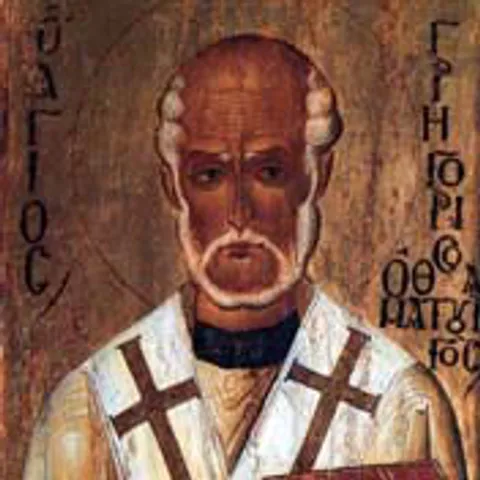 Gregory the Wonderworker’s Early life
Gregory was born in a Pontus, a region on the southern coast of the Black Sea, located in the modern-day eastern Black Sea Region of Turkey, around 212-13. His was a wealthy home and his parents named him Theodore (Gift of God) despite their pagan beliefs. When he was 14 years old his father died and soon after, he and his brother, Athenodorus, were anxious to study law at Beirut, Lebanon, then one of the four of five famous schools in the Hellenic world.
Influence of Origen
However, on the way, they first had to escort their sister to rejoin her husband, who was a government official assigned to Caesarea in Palestine (modern Haifa, Israel). When they arrived they learned that the celebrated scholar Origen, head of the catechetical school of Alexandria, lived there.
Inquisitiveness led them to hear and speak with the Origen and his irresistible charm quickly won their hearts. They soon dropped their desires for a life in Roman law, became Christian believers and pupils of Origen, learning philosophy and theology, for somewhere between five and eight years. Origen also baptised Gregory.
Pastor (then Bishop) of Neoceasarea
Gregory returned to his native Pontus with the intention of practicing oratory, but also to write a book proving the truth of Christianity, revealing his evangelistic heart. But his plans were disrupted when locals noticed his passion for Christ and his spiritual maturity. There were just seventeen Christians in Neoceasarea when Gregory arrived and this small group persuaded him to lead them as their bishop. (‘bishop’ simply meant a local overseer). At the time, Neocaesarea was a wicked, idolatrous province.
Signs of the Spirit
By his saintly life, his direct and lively preaching, helping the needy and settling quarrels and complaints, Gregory began to see many converts to Christ. But it was the signs and wonders that particularly attracted people to Christ.
En route to Neocaesarea from Amasea, Gregory expelled demons from a pagan temple, its priest converted to Christ immediately.
Once, when he was conversing with philosophers and teachers in the city square, a notorious harlot came up to him and demanded payment for the sin he had supposedly committed with her. At first Gregory gently remonstrated with her, saying that she perhaps mistook him for someone else.
But the loose woman would not be silenced. He then asked a friend to give her the money. Just as the woman took the unjust payment, she immediately fell to the ground in a demonic fit, and the fraud became evident. Gregory prayed over her, and the devil left her. This was the beginning of Gregory’s miracles. It was at this time he became known as ‘Gregory Thaumaturgus,’ ‘Gregory the Miracle Worker’ (or Wonderworker).
At one point Gregory wanted to flee from the worldly affairs into which influential townsmen persistently sought to push him. He went into the desert, where by fasting and prayer he developed an intimacy with God and received gifts of knowledge, wisdom and prophecy. He loved life in the wilderness and wanted to remain in solitude with God until the end of his days, but the Lord willed otherwise.
His theological contribution
Though he was primarily an evangelist and pastor, Gregory also had a deep theological understanding.
His principal work ‘The Exposition of Faith’, was a theological apology for Trinitarian belief. It incorporated his doctrinal instructions to new believers, expressed his arguments against heretical groups and was widely influential amongst leaders in the Patristic period: Basil the Great, Gregory the Theologian, and Gregory of Nyssa (The Cappadocian Fathers). It was the forerunner of the Nicene Creed that was to appear in the early 4th century.
In summary
He gave himself to the task of the complete conversion of the population of his diocese. The transformation in Neocaesarea was astonishing. Persuasive preaching, numerous healings and miraculous signs had a powerful effect. Such was his success that it was said that when Gregory became bishop (c 240) he found only seventeen Christians in his diocese; when he died only seventeen remained pagan (Latourette 1953:76).
Basil the Great’s Testimony
Basil the Great (330-379, Bishop of Caesarea, in his work ‘On the Spirit’ wrote the following account of Gregory the wonder-worker.
“But where shall I rank the great Gregory, and the words uttered by him? Shall we not place among Apostles and Prophets a man who walked by the same Spirit as they; who never through all his days diverged from the footprints of the saints; who maintained, as long as he lived, the exact principles of evangelical citizenship?
I am sure that we shall do the truth a wrong if we refuse to number that soul with the people of God, shining as it did like a beacon in the Church of God: for by the fellow-working of the Spirit the power which he had over demons was tremendous, and so gifted was he with the grace of the word ‘for obedience to the faith among. . .the nations.’ that, although only seventeen Christians were handed over to him, he brought the whole people alike in town and country through knowledge to God.
He too by Christ’s mighty name commanded even rivers to change their course, and caused a lake, which afforded a ground of quarrel to some covetous brethren, to dry up. Moreover, his predictions of things to come were such as in no wise to fall short of those of the great prophets. To recount all his wonderful works in detail would be too long a task. By the superabundance of gifts, wrought in him by the Spirit, in all power and in signs and in marvels, he was styled a second Moses by the very enemies of the Church.
Thus, in all that he through grace accomplished, alike by word and deed, a light seemed ever to be shining, token of the heavenly power from the unseen which followed him. To this day he is a great object of admiration to the people of his own neighborhood, and his memory, established in the churches ever fresh and green, is not dulled by length of time. (Schaff and Wace nd., Series 2. 8:46-47).
“Gregory was a great and conspicuous lamp, illuminating the church of God.” —Basil the Great.
Gregory the Wonderworker’s Early life
Gregory was born in a Pontus, a region on the southern coast of the Black Sea, located in the modern-day eastern Black Sea Region of Turkey, around 212-13. His was a wealthy home and his parents named him Theodore (Gift of God) despite their pagan beliefs. When he was 14 years old his father died and soon after, he and his brother, Athenodorus, were anxious to study law at Beirut, Lebanon, then one of the four of five famous schools in the Hellenic world.
Influence of Origen
However, on the way, they first had to escort their sister to rejoin her husband, who was a government official assigned to Caesarea in Palestine (modern Haifa, Israel). When they arrived they learned that the celebrated scholar Origen, head of the catechetical school of Alexandria, lived there.
Inquisitiveness led them to hear and speak with the Origen and his irresistible charm quickly won their hearts. They soon dropped their desires for a life in Roman law, became Christian believers and pupils of Origen, learning philosophy and theology, for somewhere between five and eight years. Origen also baptised Gregory.
Pastor (then Bishop) of Neoceasarea
Gregory returned to his native Pontus with the intention of practicing oratory, but also to write a book proving the truth of Christianity, revealing his evangelistic heart. But his plans were disrupted when locals noticed his passion for Christ and his spiritual maturity. There were just seventeen Christians in Neoceasarea when Gregory arrived and this small group persuaded him to lead them as their bishop. (‘bishop’ simply meant a local overseer). At the time, Neocaesarea was a wicked, idolatrous province.
Signs of the Spirit
By his saintly life, his direct and lively preaching, helping the needy and settling quarrels and complaints, Gregory began to see many converts to Christ. But it was the signs and wonders that particularly attracted people to Christ.
En route to Neocaesarea from Amasea, Gregory expelled demons from a pagan temple, its priest converted to Christ immediately.
Once, when he was conversing with philosophers and teachers in the city square, a notorious harlot came up to him and demanded payment for the sin he had supposedly committed with her. At first Gregory gently remonstrated with her, saying that she perhaps mistook him for someone else.
But the loose woman would not be silenced. He then asked a friend to give her the money. Just as the woman took the unjust payment, she immediately fell to the ground in a demonic fit, and the fraud became evident. Gregory prayed over her, and the devil left her. This was the beginning of Gregory’s miracles. It was at this time he became known as ‘Gregory Thaumaturgus,’ ‘Gregory the Miracle Worker’ (or Wonderworker).
At one point Gregory wanted to flee from the worldly affairs into which influential townsmen persistently sought to push him. He went into the desert, where by fasting and prayer he developed an intimacy with God and received gifts of knowledge, wisdom and prophecy. He loved life in the wilderness and wanted to remain in solitude with God until the end of his days, but the Lord willed otherwise.
His theological contribution
Though he was primarily an evangelist and pastor, Gregory also had a deep theological understanding.
His principal work ‘The Exposition of Faith’, was a theological apology for Trinitarian belief. It incorporated his doctrinal instructions to new believers, expressed his arguments against heretical groups and was widely influential amongst leaders in the Patristic period: Basil the Great, Gregory the Theologian, and Gregory of Nyssa (The Cappadocian Fathers). It was the forerunner of the Nicene Creed that was to appear in the early 4th century.
In summary
He gave himself to the task of the complete conversion of the population of his diocese. The transformation in Neocaesarea was astonishing. Persuasive preaching, numerous healings and miraculous signs had a powerful effect. Such was his success that it was said that when Gregory became bishop (c 240) he found only seventeen Christians in his diocese; when he died only seventeen remained pagan (Latourette 1953:76).
Basil the Great’s Testimony
Basil the Great (330-379, Bishop of Caesarea, in his work ‘On the Spirit’ wrote the following account of Gregory the wonder-worker.
“But where shall I rank the great Gregory, and the words uttered by him? Shall we not place among Apostles and Prophets a man who walked by the same Spirit as they; who never through all his days diverged from the footprints of the saints; who maintained, as long as he lived, the exact principles of evangelical citizenship?
I am sure that we shall do the truth a wrong if we refuse to number that soul with the people of God, shining as it did like a beacon in the Church of God: for by the fellow-working of the Spirit the power which he had over demons was tremendous, and so gifted was he with the grace of the word ‘for obedience to the faith among. . .the nations.’ that, although only seventeen Christians were handed over to him, he brought the whole people alike in town and country through knowledge to God.
He too by Christ’s mighty name commanded even rivers to change their course, and caused a lake, which afforded a ground of quarrel to some covetous brethren, to dry up. Moreover, his predictions of things to come were such as in no wise to fall short of those of the great prophets. To recount all his wonderful works in detail would be too long a task. By the superabundance of gifts, wrought in him by the Spirit, in all power and in signs and in marvels, he was styled a second Moses by the very enemies of the Church.
Thus, in all that he through grace accomplished, alike by word and deed, a light seemed ever to be shining, token of the heavenly power from the unseen which followed him. To this day he is a great object of admiration to the people of his own neighborhood, and his memory, established in the churches ever fresh and green, is not dulled by length of time. (Schaff and Wace nd., Series 2. 8:46-47).
“Gregory was a great and conspicuous lamp, illuminating the church of God.” —Basil the Great.
Satan Will Sing You to Sleep
“You don’t tell people about Jesus, because you don’t care about their eternal state.” His assertion stung. But I knew it was true. Confronted with the way he lives for the lost, its truth was as obvious to me as the nose on my face. And like the nose on my face, I wasn’t paying much attention to it until he called it out. But unlike the nose on my face, his assertion was eternally significant. I recently met this remarkable man while traveling in the Middle East. He, along with his wife, is leading a rapidly growing movement of Muslims turning to Christ in a very restrictive part of the Islamic world. I had the great (and exposing) privilege of spending hours with him. I wish I could tell you more about his story — how Jesus called him and the incredible ways the Lord uniquely prepared him to make disciples and plant churches in a very dangerous place. His story is worth a book someday. For now, I will spare the details, lest I in any way expose him. I must pass along something he shared with me, though, because we all might be ignoring the obvious and eternally significant “nose” on our collective Western Christian faces — to our own spiritual detriment, for sure, but also to the spiritual catastrophe of those around us. What Could Happen to Them My new friend lives in an Islamic country where sharing the gospel, if you’re caught, will get you thrown into prison and likely tortured to extract information about other Christians. Yet he and his wife are daily, diligently seeking to share the gospel with others because they want to “share with them in its blessings” (1 Corinthians 9:23) — even more than they want their own survival. Each morning, when this husband and wife part ways, they acknowledge to one another that it might be the last time they see each other. She knows, if caught, part of her torture will almost assuredly include rape, probably repeatedly. He knows, if caught, brutal things await him before a likely execution. For to them, “to live is Christ, and to die is gain” (Philippians 1:21). Yet each day they prayerfully pursue the Spirit of Jesus’s direction in order to show the lost the way of salvation. And they are equipping other Christians to do the same. Wholly Dependent on God When I say “prayerfully,” I mean prayerfully. They, and their fellow leaders, spend a minimum of four hours a day in prayer and God’s word, and frequently fast for extended periods, before they go out seeking souls. They do this because they need to. Spiritual strongholds do not give way and conversions don’t happen unless they do this. One wrong move and a whole network of believers could be exposed. So, they depend on the Holy Spirit to specifically lead them to people the Spirit has prepared. For them, the doctrine of election is not some abstract theological controversy for seminary students to debate. They see it played out in front of them continually. The cessationism-continuationism debate is also a moot issue for them. They regularly see the Holy Spirit do things we read about in the book of Acts. As my friend described the Spirit’s activity where he lives, it was clear that all the revelatory and miraculous spiritual gifts listed in 1 Corinthians 12–14 are a normal part of life for these believers — because they really need them. They’re not debating Christian Hedonism either. When you live under the threat of death daily, either life is Christ and death is gain to you, or you will not last. So, I learned that my friend has translated John Piper’s original sermon series on Christian Hedonism into his native language and used them as part of his core theological curriculum for believers. Lulled by an Evil Lullaby All those things were wonderful and encouraging — as well as convicting — to hear. But then he told me a disturbing story. A number of years ago, this man and his wife were given the opportunity to move to the States, and they did. After living here for a period of time, however, the wife began to plead with her husband that they move back to their Islamic country of origin. Why? She told him, “It’s like there’s a satanic lullaby playing here, and the Christians are asleep. And I feel like I’m falling asleep! Please, let’s go back!” Which they did (God be praised!). This story contains an urgent message we must hear: she wanted to go back to a dangerous environment to escape what she recognized as a greater danger to her faith: spiritual lethargy and indifference. This should stop us in our tracks. Do we recognize this as a serious danger? How spiritually sleepy are we? According to my new friend, we can gauge our sleepiness by how the eternal states of non-Christians around us shape the way we approach life. Judging by the general behavior of Christians in the West, it’s clear to my friend that, as a whole (we all can point to remarkable exceptions), we don’t care much about people’s eternal states. Are We Content to Sleep? My friend and his wife are right. There is a satanic lullaby playing, even in churches, across the West. Why else are we so lethargic in the midst of such relative freedom and unprecedented prosperity? Where is our collective Christian sense of urgency? Where are the tears over the perishing? Where is the groaning? Where is the fasting and prevailing intercession for those we love and those we live near and those we work with, not to mention the unreached of the world who have no meaningful gospel witness among them? Paul had “great sorrow and unceasing anguish in [his] heart” over his unbelieving Jewish kinsmen (Romans 9:2). Do we feel anything like that? And Paul’s Spirit-inspired urgency to bring the gospel to the lost shaped his whole approach to life: I have become all things to all people, that by all means I might save some. I do it all for the sake of the gospel, that I may share with them in its blessings. (1 Corinthians 9:22–23) What is shaping our approach to life? If we think that kind of mentality was only for someone with Paul’s apostolic calling, all we need to do is keep reading 1 Corinthians 9:24–27. It’s clear that Paul means for us to run our unique faith-races with the same kind of kingdom-focused mentality. If we’re not feeling anguish over people’s eternal state and ordering our lives around praying for and trying to find ways to bring the gospel to them, we are being lulled to sleep by the devil’s soothing strains. It’s time to start fasting and praying and pleading with God and one another to wake up. Now Is the Time It matters not if we call ourselves Calvinists and believe we have an accurate knowledge of the doctrine of election, if our knowledge does not lead us to feel anguish in our hearts over the lost and a resolve to do whatever it takes to save some. “We do not yet know as we ought to know” (to paraphrase 1 Corinthians 8:2). What we need is to cultivate Paul’s heart for the lost. My conversation with this new friend showed me that, Calvinist though I am, I do not yet know as I ought to know. But, Father, I want to know as I ought to know! I repent of all lethargy and indifference! I will not remain sleepy anymore when it comes to the eternal states of the unbelieving family and friends and neighbors and restaurant servers and checkout clerks all around me. Over Our Dead Bodies According to Jesus, in his parable of the ten virgins, spiritual sleepiness is a very, very dangerous condition (Matthew 25:1–13). We need to get more oil — now! There isn’t much time. I want to be done with satanic sleepiness and cultivate the resolve that led Charles Spurgeon — that unashamed Calvinist — to say, If sinners be damned, at least let them leap to hell over our dead bodies. And if they perish, let them perish with our arms wrapped about their knees, imploring them to stay. If hell must be filled, let it be filled in the teeth of our exertions, and let not one go unwarned and unprayed for. Father, in Jesus’s name, increase my anguish over perishing unbelievers and my urgent resolve to “become all things to all people, that by all means I might save some” (1 Corinthians 9:22), whatever it takes! Article by Jon Bloom