
Christ-Centered Biblical Counseling Order Printed Copy
- Author: James Macdonald, Bob Kellemen
- Size: 2.75MB | 431 pages
- |
Others like christ-centered biblical counseling Features >>
One God In Three Persons - Unity
Five Views On Law And Gospel
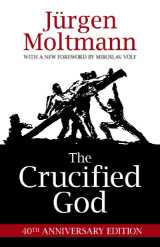
The Crucified God
The Authority Of The Bible And The Rise Of The Modern World
-160.webp)
The Apostles' Creed (Discovering Authentic Christianity In An Age Of Counterfeits)
Supremacy Of Christ In A Post Modern World
-by-hugh-ross-160.webp)
A Matter Of Days (Resolving A Creation Controversy)
Equality In Christ: Galatians 3:28 And The Gender Dispute
The Babylonian Captivity Of The Church, 1520
A Peculiar Glory: How The Christian Scriptures Reveal Their Complete Truthfulness
About the Book
"Christ-Centered Biblical Counseling" by James Macdonald and Bob Kellemen examines the role of Scripture in guiding and transforming individuals through difficult circumstances and mental health challenges. The book emphasizes the importance of relying on God's Word for wisdom and direction in counseling, offering practical tools and insights on integrating biblical principles into therapeutic interventions.
C.S. Lewis
 C.S. Lewis was a prolific Irish writer and scholar best known for his 'Chronicles of Narnia' fantasy series and his pro-Christian texts.
Who Was C.S. Lewis?
Writer and scholar C.S. Lewis taught at Oxford University and became a renowned Christian apologist writer, using logic and philosophy to support the tenets of his faith. He is also known throughout the world as the author of The Chronicles of Narnia fantasy series, which have been adapted into various films for the big and small screens.
Early Life
Clive Staples Lewis was born in Belfast, Ireland, on November 29, 1898, to Flora August Hamilton Lewis and Albert J. Lewis. As a toddler, Clive declared that his name was Jack, which is what he was called by family and friends. He was close to his older brother Warren and the two spent much time together as children.
Lewis was enraptured by fantastic animals and tales of gallantry, and hence the brothers created the imaginary land of Boxen, complete with an intricate history that served them for years. Lewis' mother died when he was 10, and he went on to receive his pre-college education at boarding schools and from a tutor. During WWI, he served with the British army and was sent home after being wounded by shrapnel. He then chose to live as a surrogate son with Janie Moore, the mother of a friend of Lewis' who was killed in the war.
Teaching Career at Oxford and Wartime Broadcasts
Lewis graduated from Oxford University with a focus on literature and classic philosophy, and in 1925 he was awarded a fellowship teaching position at Magdalen College, which was part of the university. There, he also joined the group known as The Inklings, an informal collective of writers and intellectuals who counted among their members Lewis' brother Warren and J.R.R. Tolkien. It was through conversations with group members that Lewis found himself re-embracing Christianity after having become disillusioned with the faith as a youth. He would go on to become renowned for his rich apologist texts, in which he explained his spiritual beliefs via platforms of logic and philosophy.
Lewis began publishing work including Spirits in Bondage in 1919 and the satirical Dymer in 1926. After penning other titles — including The Allegory of Love (1936), for which he won the Hawthornden Prize — he released in 1938 his first sci-fi work, Out of the Silent Planet, the first of a space trilogy which dealt sub-textually with concepts of sin and desire. Later, during WWII, Lewis gave highly popular radio broadcasts on Christianity which won many converts; his speeches were collected in the work Mere Christianity.
Books and Film Legacy
Lewis was a prolific author of fiction and nonfiction who wrote dozens of books over the course of his career. His faith-based arguments as seen in texts like The Great Divorce (1946) and Miracles (1947) are held in high regard by many theologians, scholars and general readers. His satirical fiction novel The Screwtape Letters (1942) is also a beloved classic. Lewis also continued his love affair with classic mythology and narratives during his later years: His book Till We Have Faces: A Myth Retold (1956) featured the story of Psyche and Cupid. He also penned an autobiography, Surprised by Joy: The Shape of My Early Life (1955).
Lewis' landmark series, The Chronicles of Narnia, has seen a number of on-screen iterations, including a cartoon version of The Lion, The Witch and the Wardrobe that was released in 1979 and a 1989 film series. Additionally, in 2005, a big-screen adaptation of The Lion, The Witch and the Wardrobe hit movie theaters, starring Tilda Swinton as the witch Jadis and Liam Neeson as the voice of Aslan. Two more Narnia films were brought to theaters as well: Prince Caspian (2008) and The Voyage of the Dawn Treader (2010). A movie version of The Silver Chair was slated to hit theaters in the near future, with filming starting in the winter of 2018.
Lewis' relationship with his wife, Joy, has also been depicted in Shadowlands, presented as a play and two films; one of the film versions was directed by Richard Attenborough and starred Anthony Hopkins as Lewis.
'The Chronicles of Narnia'
During the 1940s, Lewis began writing the seven books that would comprise The Chronicles of Narnia children's series, with The Lion, The Witch and the Wardrobe (1950) being the first release. The story focused on four siblings who, during wartime, walk through an armoire to enter the magical world of Narnia, a land resplendent with mythical creatures and talking animals. Throughout the series, a variety of Biblical themes are presented; one prominent character is Aslan, a lion and the ruler of Narnia, who has been interpreted as a Jesus Christ figure. (Lewis would assert that his Narnia stories weren't a direct allegory to the real world.)
Though the book received some negative reviews, it was generally well-received by readers, and the series retained its international popularity over the following decades.
Marriage
In 1954, Lewis joined the faculty of Cambridge University as a literature professor, and in 1956 he married an American English teacher, Joy Gresham, with whom he had been in correspondence. Lewis was full of happiness during the years of their marriage, though Gresham died of cancer in 1960. Lewis grieved deeply for his wife and shared his thoughts in the book A Grief Observed, using a pen name.
Death
In 1963, Lewis resigned from his Cambridge position after experiencing heart trouble. He died on November 22, 1963, in Headington, Oxford.
C.S. Lewis was a prolific Irish writer and scholar best known for his 'Chronicles of Narnia' fantasy series and his pro-Christian texts.
Who Was C.S. Lewis?
Writer and scholar C.S. Lewis taught at Oxford University and became a renowned Christian apologist writer, using logic and philosophy to support the tenets of his faith. He is also known throughout the world as the author of The Chronicles of Narnia fantasy series, which have been adapted into various films for the big and small screens.
Early Life
Clive Staples Lewis was born in Belfast, Ireland, on November 29, 1898, to Flora August Hamilton Lewis and Albert J. Lewis. As a toddler, Clive declared that his name was Jack, which is what he was called by family and friends. He was close to his older brother Warren and the two spent much time together as children.
Lewis was enraptured by fantastic animals and tales of gallantry, and hence the brothers created the imaginary land of Boxen, complete with an intricate history that served them for years. Lewis' mother died when he was 10, and he went on to receive his pre-college education at boarding schools and from a tutor. During WWI, he served with the British army and was sent home after being wounded by shrapnel. He then chose to live as a surrogate son with Janie Moore, the mother of a friend of Lewis' who was killed in the war.
Teaching Career at Oxford and Wartime Broadcasts
Lewis graduated from Oxford University with a focus on literature and classic philosophy, and in 1925 he was awarded a fellowship teaching position at Magdalen College, which was part of the university. There, he also joined the group known as The Inklings, an informal collective of writers and intellectuals who counted among their members Lewis' brother Warren and J.R.R. Tolkien. It was through conversations with group members that Lewis found himself re-embracing Christianity after having become disillusioned with the faith as a youth. He would go on to become renowned for his rich apologist texts, in which he explained his spiritual beliefs via platforms of logic and philosophy.
Lewis began publishing work including Spirits in Bondage in 1919 and the satirical Dymer in 1926. After penning other titles — including The Allegory of Love (1936), for which he won the Hawthornden Prize — he released in 1938 his first sci-fi work, Out of the Silent Planet, the first of a space trilogy which dealt sub-textually with concepts of sin and desire. Later, during WWII, Lewis gave highly popular radio broadcasts on Christianity which won many converts; his speeches were collected in the work Mere Christianity.
Books and Film Legacy
Lewis was a prolific author of fiction and nonfiction who wrote dozens of books over the course of his career. His faith-based arguments as seen in texts like The Great Divorce (1946) and Miracles (1947) are held in high regard by many theologians, scholars and general readers. His satirical fiction novel The Screwtape Letters (1942) is also a beloved classic. Lewis also continued his love affair with classic mythology and narratives during his later years: His book Till We Have Faces: A Myth Retold (1956) featured the story of Psyche and Cupid. He also penned an autobiography, Surprised by Joy: The Shape of My Early Life (1955).
Lewis' landmark series, The Chronicles of Narnia, has seen a number of on-screen iterations, including a cartoon version of The Lion, The Witch and the Wardrobe that was released in 1979 and a 1989 film series. Additionally, in 2005, a big-screen adaptation of The Lion, The Witch and the Wardrobe hit movie theaters, starring Tilda Swinton as the witch Jadis and Liam Neeson as the voice of Aslan. Two more Narnia films were brought to theaters as well: Prince Caspian (2008) and The Voyage of the Dawn Treader (2010). A movie version of The Silver Chair was slated to hit theaters in the near future, with filming starting in the winter of 2018.
Lewis' relationship with his wife, Joy, has also been depicted in Shadowlands, presented as a play and two films; one of the film versions was directed by Richard Attenborough and starred Anthony Hopkins as Lewis.
'The Chronicles of Narnia'
During the 1940s, Lewis began writing the seven books that would comprise The Chronicles of Narnia children's series, with The Lion, The Witch and the Wardrobe (1950) being the first release. The story focused on four siblings who, during wartime, walk through an armoire to enter the magical world of Narnia, a land resplendent with mythical creatures and talking animals. Throughout the series, a variety of Biblical themes are presented; one prominent character is Aslan, a lion and the ruler of Narnia, who has been interpreted as a Jesus Christ figure. (Lewis would assert that his Narnia stories weren't a direct allegory to the real world.)
Though the book received some negative reviews, it was generally well-received by readers, and the series retained its international popularity over the following decades.
Marriage
In 1954, Lewis joined the faculty of Cambridge University as a literature professor, and in 1956 he married an American English teacher, Joy Gresham, with whom he had been in correspondence. Lewis was full of happiness during the years of their marriage, though Gresham died of cancer in 1960. Lewis grieved deeply for his wife and shared his thoughts in the book A Grief Observed, using a pen name.
Death
In 1963, Lewis resigned from his Cambridge position after experiencing heart trouble. He died on November 22, 1963, in Headington, Oxford.
jesus is coming again
Reader, do you know that Jesus is coming again? He said, "I will come again" (John 14:3) and His word endureth forever (1 Pet. 1:25), for He is the truth (John 14:6). The angels said He would come again. "This same Jesus," and "in like manner" (Acts 1:11), and they were not mistaken when they announced His first coming (Luke 1:26-33; see also Luke 2:8-18). The Holy Spirit, by the mouth of the apostles, hath repeatedly said He would come again (1 Thess. 4:16; Heb. 9:28, Heb. 10:37). Is not such an event, stated upon such authority, of vital importance to us? At His first coming, the world rejected Him. He was the despised Nazarene. But when He comes again, He will appear as "the blessed and only Potentate, the King of Kings and Lord of Lords" (1 Tim. 6:13-15). He is coming to sit upon the throne of His glory (Matt. 25:31), and to be admired in all them that believed (2 Thess. 1:10), and to rule, in judgment and equity, all the nations of the earth (Psa. 2:9; Isa. 9:6-7; Rev. 2:25-27). How glorious it will be to see the King in His beauty (Isa. 33:17). Perhaps you are not a Christian, and say— "I Don't Care Anything About It." Then, dear friend, we point you to the crucified Savior as the only hope of salvation. We beg of you to "kiss the Son," lest ye perish from the way. Blessed are all they that put their trust in Him (Psalm 2:12). What shall it profit you if you gain the whole world and lose your own soul? (Matt. 16:26-27) He is coming, and we know neither the day, nor the hour, when He may come (Matt. 25:13). What if He should come now? Would you be found of Him in peace (2 Pet. 3:14), or would you be left behind to endure the terrible things which shall come upon the world (Luke 21:25-26), while the church is with Christ in the air (Luke 21:36; 1 Thess. 4:17), and be made at His appearing (2 Thess. 1:7-10) to mourn (Matt. 24:30) and pray to the mountains and rocks to hide you from His face? (Rev. 6:16). "Prepare to meet thy God," was the solemn injunction to Israel (Amos 4:12), and every one of us, both Jew and Gentile, must meet Him, either in grace or in judgment. We, then, as ambassadors for Christ, beseech you: be ye reconciled to God (2 Cor. 5:20), now, in the accepted time, in the day of salvation (2 Cor. 6:2; Luke 14:31-33). Do let us entreat you to repent and be converted, that your sins may be blotted out (Acts 10:42-43; Acts 17:30-31), and that you may turn "to serve the living and true God; and to wait for his Son from Heaven" (1 Thess. 1:9-10), and be unblamable at the coming of our Lord Jesus Christ (1 Thess. 3:13). But if you are a Christian, then we point you to His coming again, as The True Incentive to a Holy Life.(1 John 3:2-3) Jesus is coming, therefore mortify your members which are upon the earth, that you may appear with Him in glory (Col. 3:4-5). Strive and pray for purity of heart, that you may be like Him and see Him as He is (Matt. 5:18; 1 John 3:2-3). Search the Word, that you may be sanctified and cleansed thereby (Eph. 5:26), and that your whole spirit, and soul, and body may be preserved blameless unto the coming of our Lord Jesus Christ (1 Thess. 5:23). But possibly you say, with contempt, "Oh, That's Second Adventism." Beloved, have you considered that Moses (Deut. 33:2), so David (Psa. 102:16), Isaiah (Isa. 59:20; Isa. 60:1), Jeremiah (Jer. 23:5-6), Daniel (Dan. 7:13), Zechariah (Zech. 14:4-5), all the prophets and apostles (Acts 15:15-17), were believers in the second advent of Christ? And because some, by setting dates, and other errors, have brought disrepute upon this doctrine, shall we cast it aside altogether? But it may be you say (as we have been pained to hear from so many even earnest Christians): "Well, I Don't Think It Concerns Me Much, Anyway: I've always thought that in most cases it meant death, and if I'm prepared for death, that's enough; and there is too much speculation about it to suit me; and I don't believe it's a practical doctrine; and, more than that, I think it's a mistake to pay so much attention to it." Yes, even thus do many Christians, — who profess to be members of the body of Christ (1 Cor. 12:27), and who have been espoused unto one husband, that they may be presented to Him (2 Cor. 11:2) — summarily dispose of this precious truth, that Jesus is coming, to take unto Himself His bride (John 14:3; Eph. 5:23, 32). O, beloved, do not thus deprive yourself of this comforting truth. Please take your pencil and mark in your Bible the passages that pertain to it; and see How Large a Portion of the Word Is Devoted to It. If the Holy Ghost has deemed it so important, is it not worthy of our attention? The Word exhorts us (1 Thess. 4:18; 1 Cor. 1:7) to give attention to it (Rev. 1:3); and the danger of condemnation is to them who do not (Luke 12:45-46; Luke 21:34-36; 1 Thess. 5:1-7). Again, please examine the passages cited under the heading, A Practical Doctrine, and see how Jesus and the apostles used this doctrine to incite us to watchfulness, repentance, patience, ministerial faithfulness, brotherly love, etc., and then decide whether anything could be more practical. Surely no doctrine, in the Word of God, presents a deeper motive for crucifying the flesh, and for separation unto God, and to work for souls, as our hope and joy and crown of rejoicing (1 Thess. 2:19; Dan. 12:3) than this does. For the whole teaching of it is, that our conversation (citizenship) is in heaven; from whence also we look for the Savior, the Lord Jesus Christ; who shall change our vile body, that it may be fashioned like unto His glorious body (Phil. 3:20-21). It awakens groaning for the adoption, to wit, the redemption of our body (Rom. 8:23; Luke 21:28). It gives us a view of the world, as a wrecked vessel (Matt. 7:13-14; 1 Thess. 5:3; 2 Pet. 2:3-9; 2 Pet. 3:5-12), and stimulates us to work with all our might that we may save some (1 Cor. 9:22). Most, if not all, of the evangelists of our day are animated by this doctrine, and surely their work is practical. Again, Peter says, "We have also a more sure word of prophecy; whereunto ye do well that ye take heed, as unto a light that shineth in a dark place, until the day dawn, and the day star arise in your hearts:" (2 Pet. 1:19); and he exhorts us to be mindful of these words (2 Pet. 3:1-2). Therefore we are not speculating when we prayerfully study prophecy. From Jesus is Coming by W. E. B. 3rd. rev. New York: Fleming H. Revell, ©1908. Chapter 1.