

Others like beyond possible Features >>
-160.webp)
Men Of The Bible
-160.webp)
John G. Lake: Apostle To Africa
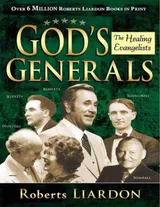
God's Generals: The Healing Evangelists

God's Generals: A. A. Allen

Appointment In Jerusalem

Fascinating Stories Of Forgotten Lives

The Act Of The Apostle
-160.webp)
By Their Blood (Christian Martyrs From The Twentieth Century And Beyond)
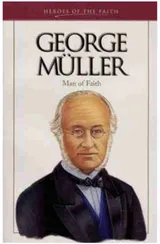
George Muller - Man Of Faith And Miracles
-160.webp)
50 Women Every Christian Should Know: Learning From Heroines Of The Faith
About the Book
"Beyond Possible" by Nimsdai Purja is a gripping account of the author's record-breaking ascent of all 14 of the world's highest peaks, known as the "Eight-thousanders," in just seven months. Purja's incredible feat showcases the power of perseverance, determination, and teamwork in the face of seemingly impossible challenges. The book offers readers a thrilling and inspiring look at what it takes to push beyond one's limits and achieve the extraordinary.
John Murray

What Keeps Couples Apart
Several months ago, as my wife’s birthday approached, I was thrilled to discover that a band she likes had plans to play next year in a nearby city. I booked good seats, spending a bit more than I normally would on birthdays, and began anticipating her reaction. On the morning of her birthday, she opened my gift, saw the concert tickets, and immediately began (to my surprise and consternation) to laugh. Hard. When she could draw a breath again, she reminded me that we had already booked tickets for this exact concert: same night, same venue. At which point I remembered that, oh yes, we had indeed done so months earlier. A long COVID postponement had pushed the concert entirely out of my mind. Now we had four expensive tickets. And — to add insult to injury — the birthday seats I had booked weren’t quite as good as the ones we had already booked together. Thankfully, my wife was able to laugh at my mistake. But of course, it was also a bit hurtful, given that I had entirely forgotten a special plan we had made together. Resilient Intimacy As my wife and I reflected later, we realized that we know married couples for whom my gaffe would have resulted not in laughter but in a blow-out argument — for whom it would have become not an amusing story but a major incident. For the wives, it would have constituted Exhibit A of her husband’s callous disregard, and the story would have been repeated (often) with bitterness, anger, and disgust. For their part, the husbands likely would have doubled down, not apologizing or daring to admit fault. We wondered what makes the difference in our case, why our marriage can weather small slights, stupid oversights, inconveniences, poorly chosen words, clashes of opinion, and sins of attitude and action against one another. And I think an important part of the answer is marital intimacy. By marital intimacy, I mean a depth of mutual knowledge and affection between a husband and wife, a marriage in which both spouses enjoy sharing experiences, emotions, ideas, and sexual romance with one another. Our own marriage is certainly a work in progress, and I’m not half the husband I ought or want to be, but through God’s goodness we have tasted this intimacy and desire more. Obstacle to Intimacy: Busyness Despite the beauty and blessedness of true intimacy, I’ve encountered numerous obstacles to it — both in my own marriage, and in years of counseling married couples. One of the most common is busyness. If intimacy involves shared experiences, emotions, ideas, and sexual romance, it’s going to require significant time together. You can’t fit it into fifteen-minute increments here and there. For many married couples, however, time is in short supply. Work commitments, household chores, church involvement, transporting kids to their activities — all these good responsibilities fill our lives and keep us traveling in different directions. When a husband and wife pass like ships in the night, there’s not sufficient time to go deep beneath the surface. Obstacle to Intimacy: Lack of Effort A closely related obstacle is a lack of effort invested in cultivating intimacy. Perhaps this is, in part, a function of our culture’s misguided idealization of relationships, in which the dream scenario is to find our soul mate and experience an instant, magical, effortless depth of relationship. We’re disillusioned when we find it doesn’t work that way. A more realistic guide for marriage comes from Hebrews 10:24, which speaks generally of relationships within the Christian community. The English Standard Version translates the verse as, “Let us consider how to stir up one another to love and good works.” But a more literal translation would be, “Let us consider one another, unto the stirring up of love and good works.” Note the subtle but significant difference. The author of Hebrews urges us to consider not mainly a project (how to stir up others) but people (“one another”). The word consider suggests direct observation of something, together with deliberate thought about it. Since Christian community requires such careful thought toward one another, surely marriage does all the more. We’re to consider our spouse, to observe and ponder this person, to become world experts so that no one knows him or her better. Like any field of research, this long-term course of spousal study requires energy, focus, and attention. Failure to put in the work rules out the reward of intimacy. Obstacles Under the Obstacles Although lack of time and lack of effort are both significant obstacles, they’re not the only ones, and certainly not the deepest. In general, barring other factors, we allocate time and effort to the pursuits we really care about. If we’re passionate about the latest Netflix show, the model railroading club, or the soccer league, we make time and engage deeply. So what prevents this same investment in our marriage? I’ve found that there are usually obstacles under the obstacles. One of the deepest is selfishness. True intimacy with a spouse requires time, work, vulnerability, and sacrifice. It’s a whole lot easier to avoid those costs, particularly if they obstruct our other aims and desires. Sometimes, at the end of a day, when I’m tired of talking and prefer to be silent, the best way to serve my wife is through conversation. At other times, the situation is reversed, and I’m the one who needs a listening ear. Our responses in such moments (and in thousands of other ones) will move us either toward or away from intimacy. “True intimacy with a spouse requires time, work, vulnerability, and sacrifice.” Ignorance also cripples intimacy. We may long for emotional, relational, and sexual intimacy in marriage, but we’ve never seen such intimacy modeled or learned about it from others. To many, intimacy is a mystery, a foreign land, and we have no map, no idea of how to get beneath pleasantries or functional conversations in order to explore another person’s heart. When we find time alone with our spouse, we remain in the rut of “calendar and kid” conversations. Or perhaps the obstacle we face isn’t ignorance but insecurity; we’ve been badly hurt in other relationships and have walled off certain areas of emotional intimacy as no-go zones in order to protect ourselves. We’re not sure how (or if) we could ever open those corners of our lives to another person again. Finally, one of the most serious obstacles to intimacy is a lack of forgiveness. When one or both spouses have been hurt by the other, and that hurt hasn’t been addressed, repented of, and covered with grace, resentment rankles. Each subsequent interaction is freighted with past pain, interpreted through a lens of suspicion. Bitterness accumulates, undercutting intimacy. How to Pursue Marital Intimacy So then, in the face of several significant obstacles, how might we move toward marital intimacy? VISION FOR INTIMACY A crucial first step is seeing and celebrating intimacy in marriage as a precious and desired goal. We would do well to remind ourselves that marriage is a picture of the relationship between Christ and the church, and that therefore the emotional, intellectual, experiential, and sexual intimacy of husband and wife reflects and expresses the intimate love between Christ and his people. Ephesians 5:28–31 teaches that Christ “nourishes and cherishes” the church, that husbands are to “love their wives as their own bodies,” and that husbands and wives become “one flesh” with one another. These are attractive and compelling visions of intimacy. SOURCE OF INTIMACY Once we desire this intimacy, how do we attain it? We can start by asking God for help. He is glorified when our marriages express the intimate love between his Son and his people. So, when we ask him for help in this area — sincerely and persistently — he will answer. Sometimes he’ll grow us in pleasant ways, and sometimes in painful ways. Seasons of suffering can deepen and sweeten our relationships. “God is glorified when our marriages express the intimate love between his Son and his people.” Early in our marriage, my insecurities and anxieties were exposed to my wife in a particularly painful way over the course of months, and she consistently responded to my vulnerability with tenderness and compassion. Her patient love set a tone for our entire marriage that continues to this day. INTIMACY IN COMMUNITY God will act on our behalf, but he also calls us to action. It may seem paradoxical, but one of the most important means of pursuing marital intimacy is surrounding our marriages with other people. True marital intimacy requires an inner core of the gospel and an outer context of Christian community; intimacy must be sourced by good news and surrounded by church. In community, our sins of selfishness and unforgiveness are lovingly identified, prayed for, and challenged. In community, we’re given examples of healthy, intimate marriages from which we can learn, and that we can imitate. Those marriages provide a road map for ours. Marriage counseling with a wise and godly couple is great, but so is simply spending time with them and observing their interactions in everyday life. We can see for ourselves how communication happens, conflicts are resolved, courtesies are extended, and collaboration in ministry is enjoyed. If your marriage is stale and superficial, why not commit to diving deeper into the gospel and into a gospel-saturated community of believers? What’s Wrong in My Marriage? If Christian community is the nurturing context for marital intimacy, the gospel is the necessary core. Only the gospel can fully address our in-built selfishness, lack of forgiveness, and insecurity — those obstacles under the other obstacles. The gospel draws our hearts to Christ, who surrendered himself to death for our sake and took our punishment upon himself. As we soak in that good news, we experience the magnificence of God’s love and the magnitude of our own sin. I once asked a warring couple to identify the main problem in their marriage, and then listened for 45 minutes as each spouse pinpointed the failings of the other. For each, their spouse’s sin was the real problem. The other’s failings were big; theirs were small. The gospel devastates that warped view, because it tells us that the Son of God had to die for our sin. But the gospel also announces that, in Christ, we’re forgiven, cleansed, and treasured by God. God sees, knows, and loves us. So maybe it’s possible for another human being to do the same. True marital intimacy is a precious jewel to be prayed for, prized, and pursued. It’s worth the work. Article by Stephen Witmer