
Others like avoiding foreign spirits Features >>
-160.webp)
Uprooting The Spirit Of Fear
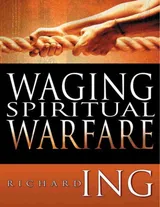
Waging Spiritual Warfare
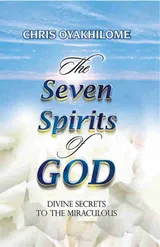
The Seven Spirits Of God
-160.webp)
Overcoming Familiar Spirits (Deliverance From Unseen Demonic Enemies And Spiritual Debt)
Reigning In Life As A King
Dressed To Kill (Spiritual Warfare And Armour)
-160.webp)
Finding Your Purpose In Life (Why Am I Here)
Longing For Godliness - Restoring God’s Image Within Us

How To Live And Not Die

Unstoppable: Running The Race You Were Born To Win
About the Book
"Avoiding Foreign Spirits" by Jonas Clark provides practical guidance and insight on how to identify and resist negative spiritual influences from foreign cultures and belief systems. The book offers strategies for maintaining spiritual discernment and staying grounded in one's faith.
Billy Graham
He Dared to Defy the Pope
One of the great rediscoveries of the Reformation — especially of Martin Luther — was that the word of God comes to us in the form of a book, the Bible. Luther grasped this powerful fact: God preserves the experience of salvation and holiness from generation to generation by means of a book of revelation, not a bishop in Rome. The life-giving and life-threatening risk of the Reformation was the rejection of the pope and councils as the infallible, final authority of the church. One of Luther’s arch-opponents in the Roman Church, Sylvester Prierias, wrote in response to Luther’s 95 theses, “He who does not accept the doctrine of the Church of Rome and pontiff of Rome as an infallible rule of faith, from which the Holy Scriptures, too, draw their strength and authority, is a heretic” (Luther: Man Between God and the Devil, 193). In other words, the church and the pope are the authoritative deposit of salvation and the word of God — and the book, the Bible, is derivative and secondary. “What is new in Luther,” biographer Heiko Oberman writes, “is the notion of absolute obedience to the Scriptures against any authorities, be they popes or councils” (Luther, 204). This rediscovery of the word of God above all earthly powers shaped Luther and the entire Reformation. But Luther’s path to that rediscovery was a tortuous one, beginning with a lightning storm at age 21. Fearful Monk In the summer of 1505, the providential Damascus-like experience happened. On the way home from law school on July 2, Luther was caught in a thunderstorm and was hurled to the ground by lightning. He cried out, “Help me, St. Anne! I will become a monk” (Luther, 92). He feared for his soul and did not know how to find safety in the gospel. So he took the next best thing: the monastery. Fifteen days later, to his father’s dismay, Luther left his legal studies and kept his vow. He knocked at the gate of the Augustinian hermits in Erfurt and asked the prior to accept him into the order. Later he said this choice was a flagrant sin — “not worth a farthing” because it was made against his father and out of fear. Then he added, “But how much good the merciful Lord has allowed to come of it!” (Luther, 125). “The Bible had come to mean more to Luther than all the fathers and commentators.” Fear and trembling pervaded Luther’s years in the monastery. At his first mass two years later, for example, he was so overwhelmed at the thought of God’s majesty that he almost ran away. The prior persuaded him to continue. But this incident would not be an isolated one in Luther’s life. Luther would later remember of these years, “Though I lived as a monk without reproach, I felt that I was a sinner before God with an extremely disturbed conscience. I could not believe that he was placated by my satisfaction” (Martin Luther: Selections from His Writings, 12). Luther would not be married for another twenty years — to Katharina von Bora on June 13, 1525 — which means he lived with sexual temptations as a single man until he was 42. But “in the monastery,” he said, “I did not think about women, money, or possessions; instead my heart trembled and fidgeted about whether God would bestow his grace on me” (Luther, 128). His all-consuming longing was to know the happiness of God’s favor. “If I could believe that God was not angry with me,” he said, “I would stand on my head for joy” (Luther, 315). Good News: God’s Righteousness In 1509, Luther’s beloved superior and counselor and friend, Johannes von Staupitz, allowed Luther to begin teaching the Bible. Three years later, on October 19, 1512, at the age of 28, Luther received his doctor’s degree in theology, and von Staupitz turned over to him the chair in biblical theology at the University of Wittenberg, which Luther held the rest of his life. As Luther set to work reading, studying, and teaching Scripture from the original languages, his troubled conscience seethed beneath the surface — especially as he confronted the phrase “the righteousness of God” in Romans 1:16–17. He wrote, “I hated that word ‘righteousness of God,’ which according to the use and custom of all the teachers, I had been taught to understand philosophically regarding the formal or active righteousness, as they called it, with which God is righteous and punishes the unrighteous sinner” (Selections, 11). But suddenly, as he labored over the text of Romans, all Luther’s hatred for the righteousness of God turned to love. He remembers, At last, by the mercy of God, meditating day and night, I gave heed to the context of the words, namely, “In it the righteousness of God is revealed, as it is written, ‘He who through faith is righteous shall live.’” There I began to understand [that] the righteousness of God is that by which the righteous lives by a gift of God, namely by faith. And this is the meaning: the righteousness of God is revealed by the gospel, namely, the passive righteousness with which [the] merciful God justifies us by faith, as it is written, “He who through faith is righteous shall live.” Here I felt that I was altogether born again and had entered paradise itself through open gates. . . . And I extolled my sweetest word with a love as great as the hatred with which I had before hated the word “righteousness of God.” Thus that place in Paul was for me truly the gate to paradise. (Selections, 12). Standing on the Book For Luther, the importance of study was so interwoven with his discovery of the true gospel that he could never treat study as anything other than utterly crucial and life-giving and history-shaping. Study had been his gateway to the gospel and to the Reformation and to God. We take so much for granted today about the truth and about the word that we can hardly imagine what it cost Luther to break through to the truth, and to sustain access to the word. Study mattered. His life and the life of the church hung on it. And so, Luther studied, and preached, and wrote more than most of us can imagine. “An indispensable key to understanding the Scriptures is suffering in the path of righteousness.” Luther was not the pastor of the town church in Wittenberg, but he did share the preaching with his pastor friend, Johannes Bugenhagen. The record bears witness to how utterly devoted he was to the preaching of Scripture. For example, in 1522 he preached 117 sermons, the next year 137 sermons. In 1528, he preached almost 200 times, and from 1529 we have 121 sermons. So the average in those four years was one sermon every two and a half days. And all of it arose from rigorous, disciplined study. He told his students that the exegete should treat a difficult passage no differently than Moses did the rock in the desert, which he smote with his rod until water gushed out for his thirsty people (Luther, 224). In other words, strike the text. In relating his breakthrough with Romans 1:16–17, he wrote, “I beat importunately upon Paul” (Selections, 12). There is a great incentive in this beating on the text: “The Bible is a remarkable fountain: the more one draws and drinks of it, the more it stimulates thirst” (What Luther Says: An Anthology, vol. 1, 67). That is what study was to Luther — taking a text the way Jacob took the angel of the Lord, and saying, “It must yield. I will hear and know the word of God in this text for my soul and for the church!” (see Genesis 32:26). That’s how he broke through to the meaning of “the righteousness of God” in justification. And that is how he broke through tradition and philosophy again and again. Luther had one weapon with which he recovered the gospel from being sold in the markets of Wittenberg: Scripture. He drove out the moneychangers — the indulgence sellers — with the whip of the word of God. Slandered and Struck Down Study was not the only factor that opened God’s word to Luther. Suffering did as well. Trials were woven into life for Luther. Keep in mind that from 1521 on, Luther lived under the ban of the empire. Emperor Charles V said, “I have decided to mobilize everything against Luther: my kingdoms and dominions, my friends, my body, my blood and my soul” (Luther, 29). He could be legally killed, except where he was protected by his prince, Frederick of Saxony. He endured relentless slander of the cruelest kind. He once observed, “If the Devil can do nothing against the teachings, he attacks the person, lying, slandering, cursing, and ranting at him. Just as the papists’ Beelzebub did to me when he could not subdue my Gospel, he wrote that I was possessed by the Devil, was a changeling, my beloved mother a whore and bath attendant” (Luther, 88). Physically, he suffered from excruciating kidney stones and headaches, with buzzing in his ears and ear infections and incapacitating constipation and hemorrhoids. “I nearly gave up the ghost — and now, bathed in blood, can find no peace. What took four days to heal immediately tears open again” (Luther, 328). Oratio, Meditatio, Tentatio In God’s providence, however, these multiplied sufferings did not destroy Luther, but instead turned him into a theologian. Luther noticed in Psalm 119 that the psalmist not only prayed and meditated over the word of God in order to understand it; he also suffered in order to understand it. Psalm 119:67, 71 says, “Before I was afflicted I went astray, but now I keep your word. . . . It is good for me that I was afflicted, that I might learn your statutes.” An indispensable key to understanding the Scriptures is suffering in the path of righteousness. “The rediscovery of the word of God above all earthly powers shaped Luther and the entire Reformation.” Thus, Luther said, “I want you to know how to study theology in the right way. I have practiced this method myself. . . . Here you will find three rules. They are frequently proposed throughout Psalm [119] and run thus: Oratio, meditatio, tentatio (prayer, meditation, tribulation).” And tribulation he called the “touchstone.” “[These rules] teach you not only to know and understand, but also to experience how right, how true, how sweet, how lovely, how mighty, how comforting God’s word is: it is wisdom supreme” (What Luther Says, vol. 3, 1359–60). He proved the value of trials over and over again in his own experience. “For as soon as God’s Word becomes known through you,” he says, “the devil will afflict you, will make a real [theological] doctor of you, and will teach you by his temptations to seek and to love God’s Word. For I myself . . . owe my papists many thanks for so beating, pressing, and frightening me through the devil’s raging that they have turned me into a fairly good theologian, driving me to a goal I should never have reached” (What Luther Says, vol. 3, 1360). Above All Earthly Powers Luther said with resounding forcefulness in 1545, the year before he died, “Let the man who would hear God speak, read Holy Scripture” (What Luther Says, vol. 2, 62). He lived what he urged. He wrote in 1533, “For a number of years I have now annually read through the Bible twice. If the Bible were a large, mighty tree and all its words were little branches, I have tapped at all the branches, eager to know what was there and what it had to offer” (What Luther Says, vol. 1, 83). Oberman says Luther kept to that practice for at least ten years (Luther, 173). The Bible had come to mean more to Luther than all the fathers and commentators. Here Luther stood, and here we stand. Not on the pronouncements of popes, or the decisions of councils, or the winds of popular opinion, but on “that word above all earthly powers” — the living and abiding word of God. Article by John Piper