
Others like aspersions Features >>
The Ministers' Handbook Of Ceremonies

Signs Of Disloyalty

Cruden's Complete Concordance To The Old And New Testaments
Resolving Scientific Difficulties In Scripture
-160.webp)
Genesis 1-4 (A Linguistic, Literary, And Theological Commentary)
Searching For The Pattern
Five Views On Law And Gospel
The Coming Of God's Kingdom
With Calvin In The Theatre Of God
The Authority Of The Bible And The Rise Of The Modern World
About the Book
"ASPERSIONS" by Dag Heward-Mills discusses the power of words and their impact on our lives. The author emphasizes the importance of being mindful of the things we say and how they can shape our reality. The book encourages readers to speak positively and use words to build up and encourage others.
William Chalmers Burns
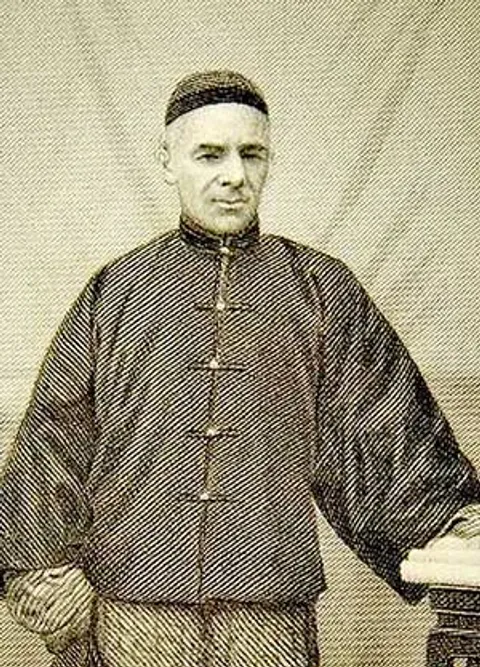 William Chalmers Burns was born in the Manse of Dun, in Angus, on April Ist, 1815. He was the third son of the Parish Church minister there. After leaving school, he went to Edinburgh to be apprenticed with an uncle to the legal profession. His eldest sister, a gay young lady, was converted to God, and became a bright witness for the Lord Jesus in 1831, and it was by means of her decided testimony that William was first awakened to a sense of his need of salvation, and led to put his trust in the Son of God, as his Redeemer and Saviour.
It was shortly after his conversion that he walked into the manse of Kilsyth, where the family then resided, having walked on foot the thirty-six miles from Edinburgh, to tell his mother and his sisters the glad news of his conversion, and to say that his desire now was to relinquish his study of law, and devote himself entirely to the preaching of the Gospel of God’s grace to his fellowmen.
And this he did heartily and with all his might, first in the neglected Parts of Scotland, and latterly among many heathen millions of the great Chinese Empire, then scarcely touched by the feet of God’s messengers of peace.
Mr. Burns’s name came into prominence in connection with a wonderful work of grace in Dundee, while he was preaching for Robert Murray M’Cheyne, then on a visit to Palestine, for the evangelization of the Jews. During Mr. Burns’s preaching in Dundee, a remarkable awakening took place; thousands were aroused to their condition in the sight of God, truly converted, and set on the heavenward way.
Remarkable scenes were witnessed in the old church of St. Peter’s, near to which M’Cheyne’s body now lies, awaiting the first resurrection. It was on the evening of a Lord’s Day in Kilsyth, after preaching to a crowded congregation, that Mr. Burns felt constrained to intimate to the people that he would preach to the people in the open air, before returning to Dundee the following day.
Deeply burdened with the souls of the people, he went into the village and invited the people, who thronged into the old church, until every seat and passage was filled. And the Lord helped His servant to preach straight to the people with great power, with the result that the whole congregation became melted under the message, many weeping aloud and crying to God for mercy. A glorious work of conversion followed.
Meetings for prayer and preaching of the Gospel continued in the churchyard, the market-place and elsewhere for weeks, while Mr. Burns returned to Dundee to resume his ministry. The work progressed in Dundee with increased interest, until the return of Mr. M’Cheyne, who greatly rejoiced in all that the Lord had done during his absence, through the ministry of His servant.
There was no jealousy, but the deepest gratitude, and these two true ministers of Christ rejoiced together over the Lord’s doings, which were indeed marvellous in their eyes.
From that time onward, until the Lord’s call came to go to China, Mr. Burns gave himself almost wholly to itinerant Gospel preaching, through Perthshire, up as far north as Aberdeen, preaching in barns, on market-places, and wherever the people could be gathered together to hear the Word. His message was plain, and to the point; thousands were awakened and many saved. But the adversary opposed. Time and again Mr. Burns was stoned, and bore the marks of these brands of the enemy for many days.
Believing it to be the call of the Lord, he went forth to China as the first missionary of the Presbyterian Church of England, in June, 1847. When questioned by those interested in his out-going, how long it would take him to prepare for the voyage, he replied with all simplicity, “I will be ready to go to-morrow.”
On a brief visit to his home, to take farewell of his sister, he silently wrung her hand, took a last glance around their old home, and with a small bag in his hand and his mother’s plaid across his arm, went forth, in the Name of the Lord with the Gospel to China’s benighted people, of whom it was said “a million a month” were dying without having once heard the Gospel.
For years this solitary witness toiled alone, at times with a few helpers, in the great heathen land, amid overwhelming hindrances, but his faith in God never faltered. On and on he went, sowing the seed which others would reap, until he reached the borders of the great kingdom of Manchuria, where, in a small, comfortless room in Nieu-chang, wearied and worn in labours abundant, he fell asleep on April 4th, 1868, his last audible words being, “For Thine is the Kingdom and the Power and the Glory.”
It is of this great land that the story of grace related in the following pages is told, and those who saw and shared in its joyful results, say that it was no doubt part of the result of William Burns’s sowing, in his earlier years in China.
William Chalmers Burns was born in the Manse of Dun, in Angus, on April Ist, 1815. He was the third son of the Parish Church minister there. After leaving school, he went to Edinburgh to be apprenticed with an uncle to the legal profession. His eldest sister, a gay young lady, was converted to God, and became a bright witness for the Lord Jesus in 1831, and it was by means of her decided testimony that William was first awakened to a sense of his need of salvation, and led to put his trust in the Son of God, as his Redeemer and Saviour.
It was shortly after his conversion that he walked into the manse of Kilsyth, where the family then resided, having walked on foot the thirty-six miles from Edinburgh, to tell his mother and his sisters the glad news of his conversion, and to say that his desire now was to relinquish his study of law, and devote himself entirely to the preaching of the Gospel of God’s grace to his fellowmen.
And this he did heartily and with all his might, first in the neglected Parts of Scotland, and latterly among many heathen millions of the great Chinese Empire, then scarcely touched by the feet of God’s messengers of peace.
Mr. Burns’s name came into prominence in connection with a wonderful work of grace in Dundee, while he was preaching for Robert Murray M’Cheyne, then on a visit to Palestine, for the evangelization of the Jews. During Mr. Burns’s preaching in Dundee, a remarkable awakening took place; thousands were aroused to their condition in the sight of God, truly converted, and set on the heavenward way.
Remarkable scenes were witnessed in the old church of St. Peter’s, near to which M’Cheyne’s body now lies, awaiting the first resurrection. It was on the evening of a Lord’s Day in Kilsyth, after preaching to a crowded congregation, that Mr. Burns felt constrained to intimate to the people that he would preach to the people in the open air, before returning to Dundee the following day.
Deeply burdened with the souls of the people, he went into the village and invited the people, who thronged into the old church, until every seat and passage was filled. And the Lord helped His servant to preach straight to the people with great power, with the result that the whole congregation became melted under the message, many weeping aloud and crying to God for mercy. A glorious work of conversion followed.
Meetings for prayer and preaching of the Gospel continued in the churchyard, the market-place and elsewhere for weeks, while Mr. Burns returned to Dundee to resume his ministry. The work progressed in Dundee with increased interest, until the return of Mr. M’Cheyne, who greatly rejoiced in all that the Lord had done during his absence, through the ministry of His servant.
There was no jealousy, but the deepest gratitude, and these two true ministers of Christ rejoiced together over the Lord’s doings, which were indeed marvellous in their eyes.
From that time onward, until the Lord’s call came to go to China, Mr. Burns gave himself almost wholly to itinerant Gospel preaching, through Perthshire, up as far north as Aberdeen, preaching in barns, on market-places, and wherever the people could be gathered together to hear the Word. His message was plain, and to the point; thousands were awakened and many saved. But the adversary opposed. Time and again Mr. Burns was stoned, and bore the marks of these brands of the enemy for many days.
Believing it to be the call of the Lord, he went forth to China as the first missionary of the Presbyterian Church of England, in June, 1847. When questioned by those interested in his out-going, how long it would take him to prepare for the voyage, he replied with all simplicity, “I will be ready to go to-morrow.”
On a brief visit to his home, to take farewell of his sister, he silently wrung her hand, took a last glance around their old home, and with a small bag in his hand and his mother’s plaid across his arm, went forth, in the Name of the Lord with the Gospel to China’s benighted people, of whom it was said “a million a month” were dying without having once heard the Gospel.
For years this solitary witness toiled alone, at times with a few helpers, in the great heathen land, amid overwhelming hindrances, but his faith in God never faltered. On and on he went, sowing the seed which others would reap, until he reached the borders of the great kingdom of Manchuria, where, in a small, comfortless room in Nieu-chang, wearied and worn in labours abundant, he fell asleep on April 4th, 1868, his last audible words being, “For Thine is the Kingdom and the Power and the Glory.”
It is of this great land that the story of grace related in the following pages is told, and those who saw and shared in its joyful results, say that it was no doubt part of the result of William Burns’s sowing, in his earlier years in China.
what happens when you turn 65
Turning 65 in January has me all fired up to get busy. I am close enough to the finish line that the face of Jesus is coming into sharper focus. This is very exciting and makes me want to pick up the pace. Of course, he is not the least impressed with frenzy. Nor is he pleased with Boomer indolence. What his face says to me is: “I am your rest every day, and there is good work to do every day till you’re home.” One Great Thing God has called me to this one great thing, and his face affirms it every day: “With full courage, now (after 65) as always, let Christ be magnified in your body, whether by life or by death” (Philippians 1:20). Live now to make much of Christ. Measure everything by this: Will it help more people admire Jesus more intensely and treasure Jesus more deeply? The Bible says, “The years of our life are seventy, or even by reason of strength eighty” (Psalms 90:10). But of course, “My times are in your hand” (Psalms 31:15). The Lord gives and the Lord takes away. We don’t live one day longer or shorter than God appoints. So at 65, I am still gagging at the pictures of leathery old sunbathers on white shores and green links. For fifteen years, I have thrown hundreds of senior mailings in the recycle bag unopened. Not that I am opposed to saving $0.79 on lunch at Perkins. Just don’t try to sell me heaven before I get there. There is too much hell left to fight. Old Versus Retired Turning 65 has set me to pondering what people have done in their later years. For example, I just received a copy of the first major biography of Charles Hodge in over a century: Paul C. Gutjahr, Charles Hodge: Guardian of American Orthodoxy (Oxford, 2011). On the first page, I read, When people reach their seventies, they often think their work is done. Not so with Hodge. His last years were among this most productive as he sat ensconced in his study, wielding his favorite pen to compose literally thousands of manuscript pages, which would eventually become his monumental Systematic Theology and his incisive What is Darwinism ? (vii) So I started poking around on the Internet. Here’s some of what I found (for example, at www.museumofconceptualart.com/accomplished): At 65 Winston Churchill became Prime Minister of England, and for the next five years led the Western world to freedom. At 69 English writer and lexicographer Samuel Johnson began his last major work, The Lives of the English Poets. At 69 Ronald Reagan became the oldest man ever sworn in as President of the United States. He was reelected at 73. At 70 Benjamin Franklin helped draft the Declaration of Independence. At 77 John Glenn became the oldest person to go into space. At 77 Grandma Moses started painting. At 82 Johann Wolfgang von Goethe finished writing his famous Faust . At 82 Winston Churchill wrote A History of the English-Speaking Peoples . At 88 Michelangelo created the architectural plans for the Church of Santa Maria degli Angeli. At 89 Albert Schweitzer ran a hospital in Africa. At 89 Arthur Rubinstein performed one of his greatest recitals in Carnegie Hall. At 93 Strom Thurmond, the longest-serving senator in U.S. history, won reelection after promising not to run again at age 99. At 93 P.G. Wodehouse worked on his 97th novel, got knighted, and died. Dependant Till the End And don’t forget, if you are running this marathon with Jesus, you have a great advantage. God has promised you: “Even to your old age I am he, and to gray hairs I will carry you. I have made, and I will bear; I will carry and will save” (Isaiah 46:4). Nothing to be ashamed of here. We’ve been dangling in the yoke of Jesus ever since he called us. At out peak, we were totally dependent. So it will be to the end. So, all you Boomers just breaking into Medicare, gird up your loins, pick up your cane, head for the gym, and get fit for the last lap. Fix your eyes on the Face at the finish line. There will plenty of time for R and R in the Resurrection. For now, there is happy work to be done.