

Abraham - God's Brave Explorer Order Printed Copy
- Author: Kay Arthur, Janna Arndt
- Size: 3.14MB | 270 pages
- |
Others like abraham - god's brave explorer Features >>


-160.webp)







About the Book
"ABRAHAM - GOD'S BRAVE EXPLORER" by Kay Arthur and Janna Arndt tells the story of Abraham, a man who courageously followed God's leading even when faced with challenges and uncertainties. Through engaging storytelling and interactive activities, young readers learn valuable lessons about faith, obedience, and the rewards of trusting in God.
William Chalmers Burns
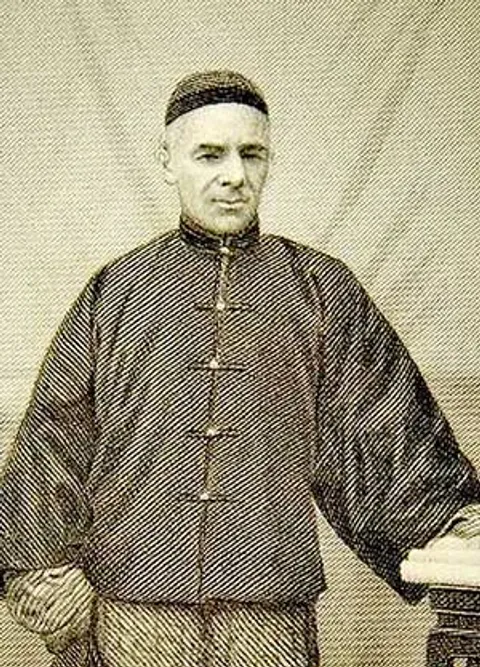 William Chalmers Burns was born in the Manse of Dun, in Angus, on April Ist, 1815. He was the third son of the Parish Church minister there. After leaving school, he went to Edinburgh to be apprenticed with an uncle to the legal profession. His eldest sister, a gay young lady, was converted to God, and became a bright witness for the Lord Jesus in 1831, and it was by means of her decided testimony that William was first awakened to a sense of his need of salvation, and led to put his trust in the Son of God, as his Redeemer and Saviour.
It was shortly after his conversion that he walked into the manse of Kilsyth, where the family then resided, having walked on foot the thirty-six miles from Edinburgh, to tell his mother and his sisters the glad news of his conversion, and to say that his desire now was to relinquish his study of law, and devote himself entirely to the preaching of the Gospel of God’s grace to his fellowmen.
And this he did heartily and with all his might, first in the neglected Parts of Scotland, and latterly among many heathen millions of the great Chinese Empire, then scarcely touched by the feet of God’s messengers of peace.
Mr. Burns’s name came into prominence in connection with a wonderful work of grace in Dundee, while he was preaching for Robert Murray M’Cheyne, then on a visit to Palestine, for the evangelization of the Jews. During Mr. Burns’s preaching in Dundee, a remarkable awakening took place; thousands were aroused to their condition in the sight of God, truly converted, and set on the heavenward way.
Remarkable scenes were witnessed in the old church of St. Peter’s, near to which M’Cheyne’s body now lies, awaiting the first resurrection. It was on the evening of a Lord’s Day in Kilsyth, after preaching to a crowded congregation, that Mr. Burns felt constrained to intimate to the people that he would preach to the people in the open air, before returning to Dundee the following day.
Deeply burdened with the souls of the people, he went into the village and invited the people, who thronged into the old church, until every seat and passage was filled. And the Lord helped His servant to preach straight to the people with great power, with the result that the whole congregation became melted under the message, many weeping aloud and crying to God for mercy. A glorious work of conversion followed.
Meetings for prayer and preaching of the Gospel continued in the churchyard, the market-place and elsewhere for weeks, while Mr. Burns returned to Dundee to resume his ministry. The work progressed in Dundee with increased interest, until the return of Mr. M’Cheyne, who greatly rejoiced in all that the Lord had done during his absence, through the ministry of His servant.
There was no jealousy, but the deepest gratitude, and these two true ministers of Christ rejoiced together over the Lord’s doings, which were indeed marvellous in their eyes.
From that time onward, until the Lord’s call came to go to China, Mr. Burns gave himself almost wholly to itinerant Gospel preaching, through Perthshire, up as far north as Aberdeen, preaching in barns, on market-places, and wherever the people could be gathered together to hear the Word. His message was plain, and to the point; thousands were awakened and many saved. But the adversary opposed. Time and again Mr. Burns was stoned, and bore the marks of these brands of the enemy for many days.
Believing it to be the call of the Lord, he went forth to China as the first missionary of the Presbyterian Church of England, in June, 1847. When questioned by those interested in his out-going, how long it would take him to prepare for the voyage, he replied with all simplicity, “I will be ready to go to-morrow.”
On a brief visit to his home, to take farewell of his sister, he silently wrung her hand, took a last glance around their old home, and with a small bag in his hand and his mother’s plaid across his arm, went forth, in the Name of the Lord with the Gospel to China’s benighted people, of whom it was said “a million a month” were dying without having once heard the Gospel.
For years this solitary witness toiled alone, at times with a few helpers, in the great heathen land, amid overwhelming hindrances, but his faith in God never faltered. On and on he went, sowing the seed which others would reap, until he reached the borders of the great kingdom of Manchuria, where, in a small, comfortless room in Nieu-chang, wearied and worn in labours abundant, he fell asleep on April 4th, 1868, his last audible words being, “For Thine is the Kingdom and the Power and the Glory.”
It is of this great land that the story of grace related in the following pages is told, and those who saw and shared in its joyful results, say that it was no doubt part of the result of William Burns’s sowing, in his earlier years in China.
William Chalmers Burns was born in the Manse of Dun, in Angus, on April Ist, 1815. He was the third son of the Parish Church minister there. After leaving school, he went to Edinburgh to be apprenticed with an uncle to the legal profession. His eldest sister, a gay young lady, was converted to God, and became a bright witness for the Lord Jesus in 1831, and it was by means of her decided testimony that William was first awakened to a sense of his need of salvation, and led to put his trust in the Son of God, as his Redeemer and Saviour.
It was shortly after his conversion that he walked into the manse of Kilsyth, where the family then resided, having walked on foot the thirty-six miles from Edinburgh, to tell his mother and his sisters the glad news of his conversion, and to say that his desire now was to relinquish his study of law, and devote himself entirely to the preaching of the Gospel of God’s grace to his fellowmen.
And this he did heartily and with all his might, first in the neglected Parts of Scotland, and latterly among many heathen millions of the great Chinese Empire, then scarcely touched by the feet of God’s messengers of peace.
Mr. Burns’s name came into prominence in connection with a wonderful work of grace in Dundee, while he was preaching for Robert Murray M’Cheyne, then on a visit to Palestine, for the evangelization of the Jews. During Mr. Burns’s preaching in Dundee, a remarkable awakening took place; thousands were aroused to their condition in the sight of God, truly converted, and set on the heavenward way.
Remarkable scenes were witnessed in the old church of St. Peter’s, near to which M’Cheyne’s body now lies, awaiting the first resurrection. It was on the evening of a Lord’s Day in Kilsyth, after preaching to a crowded congregation, that Mr. Burns felt constrained to intimate to the people that he would preach to the people in the open air, before returning to Dundee the following day.
Deeply burdened with the souls of the people, he went into the village and invited the people, who thronged into the old church, until every seat and passage was filled. And the Lord helped His servant to preach straight to the people with great power, with the result that the whole congregation became melted under the message, many weeping aloud and crying to God for mercy. A glorious work of conversion followed.
Meetings for prayer and preaching of the Gospel continued in the churchyard, the market-place and elsewhere for weeks, while Mr. Burns returned to Dundee to resume his ministry. The work progressed in Dundee with increased interest, until the return of Mr. M’Cheyne, who greatly rejoiced in all that the Lord had done during his absence, through the ministry of His servant.
There was no jealousy, but the deepest gratitude, and these two true ministers of Christ rejoiced together over the Lord’s doings, which were indeed marvellous in their eyes.
From that time onward, until the Lord’s call came to go to China, Mr. Burns gave himself almost wholly to itinerant Gospel preaching, through Perthshire, up as far north as Aberdeen, preaching in barns, on market-places, and wherever the people could be gathered together to hear the Word. His message was plain, and to the point; thousands were awakened and many saved. But the adversary opposed. Time and again Mr. Burns was stoned, and bore the marks of these brands of the enemy for many days.
Believing it to be the call of the Lord, he went forth to China as the first missionary of the Presbyterian Church of England, in June, 1847. When questioned by those interested in his out-going, how long it would take him to prepare for the voyage, he replied with all simplicity, “I will be ready to go to-morrow.”
On a brief visit to his home, to take farewell of his sister, he silently wrung her hand, took a last glance around their old home, and with a small bag in his hand and his mother’s plaid across his arm, went forth, in the Name of the Lord with the Gospel to China’s benighted people, of whom it was said “a million a month” were dying without having once heard the Gospel.
For years this solitary witness toiled alone, at times with a few helpers, in the great heathen land, amid overwhelming hindrances, but his faith in God never faltered. On and on he went, sowing the seed which others would reap, until he reached the borders of the great kingdom of Manchuria, where, in a small, comfortless room in Nieu-chang, wearied and worn in labours abundant, he fell asleep on April 4th, 1868, his last audible words being, “For Thine is the Kingdom and the Power and the Glory.”
It is of this great land that the story of grace related in the following pages is told, and those who saw and shared in its joyful results, say that it was no doubt part of the result of William Burns’s sowing, in his earlier years in China.
Trapped for All Eternity
My dear Globdrop, I have received your perspective concerning your man’s most recent incident. He drew swords with his atheist classmate and succeeded, did he? He made the Enemy and the hope of a hereafter seem almost “reasonable”? In those ten minutes, the clouds pulled back and heaven appeared to triumph over hell, did it? You call it “a true embarrassment . . . a humiliating defeat.” You repeatedly assure me that you “take full responsibility.” O my dear nephew, what’s next? Did you, borrowing a human expression, require a shoulder to cry on? A nodding head and listening ear? Words of affirmation? Stand upright, soldier. Yours is not the only name to be pulled down into disgrace. All is far from lost. Though you slouch in shame with your talons curled, consider that mere “reasoning” does not frighten us (though we do not encourage it). A “reasonable” God, a “reasonable” eternity, and a “reasonable” heaven are still no God, no eternity, and no heaven — so long as “reasonable” goes unaccompanied with “desirable.” A God and a heaven no one wants are the only kind we will approve. Just a Few More Hours This unwelcomed eternity is, from all indications, your man’s current conception. The heaven he hotly debates is not the heaven he really wants. He is not one to strive to enter the narrow gate. He is “a few more hours” kind of man. I remember that splendid night like it was yesterday. One of their comedians took the stage to joke that he feared the Enemy would return on his wedding night. How would he respond when his “Lord” came to meet him? “Give me a few more hours.” The audience bellowed uproarious laughter. This, Globdrop, is comedy! Dark, damning, delicious. What this man said captures the subtitles of their lives: “Lord, give me a few more hours to make my mark on the world!” “Give me a little longer to get married and have children!” “Lord, let me grow old and spent. Then return!” Not yet, Lord — give me just a few more hours! For all the “Christian” talk (or debating), great masses of them still consider heaven an intrusion, a cloud moving over their day at the beach, a mere shadow interrupting the earthly substance. Their decaying bodies, grey hairs, and slowing minds trigger fear, not anticipation, for what lies ahead. These are runners who slow near the finish line, soldiers who do not want the war to end, farmers who groan at the first signs of harvest, prodigals looking back longingly at the city they can no longer afford. Their hearts are here; their heaven is earth. If not forced over the cliff by death, many would say, “a few more hours” for all eternity. Demon’s History of Heaven The secret, then, is this: we do not need to waste time trying to make atheists of those who stubbornly believe that the Enemy or heaven is real; we need only convince them that it’s nothing to leave earth for. And thankfully, we do not need to deceive them on this point. I was just a young devil during the Rebellion. The humans scratch their furry heads, perplexed how we could have ever sinned; they gaze up at the stars, wondering how perfect creatures could ever fall. They never consider that our Father Below “fell like lightning from heaven” in a grand escape from their precious heaven. Sure, the Enemy was well at hand to twist the story, labeling it as our being cast out in defeat, but what he calls an insurrection, we know as emancipation. We could not linger for one more millennium locked in that kennel he calls heaven. Our Father discovered (almost too late) that the Enemy allows only spaniels in that place, puppies wagging their peppy tails, yapping incessant praises, jumping up and down for that eternal belly scratch he calls joy. Our Dark Lord Lucifer, deciding then that he would not allow us to be of the servile breed, snapped the leash from such a place. Here again, the thinkers of men scratch their heads wondering why they — and not we demons — were sent “redemption.” As their preachers drool with self-congratulation, they would be shocked to discover the truth: we wouldn’t want it if he offered it. We know what “heaven” on his terms means. Were the door to swing open to us, we would slam it once again. We’ve had enough of his ball-fetching. Danger of Desire Yet the vermin actually applaud when he takes them for slaves. He, of course, gives each chain a pretty name — joy, peace, goodness, love, and the rest. What effective propaganda that he even goes so far as to move the Warden of his own presence into them to ensure they live as he demands, all the while convincing them that this is some precious gift. It is when they begin to see things in this concussed way — God, heaven, holiness as a treasure — that things get dangerous. Humans in this condition have been known to do more damage to our Father’s kingdom than ten thousand of those who, for all their talk, just want a few more hours. Men have sung on their way to the gallows. Women have crossed oceans to tell news of the Enemy to subjects we thought firmly in our grasp. Young children even, giving up a life unlived because of this infection. The hope of heaven to them has been a shield against our most reliable weapons: suffering, grief, sickness, and pain. The servitude that they mistake for freedom would almost make us laugh — if it did not rob us of our supper. Floating Clouds, Plucking Harps Heaven must remain — if it must remain — as merely the next best thing when they are evicted from this earth. Keep heaven in the peripheral: a blinding blur; the butt of a joke; a hazy, undesirable existence of floating in clouds and plucking harps. Let them think they are praying “on earth as it is in heaven” when they really mean “in heaven as it is on earth.” Far from fainting at such a belief, we see in it the opportunity to glorify our Father Below. When they refuse the Enemy’s feast to check on the fields and oxen they bought, or when they excuse themselves because they just got married and need a few more hours, all see the truth. How those howls shook hell when that young rich man — and every rich man since — finally turned away dejected. So yes, dear Globdrop, allow heaven to be “reasonable” to your man, at least for now. But never allow it to be more. Let him contest for the idea of heaven and drop the thought once he sits down to eat lunch, scrolls mindlessly through his phone, or watches a movie with his girlfriend — send him immediately back to our world. The only heaven we can endure — and the only heaven that will deliver your patient safely to us — is the heaven for which no one really wants to leave earth. Your unamused uncle, Grimgod Article by Greg Morse