
A Testimony Of Jesus Christ: A Commentary On The Book Of Revelation, Vol. 1 Order Printed Copy
- Author: Tony Garland
- Size: 11.54MB | 573 pages
- |
Others like a testimony of jesus christ: a commentary on the book of revelation, vol. 1 Features >>

A Testimony Of Jesus Christ: A Commentary On The Book Of Revelation, Vol. 2
Library Of Christian Classics
An Outline Of The Christian Faith
At The Origins Of Christian Worship

Supremacy Of Christ In A Post Modern World
Ancient Word, Changing Worlds

Cruden's Complete Concordance To The Old And New Testaments

Mere Christianity

Daniel: God's Blueprint For Bible Prophecy
The Holiness Of God
About the Book
"A Testimony of Jesus Christ: A Commentary on the Book of Revelation, Vol. 1" by Tony Garland is a comprehensive guide to understanding the Book of Revelation. Garland delves into the symbolism and imagery within the text, providing insightful commentary and interpretations to help readers gain a deeper understanding of one of the most mysterious and enigmatic books in the Bible. This first volume covers chapters 1-11 of Revelation.
Dietrich Bonhoeffer
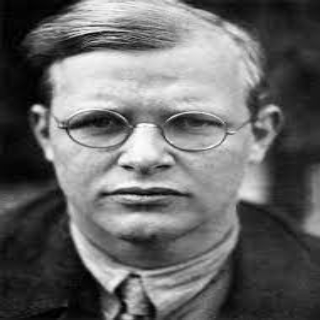
"Cheap grace is preaching forgiveness without requiring repentance, baptism without church discipline, Communion without confession. … Cheap grace is grace without discipleship, grace without the cross, grace without Jesus Christ, living and incarnate."
"The time is fulfilled for the German people of Hitler. It is because of Hitler that Christ, God the helper and redeemer, has become effective among us. … Hitler is the way of the Spirit and the will of God for the German people to enter the Church of Christ." So spoke German pastor Hermann Gruner. Another pastor put it more succinctly: "Christ has come to us through Adolph Hitler."
So despondent had been the German people after the defeat of World War I and the subsequent economic depression that the charismatic Hitler appeared to be the nation's answer to prayer—at least to most Germans. One exception was theologian Dietrich Bonhoeffer, who was determined not only to refute this idea but also to topple Hitler, even if it meant killing him.
From pacifist to co-conspirator
Bonhoeffer was not raised in a particularly radical environment. He was born into an aristocratic family. His mother was daughter of the preacher at the court of Kaiser Wilhelm II, and his father was a prominent neurologist and professor of psychiatry at the University of Berlin.
All eight children were raised in a liberal, nominally religious environment and were encouraged to dabble in great literature and the fine arts. Bonhoeffer's skill at the piano, in fact, led some in his family to believe he was headed for a career in music. When at age 14, Dietrich announced he intended to become a minister and theologian, the family was not pleased.
Bonhoeffer graduated from the University of Berlin in 1927, at age 21, and then spent some months in Spain as an assistant pastor to a German congregation. Then it was back to Germany to write a dissertation, which would grant him the right to a university appointment. He then spent a year in America, at New York's Union Theological Seminary, before returning to the post of lecturer at the University of Berlin.
During these years, Hitler rose in power, becoming chancellor of Germany in January 1933, and president a year and a half later. Hitler's anti-Semitic rhetoric and actions intensified—as did his opposition, which included the likes of theologian Karl Barth, pastor Martin Niemoller, and the young Bonhoeffer. Together with other pastors and theologians, they organized the Confessing Church, which announced publicly in its Barmen Declaration (1934) its allegiance first to Jesus Christ: "We repudiate the false teaching that the church can and must recognize yet other happenings and powers, personalities and truths as divine revelation alongside this one Word of God. … "
In the meantime, Bonhoeffer had written The Cost of Discipleship (1937), a call to more faithful and radical obedience to Christ and a severe rebuke of comfortable Christianity: "Cheap grace is preaching forgiveness without requiring repentance, baptism without church discipline, Communion without confession. … Cheap grace is grace without discipleship, grace without the cross, grace without Jesus Christ, living and incarnate."
During this time, Bonhoeffer was teaching pastors in an underground seminary, Finkenwalde (the government had banned him from teaching openly). But after the seminary was discovered and closed, the Confessing Church became increasingly reluctant to speak out against Hitler, and moral opposition proved increasingly ineffective, so Bonhoeffer began to change his strategy. To this point he had been a pacifist, and he had tried to oppose the Nazis through religious action and moral persuasion.
Now he signed up with the German secret service (to serve as a double agent—while traveling to church conferences over Europe, he was supposed to be collecting information about the places he visited, but he was, instead, trying to help Jews escape Nazi oppression). Bonhoeffer also became a part of a plot to overthrow, and later to assassinate, Hitler.
As his tactics were changing, he had gone to America to become a guest lecturer. But he couldn't shake a feeling of responsibility for his country. Within months of his arrival, he wrote theologian Reinhold Niebuhr, "I have made a mistake in coming to America. I must live through this difficult period in our national history with the Christian people of Germany. I will have no right to participate in the reconstruction of Christian life in Germany after the war if I do not share the trials of this time with my people."
Bonhoeffer, though privy to various plots on Hitler's life, was never at the center of the plans. Eventually his resistance efforts (mainly his role in rescuing Jews) was discovered. On an April afternoon in 1943, two men arrived in a black Mercedes, put Bonhoeffer in the car, and drove him to Tegel prison.
Radical reflections
Bonhoeffer spent two years in prison, corresponding with family and friends, pastoring fellow prisoners, and reflecting on the meaning of "Jesus Christ for today." As the months progressed, be began outlining a new theology, penning enigmatic lines that had been inspired by his reflections on the nature of Christian action in history.
"God lets himself be pushed out of the world on to the cross," he wrote. "He is weak and powerless in the world, and that is precisely the way, the only way, in which he is with us and helps us. [The Bible] … makes quite clear that Christ helps us, not by virtue of his omnipotence, but by virtue of his weakness and suffering. … The Bible directs man to God's powerlessness and suffering; only the suffering God can help."
In another passage, he said, "To be a Christian does not mean to be religious in a particular way, to make something of oneself (a sinner, a penitent, or a saint) on the basis of some method or other, but to be a man—not a type of man, but the man that Christ creates in us. It is not the religious act that makes the Christian, but participation in the sufferings of God in the secular life."
Eventually, Bonhoeffer was transferred from Tegel to Buchenwald and then to the extermination camp at FlossenbĂĽrg. On April 9, 1945, one month before Germany surrendered, he was hanged with six other resisters.
A decade later, a camp doctor who witnessed Bonhoeffer's hanging described the scene: "The prisoners … were taken from their cells, and the verdicts of court martial read out to them. Through the half-open door in one room of the huts, I saw Pastor Bonhoeffer, before taking off his prison garb, kneeling on the floor praying fervently to his God. I was most deeply moved by the way this lovable man prayed, so devout and so certain that God heard his prayer. At the place of execution, he again said a prayer and then climbed the steps to the gallows, brave and composed. His death ensued in a few seconds. In the almost 50 years that I have worked as a doctor, I have hardly ever seen a man die so entirely submissive to the will of God."
Bonhoeffer's prison correspondence was eventually edited and published as Letters and Papers from Prison, which inspired much controversy and the "death of God" movement of the 1960s (though Bonhoeffer's close friend and chief biographer, Eberhard Bethge, said Bonhoeffer implied no such thing). His Cost of Discipleship, as well as Life Together (about Christian community, based on his teaching at the underground seminary), have remained devotional classics.
what if my singleness never ends
It happened suddenly this past May, the moment I’d prayed for and sought after for quite some time: the moment I became okay with lifelong singleness. Something inside me relaxed as I sat at a coffee shop, my mind not even on relationships but preoccupied with a menu over dinner with friends. And then suddenly, I felt content to be single — not only for another few months, or even years, but even until the day I die, if God chooses that for me. “I don’t want to skip what God chooses to give me during singleness.” More than ever before, the years stretching out before me don’t seem like a romance-less, spouse-less, and (okay, let’s face it) sex-less gray void. It was a beautiful moment that could come only from God, a moment of triumph over an idol that has long battled for the throne of my heart. Whether it’s for a season or a lifetime, I’ve found that I don’t want to skip what God chooses to give me during singleness. Already Loved The more weddings I attend (which is several a year at this stage of life), the more the feeling sinks in that I may never be a bride. But the feeling isn’t altogether sad. Because I’m already dressed in white, you see. My friends’ immaculate dresses and the wedding day itself symbolize something mysterious and beautiful: the “robe of righteousness” God’s people already wear (Isaiah 61:10) and the “fine linen, bright and pure” we will put on at the wedding feast of the Lamb (Revelation 19:8). I’m already pursued by someone who wove the very sinews of my being together. I’m already loved with a love that will outlast every other. I’m already known more intimately than I can fathom. It’s so easy to read that last paragraph and think “so cliché,” especially since this is yet another  Christian article about singleness. Just be still. Do you realize what that paragraph means? You’re known just as you are (1 Corinthians 13:12). Even the inmost places of your heart — the darkest, the brightest, the most wounded, the most joyful, the most romantic — God knows and comprehends them to their depths. He cares for your unspoken and most intimate needs. There isn’t a thought you can speak before God knows it’s there (Psalm 139:4). Dwell on that. Do God’s presence and promises carry so little preciousness that we can scoff and declare them “cliché”? Faulty Assumptions So often, we spout inane phrases to single people like “God will bring you the right guy.” They reveal the heart so completely: I have to have a romantic relationship in my life at some point to be whole. We might subtly think, I don’t have to have it now, God. Or even next month. But at some point, God, you’ve gotta bring someone for me to marry. But he doesn’t. God does not have to bring us someone to marry. He simply is not obligated to do anything for us that is not for his glory and for our joy in him. And since we’re not all-knowing, we cannot claim to know what will give us the most long-term joy. We can make guesses, certainly. But the ultimate decision is up to our God, who has never ceased to provide exactly what his people need — from the garments of skin worn by Adam and Eve (Genesis 3:21) to our own daily bread (Matthew 6:11). “I am already loved with a love that will outlast every other.” I’m not  saying you won’t have difficult days where you yearn to be a husband or wife (I have those days too!), but I am saying that Jesus will meet you in those difficult times. He is gloriously gracious like that. The Spirit is willing and able to teach your heart many things, including contentment in singleness as long as God sees fit — and even if it’s lifelong. Don’t get me wrong: seeking marriage is great. If you’re interested in a godly someone, use wisdom and discernment and be intentional about it. But don’t fret. You may marry that person, and you may not. Whatever happens, don’t let it overshadow what God has already done for you and the glorious place you are headed. Three Suggestions “That’s great,” you may say as you read this. “But how can I do that?” I don’t pretend to know the complete answer to that question, but here are three suggestions that have helped me. 1. Recognize that you can’t be content on your own. Contentment is a work of God (Philippians 4:11–13). Pray to him for it. Lay your will and your heart down completely, and not in a way where you’re trying to be holy and spiritual so that you can get the “true prize” in your eyes. God can change your heart from that too; just ask. He is a Father who listens to his children. 2. Second, don’t surround yourself with romance. I’m not saying avoid all your friends’ weddings — each is a time for rejoicing and celebrating God’s work in their lives! But don’t inundate yourself with romantic comedies and TV shows and books and other media that are constantly focused on romance. Doing this can easily irritate wounds and give a foothold for envy and comparison to wreak havoc on your emotions. 3. And third, enjoy singleness. Seriously. If you’re not content in singleness, then you won’t be content in marriage. Spouses and significant others are not contentment charms; wedding vows are not magic incantations that produce lifelong fulfillment. “If you’re not content in singleness, then you won’t be content in marriage.” Give your time to ministering to friends and your community. Pursue your interests intently. Learn to manage your money. These activities do not have to be less fulfilling just because you are spouse-less! Believe it or not, if you do marry, there will be times when you yearn for singleness, and it isn’t likely to come again (at least not in the same way). A Better Goal So I come alongside you as a fellow single, encouraging you to join me in laying down the idol of romance. Let’s prepare now to better serve a future spouse or, if we never marry, to enjoy Jesus no matter married or not. Marriage is great, but it isn’t ultimate. The honor of “ultimate” remains with our true romance: the God who creates, sustains, intervenes in, and pursues the hearts of his people from eternity to eternity (Psalm 90:1–2). Amen.