

Others like 7 qualities wise men want Features >>






-160.webp)

-160.webp)
About the Book
"7 Qualities Wise Men Want" by Kingsley Okonkwo is a relationship guide that explores the key qualities that mature and wise men look for in a partner. The book delves into topics such as virtue, beauty, homeliness, wisdom, kindness, industry, and charm, offering insights and practical advice on how women can embody these qualities to attract and maintain healthy relationships with discerning men.
Emerson Andrews
 His Early life
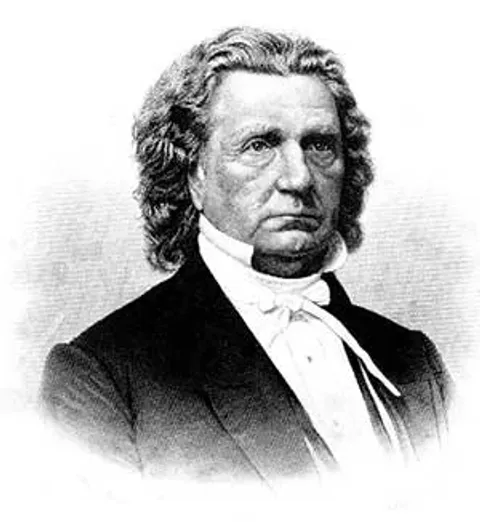
Emerson Andrews was born in Mansfield, Bristol County, Massachusetts in 1806 to godly parents, James and Mercy Andrews. They were from English stock and were strict Puritans in faith and lifestyle. Although young Emerson was raised in the Congregational Church he was far from God in his teens and twenties.
Nevertheless, periodically, he experienced intense conviction, usually through his parents’ counsels and prayers but particularly through two unforgettable sermons delivered by the eccentric revivalist, Lorenzo Dow. Soon after this he was converted under the ministry of another revival preacher, Asahel Nettleton.
He was a very educated man formerly studying at Chesterfield Academy and, at the time of his conversion, at Plainfield Kimball Union Academy, in New Hampshire. In the spring of 1832 whilst studying further at Union College in Schenectady, New York, he was baptised by immersion in the Mohawk River. It was his convictions about the Bible’s teaching on water baptism that caused him to join the Baptist’s instead of the Congregationalists or Presbyterians.
A Lover of Revival
He wrote “Many revivals and protracted meetings of one, two, or more days, and some for weeks and months, have been held, in New England and elsewhere, within, my personal remembrance. These have sent out their hallowed influences, as the light of the world and salt of the earth. Just before and at the time of my second birth, many sweeping and glorious revivals, under the celebrated Dr. Netteton, John Leland, Jedediah Burchard, C. G. Finney, were hailed, enjoyed, and sounded all around and over the country.
As soon as I was converted I cherished the good news of revivals; and I sought a place and portion with live Christians, that I might speak for Christ and win souls to salvation. I asked God for direction and help, and was answered.
His first visit to a Revival
He describes his first visit to a Revival “The first meeting that I attended after my regeneration was held in the town of Windsor, Vt. It was called a “four days’ meeting.” But many such were held in different places about that time. This came off in the summer of l830. I was much delighted, fed, and strengthened by such a sight, experience, exercise, and spiritual supper. It was a precious banquet, adapted to develop and enlarge the young convert’s soul.
The four pastors of the town, with their respective churches and congregations, and some from neighboring towns, met with the Baptist church, of which Elder Leland Howard was the long-honored pastor. Some twenty other pastors also came in from adjacent towns, and a few Lawyers and teachers, who took leading parts in the services. Large congregations were constantly in attendance, and all the various exercises and meetings were interesting and profitable.
Some of the sermons and prayers were most powerful, melting, and effective. Sinners often arose, requesting prayers, or sent up short petitions to be read. A lawyer by the name of Shepherd, from New York, was found to be very able, pointed, and specific in prayer, and so effective and precise in noting each different request more perfectly than the ministers, that he was often invited to lead in prayer — especially when there were some ten or twenty different, or some difficult requests presented.
He seemed to be full of the Spirit, and was especially gifted and successful. Ministers learned something valuable from his wisdom and tact. I confess that his pointedness made a powerful and lasting impression on my mind and practice.
The professors and ministers were much blessed, and many sinners were converted in the meetings. The gospel was preached and the Spirit poured out, prayer and sacrifices made. Novelty and wonder attracted many. Here God crowned the effort.”
Mentored by Jacob Knapp
He writes. ” ROCHESTER, N.Y. 1839. Here I assisted in a powerful meeting, under the preaching of the celebrated Elder Jacob Knapp, for three weeks. Marvellous things were done. The wicked raged, the Spirit worked, grace prevailed, and hundreds were converted — a glorious triumph over rum, gambling, and infidelity. Jesus reigned.” This exposure to revival power whetted his appetite for an evangelistic ministry.
His first revival efforts
“WHITE DEER, PENN. 1839. In this rich farming district I had a revival meeting of five weeks, with a feeble Baptist church. We began at the close of the Association; but, with all the eloquent pastoral preaching in it, the brethren were not aroused, nor sinners much convicted.
Here my first sermon was from the text, “O Lord, revive thy work!” And he did so immediately. Some half a dozen persons were convicted and converted, and the church was revived by the power of God on that evening’s effort. The whole region, then, for seven miles around, was awakened, and some forty converts were immersed by Elder Spratt, D.D.
Here, too, we experienced severe opposition and much persecution from outside professors and sinners, but God strengthened our hands for a triumphant work. This was a blessed era with the church, and it is fragrant still.
“CLINTON, PENN. I had a revival meeting in this township. It was very great and powerful. Satan and sinners raged, at times, terribly, but the cross was triumphant. Many were immersed by the beloved pastor, Elder Spratt, D.D.
Hugh Donelly, the postmaster, rum-selling merchant, and an avowed infidel, who had slandered me and ridiculed the meeting, crept in away back, then into the middle seats; then, after a few nights, fell on his knees groaning and crying for mercy. I soon aided him in coming forward.
Then out came his wife and sister. We all prayed, and soon the three rejoiced in hope, and spoke boldly for Jesus. Brother Donelly has made a noble record in Pennsylvania and Indiana for Jesus and his cause…..
PARMA, N.Y. In this western village, in mid-winter, I preached night and day, for three weeks, to overflowing houses and attentive hearers. Christians renewed their “first love and vows,” and many sinners were converted and baptized.
An infidel, hearing a few sermons, was struck under conviction, and fled away thirty miles for comfort; but, feeling worse and worse, returned like the prodigal, feeling wretched and lost. He came forward, prayer was offered, and he soon yielded and believed, giving glory to God. Then he told his experience, and exhorted his old Universalist and infidel friends to repent and be saved from hell.
Emerson Andrews Preaching
His preaching zeal and effectiveness were quickly recognised and he was soon licensed to preach and for a four year period served brief pastorates in New York State – Waterford, West Troy, Lansingburg and Rome (1834-1838)
In 1838 began an itinerant evangelist for thirty-five years, mainly in America, but also in Europe, Africa, Asia and Canada. His estimates were that 40,000 were converted through his ministry.
His Early life
Emerson Andrews was born in Mansfield, Bristol County, Massachusetts in 1806 to godly parents, James and Mercy Andrews. They were from English stock and were strict Puritans in faith and lifestyle. Although young Emerson was raised in the Congregational Church he was far from God in his teens and twenties.
Nevertheless, periodically, he experienced intense conviction, usually through his parents’ counsels and prayers but particularly through two unforgettable sermons delivered by the eccentric revivalist, Lorenzo Dow. Soon after this he was converted under the ministry of another revival preacher, Asahel Nettleton.
He was a very educated man formerly studying at Chesterfield Academy and, at the time of his conversion, at Plainfield Kimball Union Academy, in New Hampshire. In the spring of 1832 whilst studying further at Union College in Schenectady, New York, he was baptised by immersion in the Mohawk River. It was his convictions about the Bible’s teaching on water baptism that caused him to join the Baptist’s instead of the Congregationalists or Presbyterians.
A Lover of Revival
He wrote “Many revivals and protracted meetings of one, two, or more days, and some for weeks and months, have been held, in New England and elsewhere, within, my personal remembrance. These have sent out their hallowed influences, as the light of the world and salt of the earth. Just before and at the time of my second birth, many sweeping and glorious revivals, under the celebrated Dr. Netteton, John Leland, Jedediah Burchard, C. G. Finney, were hailed, enjoyed, and sounded all around and over the country.
As soon as I was converted I cherished the good news of revivals; and I sought a place and portion with live Christians, that I might speak for Christ and win souls to salvation. I asked God for direction and help, and was answered.
His first visit to a Revival
He describes his first visit to a Revival “The first meeting that I attended after my regeneration was held in the town of Windsor, Vt. It was called a “four days’ meeting.” But many such were held in different places about that time. This came off in the summer of l830. I was much delighted, fed, and strengthened by such a sight, experience, exercise, and spiritual supper. It was a precious banquet, adapted to develop and enlarge the young convert’s soul.
The four pastors of the town, with their respective churches and congregations, and some from neighboring towns, met with the Baptist church, of which Elder Leland Howard was the long-honored pastor. Some twenty other pastors also came in from adjacent towns, and a few Lawyers and teachers, who took leading parts in the services. Large congregations were constantly in attendance, and all the various exercises and meetings were interesting and profitable.
Some of the sermons and prayers were most powerful, melting, and effective. Sinners often arose, requesting prayers, or sent up short petitions to be read. A lawyer by the name of Shepherd, from New York, was found to be very able, pointed, and specific in prayer, and so effective and precise in noting each different request more perfectly than the ministers, that he was often invited to lead in prayer — especially when there were some ten or twenty different, or some difficult requests presented.
He seemed to be full of the Spirit, and was especially gifted and successful. Ministers learned something valuable from his wisdom and tact. I confess that his pointedness made a powerful and lasting impression on my mind and practice.
The professors and ministers were much blessed, and many sinners were converted in the meetings. The gospel was preached and the Spirit poured out, prayer and sacrifices made. Novelty and wonder attracted many. Here God crowned the effort.”
Mentored by Jacob Knapp
He writes. ” ROCHESTER, N.Y. 1839. Here I assisted in a powerful meeting, under the preaching of the celebrated Elder Jacob Knapp, for three weeks. Marvellous things were done. The wicked raged, the Spirit worked, grace prevailed, and hundreds were converted — a glorious triumph over rum, gambling, and infidelity. Jesus reigned.” This exposure to revival power whetted his appetite for an evangelistic ministry.
His first revival efforts
“WHITE DEER, PENN. 1839. In this rich farming district I had a revival meeting of five weeks, with a feeble Baptist church. We began at the close of the Association; but, with all the eloquent pastoral preaching in it, the brethren were not aroused, nor sinners much convicted.
Here my first sermon was from the text, “O Lord, revive thy work!” And he did so immediately. Some half a dozen persons were convicted and converted, and the church was revived by the power of God on that evening’s effort. The whole region, then, for seven miles around, was awakened, and some forty converts were immersed by Elder Spratt, D.D.
Here, too, we experienced severe opposition and much persecution from outside professors and sinners, but God strengthened our hands for a triumphant work. This was a blessed era with the church, and it is fragrant still.
“CLINTON, PENN. I had a revival meeting in this township. It was very great and powerful. Satan and sinners raged, at times, terribly, but the cross was triumphant. Many were immersed by the beloved pastor, Elder Spratt, D.D.
Hugh Donelly, the postmaster, rum-selling merchant, and an avowed infidel, who had slandered me and ridiculed the meeting, crept in away back, then into the middle seats; then, after a few nights, fell on his knees groaning and crying for mercy. I soon aided him in coming forward.
Then out came his wife and sister. We all prayed, and soon the three rejoiced in hope, and spoke boldly for Jesus. Brother Donelly has made a noble record in Pennsylvania and Indiana for Jesus and his cause…..
PARMA, N.Y. In this western village, in mid-winter, I preached night and day, for three weeks, to overflowing houses and attentive hearers. Christians renewed their “first love and vows,” and many sinners were converted and baptized.
An infidel, hearing a few sermons, was struck under conviction, and fled away thirty miles for comfort; but, feeling worse and worse, returned like the prodigal, feeling wretched and lost. He came forward, prayer was offered, and he soon yielded and believed, giving glory to God. Then he told his experience, and exhorted his old Universalist and infidel friends to repent and be saved from hell.
Emerson Andrews Preaching
His preaching zeal and effectiveness were quickly recognised and he was soon licensed to preach and for a four year period served brief pastorates in New York State – Waterford, West Troy, Lansingburg and Rome (1834-1838)
In 1838 began an itinerant evangelist for thirty-five years, mainly in America, but also in Europe, Africa, Asia and Canada. His estimates were that 40,000 were converted through his ministry.
Trapped for All Eternity
My dear Globdrop, I have received your perspective concerning your man’s most recent incident. He drew swords with his atheist classmate and succeeded, did he? He made the Enemy and the hope of a hereafter seem almost “reasonable”? In those ten minutes, the clouds pulled back and heaven appeared to triumph over hell, did it? You call it “a true embarrassment . . . a humiliating defeat.” You repeatedly assure me that you “take full responsibility.” O my dear nephew, what’s next? Did you, borrowing a human expression, require a shoulder to cry on? A nodding head and listening ear? Words of affirmation? Stand upright, soldier. Yours is not the only name to be pulled down into disgrace. All is far from lost. Though you slouch in shame with your talons curled, consider that mere “reasoning” does not frighten us (though we do not encourage it). A “reasonable” God, a “reasonable” eternity, and a “reasonable” heaven are still no God, no eternity, and no heaven — so long as “reasonable” goes unaccompanied with “desirable.” A God and a heaven no one wants are the only kind we will approve. Just a Few More Hours This unwelcomed eternity is, from all indications, your man’s current conception. The heaven he hotly debates is not the heaven he really wants. He is not one to strive to enter the narrow gate. He is “a few more hours” kind of man. I remember that splendid night like it was yesterday. One of their comedians took the stage to joke that he feared the Enemy would return on his wedding night. How would he respond when his “Lord” came to meet him? “Give me a few more hours.” The audience bellowed uproarious laughter. This, Globdrop, is comedy! Dark, damning, delicious. What this man said captures the subtitles of their lives: “Lord, give me a few more hours to make my mark on the world!” “Give me a little longer to get married and have children!” “Lord, let me grow old and spent. Then return!” Not yet, Lord — give me just a few more hours! For all the “Christian” talk (or debating), great masses of them still consider heaven an intrusion, a cloud moving over their day at the beach, a mere shadow interrupting the earthly substance. Their decaying bodies, grey hairs, and slowing minds trigger fear, not anticipation, for what lies ahead. These are runners who slow near the finish line, soldiers who do not want the war to end, farmers who groan at the first signs of harvest, prodigals looking back longingly at the city they can no longer afford. Their hearts are here; their heaven is earth. If not forced over the cliff by death, many would say, “a few more hours” for all eternity. Demon’s History of Heaven The secret, then, is this: we do not need to waste time trying to make atheists of those who stubbornly believe that the Enemy or heaven is real; we need only convince them that it’s nothing to leave earth for. And thankfully, we do not need to deceive them on this point. I was just a young devil during the Rebellion. The humans scratch their furry heads, perplexed how we could have ever sinned; they gaze up at the stars, wondering how perfect creatures could ever fall. They never consider that our Father Below “fell like lightning from heaven” in a grand escape from their precious heaven. Sure, the Enemy was well at hand to twist the story, labeling it as our being cast out in defeat, but what he calls an insurrection, we know as emancipation. We could not linger for one more millennium locked in that kennel he calls heaven. Our Father discovered (almost too late) that the Enemy allows only spaniels in that place, puppies wagging their peppy tails, yapping incessant praises, jumping up and down for that eternal belly scratch he calls joy. Our Dark Lord Lucifer, deciding then that he would not allow us to be of the servile breed, snapped the leash from such a place. Here again, the thinkers of men scratch their heads wondering why they — and not we demons — were sent “redemption.” As their preachers drool with self-congratulation, they would be shocked to discover the truth: we wouldn’t want it if he offered it. We know what “heaven” on his terms means. Were the door to swing open to us, we would slam it once again. We’ve had enough of his ball-fetching. Danger of Desire Yet the vermin actually applaud when he takes them for slaves. He, of course, gives each chain a pretty name — joy, peace, goodness, love, and the rest. What effective propaganda that he even goes so far as to move the Warden of his own presence into them to ensure they live as he demands, all the while convincing them that this is some precious gift. It is when they begin to see things in this concussed way — God, heaven, holiness as a treasure — that things get dangerous. Humans in this condition have been known to do more damage to our Father’s kingdom than ten thousand of those who, for all their talk, just want a few more hours. Men have sung on their way to the gallows. Women have crossed oceans to tell news of the Enemy to subjects we thought firmly in our grasp. Young children even, giving up a life unlived because of this infection. The hope of heaven to them has been a shield against our most reliable weapons: suffering, grief, sickness, and pain. The servitude that they mistake for freedom would almost make us laugh — if it did not rob us of our supper. Floating Clouds, Plucking Harps Heaven must remain — if it must remain — as merely the next best thing when they are evicted from this earth. Keep heaven in the peripheral: a blinding blur; the butt of a joke; a hazy, undesirable existence of floating in clouds and plucking harps. Let them think they are praying “on earth as it is in heaven” when they really mean “in heaven as it is on earth.” Far from fainting at such a belief, we see in it the opportunity to glorify our Father Below. When they refuse the Enemy’s feast to check on the fields and oxen they bought, or when they excuse themselves because they just got married and need a few more hours, all see the truth. How those howls shook hell when that young rich man — and every rich man since — finally turned away dejected. So yes, dear Globdrop, allow heaven to be “reasonable” to your man, at least for now. But never allow it to be more. Let him contest for the idea of heaven and drop the thought once he sits down to eat lunch, scrolls mindlessly through his phone, or watches a movie with his girlfriend — send him immediately back to our world. The only heaven we can endure — and the only heaven that will deliver your patient safely to us — is the heaven for which no one really wants to leave earth. Your unamused uncle, Grimgod Article by Greg Morse