

101 Crucial Lessons They Don't Teach You In Business School Order Printed Copy
- Author: Chris Haroun
- Size: 516KB | 134 pages
- |
Others like 101 crucial lessons they don't teach you in business school Features >>

The 100 Absolutely Unbreakable Laws Of Business Success

The Rules Of Work
101 Activities For Teaching Creativity And Problem Solving

None Of These Diseases

Goal Setting
Ethics 101 - What Every Leader Needs To Succeed
Leadership

The Four Agreements

Anger: Taming A Powerful Emotion

Give And Take - A Revolutionary Approach To Success
About the Book
"101 Crucial Lessons They Don't Teach You In Business School" by Chris Haroun provides practical advice and insights for success in the business world that are often overlooked in traditional business education. The book covers a wide range of topics, from networking and leadership to negotiation and decision-making, offering valuable lessons for aspiring entrepreneurs and professionals alike. Haroun's straightforward approach and real-world examples make this book a valuable resource for anyone looking to succeed in the business world.
Jerry Bridges
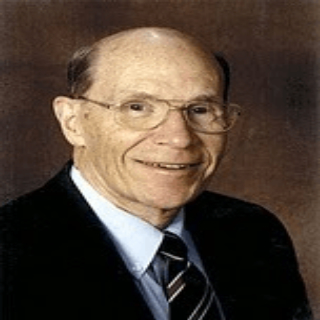 Jerry Bridges entered into the joy of his Master on Sunday evening, March 6, 2016, at Penrose Hospital in Colorado Springs, the day after he suffered cardiac arrest. He was 86 years old.
Childhood
Gerald Dean Bridges was born on December 4, 1929, in a cotton-farming home in Tyler, Texas, to fundamentalist parents, six weeks after the Black Tuesday stock market crash that led to the Great Depression.
Jerry was born with several disabilities: he was cross-eyed, he was deaf in his right ear (which was not fully developed), and he had spine and breastbone deformities. But given his family’s poverty, they were unable to afford medical care for these challenges.
The separatist church in East Texas where the Bridges were members had an altar call after every service. Jerry walked the aisle three times, at the ages of 9, 11, and 13. But he later realized that he had not been born again.
His mother Lillian passed away in 1944 when he was 14.
Conversion
In August of 1948, as an 18-year-old college student right before his sophomore year began, Jerry was home alone one night in bed. He acknowledged to the Lord that he was not truly a Christian, despite growing up in a Christian home and professing faith. He prayed, ”God whatever it takes, I want Christ to be my Savior.”
The next week in his dorm room at the University of Oklahoma he was working on a school assignment and reached for a textbook, when he noticed the little Bible his parents had given him in high school. He figured that since he was now a Christian, he ought to start reading it daily, which he did (and never stopped doing for the rest of his days).
The Navy
After graduating with an engineering degree on a Navy ROTC scholarship, he went on active duty with the Navy, serving as an officer during the Korean conflict (1951-1953). A fellow officer invited him to go to a Navigator Bible study. Jerry went and he was hooked. He had never experienced anything like this before.
When stationed on ship in Japan, he got to know several staff members of the Navigators quite well. One day, after Jerry had been in Japan for six months, a Navy worker asked him why he didn’t just throw in his lot with the Navigators and come to work for them. The very next day, December 26, 1952, Jerry failed a physical exam due to the hearing loss in his right ear, and he was given a medical discharge in July 1953, after being in the Navy for only two years. Jerry was not overly disappointed, surmising that perhaps this was the Lord’s way of steering him to the Navigators.
When he returned to the U.S., he began working for Convair, an airplane manufacturing company in southern California, writing technical papers for shop and flight line personnel. It was there that he learned to write simply and clearly—skills the Lord would later use to instruct and edify thousands of people from his pen.
The Navigators
Jerry was single at the time, living in the home of Navigator Glen Solum, a common practice in the early days of The Navigators. In 1955 Jim invited Jerry to go with him to a staff conference at the headquarters of The Navigators in Glen Eyrie at Colorado Springs. It was there that Jerry sensed a call from the Lord to be involved with vocational ministry. He was resistant to the idea of going on staff, but felt conviction and prayed to the Lord, “Whatever you want.” The following day he met Dawson Trotman, the 49-year-old founder of The Navigators, who wanted to interview Jerry for a position, which he received and accepted. Jerry was put in charge of the correspondence department—answering letters, handling receipts, and mainly the NavLog newsletter to supporters.
When Trotman died in June of 1956 (saving a girl who was drowning), Jim Downing took a position equivalent to a chief operations operator. A Navy man, Jim Downing knew that Jerry had also served in the Navy and tapped him to be his assistant.
Jerry struggled at times in his role, unsure if this was his calling since his position was so different from the typical campus reps. After ten years on staff he told the Lord, “I’m going to do this for the rest of my life. If you want me out of The Navigators you’ll have to let me know.”
Beginning in 1960, Jerry served for three years in Europe as administrative assistant to the Navigators’ Europe Director. In January of 1960, he read a booklet entitled The Doctrine of Election, which he first considered heresy but then embraced the following day.
In October of 1963, at the age of 34, he married his first wife, Eleanor Miller of The Navigators following a long-distance relationship. Two children followed: Kathy in 1966, and Dan in 1967. From 1965 to 1969 Jerry served as office manager for The Navigators’ headquarters office at Glen Eyrie.
From 1969 to 1979 Jerry served as the Secretary-Treasurer for The Navigators. It was during this time that NavPress was founded in 1975. Their first publications began by transcribing and editing audio material from their tape archives and turning them into booklets. They produced one by Jerry on Willpower. Leroy Eims—who started the Collegiate ministry—encouraged Jerry to try his hand at writing new material. Jerry had been teaching at conferences on holiness, so he suggested a book along those lines.
In 1978, NavPress published The Pursuit of Holiness, which has now sold over 1.5 million copies. Jerry assumed it would be his only book. A couple of years later, after reading about putting off the old self and putting on the new self from Ephesians 4, he decided to write The Practice of Godliness—on developing a Christlike character. That book went on to sell over half a million copies, and his 1988 book on Trusting God has sold nearly a million copies.
Jerry served as The Navigators’ Vice President for Corporate Affairs from 1979 to 1994. It was in this season of ministry that Eleanor developed non-Hodgkin’s lymphoma. She went to be with the Lord on November 9, 1988, just three weeks after their 25th wedding anniversary. On November 24, 1989, Jerry married Jane Mallot, who had known the Bridges family since the early ’70s.
Jerry’s final position with The Navigator’s was in the area of staff development with the Collegiate Mission. He saw this ministry as developing people, rather than teaching people how to do ministry. In addition to his work with The Navigators, he also maintained an active writing and teaching ministry, traveling the world to instruct and equip pastors and missionaries and other workers through conferences, seminars, and retreats.
Lessons
In 2014, Jerry published a memoir of his life, tracing the providential hand of God through his own story: God Took Me by the Hand: A Story of God’s Unusual Providence (NavPress, 2014). He closes the work with seven spiritual lessons he learned in his six decades of the Christian life:
The Bible is meant to be applied to specific life situations.
All who trust in Christ as Savior are united to Him in a loving way just as the branches are united to the vine.
The pursuit of holiness and godly character is neither by self-effort nor simply letting Christ “live His life through you.”
The sudden understanding of the doctrine of election was a watershed event for me that significantly affected my entire Christian life.
The representative union of Christ and the believer means that all that Christ did in both His perfect obedience and His death for our sins is credited to us.
The gospel is not just for unbelievers in their coming to Christ.
We are dependent on the Holy Spirit to apply the life of Christ to our lives.
His last book, The Blessing of Humility: Walk within Your Calling, will be published this summer by NavPress.
Legacy
One of the great legacies of Jerry Bridges is that he combined—to borrow some titles from his books—the pursuit of holiness and godliness with an emphasis on transforming grace. He believed that trusting God not only involved believing what he had done for us in the past, but that the gospel empowers daily faith and is transformative for all of life.
In 2009 he explained to interviewer Becky Grosenbach the need for this emphasis within the culture of the ministry he had given his life to:
When I came on staff almost all the leaders had come out of the military and we had pretty much a military culture. We were pretty hard core. We were duty driven. The WWII generation. We believed in hard work. We were motivated by saying “this is what you ought to do.” That’s okay, but it doesn’t serve you over the long haul. And so 30 years ago there was the beginning of a change to emphasize transforming grace, a grace-motivated discipleship.
In the days ahead, many will write tributes of this dear saint (see, e.g., this one from his friend, prayer partner, and sometimes co-author Bob Bevington). I would not be able to improve upon the reflections and remembrances of those who knew him better than I did. But I do know that he received from the Lord the ultimate acclamation as he entered into the joy of his Master and received the words we all long to hear, “Well done, my good and faithful servant.” There was nothing flashy about Jerry Bridges. He was a humble and unassuming man—strong in spirit, if not in voice or frame. And now we can rejoice with him in his full and final healing as he beholds his beloved Savior face to face. Thank you, God, for this man who helped us see and know you more.
Jerry Bridges wrote more than 20 books over the course of nearly 40 years:
The Pursuit of Holiness (NavPress, 1978)
The Practice of Godliness (NavPress, 1983)
True Fellowship (NavPress, 1985) [later published as The Crisis of Caring (P&R, 1992); finally republished with a major revision as True Community (NavPress, 2012)]
Trusting God (NavPress, 1988)
Transforming Grace (NavPress, 1991)
The Discipline of Grace (NavPress, 1994)
The Joy of Fearing God (Waterbrook, 1997)
I Exalt You, O God (Waterbrook, 2000)
I Give You Glory, O God (Waterbrook, 2002)
The Gospel for Real Life (NavPress, 2002)
The Chase (NavPress, 2003) [taken from Pursuit of Holiness]
Growing Your Faith (NavPress, 2004)
Is God Really in Control? (NavPress, 2006)
The Fruitful Life (NavPress, 2006)
Respectable Sins (NavPress, 2007) [student edition, 2013]
The Great Exchange [co-authored with Bob Bevington] (Crossway, 2007)
Holiness Day by Day (NavPress, 2008) [a devotional drawing from his earlier writing on holiness]
The Bookends of the Christian Life [co-authored with Bob Bevington] (Crossway, 2009)
Who Am I? (Cruciform, 2012)
The Transforming Power of the Gospel (NavPress, 2012)
31 Days Toward Trusting God (NavPress, 2013) [abridged from Trusting God]
God Took Me by the Hand (NavPress, 2014)
The Blessing of Humility: Walk within Your Calling (NavPress, 2016)
For an audio library of Jerry Bridges’ talks, go here.
Funeral
Visitation for Jerry Bridges was held on Thursday, March 10, 2016, from 5 to 8 pm, at Shrine of Remembrance (1730 East Fountain Blvd, Colorado Springs, CO 80910).
The memorial service was held on Friday, March 11, 2016, at 2 pm at Village Seven Presbyterian Church (4055 Nonchalant Circle South, Colorado Springs, CO 80917).
Jerry Bridges entered into the joy of his Master on Sunday evening, March 6, 2016, at Penrose Hospital in Colorado Springs, the day after he suffered cardiac arrest. He was 86 years old.
Childhood
Gerald Dean Bridges was born on December 4, 1929, in a cotton-farming home in Tyler, Texas, to fundamentalist parents, six weeks after the Black Tuesday stock market crash that led to the Great Depression.
Jerry was born with several disabilities: he was cross-eyed, he was deaf in his right ear (which was not fully developed), and he had spine and breastbone deformities. But given his family’s poverty, they were unable to afford medical care for these challenges.
The separatist church in East Texas where the Bridges were members had an altar call after every service. Jerry walked the aisle three times, at the ages of 9, 11, and 13. But he later realized that he had not been born again.
His mother Lillian passed away in 1944 when he was 14.
Conversion
In August of 1948, as an 18-year-old college student right before his sophomore year began, Jerry was home alone one night in bed. He acknowledged to the Lord that he was not truly a Christian, despite growing up in a Christian home and professing faith. He prayed, ”God whatever it takes, I want Christ to be my Savior.”
The next week in his dorm room at the University of Oklahoma he was working on a school assignment and reached for a textbook, when he noticed the little Bible his parents had given him in high school. He figured that since he was now a Christian, he ought to start reading it daily, which he did (and never stopped doing for the rest of his days).
The Navy
After graduating with an engineering degree on a Navy ROTC scholarship, he went on active duty with the Navy, serving as an officer during the Korean conflict (1951-1953). A fellow officer invited him to go to a Navigator Bible study. Jerry went and he was hooked. He had never experienced anything like this before.
When stationed on ship in Japan, he got to know several staff members of the Navigators quite well. One day, after Jerry had been in Japan for six months, a Navy worker asked him why he didn’t just throw in his lot with the Navigators and come to work for them. The very next day, December 26, 1952, Jerry failed a physical exam due to the hearing loss in his right ear, and he was given a medical discharge in July 1953, after being in the Navy for only two years. Jerry was not overly disappointed, surmising that perhaps this was the Lord’s way of steering him to the Navigators.
When he returned to the U.S., he began working for Convair, an airplane manufacturing company in southern California, writing technical papers for shop and flight line personnel. It was there that he learned to write simply and clearly—skills the Lord would later use to instruct and edify thousands of people from his pen.
The Navigators
Jerry was single at the time, living in the home of Navigator Glen Solum, a common practice in the early days of The Navigators. In 1955 Jim invited Jerry to go with him to a staff conference at the headquarters of The Navigators in Glen Eyrie at Colorado Springs. It was there that Jerry sensed a call from the Lord to be involved with vocational ministry. He was resistant to the idea of going on staff, but felt conviction and prayed to the Lord, “Whatever you want.” The following day he met Dawson Trotman, the 49-year-old founder of The Navigators, who wanted to interview Jerry for a position, which he received and accepted. Jerry was put in charge of the correspondence department—answering letters, handling receipts, and mainly the NavLog newsletter to supporters.
When Trotman died in June of 1956 (saving a girl who was drowning), Jim Downing took a position equivalent to a chief operations operator. A Navy man, Jim Downing knew that Jerry had also served in the Navy and tapped him to be his assistant.
Jerry struggled at times in his role, unsure if this was his calling since his position was so different from the typical campus reps. After ten years on staff he told the Lord, “I’m going to do this for the rest of my life. If you want me out of The Navigators you’ll have to let me know.”
Beginning in 1960, Jerry served for three years in Europe as administrative assistant to the Navigators’ Europe Director. In January of 1960, he read a booklet entitled The Doctrine of Election, which he first considered heresy but then embraced the following day.
In October of 1963, at the age of 34, he married his first wife, Eleanor Miller of The Navigators following a long-distance relationship. Two children followed: Kathy in 1966, and Dan in 1967. From 1965 to 1969 Jerry served as office manager for The Navigators’ headquarters office at Glen Eyrie.
From 1969 to 1979 Jerry served as the Secretary-Treasurer for The Navigators. It was during this time that NavPress was founded in 1975. Their first publications began by transcribing and editing audio material from their tape archives and turning them into booklets. They produced one by Jerry on Willpower. Leroy Eims—who started the Collegiate ministry—encouraged Jerry to try his hand at writing new material. Jerry had been teaching at conferences on holiness, so he suggested a book along those lines.
In 1978, NavPress published The Pursuit of Holiness, which has now sold over 1.5 million copies. Jerry assumed it would be his only book. A couple of years later, after reading about putting off the old self and putting on the new self from Ephesians 4, he decided to write The Practice of Godliness—on developing a Christlike character. That book went on to sell over half a million copies, and his 1988 book on Trusting God has sold nearly a million copies.
Jerry served as The Navigators’ Vice President for Corporate Affairs from 1979 to 1994. It was in this season of ministry that Eleanor developed non-Hodgkin’s lymphoma. She went to be with the Lord on November 9, 1988, just three weeks after their 25th wedding anniversary. On November 24, 1989, Jerry married Jane Mallot, who had known the Bridges family since the early ’70s.
Jerry’s final position with The Navigator’s was in the area of staff development with the Collegiate Mission. He saw this ministry as developing people, rather than teaching people how to do ministry. In addition to his work with The Navigators, he also maintained an active writing and teaching ministry, traveling the world to instruct and equip pastors and missionaries and other workers through conferences, seminars, and retreats.
Lessons
In 2014, Jerry published a memoir of his life, tracing the providential hand of God through his own story: God Took Me by the Hand: A Story of God’s Unusual Providence (NavPress, 2014). He closes the work with seven spiritual lessons he learned in his six decades of the Christian life:
The Bible is meant to be applied to specific life situations.
All who trust in Christ as Savior are united to Him in a loving way just as the branches are united to the vine.
The pursuit of holiness and godly character is neither by self-effort nor simply letting Christ “live His life through you.”
The sudden understanding of the doctrine of election was a watershed event for me that significantly affected my entire Christian life.
The representative union of Christ and the believer means that all that Christ did in both His perfect obedience and His death for our sins is credited to us.
The gospel is not just for unbelievers in their coming to Christ.
We are dependent on the Holy Spirit to apply the life of Christ to our lives.
His last book, The Blessing of Humility: Walk within Your Calling, will be published this summer by NavPress.
Legacy
One of the great legacies of Jerry Bridges is that he combined—to borrow some titles from his books—the pursuit of holiness and godliness with an emphasis on transforming grace. He believed that trusting God not only involved believing what he had done for us in the past, but that the gospel empowers daily faith and is transformative for all of life.
In 2009 he explained to interviewer Becky Grosenbach the need for this emphasis within the culture of the ministry he had given his life to:
When I came on staff almost all the leaders had come out of the military and we had pretty much a military culture. We were pretty hard core. We were duty driven. The WWII generation. We believed in hard work. We were motivated by saying “this is what you ought to do.” That’s okay, but it doesn’t serve you over the long haul. And so 30 years ago there was the beginning of a change to emphasize transforming grace, a grace-motivated discipleship.
In the days ahead, many will write tributes of this dear saint (see, e.g., this one from his friend, prayer partner, and sometimes co-author Bob Bevington). I would not be able to improve upon the reflections and remembrances of those who knew him better than I did. But I do know that he received from the Lord the ultimate acclamation as he entered into the joy of his Master and received the words we all long to hear, “Well done, my good and faithful servant.” There was nothing flashy about Jerry Bridges. He was a humble and unassuming man—strong in spirit, if not in voice or frame. And now we can rejoice with him in his full and final healing as he beholds his beloved Savior face to face. Thank you, God, for this man who helped us see and know you more.
Jerry Bridges wrote more than 20 books over the course of nearly 40 years:
The Pursuit of Holiness (NavPress, 1978)
The Practice of Godliness (NavPress, 1983)
True Fellowship (NavPress, 1985) [later published as The Crisis of Caring (P&R, 1992); finally republished with a major revision as True Community (NavPress, 2012)]
Trusting God (NavPress, 1988)
Transforming Grace (NavPress, 1991)
The Discipline of Grace (NavPress, 1994)
The Joy of Fearing God (Waterbrook, 1997)
I Exalt You, O God (Waterbrook, 2000)
I Give You Glory, O God (Waterbrook, 2002)
The Gospel for Real Life (NavPress, 2002)
The Chase (NavPress, 2003) [taken from Pursuit of Holiness]
Growing Your Faith (NavPress, 2004)
Is God Really in Control? (NavPress, 2006)
The Fruitful Life (NavPress, 2006)
Respectable Sins (NavPress, 2007) [student edition, 2013]
The Great Exchange [co-authored with Bob Bevington] (Crossway, 2007)
Holiness Day by Day (NavPress, 2008) [a devotional drawing from his earlier writing on holiness]
The Bookends of the Christian Life [co-authored with Bob Bevington] (Crossway, 2009)
Who Am I? (Cruciform, 2012)
The Transforming Power of the Gospel (NavPress, 2012)
31 Days Toward Trusting God (NavPress, 2013) [abridged from Trusting God]
God Took Me by the Hand (NavPress, 2014)
The Blessing of Humility: Walk within Your Calling (NavPress, 2016)
For an audio library of Jerry Bridges’ talks, go here.
Funeral
Visitation for Jerry Bridges was held on Thursday, March 10, 2016, from 5 to 8 pm, at Shrine of Remembrance (1730 East Fountain Blvd, Colorado Springs, CO 80910).
The memorial service was held on Friday, March 11, 2016, at 2 pm at Village Seven Presbyterian Church (4055 Nonchalant Circle South, Colorado Springs, CO 80917).
Time Alone for God
“All of humanity’s problems stem from man’s inability to sit quietly in a room alone.” —Blaise Pascal (1623–1662) It’s a sweeping claim, but it might just be the kind of overstatement we need today to be awakened from our relentless stream of distractions and diversions. How hauntingly true might it be, that we are unable to sit quietly? Four hundred years after Pascal, life may be as hurried and anxious as it has ever been. The competition for our attention is ruthless. We not only hear one distracting Siren call after another, but an endless cacophony of voices barrages us all at once. And yet, long before Pascal, Jesus himself modeled for us the very kind of habits and rhythms of life we need in any age. Even as God in human flesh, he prioritized time alone with his Father. Imagine what “good” he might otherwise have done with all those hours. But he chose again and again, in perfect wisdom and love, to give his first and best moments to seeking his Father’s face. And if Jesus, even Jesus, carved out such space in the demands of his human life, shouldn’t we all the more? “How many of us have the presence of mind, and heart, to discern and prioritize prayer as Jesus did?” We may have but glimpses of Jesus’s habits and personal spiritual practices in the Gospels, but what we do have is by no accident, and it is not scant. We know exactly what God means for us to know, in just the right detail — and we have far more about Jesus’s personal spiritual rhythms than we do about anyone else in Scripture. And the picture we have of Christ’s habits is not one that is foreign to our world and lives and experience. Rather, we find timeless and transcultural postures that can be replicated, and easily applied, by any follower of Jesus, anywhere in the world, at any time in history. Retreat and Reenter For two thousand years, the teachings of Christ have called his people into rhythms of retreating from the world and entering into it. The healthy Christian life is neither wholly solitary nor wholly communal. We withdraw, like Jesus, to “a desolate place” to commune with God (Mark 1:35), and then return to the bustle of daily tasks and the needs of others. We carve out a season for spiritual respite, in some momentarily sacred space, to feed our souls, enjoying God there in the stillness. Then we enter back in, as light and bread, to a hungry, harassed, and helpless world (Matthew 9:36). Quiet Times Without a Bible Before rehearsing Jesus’s patterns in retreating for prayer and then reentering for ministry, we should observe the place of Scripture in his life. Jesus did not have his own personal material copy of the Bible, like almost all of us do today. He heard what was read aloud in the synagogue, and what his mother sang, and he rehearsed what he had put to memory. And yet throughout his recorded ministry, we see evidence of a man utterly captivated by what is written in the text of Scripture. And like Christ, we will do well to make God’s own words, in the Bible, to be the leading edge of our own seeking to draw near to him. At the very outset of his public ministry, Jesus retreated to the wilderness, and there, in the culminating temptations before the devil himself, he leaned on what is written (Matthew 4:4, 6–7, 10; Luke 4:4, 8, 10). Then returning from the wilderness, to his hometown of Nazareth, he stood up to read, took the scroll of Isaiah (61:1–2), and announced, “Today this Scripture has been fulfilled in your hearing” (Luke 4:21). Jesus identified John the Baptist as “he of whom it is written” (Matthew 11:10; Luke 7:27), and he cleared the temple of moneychangers on the grounds of what is written in Isaiah 56:7 (Matthew 21:13; Mark 11:17; Luke 19:46). He rebuked the proud by quoting Scripture (Mark 7:6; Luke 20:17). At every step of the way to Calvary, over and over again, he knew everything would happen “as it is written” (see especially the Gospel of John, 6:31, 45; 8:17; 10:34; 12:14, 16; 15:25). “The Son of Man goes as it is written of him” (Mark 14:21), he said. “See, we are going up to Jerusalem, and everything that is written about the Son of Man by the prophets will be accomplished” (Luke 18:31). “Solitude is an opportunity to open up our lives and souls to him for whom we were made.” Even though Jesus didn’t have his own Bible to page through in his quiet times, let there be no confusion about the central place of God’s written word in his life. He lived by what was written. What an amazing opportunity we now have today, with Old and New Testaments in paper and ink (and with us, everywhere we go, on our phones), to daily give ourselves to the word of God. How Often He Withdrew For Christ, “the wilderness” or “desolate place” often became his momentarily sacred space. He regularly escaped the noise and frenzy of society to be alone with his Father, where he could give him his full attention. After “his fame spread everywhere” (Mark 1:28), and “the whole city was gathered together at the door” (Mark 1:33), Jesus took a remarkable step. He slipped away the following morning to restore his soul in “secret converse” with his Father: Rising very early in the morning, while it was still dark, he departed and went out to a desolate place, and there he prayed. (Mark 1:35) What a ministry opportunity he left behind, some might say. Surely some of us would have skipped or shortened our private disciplines to rush and bless the swelling masses. To be sure, other times would come (as we’ll see) when Jesus would delay his personal habits to meet immediate needs. But how many of us, in such a situation, would have the presence of mind, and heart, to discern and prioritize prayer as Jesus did? Luke also makes it unmistakable that this pattern of retreat and reentry was part of the ongoing dynamic of Christ’s human life. Jesus “departed and went into a desolate place” (Luke 4:42) — not just once but regularly. “He would withdraw to desolate places and pray” (Luke 5:16). So also Matthew. After the death of John the Baptist, Jesus “withdrew from there in a boat to a desolate place by himself” (Matthew 14:13). But even then, the crowds pursued him. He didn’t despise them (here he puts his desire to retreat on hold) but had compassion on them and healed their sick (Matthew 14:14). Then after feeding them, five thousand strong, he withdrew again to a quiet place. “After he had dismissed the crowds, he went up on the mountain by himself to pray” (Matthew 14:23). Praying, Fasting, Teaching What was written animated his life, and when he withdrew, he went to speak to his Father in prayer. At times, he went away by himself, to be alone (Matthew 14:23; Mark 6:46–47; John 6:15). “He went out to the mountain to pray, and all night he continued in prayer to God” (Luke 6:12). His disciples saw him leave to pray, and later return. He also prayed with others. The disciples saw him model prayer at his baptism (Luke 3:21), and as he laid his hands on the children (Matthew 19:13), and when he drove out demons (Mark 9:29). He prayed with his men, and even when he prayed alone, his men might be nearby: “Now it happened that as he was praying alone, the disciples were with him” (Luke 9:18; also 11:1). He took Peter, John, and James “and went up on the mountain to pray” (Luke 9:28). On the night before he died, he said to Peter, “I have prayed for you that your faith may not fail” (Luke 22:32). All of John 17 is his prayer for his disciples, in their hearing. Then they went out from that upper room and saw him pray over and over in the garden (Matthew 26:36, 39, 42, 44). He not only modeled prayer, but instructed them in how to pray. “Pray then like this . . .” (Matthew 6:9–13). “Christ himself modeled for us the very kind of habits and rhythms of life we need in any age.” And he not only assumed they would pray (Matthew 21:22; Mark 11:24–25; Luke 11:2) but commanded it (Matthew 24:20; 26:41; Mark 13:18; 14:38; Luke 21:36; 22:40, 46). “Pray for those who persecute you” (Matthew 5:44). “Pray for those who abuse you” (Luke 6:28). “Pray earnestly to the Lord of the harvest” (Matthew 9:38; Luke 10:2). Pray without show and without posturing (Matthew 6:5–7). He warned against those who “for a pretense make long prayers” (Mark 12:40; Luke 20:47). “He told them a parable to the effect that they ought always to pray and not lose heart” (Luke 18:1). And to accompany prayer, he not only modeled fasting (Matthew 4:2), but assumed his men would fast as well (“when you fast,” not if, Matthew 6:16–18), and even promised they would (“then they will fast,” Matthew 9:15; Mark 2:20; Luke 5:35). Come Away with Me Jesus didn’t only retreat to be alone with God. He also taught his disciples to do the same (Mark 3:7; Luke 9:10). In Mark 6:31–32, he invites his men to join him, saying, “Come away by yourselves to a desolate place and rest a while.” Mark explains, “For many were coming and going, and they had no leisure even to eat. And they went away in the boat to a desolate place by themselves.” So also, in the Gospel of John, Jesus, as his fame spread, retreated from more populated settings to invest in his men in more desolate, less distracting places (John 11:54). In his timeless Sermon on the Mount, Jesus taught all his hearers, including us today, not only to give without show (Matthew 6:3–4), and fast without publicity (Matthew 6:17–18), but also to find our private place to seek our Father’s face: “When you pray, go into your room and shut the door and pray to your Father who is in secret. And your Father who sees in secret will reward you” (Matthew 6:6). And how today might our Father reward us any better than with more of himself through his Son? Converse with God in the Quiet In it all — in receiving his Father’s voice in Scripture, and praying alone (and with company), and at times, when faced with particularly pressing concerns, adding the tool of fasting — Jesus sought communion with his Father. His habits were not demonstrations of will and sheer discipline. His acts of receiving the word, and responding in prayer, were not ends in themselves. In these blessed means, he pursued the end of knowing and enjoying his Father. And so do we today. We don’t retreat from life’s busyness and bustle as an end in itself. “To sit quietly in a room alone,” in Pascal’s words, is not an achievement but an instrument — an opportunity to open up our lives and souls to him for whom we were made. To know him and enjoy him. Article by David Mathis