
GIP Library icon

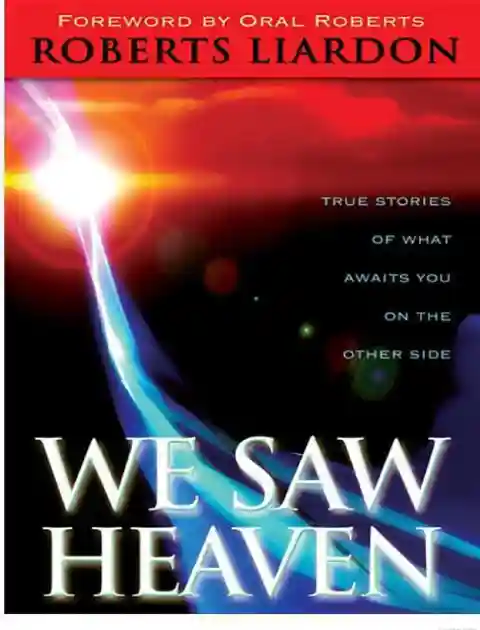
We Saw Heaven: True Stories Of What Awaits You On The Other Side We Saw Heaven: True Stories Of What Awaits You On The Other Side

We Saw Heaven: True Stories Of What Awaits You On The Other Side Order Printed Copy

  • Author: Roberts Liardon
  • Size: 658KB | 171 pages
  • |
Continue with
Google Twitter
LOG IN TO REVIEW
About the Book


"We Saw Heaven" by Roberts Liardon is a collection of firsthand accounts from individuals who have had near-death experiences and encountered the afterlife. These stories provide insight into what awaits us on the other side, offering comfort and reassurance to those who may have questions or fears about death. Liardon's book offers a compelling and uplifting look at the possibility of life beyond our physical existence.

Richard Sibbes
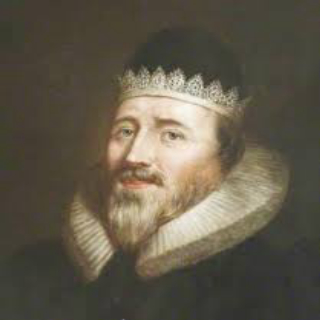
Richard Sibbes Richard Sibbes was born in Tostock, Suffolk, four miles from Bury St. Edmunds, in 1577.[1] He is the eldest son of Paul Sibbes and Joane. His father was a wheelwright who hoped Sibbes would be in the same field of occupation. Instead of following the footsteps of his father, young Sibbes, out of love for reading, would choose books over wooden wheels.[2] Truly enough, throughout his lifetime, books were part of Sibbes’ life.[3] Proof of this interest to books is his accomplishments as a lecturer [pastor], fellow tutor, vicar, and for obtaining various degrees in his academic education. Sibbes’ legacy of his seven-volume work was collected by A. B. Grosart which was published from 1862 to 1864.[4] Sibbes’ ministries and his works spread throughout England even after his death. However, he was never married. Sibbes died on July 5, 1635, in his chambers at Gray’s Inn.[5] J. I. Packer noted that Sibbes’ left more than two million words on paper after his death.[6] Educational Background Sibbes’ started studying at St. John’s College, Cambridge when he was eighteen, in 1595. He then proceeded to finish a Bachelor of Arts in 1599. He received a fellowship grant in 1601. Sibbes continued studying, finishing a Master of Arts degree by 1602. Sibbes became a prominent preacher in Cambridge and got the endorsement to apply for a Bachelor of Divinity. After his defense and fulfilling the requirements, he earned this degree in 1610.[7] Furthermore, in almost two decades, Sibbes received his Doctor of Divinity in 1627 after returning from London for his mastership at St. Katherine.[8] Ministerial Experience and Vocation Sibbes’ conversion happened after hearing Paul Bayne’s sermon in 1603. Bayne succeeded William Perkins at St. Andrews, Cambridge.[9] During Sibbes’ stay in Cambridge, as a fellow, he handled and supervised five to six students for a tutorial.[10] Sibbes held various vocations such as being chaplain, lecturer, and got a promotion from mere fellow to senior fellowship. After being a senior dean at St. John, Sibbes became the master of St. Katherine’s College in 1626.[11] As a preacher, Sibbes received his ordination in Norwich, in 1607. He became the minister of Thurston in 1608. Later, in 1610, Sibbes accepted the offer as a lecturer of Holy Trinity Church, Cambridge until he was called to be a lecturer at Gray’s Inn, London, in 1617.[12] This lectureship lasts until his death. Even during Sibbes’ mastership at St. Katherine, he remained a lecturer at Gray’s Inn. In 1633, through the appointment of King Charles I, Sibbes became the vicar of Holy Trinity Church, Cambridge. The positions held by Sibbes were mastership at St. Katherine, a lecturer at Gray’s Inn, and vicar of Holy Trinity Church. Influence of the Heavenly Doctor Throughout Sibbes ministries, prominence followed as he influenced many Puritan ministers. Sibbes, as an influencer, is known to be the “pastor of pastors,” not just in the Church of England but even to Presbyterians and Independent Congregationalists.[13] Sibbes was responsible for John Cotton’s conversion in 1612.[14] Moreover, he persuaded John Preston’s style in preaching, transforming from witty sermons to more plain but spiritual preaching.[15] Sibbes’ book, The Bruised Reed, encouraged Richard Baxter to gain settled-conviction on his conversion.[16] Likewise, Sibbes helped Thomas Goodwin, the chief editor of most of his works, to keep away from Arminianism.[17] Sibbes’ ministry extends even to common people. Humphrey Mills, a layman, shared his testimony about Sibbes’ ministry. Mills was spiritually refreshed and brought to peace and joy after hearing Sibbes’ “sweet soul-melting Gospel-sermons.”[18] Sibbes’ encouragement did not end in the days of Puritans. Martyn Lloyd-Jones, one of the greatest preachers in the twentieth century, was grateful for Sibbes’ works. Lloyd-Jones, in his spiritual dryness, said that Sibbes’ books “quietened, soothed, comforted, encouraged, and healed [him].”[19] Sibbes was a renowned Puritan throughout Cambridge, London, and even to Amsterdam. Mainly because of his various offices plus broad networks outside the church. He remained a moderate Puritan perceiving the Church of England as the true church. Sibbes encouraged other Separatists to return and warned the moderates not to dissent. Yet many historians and scholars misinterpreted Sibbes in his theology and ministry. Thankfully, Mark Dever, in his recent work, argues contrary to many historians that Sibbes was dismissed in his ministry. Dever also concludes that Sibbes did not drift away from Calvinism, claiming that he was a thoroughly Reformed preacher and never became non-conformist, rather a moderate puritan.[20] Sibbes, through his works, are still penetrating churches and seminaries up to this day. Recently, his seven-volume set was published by The Banner of Truth Trust in 2001. The best introduction for Sibbes’ works, personally, is his The Bruised Reed and the Smoking Flax. For Michael Reeves’ opinion, Sibbes is “the best introduction to the Puritans…. Reading him is like sitting in the sunshine: he gets into your heart and warms it to Christ.”[21] References [1] Alexander B. Grosart, “Memoir of Richard Sibbes, D.D.,” in Richard Sibbes, The Works of Richard Sibbes, ed. Alexander Grosart, 7 vols. (1862-1864; reprint, Carlisle, Pennsylvania: The Banner of Truth Trust, 2001), 1:xxvii. [2] Joel Beeke, “Richard Sibbes on Entertaining the Holy Spirit,” in The Beauty and Glory of the Holy Spirit, ed. Joel Beeke and Joseph Pipa Jr. (Grand Rapids, Michigan: Reformation Heritage Books, 2012), 228. Cf. Joel Beeke and Mark Jones, A Puritan Theology: Doctrine for Life (Grand Rapids, MI: Reformation Heritage Books, 2012), chap. 36, Kindle. [3] Joel Beeke and Randall Pederson, Meet the Puritans (Grand Rapids, MI: Reformation Heritage Books, 2006), 534-5. [4] Mark Dever, “The Works of Richard Sibbes,” in You Must Read: Books that Have Shaped Our Lives (Carlisle, PA: The Banner of Truth Trust, 2015), 154. [5] Grosart, “Memoir,” in Sibbes, Works, 1:cxxxi. [6] J. I. Packer, foreword to Richard Sibbes: Puritanism and Calvinism in Late Elizabethan and Early Stuart England, by Mark E. Dever (Macon, Georgia: Mercer University Press, 2000), ix. [7] Dever, Richard Sibbes, 37-38. Bachelor of Divinity, according to Dr. Shawn Wright is equivalent with Master of Divinity today, “Lectures in English Puritanism” (The Southern Baptist Theological Seminary, Louisville, KY, Spring 2020), but the process is different. Dever noted in his work that Sibbes undergone two public preaching, one in English and another in Latin, and two defense topics chosen by the panelists. [8] Grosart, “Memoir,” in Sibbes, Works, 1:cxi. [9] Beeke and Pederson, Meet the Puritans, 534-5. [10] Dever, Richard Sibbes, 30-31. [11] Dever, 31-34, 46. [12] Beeke and Pederson, Meet the Puritans, 534-6. [13] Beeke, “Richard Sibbes on Entertaining the Holy Spirit,” 230. [14] Dever, Richard Sibbes, 40. [15] Beeke and Pederson, Meet the Puritans, 535-7. [16] Richard Baxter, The Autobiography of Richard Baxter (Bedford St., London: J.M. Dent & Sons Ltd., 1931), 7. Baxter’s father bought Sibbes’ book from a peddler and gave it to Richard Baxter. Cf. Timothy K. Beougher, Richard Baxter and Conversion: A Study of the Puritan Concept of Becoming a Christian (Scotland, UK: Christian Focus Publications, 2007), 21. [17] Dever, Richard Sibbes, 41. [18] Ronald Frost, “The Bruised Reed by Richard Sibbes (1577-1635)” in Kelly M. Kapic and Randal C. Gleason, The Devoted Life: An Invitation to the Puritan Classics (Downers Grove, IL: Intervarsity Press, 2004), 80-81. Quoting from a collection of Puritan testimonials by John Rogers, Ohel or Bethshemesh, A Tarbernacle for the Sun (London, n.p., 1653), 410. [19] D. Martyn Lloyd-Jones, Preaching and Preachers (Grand Rapids, Michigan: Zondervan Publishing House, 1972), 175. Cf. Publisher’s Foreword to The Bruised Reed, by Richard Sibbes, x. [20] Dever, Richard Sibbes, 211-8. [21] Michael Reeves, “A Short Biography of Richard Sibbes,” in Richard Sibbes, Christ it Best; or, St. Paul’s Strait (Carlisle, PA: Banner of Truth Trust, 2012), 66.

Meeting Christ in Aslan

Over the next five years, the seven installments of C.S. Lewis’s The Chronicles of Narniaseries will turn seventy. Generations of children have found delight in stepping through the wardrobe door to this mythical world, filled with magic, meaning, and a whole cast of fantastic characters. Still, in the end, the appeal of The Chronicles comes back to a single character. Aslan, the Great Lion, who calls the children into Narnia, plays the central role in each adventure. It’s not exactly correct to call Aslan an “allegory” of Jesus. Lewis might prefer that we instead think of Aslan as Christ transposed into a Narnian key, a Creator and Lord fit for a world primarily inhabited by talking animals. Throughout The Chronicles, Aslan often emphasizes that he really is a lion and not an illusion or symbol. “Touch me,” he tells one character in “The Horse and His Boy”. “Smell me. Here are my paws, here is my tail, these are my whiskers. I am a true Beast.” True to Lewis’s genius and his love of myth, Aslan’s purpose in calling children from our world into Narnia is the same as Lewis’s purpose in writing The Chronicles. Through the Great Lion, Lewis gives us a glimpse of the character of the Savior and King he called “myth become fact,” and whom Scripture calls “the Lion of Judah.” Two moments in the Narnia series are particular favorites of my colleague Shane Morris, and illustrate Aslan’s mission with particular clarity. One takes place during the third Chronicle (the fifth in publication order), “The Horse and His Boy.” Shasta, the main character, has ridden through the night and is lost in the mountains. Having grown up in a foreign country and just returned to Narnia, he doesn’t realize he is royalty. After running and riding for his life for so long, he’s tired and discouraged, and concludes that he must be the unluckiest boy alive. Suddenly, a great Voice confronts him out of the darkness, and asks to know his sorrows. A very frightened Shasta, not knowing what else to do, relays how he and his companions fled from their captors across the desert, how fear and danger have stalked them at every turn, and how he’s been threatened by at least four lions. “There was only one lion,” replies the Voice. “But he was swift of foot.” Aslan reveals that he was the lion, and that his intervention at these crucial moments saved the boy’s life, as well as the lives of his fellow travelers and his native kingdom. What Shasta saw as bad luck was Aslan’s providential paw guiding him through danger toward his rightful throne, and even introducing him to his future wife. The second scene takes place at the end of “The Voyage of the Dawn Treader.” Lucy, Edmund, and Eustace have just come to the edge of the world after months at sea. The rest of the characters have gone home or paddled into Aslan’s Country, and the three children are left alone. They encounter Aslan on a grassy shore, who’s taken the form of a lamb and invites them to breakfast. There, he tells the children that it’s time for them to go home and, for Edmund and Lucy, there will be no returning to Narnia. They don’t take the news well. “It isn’t Narnia, you know,” cries Lucy. “It’s you. We shan’t meet you there. And how are we to live, never meeting you?” “But you shall meet me, dear one,” Aslan replies. “But there I have another name. You must learn to know me by that name. This was the very reason why you were brought to Narnia, that by knowing me here for a little, you may know me better there.” Like Jesus revealing Himself to His disciples at the breaking of bread, here Lewis has Aslan shed the disguise to allow readers to fully recognize him. When Aslan reveals his role in Shasta’s story, it brings to mind how Jesus, on the road to Emmaus, revealed to His disciples everything concerning Himself in the Law and Prophets. It’s no wonder that, like those disciples, many who have met Aslan in The Chronicles of Narnia have also felt their hearts burning within them. Seventy years on, C.S. Lewis’s stories deserve every bit of their status as classics, filled as they are with spiritual treasures for young and old alike. But the lion’s share of the credit goes to Aslan. In him we meet a character too good to be just a story. And, like Lucy, we long to know his true name—not in spite of the mane and tail, but because of them. Publication date: October 20, 2021 John Stonestreet


Feedback
Suggestionsuggestion box
x