

Others like the power of self-confidence Features >>

The Power Of Servant-Leadership

The Law Of Recognition
-160.webp)
Grit (The Power Of Passion And Perseverance)

No Excuses - The Power Of Self Discipline

The Power Of Thought And Visualization

The Power Of The Mind
-160.webp)
The Gifts Of Imperfection: Embrace Who You Are

Leadership, The Power Of A Creative Life

Power Of Character In Leadership

The Power Of Positive Thinking
About the Book
"The Power of Self-Confidence" by Brian Tracy offers insights and practical strategies for building and sustaining self-confidence in all areas of life. Tracy emphasizes the importance of self-belief and provides techniques for overcoming self-doubt, setting goals, and taking action to achieve success. The book encourages readers to cultivate a positive mindset, embrace failure as a learning opportunity, and develop habits that promote self-assurance and resilience. Overall, it is a comprehensive guide for anyone looking to boost their self-confidence and unlock their full potential.
Gladys Aylward
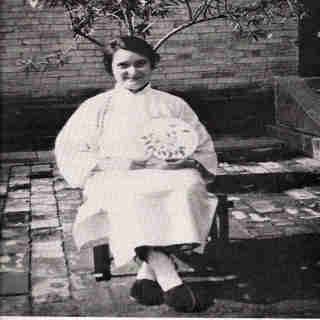 Gladys Aylward was born in London in 1904 (or a few years earlier). She worked for several years as a parlormaid, and then attended a revival meeting at which the preacher spoke of dedicating one's life to the service of God. Gladys responded to the message, and soon after became convinced that she was called to preach the Gospel in China. At the age of 26, she became a probationer at the China Inland Mission Center in London, but was failed to pass the examinations. She worked at other jobs and saved her money. Then she heard of a 73-year-old missionary, Mrs. Jeannie Lawson, who was looking for a younger woman to carry on her work. Gladys wrote to Mrs. Lawson and was accepted if she could get to China. She did not have enough money for the ship fare, but did have enough for the train fare, and so in October of 1930 she set out from London with her passport, her Bible, her tickets, and two pounds ninepence, to travel to China by the Trans-Siberian Railway, despite the fact that China and the Soviet Union were engaged in an undeclared war. She arrived in Vladivostok and sailed from there to Japan and from Japan to Tientsin, and thence by train, then bus, then mule, to the inland city of Yangchen, in the mountainous province of Shansi, a little south of Peking (Beijing). Most of the residents had seen no Europeans other than Mrs. Lawson and now Miss Aylward. They distrusted them as foreigners, and were not disposed to listen to them.
Yangchen was an overnight stop for mule caravans that carried coal, raw cotton, pots, and iron goods on six-week or three-month journeys. It occurred to the two women that their most effective way of preaching would be to set up an inn. The building in which they lived had once been an inn, and with a bit of repair work could be used as one again. They laid in a supply of food for mules and men, and when next a caravan came past, Gladys dashed out, grabbed the rein of the lead mule, and turned it into their courtyard. It went willingly, knowing by experience that turning into a courtyard meant food and water and rest for the night. The other mules followed, and the muleteers had no choice. They were given good food and warm beds at the standard price, and their mules were well cared for, and there was free entertainment in the evening--the inkeepers told stories about a man named Jesus. After the first few weeks, Gladys did not need to kidnap customers -- they turned in at the inn by preference. Some became Christians, and many of them (both Christians and non-Christians) remembered the stories, and retold them more or less accurately to other muleteers at other stops along the caravan trails. Gladys practiced her Chinese for hours each day, and was becoming fluent and comfortable with it. Then Mrs. Lawson suffered a severe fall, and died a few days later. Gladys Aylward was left to run the mission alone, with the aid of one Chinese Christian, Yang, the cook.
A few weeks after the death of Mrs. Lawson, Miss Aylward met the Mandarin of Yangchen. He arrived in a sedan chair, with an impressive escort, and told her that the government had decreed an end to the practice of footbinding. (Note: Among the upper and middle classes, it had for centuries been the custom that a woman's foot should be wrapped tightly in bandages from infancy, to prevent it from growing. Thus grown women had extremely tiny feet, on which they could walk only with slow, tottering steps, which were thought to be extremely graceful.) The government needed a foot-inspector, a woman (so that she could invade the women's quarters without scandal), with her own feet unbound (so that she could travel), who would patrol the district enforcing the decree. It was soon clear to them both that Gladys was the only possible candidate for the job, and she accepted, realizing that it would give her undreamed-of opportunities to spread the Gospel.
During her second year in Yangchen, Gladys was summoned by the Mandarin. A riot had broken out in the men's prison. She arrived and found that the convicts were rampaging in the prison courtyard, and several of them had been killed. The soldiers were afraid to intervene. The warden of the prison said to Gladys, "Go into the yard and stop the rioting." She said, "How can I do that?" The warden said, "You have been preaching that those who trust in Christ have nothing to fear." She walked into the courtyard and shouted: "Quiet! I cannot hear when everyone is shouting at once. Choose one or two spokesmen, and let me talk with them." The men quieted down and chose a spokesman. Gladys talked with him, and then came out and told the warden: "You have these men cooped up in crowded conditions with absolutely nothing to do. No wonder they are so edgy that a small dispute sets off a riot. You must give them work. Also, I am told that you do not supply food for them, so that they have only what their relatives send them. No wonder they fight over food. We will set up looms so that they can weave cloth and earn enough money to buy their own food." This was done. There was no money for sweeping reforms, but a few friends of the warden donated old looms, and a grindstone so that the men could work grinding grain. The people began to call Gladys Aylward "Ai-weh-deh," which means "Virtuous One." It was her name from then on.
Soon after, she saw a woman begging by the road, accompanied by a child covered with sores and obviously suffering severe malnutrition. She satisfied herself that the woman was not the child's mother, but had kidnapped the child and was using it as an aid to her begging. She bought the child for ninepence--a girl about five years old. A year later, "Ninepence" came in with an abandoned boy in tow, saying, "I will eat less, so that he can have something." Thus Ai-weh-deh acquired a second orphan, "Less." And so her family began to grow.... She was a regular and welcome visitor at the palace of the Mandarin, who found her religion ridiculous, but her conversation stimulating. In 1936, she officially became a Chinese citizen. She lived frugally and dressed like the people around her (as did the missionaries who arrived a few years after in in the neighboring town of Tsechow, David and Jean Davis and their young son Murray, of Wales), and this was a major factor in making her preaching effective.
Then the war came. In the spring of 1938, Japanese planes bombed the city of Yangcheng, killing many and causing the survivors to flee into the mountains. Five days later, the Japanese Army occupied Yangcheng, then left, then came again, then left. The Mandarin gathered the survivors and told them to retreat into the mountains for the duration. He also announced that he was impressed by the life of Ai-weh-deh and wished to make her faith his own. There remained the question of the convicts at the jail. The traditional policy favored beheading them all lest they escape. The Mandarin asked Ai-weh-deh for advice, and a plan was made for relatives and friends of the convicts to post a bond guaranteeing their good behavior. Every man was eventually released on bond. As the war continued Gladys often found herself behind Japanese lines, and often passed on information, when she had it, to the armies of China, her adopted country. She met and became friends with "General Ley," a Roman Catholic priest from Europe who had teken up arms when the Japanese invaded, and now headed a guerilla force. Finally he sent her a message. The Japanese are coming in full force. We are retreating. Come with us." Angry, she scrawled a Chinese note, Chi Tao Tu Pu Twai, "Christians never retreat!" He sent back a copy of a Japanese handbill offering $100 each for the capture, dead or alive, of (1) the Mandarin, (2) a prominent merchant, and (3) Ai-weh-deh. She determined to flee to the government orphanage at Sian, bringing with her the children she had accumulated, about 100 in number. (An additional 100 had gone ahead earlier with a colleague.) With the children in tow, she walked for twelve days. Some nights they found shelter with friendly hosts. Some nights they spent unprotected on the mountainsides. On the twelfth day, they arrived at the Yellow River, with no way to cross it. All boat traffic had stopped, and all civilian boats had been seized to keep them out of the hands of the Japanese. The children wanted to know, "Why don't we cross?" She said, "There are no boats." They said, "God can do anything. Ask Him to get us across." They all knelt and prayed. Then they sang. A Chinese officer with a patrol heard the singing and rode up. He heard their story and said, "I think I can get you a boat." They crossed, and after a few more difficulties Ai-weh-deh delivered her charges into competent hands at Sian, and then promptly collapsed with typhus fever and sank into delirium for several days.
As her health gradually improved, she started a Christian church in Sian, and worked elsewhere, including a settlement for lepers in Szechuan, near the borders of Tibet. Her health was permanently impaired by injuries received during the war, and in 1947 she returned to England for a badly needed operation. She remained in England, preaching there.
In 1957, Alan Burgess wrote a book about her, The Small Woman. It was condensed in The Reader's Digest, and made into a movie called The Inn of the Sixth Happiness, starring Ingrid Bergman. When Newsweek magazine reviewed the movie, and summarized the plot, a reader, supposing the story to be fiction, wrote in to say, "In order for a movie to be good, the story should be believable!" Miss Gladys Aylward, the Small Woman, Ai-weh-deh, died 3 January 1970.
Gladys Aylward was born in London in 1904 (or a few years earlier). She worked for several years as a parlormaid, and then attended a revival meeting at which the preacher spoke of dedicating one's life to the service of God. Gladys responded to the message, and soon after became convinced that she was called to preach the Gospel in China. At the age of 26, she became a probationer at the China Inland Mission Center in London, but was failed to pass the examinations. She worked at other jobs and saved her money. Then she heard of a 73-year-old missionary, Mrs. Jeannie Lawson, who was looking for a younger woman to carry on her work. Gladys wrote to Mrs. Lawson and was accepted if she could get to China. She did not have enough money for the ship fare, but did have enough for the train fare, and so in October of 1930 she set out from London with her passport, her Bible, her tickets, and two pounds ninepence, to travel to China by the Trans-Siberian Railway, despite the fact that China and the Soviet Union were engaged in an undeclared war. She arrived in Vladivostok and sailed from there to Japan and from Japan to Tientsin, and thence by train, then bus, then mule, to the inland city of Yangchen, in the mountainous province of Shansi, a little south of Peking (Beijing). Most of the residents had seen no Europeans other than Mrs. Lawson and now Miss Aylward. They distrusted them as foreigners, and were not disposed to listen to them.
Yangchen was an overnight stop for mule caravans that carried coal, raw cotton, pots, and iron goods on six-week or three-month journeys. It occurred to the two women that their most effective way of preaching would be to set up an inn. The building in which they lived had once been an inn, and with a bit of repair work could be used as one again. They laid in a supply of food for mules and men, and when next a caravan came past, Gladys dashed out, grabbed the rein of the lead mule, and turned it into their courtyard. It went willingly, knowing by experience that turning into a courtyard meant food and water and rest for the night. The other mules followed, and the muleteers had no choice. They were given good food and warm beds at the standard price, and their mules were well cared for, and there was free entertainment in the evening--the inkeepers told stories about a man named Jesus. After the first few weeks, Gladys did not need to kidnap customers -- they turned in at the inn by preference. Some became Christians, and many of them (both Christians and non-Christians) remembered the stories, and retold them more or less accurately to other muleteers at other stops along the caravan trails. Gladys practiced her Chinese for hours each day, and was becoming fluent and comfortable with it. Then Mrs. Lawson suffered a severe fall, and died a few days later. Gladys Aylward was left to run the mission alone, with the aid of one Chinese Christian, Yang, the cook.
A few weeks after the death of Mrs. Lawson, Miss Aylward met the Mandarin of Yangchen. He arrived in a sedan chair, with an impressive escort, and told her that the government had decreed an end to the practice of footbinding. (Note: Among the upper and middle classes, it had for centuries been the custom that a woman's foot should be wrapped tightly in bandages from infancy, to prevent it from growing. Thus grown women had extremely tiny feet, on which they could walk only with slow, tottering steps, which were thought to be extremely graceful.) The government needed a foot-inspector, a woman (so that she could invade the women's quarters without scandal), with her own feet unbound (so that she could travel), who would patrol the district enforcing the decree. It was soon clear to them both that Gladys was the only possible candidate for the job, and she accepted, realizing that it would give her undreamed-of opportunities to spread the Gospel.
During her second year in Yangchen, Gladys was summoned by the Mandarin. A riot had broken out in the men's prison. She arrived and found that the convicts were rampaging in the prison courtyard, and several of them had been killed. The soldiers were afraid to intervene. The warden of the prison said to Gladys, "Go into the yard and stop the rioting." She said, "How can I do that?" The warden said, "You have been preaching that those who trust in Christ have nothing to fear." She walked into the courtyard and shouted: "Quiet! I cannot hear when everyone is shouting at once. Choose one or two spokesmen, and let me talk with them." The men quieted down and chose a spokesman. Gladys talked with him, and then came out and told the warden: "You have these men cooped up in crowded conditions with absolutely nothing to do. No wonder they are so edgy that a small dispute sets off a riot. You must give them work. Also, I am told that you do not supply food for them, so that they have only what their relatives send them. No wonder they fight over food. We will set up looms so that they can weave cloth and earn enough money to buy their own food." This was done. There was no money for sweeping reforms, but a few friends of the warden donated old looms, and a grindstone so that the men could work grinding grain. The people began to call Gladys Aylward "Ai-weh-deh," which means "Virtuous One." It was her name from then on.
Soon after, she saw a woman begging by the road, accompanied by a child covered with sores and obviously suffering severe malnutrition. She satisfied herself that the woman was not the child's mother, but had kidnapped the child and was using it as an aid to her begging. She bought the child for ninepence--a girl about five years old. A year later, "Ninepence" came in with an abandoned boy in tow, saying, "I will eat less, so that he can have something." Thus Ai-weh-deh acquired a second orphan, "Less." And so her family began to grow.... She was a regular and welcome visitor at the palace of the Mandarin, who found her religion ridiculous, but her conversation stimulating. In 1936, she officially became a Chinese citizen. She lived frugally and dressed like the people around her (as did the missionaries who arrived a few years after in in the neighboring town of Tsechow, David and Jean Davis and their young son Murray, of Wales), and this was a major factor in making her preaching effective.
Then the war came. In the spring of 1938, Japanese planes bombed the city of Yangcheng, killing many and causing the survivors to flee into the mountains. Five days later, the Japanese Army occupied Yangcheng, then left, then came again, then left. The Mandarin gathered the survivors and told them to retreat into the mountains for the duration. He also announced that he was impressed by the life of Ai-weh-deh and wished to make her faith his own. There remained the question of the convicts at the jail. The traditional policy favored beheading them all lest they escape. The Mandarin asked Ai-weh-deh for advice, and a plan was made for relatives and friends of the convicts to post a bond guaranteeing their good behavior. Every man was eventually released on bond. As the war continued Gladys often found herself behind Japanese lines, and often passed on information, when she had it, to the armies of China, her adopted country. She met and became friends with "General Ley," a Roman Catholic priest from Europe who had teken up arms when the Japanese invaded, and now headed a guerilla force. Finally he sent her a message. The Japanese are coming in full force. We are retreating. Come with us." Angry, she scrawled a Chinese note, Chi Tao Tu Pu Twai, "Christians never retreat!" He sent back a copy of a Japanese handbill offering $100 each for the capture, dead or alive, of (1) the Mandarin, (2) a prominent merchant, and (3) Ai-weh-deh. She determined to flee to the government orphanage at Sian, bringing with her the children she had accumulated, about 100 in number. (An additional 100 had gone ahead earlier with a colleague.) With the children in tow, she walked for twelve days. Some nights they found shelter with friendly hosts. Some nights they spent unprotected on the mountainsides. On the twelfth day, they arrived at the Yellow River, with no way to cross it. All boat traffic had stopped, and all civilian boats had been seized to keep them out of the hands of the Japanese. The children wanted to know, "Why don't we cross?" She said, "There are no boats." They said, "God can do anything. Ask Him to get us across." They all knelt and prayed. Then they sang. A Chinese officer with a patrol heard the singing and rode up. He heard their story and said, "I think I can get you a boat." They crossed, and after a few more difficulties Ai-weh-deh delivered her charges into competent hands at Sian, and then promptly collapsed with typhus fever and sank into delirium for several days.
As her health gradually improved, she started a Christian church in Sian, and worked elsewhere, including a settlement for lepers in Szechuan, near the borders of Tibet. Her health was permanently impaired by injuries received during the war, and in 1947 she returned to England for a badly needed operation. She remained in England, preaching there.
In 1957, Alan Burgess wrote a book about her, The Small Woman. It was condensed in The Reader's Digest, and made into a movie called The Inn of the Sixth Happiness, starring Ingrid Bergman. When Newsweek magazine reviewed the movie, and summarized the plot, a reader, supposing the story to be fiction, wrote in to say, "In order for a movie to be good, the story should be believable!" Miss Gladys Aylward, the Small Woman, Ai-weh-deh, died 3 January 1970.
Am I Really a Christian
Am I really a Christian? Perhaps for you, that question looms like a shadow in the back of the soul, threatening your dearest hopes and peace. Others may struggle to understand why. You bear all the outward marks of a Christian: You read, pray, and gather with your church faithfully. You serve and sacrifice your time. You look for opportunities to share Christ with neighbors. You hide no secret sins. But “the heart knows its own bitterness” (Proverbs 14:10), and so too its own darkness. No matter how much you obey on the outside, when you look within you find a mass of conflicting desires and warring ambitions. Every godly impulse seems mixed with an ungodly one; every holy desire with something shameful. You can’t pray earnestly without feeling proud of yourself afterward. You can’t serve without some part of you wanting to be praised. You remember Judas and Demas, men whose outward appearance deceived others and deceived themselves. You know that on the last day many will find themselves surprised, knocking on the door of heaven only to hear four haunting words: “I never knew you” (Matthew 7:23; 25:11–12). And so, in the stillness before sleep, in quiet moments of the day, and sometimes in the middle of worship itself, the shadow returns: Am I real — or am I just deceiving myself? ‘With You There Is Forgiveness’ Sometimes, the most apt answers to our most pressing questions are buried hundreds of years ago. And when it comes to assurance in particular, we may never surpass the pastoral wisdom of those seventeenth-century soul physicians, the Puritans. Assurance proved to be a common struggle for the Christians of that era, such that John Owen devoted over three hundred pages to the topic in his masterful Exposition of Psalm 130, most of which addresses a single verse: “With you there is forgiveness, that you may be feared” (Psalm 130:4). “When it comes to assurance, what matters most is not sin’s persistence, but our resistance.” With God there is forgiveness — free forgiveness, abundant forgiveness, glad forgiveness, based on the blood and righteousness of Jesus Christ. But Owen knew that some Christians would hesitate to believe that forgiveness was for them. He knew that some introspective believers, bruised with a sense of their indwelling sin, would respond, “Yes, there is forgiveness with God, but I see so much darkness within myself — is there forgiveness for me?” In a way, Owen’s entire book is his answer to that question. But he devotes special attention to such believers in one brief section — not aiming, necessarily, to remove every doubt (something only God can do), but merely to help readers see themselves from a new, more gracious angle. Grief can be a good sign. When some Christians search their hearts, they have eyes only for their sin. Their highest worship seems tainted with self-focus; their best obedience seems spoiled by strains of insincerity. They are ready to sigh with David, “My iniquities have overtaken me, and I cannot see; they are more than the hairs of my head; my heart fails me” (Psalm 40:12). But such grief can be a good sign. Owen asks us to imagine a man with a numb leg. As long as his leg has lost sensation, the man “endures deep cuts and lancings, and feels them not.” Yet as soon as his nerves awake, he “feels the least cut, and may think the instruments sharper than they were before, when all the difference is, that he hath got a quickness of sense” (Works of John Owen, 6:604). Outside of Christ, our souls are numb to the evil of sin. The guilt and the consequences of sin may have wounded us from time to time, but its evil we could hardly feel (if at all) — no matter how often it thrust us through. But once our souls come alive, we need only a paper cut to wince. Sin burdens us, oppresses us, grieves us, not because we are worse than we were before, but because we finally feel sin for what it is: the thorns that crowned our Savior’s head, the spear that pierced our Lord. So, Owen writes, “‘Oh wretched man that I am! who shall deliver me from the body of this death?’ [Romans 7:24] is a better evidence of grace and holiness than ‘God, I thank thee I am not as other men’ [Luke 18:11]” (601). Grief over our sin, far from disqualifying us from the kingdom, suggests that comfort is on the way (Matthew 5:4). Your resistance, not sin’s persistence, matters most. Temptation is frustratingly persistent. Sin would grieve us less if it left us alone more often: if pride were not ready to rise on all occasions, if anger did not flame up from the smallest sparks, if foolish thoughts did not fill our minds so often. Can we have any confidence of assurance if we find sin so relentlessly tempting? Owen takes us to 1 Peter 2:11, where the apostle writes, “Abstain from the passions of the flesh, which wage war against your soul.” He comments, “Now, to war is not to make faint or gentle opposition, . . . but it is to go out with great strength, to use craft, subtlety, and force, so as to put the whole issue to a hazard. So these lusts war” (605). “God’s ‘well done’ says less about the worth of our works than about the wonder of his mercy.” Sin wars — and not against those whom it holds captive, but against those who have been rescued from its authority and now fight below Christ’s banner. When it comes to assurance, then, what matters most is not sin’s persistence, but our resistance. Or as Owen puts it, “Your state is not at all to be measured by the opposition that sin makes to you, but by the opposition you make to it” (605). Sin may burden and tempt you, oppose and oppress you. Every army does. But do you, for your part, resist? Do you run up the watchtower and raise an alarm? Do you grip your shield and swing your sword? Do you labor, strive, watch, pray, and keep close to your Captain? Then sin’s warfare against you may be a sign that you are in Christ’s service. Christ purifies our obedience. The most sensitive Christians, Owen writes, often “find their hearts weak, and all their duties worthless. . . . In the best of them there is such a mixture of self, hypocrisy, unbelief, vain-glory, that they are even ashamed and confounded with the remembrance of them” (600). Whatever fruit they bear seems covered with the mold of indwelling sin. But often, God sees more grace in his sin-burdened people than they see in themselves. Remember Sarah, Owen says: even when she was walking in unbelief, God took notice of the fact — a trifle in our eyes — that she called her husband “lord” (Genesis 18:12; 1 Peter 3:6). So too, on the last day, Jesus will commend his people for good works they have long forgotten and struggle even to recognize (Matthew 25:37–40). Of course, God’s “well done” says less about the worth of our works than about the wonder of his mercy. Our Father hangs our pictures upon his wall because Christ adorns them with the jewels of his own crown. Owen writes, Jesus Christ takes whatever is evil and unsavoury out of them, and makes them acceptable. . . . All the ingredients of self that are in them on any account he takes away, and adds incense to what remains, and presents it to God. . . . So that God accepts a little, and Christ makes our little a great deal. (603) The only works that God accepts are those that have been washed in the blood of Jesus (Revelation 7:14). And any work that is washed in the blood of Jesus becomes transfigured, a small but resplendent reflection of “Christ in you, the hope of glory” (Colossians 1:27). And therefore God, in unspeakable grace, “remembers the duties which we forget, and forgets the sins which we remember” (603). Assurance arises from faith. Owen’s final piece of counsel may feel counterintuitive to the unassured heart. Many who struggle with assurance hesitate to rest their full weight on Christ’s saving promises until they feel some warrant from within that the promises belong to them. They wait to come boldly to the throne of grace until they find something to bring with them. But this gets the order exactly backward. Owen writes, “Do not resolve not to eat thy meat until thou art strong, when thou hast no means of being strong but by eating” (603). When we wait to focus our gaze on Christ’s promises until we are holy enough, we are like a man waiting to eat until he becomes strong, or waiting to sleep until he feels energized, or waiting to study until he grows wise. Sinclair Ferguson, a modern-day pupil of Owen, puts it this way: Believing [gives] rise to obedience, not obedience . . . to assurance irrespective of believing. Such faith cannot be forced into us by our efforts to be obedient; it arises only from larger and clearer views of Christ. (The Whole Christ, 204) The faith that nourishes both obedience and assurance arises only from larger and clearer views of Christ. If we stay away from Jesus until we are holy enough, we will stay away forever. But if we come to him right now and every morning hereafter, no matter how dead we feel, looking for welcome on the basis of his blood rather than our efforts, then we can hope, in time, to find faith flowering in fuller obedience and deeper assurance. But we will come only if we know, with Owen, that “with you there is forgiveness, that you may be feared” (Psalm 130:4). All who come to Christ, trust in Christ, and embrace Christ find the forgiveness that is with Christ. And you are no exception. Article by Scott Hubbard