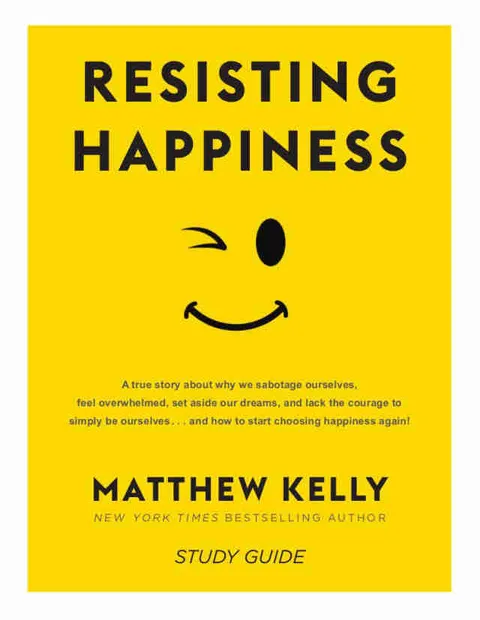

Resisting Happiness: A True Story About Why We Sabotage Ourselves Order Printed Copy
- Author: Matthew Kelly
- Size: 265KB | 32 pages
- |
Others like resisting happiness: a true story about why we sabotage ourselves Features >>
Top 7 Classics On Holiness
Longing For Godliness - Restoring God’s Image Within Us
Latent Power Of The Soul
How To Know The Will Of God
How You Can Know The Will Of God

A Heart Ablaze
.epub-160.webp)
The Price Of Spiritual Power
Most Important Person On Earth
-160.webp)
Renovation Of The Heart: Putting On The Character Of Christ
Now Faith Is
About the Book
In "Resisting Happiness," Matthew Kelly shares his personal journey and struggles with self-sabotage, and offers insights and practical advice on how to overcome the barriers that prevent us from embracing happiness and fulfillment in our lives. Through personal anecdotes and reflections, Kelly encourages readers to confront their fears and adopt habits and attitudes that lead to a more joyful and purposeful life.
Brother Yun
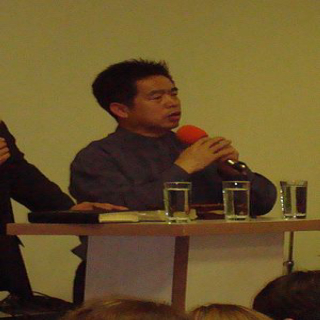 Brother Yun was born in February 1958 in the province of Henan. His original name was Liu Zhenying (刘振营).
Brother Yun became a believer at the age of 16. Soon after he became a Christian, God called him to be His witness in the west and south. As he was obedient to the calling, he eventually became a witness of Christ not just in the western and southern parts of China, but throughout China and in the nations beyond China as well.
Brother Yun was born into a poor family. His family’s financial situation took a turn for the worst when his father became ill with an asthmatic condition that led to lung cancer eventually. His life got worse when he became a Christian as he suffered severe trials and persecutions. In the midst of suffering for the Lord, however, he experienced miracle after miracle, which helped to strengthen his faith.
HOW BROTHER YUN BECAME A BELIEVER
In 1974, Brother Yun’s father became ill with lung cancer. His mother, who had been a Christian for many years but had become spiritually cold after the expulsion of Western missionaries during the Cultural Revolution, felt a deep sense of desperation because if her husband had died then, it would leave the family in dire straits. She thought of committing suicide. One evening, as she was lying in bed, she heard a voice saying to her that Jesus loved her. In tears and in repentance, she rededicated her life to God and gathered her family to pray for her husband. The next morning, her husband got better and as a result, everyone in the family, including Brother Yun, put their faith in God.
HIS HUNGER FOR THE WORD OF GOD
Brother Yun was 16 when he became a Christian. Soon after, he started hungering for the Word of God. However, his family did not have a Bible. He began asking his mother who Jesus was. In response, his mother would tell him that Jesus was the Son of God and that He had recorded all His teachings in the Bible.
Brother Yun wanted a Bible and his mother recalled that there was a man in another village who had one. So she brought him to see the man. The man was too afraid to show Brother Yun his Bible. So he suggested to the latter that he could pray and ask God for one.
Brother Yun decided to fast and pray for a Bible. For the next 100 days, he ate only one bowl of steamed rice everyday. One day at 4am, after fasting for 100 days, he saw a vision. In the vision, he was walking up a steep hill and trying to push a heavy cart at the same time. He was heading towards a village where he intended to beg for food for his family. He struggled greatly as he continued his climb uphill. The cart was about to roll back and fall on him when he saw three men walking down the hill in the opposite direction. One of them was a kind old man and he was pulling a large cart of fresh bread. When the old man saw Brother Yun, he asked him if he was hungry. He said ‘yes’ and started crying. The old man then took a red bag of bread from his cart and asked his two servants to give it to Brother Yun. As he put the bread into his mouth, it immediately turned into a Bible.
Upon waking up, Brother Yun began to search for the Bible. His search, however, was in vain. All of a sudden, he heard a faint knock on the door and someone was calling out his name. Immediately, he recognised the voice – it was the same voice he had heard in the vision. He quickly opened the door and standing before him were the two servants he had seen in the vision. One of them held a red bag in his hand. In this red bag was a Bible.
It was later that Brother Yun found out the names of the two men. One was Brother Wang while the other was Brother Sung. They were sent by an evangelist to give Brother Yun the Bible. The evangelist, who had suffered terribly during the Cultural Revolution and had nearly died while being tortured, had received a vision from God. In the vision, God showed him Brother Yun’s house and the location of his village. He was asked to give his Bible to Brother Yun. However, he did not obey God until three months later.
Brother Yun began to devour the Word of God. Even though he could hardly read, this did not deter him at all. When he had finished reading the entire Bible, he started to memorise one chapter per day. In 28 days, he had memorised the Gospel of Matthew. Then he went on to memorise the Book of Acts and so forth.
OBEDIENT TO THE CALL OF GOD
One morning at 4am, Brother Yun had a dream. In the dream, God asked him to be His witness in the west and south. In the same dream, he saw a young man from the south coming to his house. And so at daybreak, he told his mother to expect the young man’s visit and to ask him to wait for him. Then he sat off to a village he had never heard of in the west. The people in this village had been praying for him to visit as they had heard about how he had prayed for a Bible and got it.
When the meeting at the village concluded and Brother Yun got ready to leave, the villagers refused to let him go. So he stayed on and recited to them the first twelve chapters from the Book of Acts. After that, the villagers finally let him go. From the village to his house, it could take up to 2 hours to walk. Because he did not want to make the young man from the south wait too long, he decided to run home. All of a sudden, he found himself entering his village without any apparent time lapse. What should have taken him a few hours took him just a few moments. It was as if God had supernaturally transported him back to his village.
PERSECUTIONS AND MIRACLES IN HIS LIFE
Brother Yun was arrested by security police numerous times and was thrown into prison three times for sharing the gospel in communist China.
When Brother Yun was arrested the first time, he was only 17 years old. At that time, he was ministering at a meeting far away from home. After he was caught, he was thrown into a freezing cold prison cell. There was no heat in the cell and his winter coat had been thrown into the snow by the security police who had caught him. He began to sing Psalm 150 aloud. The more he sang, the more he was filled with joy. Gradually, his frozen hands and feet regained feeling and he no longer felt cold.
During his first imprisonment in Nanyang, Brother Yun felt that God wanted him to fast without food and water until he could see his family again. This fast lasted 74 days, which was humanly impossible but yet was made possible because he chose to obey God.
During those times when Brother Yun was in the hands of government officials, he was repeatedly beaten and tortured with electric batons. He was also kicked and trampled upon. Furthermore, he had needles being jabbed underneath his fingernails.
Once, Brother Yun was paraded through the streets with a red cross tied behind him for half a day. When night fell, he was locked and left alone inside a large interrogation room. The wooden cross was taken off his back but his hands were still tied up. All of a sudden, the rope that was used to tie his hands snapped by itself. He immediately walked out of the interrogation room and walked through the courtyard in the midst of onlookers. Nobody stopped him or said anything to him. It was as if God had blinded their eyes and they did not even recognise who he was.
Because the front gate was locked, the only way Brother Yun could get out was to climb over an eight-foot high cement wall. He climbed up as much as he could manage. Then he looked over the wall and saw that there was a ten-foot wide open tank directly below. Suddenly, he felt as if someone had lifted him up and thrown him over. He was thrown so far that he did not land in the tank.
Brother Yun’s 3rd imprisonment was a very dark period in his life as the prison guards in the maximum security prison were determined to prevent his escape. So they beat his legs to cripple him permanently. They had him beaten up everyday, even in his crippled state. One day, God instructed him to escape from the prison. This was confirmed by a brother-in-Christ. Thus, on May 5, 1997, he miraculously walked past dozens of prison guards and out of the maximum security prison. It was as if he had become invisible to the guards. He did not realise that his legs had been miraculously healed until later.
Throughout all the horrendous and painful experiences that Brother Yun went through, the word of the Lord kept coming to him, encouraging him and strengthening his faith.
BROTHER YUN’S MINISTRY
Brother Yun eventually escaped China and sought asylum in Germany in 2001. Since then, he has been continuing his ministry from there and has spoken to congregations internationally. He has founded “Back to Jerusalem” Movement and has been sending missionaries out from China to share the gospel in the least-reached nations.
Brother Yun’s life and ministry have impacted many lives. Thousands of people have become Christians through his ministry. It is thus inevitable that fellow Christians have allowed themselves to be used as instruments of wickedness to attack his reputation. The co-author of The Heavenly Man, Paul Hattaway has aptly put it this way, “Many of the great Christian leaders throughout history have been the subject of brutal attacks from other Christians.”
AFTERTHOUGHT
Brother Yun’s childlike faith and his prompt obedience to God’s call are exemplary. It is incredible that he has remained faithful to God despite the tremendous suffering and persecutions he has gone through.
Brother Yun was born in February 1958 in the province of Henan. His original name was Liu Zhenying (刘振营).
Brother Yun became a believer at the age of 16. Soon after he became a Christian, God called him to be His witness in the west and south. As he was obedient to the calling, he eventually became a witness of Christ not just in the western and southern parts of China, but throughout China and in the nations beyond China as well.
Brother Yun was born into a poor family. His family’s financial situation took a turn for the worst when his father became ill with an asthmatic condition that led to lung cancer eventually. His life got worse when he became a Christian as he suffered severe trials and persecutions. In the midst of suffering for the Lord, however, he experienced miracle after miracle, which helped to strengthen his faith.
HOW BROTHER YUN BECAME A BELIEVER
In 1974, Brother Yun’s father became ill with lung cancer. His mother, who had been a Christian for many years but had become spiritually cold after the expulsion of Western missionaries during the Cultural Revolution, felt a deep sense of desperation because if her husband had died then, it would leave the family in dire straits. She thought of committing suicide. One evening, as she was lying in bed, she heard a voice saying to her that Jesus loved her. In tears and in repentance, she rededicated her life to God and gathered her family to pray for her husband. The next morning, her husband got better and as a result, everyone in the family, including Brother Yun, put their faith in God.
HIS HUNGER FOR THE WORD OF GOD
Brother Yun was 16 when he became a Christian. Soon after, he started hungering for the Word of God. However, his family did not have a Bible. He began asking his mother who Jesus was. In response, his mother would tell him that Jesus was the Son of God and that He had recorded all His teachings in the Bible.
Brother Yun wanted a Bible and his mother recalled that there was a man in another village who had one. So she brought him to see the man. The man was too afraid to show Brother Yun his Bible. So he suggested to the latter that he could pray and ask God for one.
Brother Yun decided to fast and pray for a Bible. For the next 100 days, he ate only one bowl of steamed rice everyday. One day at 4am, after fasting for 100 days, he saw a vision. In the vision, he was walking up a steep hill and trying to push a heavy cart at the same time. He was heading towards a village where he intended to beg for food for his family. He struggled greatly as he continued his climb uphill. The cart was about to roll back and fall on him when he saw three men walking down the hill in the opposite direction. One of them was a kind old man and he was pulling a large cart of fresh bread. When the old man saw Brother Yun, he asked him if he was hungry. He said ‘yes’ and started crying. The old man then took a red bag of bread from his cart and asked his two servants to give it to Brother Yun. As he put the bread into his mouth, it immediately turned into a Bible.
Upon waking up, Brother Yun began to search for the Bible. His search, however, was in vain. All of a sudden, he heard a faint knock on the door and someone was calling out his name. Immediately, he recognised the voice – it was the same voice he had heard in the vision. He quickly opened the door and standing before him were the two servants he had seen in the vision. One of them held a red bag in his hand. In this red bag was a Bible.
It was later that Brother Yun found out the names of the two men. One was Brother Wang while the other was Brother Sung. They were sent by an evangelist to give Brother Yun the Bible. The evangelist, who had suffered terribly during the Cultural Revolution and had nearly died while being tortured, had received a vision from God. In the vision, God showed him Brother Yun’s house and the location of his village. He was asked to give his Bible to Brother Yun. However, he did not obey God until three months later.
Brother Yun began to devour the Word of God. Even though he could hardly read, this did not deter him at all. When he had finished reading the entire Bible, he started to memorise one chapter per day. In 28 days, he had memorised the Gospel of Matthew. Then he went on to memorise the Book of Acts and so forth.
OBEDIENT TO THE CALL OF GOD
One morning at 4am, Brother Yun had a dream. In the dream, God asked him to be His witness in the west and south. In the same dream, he saw a young man from the south coming to his house. And so at daybreak, he told his mother to expect the young man’s visit and to ask him to wait for him. Then he sat off to a village he had never heard of in the west. The people in this village had been praying for him to visit as they had heard about how he had prayed for a Bible and got it.
When the meeting at the village concluded and Brother Yun got ready to leave, the villagers refused to let him go. So he stayed on and recited to them the first twelve chapters from the Book of Acts. After that, the villagers finally let him go. From the village to his house, it could take up to 2 hours to walk. Because he did not want to make the young man from the south wait too long, he decided to run home. All of a sudden, he found himself entering his village without any apparent time lapse. What should have taken him a few hours took him just a few moments. It was as if God had supernaturally transported him back to his village.
PERSECUTIONS AND MIRACLES IN HIS LIFE
Brother Yun was arrested by security police numerous times and was thrown into prison three times for sharing the gospel in communist China.
When Brother Yun was arrested the first time, he was only 17 years old. At that time, he was ministering at a meeting far away from home. After he was caught, he was thrown into a freezing cold prison cell. There was no heat in the cell and his winter coat had been thrown into the snow by the security police who had caught him. He began to sing Psalm 150 aloud. The more he sang, the more he was filled with joy. Gradually, his frozen hands and feet regained feeling and he no longer felt cold.
During his first imprisonment in Nanyang, Brother Yun felt that God wanted him to fast without food and water until he could see his family again. This fast lasted 74 days, which was humanly impossible but yet was made possible because he chose to obey God.
During those times when Brother Yun was in the hands of government officials, he was repeatedly beaten and tortured with electric batons. He was also kicked and trampled upon. Furthermore, he had needles being jabbed underneath his fingernails.
Once, Brother Yun was paraded through the streets with a red cross tied behind him for half a day. When night fell, he was locked and left alone inside a large interrogation room. The wooden cross was taken off his back but his hands were still tied up. All of a sudden, the rope that was used to tie his hands snapped by itself. He immediately walked out of the interrogation room and walked through the courtyard in the midst of onlookers. Nobody stopped him or said anything to him. It was as if God had blinded their eyes and they did not even recognise who he was.
Because the front gate was locked, the only way Brother Yun could get out was to climb over an eight-foot high cement wall. He climbed up as much as he could manage. Then he looked over the wall and saw that there was a ten-foot wide open tank directly below. Suddenly, he felt as if someone had lifted him up and thrown him over. He was thrown so far that he did not land in the tank.
Brother Yun’s 3rd imprisonment was a very dark period in his life as the prison guards in the maximum security prison were determined to prevent his escape. So they beat his legs to cripple him permanently. They had him beaten up everyday, even in his crippled state. One day, God instructed him to escape from the prison. This was confirmed by a brother-in-Christ. Thus, on May 5, 1997, he miraculously walked past dozens of prison guards and out of the maximum security prison. It was as if he had become invisible to the guards. He did not realise that his legs had been miraculously healed until later.
Throughout all the horrendous and painful experiences that Brother Yun went through, the word of the Lord kept coming to him, encouraging him and strengthening his faith.
BROTHER YUN’S MINISTRY
Brother Yun eventually escaped China and sought asylum in Germany in 2001. Since then, he has been continuing his ministry from there and has spoken to congregations internationally. He has founded “Back to Jerusalem” Movement and has been sending missionaries out from China to share the gospel in the least-reached nations.
Brother Yun’s life and ministry have impacted many lives. Thousands of people have become Christians through his ministry. It is thus inevitable that fellow Christians have allowed themselves to be used as instruments of wickedness to attack his reputation. The co-author of The Heavenly Man, Paul Hattaway has aptly put it this way, “Many of the great Christian leaders throughout history have been the subject of brutal attacks from other Christians.”
AFTERTHOUGHT
Brother Yun’s childlike faith and his prompt obedience to God’s call are exemplary. It is incredible that he has remained faithful to God despite the tremendous suffering and persecutions he has gone through.
What Does Hell Say About God
As children, we love stories. We lie in bed, or curl up on our parent’s knee, as the voice of our mother or father takes us into fictional worlds. We explore Where the Wild Things Are. We join the inquiry, Are You My Mother? We doff our hats with Babar, learn life lessons from Charlotte’s Web, stand with outstretched arms towards The Giving Tree. We wonder what Green Eggs and Ham actually taste like. Then we grow older. But hopefully not too old to pass through wardrobes into Narnia, or dig our five-by-five Holes with Stanley Yelnats, or live in them with The Hobbit. We might imagine seeing color the first time with The Giver or soaring on a Nimbus 2000 with the boy bearing the thunderbolt scar. We humans are creatures of story. As such, we are born with a unique skill: the ability to detect off-notes in narrative. Like the wrong key struck on the piano. Little ones tell their dad, “That’s not how it’s supposed to go!” But sadly, many hear God’s story, and give the same protest when he reads that chapter which spans eternity. Truth Some Hearts Can’t Bear As many wrestle with the existence of hell — or as we ourselves wrestle with it — that innate sense resurfaces. Many read, “These will go away into eternal punishment” — to be tormented with fire and sulfur, day and night, without any reprieve or rest, forever (Matthew 25:46; Revelation 14:9–11) — and reflexively say, “That’s not how it’s supposed to go.” They shake their heads, How is that a good story? Such try to rescue us from orthodoxy with Rob Bell, who writes, Telling a story about a God who inflicts unrelenting punishment on people because they didn’t do or say or believe the correct things in a brief window of time called life isn’t a very good story. (Love Wins, 110) For Bell and company, the lack of a happily ever after for all — or even most — sounds off. Even annihilation, to them, seems like a better ending. A God that would punish humans for an eternity is devastating, crushing, unbearable, traumatizing, terrifying, cruel, wrong, untenable, unacceptable, awful, unlovable. Hear it from Bell, this God is a being that no amount of good music or coffee can cover. “Heaven will not be heaven without the reminder of God’s righteous condemnation.” The challenge, then, is not to merely prove the existence of hell from one’s exegesis, but to answer why God’s story is better than we would have authored — because it is. We must try to reason with the heart, for Jesus taught us an extraordinary truth when he exposed that the mind will misunderstand what the heart detests: “Why do you not understand what I say? It is because you cannot bear to hear my word” (John 8:43). So it is with many today when considering hell. Four Truths About Hell We should not come to this subject lightly. We are talking about a real hell for real people for a real eternity. A place it would have been better to never have been born than to enter. A place of fire. Punishment. Banishment. Outer darkness. Curse. Destruction. Anguish. Second death. A place where worms feast, strong men weep, and teeth gnash. The four letters describe an unending punishment for those we have, for a brief time, known. How Paul considered the lostness of his kinsmen, and how Jesus lamented the unbelief of Israel teaches that we need not lay aside our love for the lost in discussing the eternal lostness being an appropriate punishment for their sin. Consider four truths. 1. Who Will Be in Hell The first consideration is clarifying what sort of creature will be under God’s wrath forever. The little old lady who has shown herself to be a selfless, gentle, patient, forgiving, and amiable neighbor may have a quaint funeral. But the person eulogized is not the person who she truly was nor who she will show herself to be in eternity to come. God has hidden her from us. At death, God repossesses all borrowed virtue, the full torrent of her wicked heart is unleashed. She will be fully given over to her sin (Romans 1:24, 26, 28). The hatred of God, the impatience, the lustful thoughts, the greed, the slander, the viciousness, all will stampede forth. The evil that showed itself in seed form on earth will grow to be forests. The light of common grace will fade from her, and she will be given to the darkness which she so loved (John 3:19). Her full depravity, now exposed, will cause the saints who cared most for her on earth to shudder. Sin, fully enthroned, dehumanizes. We can see ungodliness ripen in our own life span. Little Adolf, sleeping in his crib, becomes Hitler. Jezebel casts aside her dolls to slay prophets. But these do not compare with the change to be seen when hearts fully harden, and they’re faced with the Master they hate. God cut down our life span to prevent such ripening (Genesis 6:3). While citizens of heaven are their most fallen on earth, citizens of hell are their most human. John casts a ray of light upon the tormented in the book of Revelation. These creatures will still hate God, still curse the name of our Lord, still blaspheme the Holy Spirit who eternally dwells within us — even while under the pain of judgment. The fourth angel poured out his bowl on the sun, and it was allowed to scorch people with fire. They were scorched by the fierce heat, and they cursed the name of God who had power over these plagues. They did not repent and give him glory. The fifth angel poured out his bowl on the throne of the beast, and its kingdom was plunged into darkness. People gnawed their tongues in anguish and cursed the God of heaven for their pain and sores. They did not repent of their deeds. (Revelation 16:8–11) Between gnawing themselves in anguish, they still move their chewed tongues to curse our God. “Immortal horrors,” C.S. Lewis rightly called them. Preferring to be scorched than saved, they will share the fate of their father, the devil. What fellowship shall children of light share with these creatures when both are seen as they truly will be? 2. What Hell Says About God Some, like Bell, believe that God cannot be glorified in hell. “The belief that untold masses of people suffering forever doesn’t bring God glory. Restoration brings God glory; eternal torment doesn’t. Reconciliation brings God glory; endless anguish doesn’t. Renewal and return cause God’s greatness to shine through the universe; never-ending punishment doesn’t” (Love Wins, 108). Behold the wisdom of man. To which the apostle Paul responds, What if God, desiring to show his wrath and to make known his power, has endured with much patience vessels of wrath prepared for destruction, in order to make known the riches of his glory for vessels of mercy, which he has prepared beforehand for glory — even us whom he has called, not from the Jews only but also from the Gentiles? (Romans 9:22–24) Hell, like all of creation, tells of the glory of God. Bell says it doesn’t; God says it most certainly does. The Almighty is not embarrassed by it. God’s righteous vengeance against those who exchanged his glory and rejected him for a lifetime will not be conducted in back alleys. He shows his wrath and makes known his power. Why? In order to communicate the full riches of his glory to his children. Contrary to how we might write redemption’s story, the lake of fire warms us with the reminder that our God is powerful, righteously severe, and abundantly merciful toward his own. Heaven will not be heaven, in God’s perfect plan, without the reminder of God’s righteous condemnation — this beyond, even, eternally exposing the scars of Christ. We will be sobered. We will be amazed. We will be thankful for God’s mercy to us. “Hell, like all of creation, tells of the glory of God. The Almighty is not embarrassed by it.” The unredeemed hate this. They begin to gnash their teeth already. Starting with men as the end of all things, they will not allow God the right of his deity: “I will have mercy on whom I have mercy, and I will have compassion on whom I have compassion” (Romans 9:15). They show how presumptuous the creature can be when he tells God that he must save all men; when they are shocked — not that God would have mercy on any, but that he won’t show blood-bought mercy to all. 3. What Hell Says About Christ In all discussions of hell, we must remember that God the Son knows it better than anyone else ever will — including all submerged in it forever. A thousand lifetimes later, no closer to the end than when they began, they shall not inch any closer to saying those words we find upon the Savior’s lips in the Gospels: “It is finished!” (John 19:30). With all the torment they experience, they remain but near the surface of that burning lake which Christ, out of love for his people, plunged to the bottom. When Paul, the apostle who experienced unceasing anguish for his unsaved kinsmen (Romans 9:1–3) and labored for their salvation (Romans 10:1–4), considered the refusal of the creature to his Lord’s hell-assuming love, he said, “If anyone has no love for the Lord, let him be accursed. Our Lord, come!” (1 Corinthians 16:22). In other words, when he considered the refused proposal of Jesus Christ — who did not merely stoop to one knee to ask but stooped to the grave — he said, it is proper for such a one to be damned. Did the King of glory travel from the celestial throne to a beastly stable to the garbage dump of a cross to submerge under the fire of God’s wrath — to be rejected by ants who prefer their lusts, appetites, and self to him? What must be the result when a world scrolls past the King of glory for lives of pornography and ESPN? Hell. God calls to the angels, “Be appalled, O heavens, at this; be shocked, be utterly desolate. . . . They have forsaken me [and now my Son], the fountain of living waters, and hewed out cisterns for themselves, broken cisterns that can hold no water” (Jeremiah 2:12–13). Hades testifies that preferring anything to Christ — not hell itself — is eternally horrifying. 4. What We Learn from Fairy Tales Perhaps we should pay more attention to our children’s stories. The pattern is familiar: The pristine kingdom falls, the land is cursed, evil gains the upper hand. This sets the stage for the hero to defy the curse, and, at great cost to himself (self-sacrifice), conquer the dragon, ushering in the last state that surpasses the first — the light shining best for those who have seen darkness. Yet remember how these stories end: the witch, the monster, the evil king and his henchmen, stand vanquished and banished from the kingdom. Have you ever witnessed a child cry for them? No child I have known protests the demise of Scar, Lord Voldemort, or the Witch-king of Angmar. While the analogy breaks down, as all analogies inevitably do, we should still ask why that is. Because we know the rightness of the villains being punished. We just don’t like the fact that we — and those we love — are by nature the villains of the narrative. Both Old and New Testament writers exalt in something peculiar to our modern ears: God, the man of war, slaying his enemies. Modern man, made more in the image of secular humanism than the Holy One of Israel, wonders, Singing about God’s drowning of Pharaoh’s army in the sea — how can this be? (Exodus 15). Our spiritual ancestors celebrated God’s holiness, his power, and his love to save his people from their enemies — while the Egyptians deemed him unlovable. “We are talking about a real hell for real people for a real eternity.” But is this heartless? Unfeeling? Will we not be able to enjoy heaven while ones we knew are in hell? God’s Book, along with the fairy tales and great epics, teaches us that the death of the wicked defines romances and comedies, not tragedies. One day, the lake of fire will be filled, the evil warlord and all his minions will be conquered, and we will celebrate our King’s victory over those who cursed his Son’s name and devoured his people. When we consider the story of eternity, we must silence that carnal protest that throws God in the dock to give his defense before our felt sensibilities. He is the potter; we are the clay. He is all-wise; we are all-foolish, apart from him. He is the Judge of the world; he will surely do right. And right includes hell; the casting of Sauron and his orcs into the utter darkness of Mount Doom. In so doing, he communicates the full range of his power and glory to his people, the full loveliness of his Son, and the perfect harmony of his purpose and plan — of which the redeemed will not detect a single off-note. Article by Greg Morse
-480.webp)