
GIP Library icon

Why Are You Angry Why Are You Angry

Why Are You Angry Order Printed Copy

  • Author: Isaac Homeda Osei
  • Size: 497KB | 16 pages
  • |
Continue with
Google Twitter
LOG IN TO REVIEW
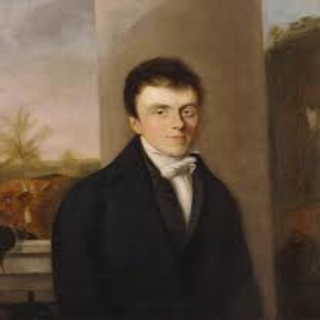
William Booth

William Booth General William Booth’s early life William Booth was born in Nottingham in 1829 of well-bred parents who had become poor. He was a lively lad nicknamed Wilful Wil. At the age of fifteen he was converted in the Methodist chapel and became the leader of a band of teenage evangelists who called him Captain and held street meetings with remarkable success. In 1851 he began full-time Christian work among the Methodist Reformers in London and later in Lincolnshire. After a period in a theological college he became a minister of the Methodist New Connexion. His heart however was with the poor people unreached by his church, and in 1861 he left the Methodists to give himself freely to the work of evangelism. Joined by Catherine, his devoted wife, they saw their ministry break out into real revival, which in Cornwall spread far and wide. One memorable day in July 1865, after exploring the streets in an East End district where he was to conduct a mission, the terrible poverty, vice and degradation of these needy people struck home to his heart. He arrived at his Hammersmith home just before midnight and greeted his waiting Catherine with these words: “Darling, I have found my destiny!” She understood him. Together they had ministered God’s grace to God’s poor in many places. Now they were to spend their lives bringing deliverance to Satan”s captives in the evil jungle of London”s slums. One day William took Bramwell, his son, into an East End pub which was crammed full of dirty, intoxicated creatures. Seeing the appalled look on his son”s face, he said gently, “Bramwell, these are our people—the people I want you to live for.” William and Catherine loved each other passionately all their lives. And no less passionately did they love their Lord together. Now, although penniless, together with their dedicated children, they moved out in great faith to bring Christ”s abundant life to London”s poverty-stricken, devil-oppressed millions. At first their organisation was called the Christian Mission. In spite of brutal opposition and much cruel hardship, the Lord blessed this work, and it spread rapidly. William Booth was the dynamic leader who called young men and women to join him in this full-time crusade. With enthusiastic abandon, hundreds gave up all to follow him. “Make your will, pack your box, kiss your girl and be ready in a week”, he told one young volunteer. Salvation Army born One day as William was dictating a report on the work to George Railton, his secretary, he said, “We are a volunteer army,” “No”, said Bramwell, “I am a regular or nothing.” His father stopped in his stride, bent over Railton, took the pen from his hand, and crossing out the word “volunteer”, wrote “salvation”. The two young men stared at the phrase “a salvation army”, then both exclaimed “Hallelujah”. So the Salvation Army was born. As these dedicated, Spirit-filled soldiers of the cross flung themselves into the battle against evil under their blood and fire banner, amazing miracles of deliverance occurred. Alcoholics, prostitutes and criminals were set free and changed into workaday saints. Cecil Rhodes once visited the Salvation Army farm colony for men at Hadleigh, Essex, and asked after a notorious criminal who had been converted and rehabilitated there. “Oh”, was the answer, “He has left the colony and has had a regular job outside now for twelve months.” “Well” said Rhodes in astonishment, “if you have kept that man working for a year, I will believe in miracles.” Slave traffic The power that changed and delivered was the power of the Holy Spirit. Bramwell Booth in his book Echoes and Memories describes how this power operated, especially after whole nights of prayer. Persons hostile to the Army would come under deep conviction and fall prostrate to the ground, afterward to rise penitent, forgiven and changed. Healings often occurred and all the gifts of the Spirit were manifested as the Lord operated through His revived Body under William Booth’s leadership. Terrible evils lay hidden under the curtain of Victorian social life in the nineteenth century. The Salvation Army unmasked and fought them. Its work among prostitutes soon revealed the appalling wickedness of the white slave traffic, in which girls of thirteen were sold by their parents to the pimps who used them in their profitable brothels, or who traded them on the Continent. “Thousands of innocent girls, most of them under sixteen, were shipped as regularly as cattle to the state-regulated brothels of Brussels and Antwerp.” (Collier). Imprisoned In order to expose this vile trade, W. T. Stead (editor of The Pall Mall Gazette) and Bramwell Booth plotted to buy such a child in order to shock the Victorians into facing the fact of this hidden moral cancer in their society. This thirteen-year-old girl, Eliza Armstrong, was bought from her mother for £5 and placed in the care of Salvationists in France. W. T. Stead told the story in a series of explosive articles in The Pall Mall Gazette which raised such a furore that Parliament passed a law raising the age of consent from thirteen to sixteen. However, Booth and Stead were prosecuted for abduction, and Stead was imprisoned for three months. William Booth always believed the essential cause of social evil and suffering was sin, and that salvation from sin was its essential cure. But as his work progressed, he became increasingly convinced that social redemption and reform should be an integral part of Christian mission. So at the age of sixty he startled England with the publication of the massive volume entitled In Darkest England, and the Way Out. It was packed with facts and statistics concerning Britain’s submerged corruption, and proved that a large proportion of her population was homeless, destitute and starving. It also outlined Booth’s answer to the problem — his own attempt to begin to build the welfare state. All this was the result of two years” laborious research by many people, including the loyal W. T. Stead. On the day the volume was finished and ready for publication, Stead was conning its final pages in the home of the Booths. At last he said, “That work will echo round the world. I rejoice with an exceeding great joy.” “And I”, whispered Catherine, dying of cancer in a corner of the room, “And I most of all thank God. Thank God!” As the work of the Salvation Army spread throughout Britain and into many countries overseas, it met with brutal hostility. In many places Skeleton Armies were organised to sabotage this work of God. Hundreds of officers were attacked and injured (some for life). Halls and offices were smashed and fired. Meetings were broken up by gangs organised by brothel keepers and hostile publicans. One sympathiser in Worthing defended his life and property with a revolver. But Booth’s soldiers endured the persecution for many years, often winning over their opponents by their own offensive of Christian love. The Army that William Booth created under God was an extension of his own dedicated personality. It expressed his own resolve in his words which Collier places on the first page of his book: “While women weep as they do now, I’ll fight; while little children go hungry as they do now, I’ll fight; while men go to prison, in and out, in and out, as they do now, I’ll fight—I’ll fight to the very end!” Toward the end of his life, he became blind. When he heard the doctor’s verdict that he would never see again, he said to his son: “Bramwell, I have done what I could for God and the people with my eyes. Now I shall see what I can do for God and the people without my eyes.” But the old warrior had finally laid down his sword. His daughter, Eva, head of the Army’s work in America, came home to say her last farewell. Standing at the window she described to her father the glory of that evening’s sunset. “I cannot see it,” said the General, “but I shall see the dawn.”

why god loves people who hate each other

The church is filled with lots of dangerously different people. There are rich and poor, old and young, male and female. We have families with fifteen children and fifty-year-old unmarrieds. There are Republicans and Democrats, executives and janitors, athletes, artists, and teachers. And the differences get even deeper — American, African, Asian, Latin, and Middle Eastern. Not to mention our personalities — outgoing and shy, bold and meek, patient and ambitious, emotional and unaffected, rational and relational. There’s no mystery why the Bible has so much to say about stress, conflict, and reconciliation between believers. How could there  not  be friction in a family like ours? A First-Century Food Fight Remember when Paul called out Peter in front of everyone? When the  apostles — a very small group of very like-minded men who alone mediate the very words of Christ — don’t always get along, it could easily discourage the rest of us, right? Paul said, “I opposed him to his face” (Galatians 2:11). So what was he so worked up about? Peter had stopped eating with Gentile believers to preserve his image among the Jews, and many had followed his example (2:12–13). But is that really that big of a deal? It may seem like Paul blew an empty seat in a lunchroom way out of proportion, but he didn’t. Paul saw that Peter’s decision denied the world-changing, death-defeating, unifying work of Christ. Through the gospel, God was doing something uniquely beautiful and glorious by not  only  reconciling people to himself, but also bringing them together in love across every imaginable barrier and boundary. Why Did God Make Us So Different? We might be lulled into forgetting all of our differences are due to the God himself, who knit us together, every cell and disposition, before we were even born (Psalm 139). He’s never surprised that we’re different. In fact, he knows every difference completely and intimately because he designed them. Think for a minute about the  thousands  of years now of bloody, almost unrelenting, hostile conflict between Jews and Gentiles.  God  did that.  God  made Israel “distinct from every other people on the face of the earth” (Exodus 33:16).  He  set them violently against every neighboring nation (Deuteronomy 7:2). It was the worldwide rehearsal of Joseph and his fancy coat, when his father made him the enemy of all his brothers by setting him apart with his special love (Genesis 37). Why would he design Jews and Gentiles for so much division and destruction? For this reason: “[Christ] himself is our peace, who made us both one and has broken down the wall of hostility . . . and reconciled us both to God in one body through the cross, thereby killing the hostility” (Ephesians 2:14, 16). The God-designed differences — even hostilities — between these two peoples was meant to show the invincible power of the gospel message to produce love. When Two Become One God’s full acceptance of us in Jesus binds up the brokenness in our relationships. That’s a significant, intentional part of the most important plan in history, God’s plan to save his children from  every  tribe, tongue, people, and nation. Christ came to repair what our rebellion had wrecked in our relationship with him, but he  also  came to reunite us in love with people different than us in every imaginable way. Through the gospel, in light of every conceivable contrast, God has united us in at least three remarkable realities. 1. We are one in death. This is where Paul turns first with Peter. “We know that a person is not justified by works of the law but through faith in Jesus Christ. . . . By works of the law no one will be justified” (Galatians 2:16). Self-righteousness has never rescued anyone from God’s wrath, because no one has lived and loved God’s law flawlessly. “None is righteous, no, not one” (Romans 3:10). Therefore, we all — without exception — were dead in our sin and without hope in ourselves (Ephesians 2:1; Romans 6:23). 2. We are one in hope. “In Christ Jesus you are all sons of God, through faith. For as many of you as were baptized into Christ have put on Christ. There is neither slave nor free, there is no male and female, for you are all one in Christ Jesus. And if you are Christ’s, then you are Abraham’s offspring, heirs according to promise” (Galatians 3:26–29). Everything that elevates us over one another in everyday society is eliminated before our heavenly Father for eternity. We can’t escape comparison, class, and cliques in this life, but God embraces us each equally from every family, country, and social status. In Christ, we are all — without exception and distinction — complete and full heirs of eternal life, the world, and God himself. 3. Therefore, we are one in life. Jesus promised the world would see him in our love for one another (John 13:35). How much  more  powerfully will they see him in our love for one another when we’re really, really different? When we love people like us, we don’t surprise many people in the world. But there’s a strange and beautiful love across boundaries that they simply cannot explain. It’s a love that restores the broken (Galatians 6:1) and bears heavy, inconvenient, painful burdens (Galatians 6:2). It’s a life that loves to do good to everyone, especially to those with whom we’re one in Christ (Galatians 6:10). Miraculously, there’s a oneness in this diverse family that “fulfills the law of Christ.” The happy, servant-hearted, committed, mutually beneficial relationship between flawed and different sinners displays the character and glory of God. Seeing Differences Differently The gospel turns haters into brothers, enemies into sisters. One of the most powerful and winsome things that Jesus purchased with his death was unlikely love. So we have to learn to see our differences differently, to see the contrasts and even inconveniences as unique canvases for Christ and his redeeming love for us.

Feedback
Suggestionsuggestion box
x