
Others like what fits a man for leadership Features >>


About the Book
"What Fits A Man For Leadership" by Gbile Akanni focuses on the qualities and characteristics that make a person fit for leadership roles. The book emphasizes the importance of humility, integrity, and selflessness in leadership, and provides practical insights and guidance on how to develop these qualities. Akanni highlights the need for leaders to be servant-hearted, visionary, and willing to make sacrifices for the greater good. Overall, the book serves as a valuable resource for individuals seeking to enhance their leadership abilities and make a positive impact in their communities.
Calvin Miller
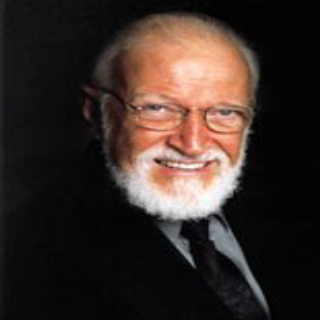 Calvin Miller was a pastor, professor and storyteller, best known for The Singer Trilogy, a mythic retelling of the New Testament story in the spirit of C. S. Lewis and J. R. R. Tolkien. Miller passed away on the afternoon of August 19, 2012, due to complications after heart surgery. He was 75.
A prolific artist and a writer's writer, Miller garnered respect and praise throughout his career from peers like Luci Shaw, Max Lucado and Philip Yancey. He was the author of more than forty books of popular theology and Christian inspiration including such recent books as Letters to Heaven, The Path of Celtic Prayer, Letters to a Young Pastor and his memoir Life Is Mostly Edges.
In addition to his twenty years of pastoral service at Westside Church in Omaha, Nebraska, Miller was also a great mentor to many students and leaders through his preaching and pastoral ministry classes at Beeson Divinity School. Calvin Miller, never one to multiply words, used just four to describe his rule of life: "Time is a gift."
RESCUE FROM THE SLUSH PILE
In October 1973 one important book was rescued from the slush pile (the stack of unsolicited manuscripts every publisher receives) by assistant editor Don Smith. He read a manuscript by a little-known Baptist pastor in Nebraska that was a poetic retelling of the life of Jesus—portraying him as a Troubadour. Both he and Linda Doll excitedly encouraged Jim Sire to take this imaginative manuscript seriously. In February 1974 Sire wrote the author, Calvin Miller, that IVP wanted to publish his book The Singer.
Months before, Miller had been waking up nights, stirred to write this tale, perhaps unconsciously inspired by the recent Broadway hits Jesus Christ Superstar and Godspell. Later Miller wrote:
When the manuscript was done, I sent it to Jim Sire at InterVarsity Press. “It’s good,” he said, “but we want to think about it a couple of weeks before we give you an answer.” So I waited until finally the letter came. They were going to do it. Jim Sire had done his Ph.D. on John Milton, and the fact that he liked it was joy immeasurable to me. “But,” he cautioned, “we’re going to print five thousand of these. They may not do well—in fact we may end up with four thousand of them on skids in our basement for the next ten years. Still, it’s a good book and deserves to be in print.”
Far more than a thousand copies sold. Actually, over three hundred times that amount sold in its first decade. It became “the most successful evangelical publication in this genre.” The Singer was followed in two years by The Song (paralleling the story of the early church in Acts) and two years after that by The Finale (inspired by the book of Revelation). Publication of The Singer changed Miller’s life. Even though he stayed in the pastorate for many years, it set him on a course of writing and speaking that he could not have imagined.
Calvin Miller was a pastor, professor and storyteller, best known for The Singer Trilogy, a mythic retelling of the New Testament story in the spirit of C. S. Lewis and J. R. R. Tolkien. Miller passed away on the afternoon of August 19, 2012, due to complications after heart surgery. He was 75.
A prolific artist and a writer's writer, Miller garnered respect and praise throughout his career from peers like Luci Shaw, Max Lucado and Philip Yancey. He was the author of more than forty books of popular theology and Christian inspiration including such recent books as Letters to Heaven, The Path of Celtic Prayer, Letters to a Young Pastor and his memoir Life Is Mostly Edges.
In addition to his twenty years of pastoral service at Westside Church in Omaha, Nebraska, Miller was also a great mentor to many students and leaders through his preaching and pastoral ministry classes at Beeson Divinity School. Calvin Miller, never one to multiply words, used just four to describe his rule of life: "Time is a gift."
RESCUE FROM THE SLUSH PILE
In October 1973 one important book was rescued from the slush pile (the stack of unsolicited manuscripts every publisher receives) by assistant editor Don Smith. He read a manuscript by a little-known Baptist pastor in Nebraska that was a poetic retelling of the life of Jesus—portraying him as a Troubadour. Both he and Linda Doll excitedly encouraged Jim Sire to take this imaginative manuscript seriously. In February 1974 Sire wrote the author, Calvin Miller, that IVP wanted to publish his book The Singer.
Months before, Miller had been waking up nights, stirred to write this tale, perhaps unconsciously inspired by the recent Broadway hits Jesus Christ Superstar and Godspell. Later Miller wrote:
When the manuscript was done, I sent it to Jim Sire at InterVarsity Press. “It’s good,” he said, “but we want to think about it a couple of weeks before we give you an answer.” So I waited until finally the letter came. They were going to do it. Jim Sire had done his Ph.D. on John Milton, and the fact that he liked it was joy immeasurable to me. “But,” he cautioned, “we’re going to print five thousand of these. They may not do well—in fact we may end up with four thousand of them on skids in our basement for the next ten years. Still, it’s a good book and deserves to be in print.”
Far more than a thousand copies sold. Actually, over three hundred times that amount sold in its first decade. It became “the most successful evangelical publication in this genre.” The Singer was followed in two years by The Song (paralleling the story of the early church in Acts) and two years after that by The Finale (inspired by the book of Revelation). Publication of The Singer changed Miller’s life. Even though he stayed in the pastorate for many years, it set him on a course of writing and speaking that he could not have imagined.
"A Dream Reveals God's Healing Power of Love"
Have you ever had an experience so exceptional you hesitated to share it with others who might not believe it? In the mid-1970s, I worked for a Knoxville company, selling to grocery stores, campgrounds, etc. My route often took me to Chattanooga, where one of my customers lived and was a Christian. We would often share our views and testimonies. One day, after he had shared a beautiful Spiritual experience with me, without thinking, I said, "Wow, is that for real?" He instantly turned away and tartly said, "I don't share this with everyone because I know they won't believe, but I thought you would!" But we were fine; I apologized and explained that it was only a reaction, and I didn't doubt his word. The following article is about a vision I have shared with only a few who I thought would believe. God's Healing Power of Love In 1996 during an incredibly stressful situation, my personal and home life were crashing, and there seemed to be nothing I could do. I was depressed, and Satan repeatedly taunted me with self-harm suggestions. I knew he was a liar, but he always attacks our weakest points. Even those closest to me were unaware that I had encountered one of the lowest points in my life. Our problems and troubles always seem worse at night, don't they? One night in the wee hours, awake and leaning against my pillow, suffering from what I now know was another brutal satanic attack, something happened that changed my life forever. My Vision Suddenly I was sitting in the drivers' seat of a large truck; it had been in an accident, and everything around me was in small broken pieces. The windshield was gone, broken glass and large shreds of sharp metal dangled from the ceiling and were scattered all around. Observing my injured body, I said, I must have been in a fatal accident! Just then, a kind-looking a well-dressed man calmly opened the smashed passenger door and stepped up to the truck. Reaching through the debris, he caught my hand, and I miraculously passed through the twisted metal, glass, and shredded material and out the passenger door to the ground. As I stepped out, I realized how well I felt, no aches or pains, and no depression. I was amazingly well! We started walking, and after about 50 yards, I saw what can only be described as a place or an opening. What I saw/experienced inside cannot accurately be put into words, but I will try. As we drew closer, I became aware of an unspeakable beauty; colors I had never seen, and music that radiated beauty, peace, and healing. Even more were the penetrating feelings of joy, total acceptance, and sense of well-being. The emotional and Spiritual healing powers were beyond what I thought possible. I stood as though glued to the ground, as I was repeatedly bathed with wave after wave of blissful sensations of healing, love, and total acceptance, powerless to move. I am convinced it could only have been a glimpse of Heaven. The power was so penetrating and extreme that I do not believe if it had occurred outside the vision, I could have remained standing. I do not know how long we were there, but perhaps only a few minutes when my friend indicated it was time to leave. We quietly walked back to the front of the wrecked truck. Then, as quickly as the vision started, it ended, and I was again sitting up in bed, awake. But the sensations remained. I trembled as my heart pounded, and the beauty and euphoria from the vision replayed in my mind. I knew without a doubt this was from God; it could not have been anything else. Again, I cannot put this into words, but it was so powerful that I would have knowingly gone through an actual truck wreck and even death to have this experience again. As I sat there searching for understanding, and wondering aloud I asked, "does this means that I am going to lose my life in a terrible accident?" Then a powerful and comforting Spiritual voice immediately responded, "No, I just wanted you to know that I love you and for you to experience the healing power of my love." I was instantly and permanently healed, and my days were once again enjoyable. Although it was winter and in the northern U.S., I would walk through the snow conducting business humming or whistling, and nothing could cause me the slightest bit of worry. The problems in my life did not change, but I did. The things I was so anxious about happened anyway, but I was okay because this miracle from God had brought total healing. God healed and removed me from the most miserable time in my life! It was a miracle that brought healing, joy, and hope for the future, and, most of all, newfound confidence in God. I was laughing and talking with my co-workers again. I didn't discuss my experience with them because some were not Christians, and I was concerned that they could not understand, and it was so precious and powerful that I didn't want to take the chance of someone not believing. This miracle was a token of God's love, and it did more for me than a truckload of pills. It was only a small sample of God's healing power of love but has remained one of the most beautiful experiences of my life. The Apostle Paul's actual visit to Heaven and the things he saw and experienced were so wondrous that God would not allow him to speak of them. Paul was so captivated by his Glorious Visit that the only reason he would willingly return to earth was to complete God's message to the world. Twenty-Five Years Later Twenty-five years later, I still remember that experience in detail but can only now understand how much it changed my life. This vision, and a couple of others, are mostly responsible for establishing this ministry and website. I would never again doubt God's reality or wonder about His healing power, and it has given me faith for the countless times I have prayed with others. Now, when troubles and depression try to return, all I need to do is recall that vision, and the healing powers return. No matter how discouraging things become, or how trying the circumstances, remember that nothing is impossible with God; the healing power of God's love is enough to overcome them all. Samuel Mills