
Richard Sibbes
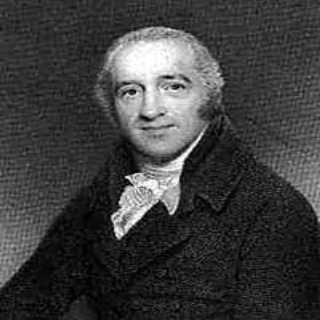
Richard Sibbes was born in Tostock, Suffolk, four miles from Bury St. Edmunds, in 1577.[1] He is the eldest son of Paul Sibbes and Joane. His father was a wheelwright who hoped Sibbes would be in the same field of occupation. Instead of following the footsteps of his father, young Sibbes, out of love for reading, would choose books over wooden wheels.[2] Truly enough, throughout his lifetime, books were part of Sibbesâ life.[3] Proof of this interest to books is his accomplishments as a lecturer [pastor], fellow tutor, vicar, and for obtaining various degrees in his academic education.
Sibbesâ legacy of his seven-volume work was collected by A. B. Grosart which was published from 1862 to 1864.[4] Sibbesâ ministries and his works spread throughout England even after his death. However, he was never married.
Sibbes died on July 5, 1635, in his chambers at Grayâs Inn.[5] J. I. Packer noted that Sibbesâ left more than two million words on paper after his death.[6]
Educational Background
Sibbesâ started studying at St. Johnâs College, Cambridge when he was eighteen, in 1595. He then proceeded to finish a Bachelor of Arts in 1599. He received a fellowship grant in 1601. Sibbes continued studying, finishing a Master of Arts degree by 1602.
Sibbes became a prominent preacher in Cambridge and got the endorsement to apply for a Bachelor of Divinity. After his defense and fulfilling the requirements, he earned this degree in 1610.[7] Furthermore, in almost two decades, Sibbes received his Doctor of Divinity in 1627 after returning from London for his mastership at St. Katherine.[8]
Ministerial Experience and Vocation
Sibbesâ conversion happened after hearing Paul Bayneâs sermon in 1603. Bayne succeeded William Perkins at St. Andrews, Cambridge.[9] During Sibbesâ stay in Cambridge, as a fellow, he handled and supervised five to six students for a tutorial.[10] Sibbes held various vocations such as being chaplain, lecturer, and got a promotion from mere fellow to senior fellowship. After being a senior dean at St. John, Sibbes became the master of St. Katherineâs College in 1626.[11]
As a preacher, Sibbes received his ordination in Norwich, in 1607. He became the minister of Thurston in 1608. Later, in 1610, Sibbes accepted the offer as a lecturer of Holy Trinity Church, Cambridge until he was called to be a lecturer at Grayâs Inn, London, in 1617.[12] This lectureship lasts until his death.
Even during Sibbesâ mastership at St. Katherine, he remained a lecturer at Grayâs Inn. In 1633, through the appointment of King Charles I, Sibbes became the vicar of Holy Trinity Church, Cambridge. The positions held by Sibbes were mastership at St. Katherine, a lecturer at Grayâs Inn, and vicar of Holy Trinity Church.
Influence of the Heavenly Doctor
Throughout Sibbes ministries, prominence followed as he influenced many Puritan ministers. Sibbes, as an influencer, is known to be the âpastor of pastors,â not just in the Church of England but even to Presbyterians and Independent Congregationalists.[13] Sibbes was responsible for John Cottonâs conversion in 1612.[14]
Moreover, he persuaded John Prestonâs style in preaching, transforming from witty sermons to more plain but spiritual preaching.[15] Sibbesâ book, The Bruised Reed, encouraged Richard Baxter to gain settled-conviction on his conversion.[16] Likewise, Sibbes helped Thomas Goodwin, the chief editor of most of his works, to keep away from Arminianism.[17]
Sibbesâ ministry extends even to common people. Humphrey Mills, a layman, shared his testimony about Sibbesâ ministry. Mills was spiritually refreshed and brought to peace and joy after hearing Sibbesâ âsweet soul-melting Gospel-sermons.â[18] Sibbesâ encouragement did not end in the days of Puritans. Martyn Lloyd-Jones, one of the greatest preachers in the twentieth century, was grateful for Sibbesâ works. Lloyd-Jones, in his spiritual dryness, said that Sibbesâ books âquietened, soothed, comforted, encouraged, and healed [him].â[19]
Sibbes was a renowned Puritan throughout Cambridge, London, and even to Amsterdam. Mainly because of his various offices plus broad networks outside the church. He remained a moderate Puritan perceiving the Church of England as the true church. Sibbes encouraged other Separatists to return and warned the moderates not to dissent.
Yet many historians and scholars misinterpreted Sibbes in his theology and ministry. Thankfully, Mark Dever, in his recent work, argues contrary to many historians that Sibbes was dismissed in his ministry. Dever also concludes that Sibbes did not drift away from Calvinism, claiming that he was a thoroughly Reformed preacher and never became non-conformist, rather a moderate puritan.[20]
Sibbes, through his works, are still penetrating churches and seminaries up to this day. Recently, his seven-volume set was published by The Banner of Truth Trust in 2001. The best introduction for Sibbesâ works, personally, is his The Bruised Reed and the Smoking Flax. For Michael Reevesâ opinion, Sibbes is âthe best introduction to the PuritansâŠ. Reading him is like sitting in the sunshine: he gets into your heart and warms it to Christ.â[21]
References
[1] Alexander B. Grosart, âMemoir of Richard Sibbes, D.D.,â in Richard Sibbes, The Works of Richard Sibbes, ed. Alexander Grosart, 7 vols. (1862-1864; reprint, Carlisle, Pennsylvania: The Banner of Truth Trust, 2001), 1:xxvii.
[2] Joel Beeke, âRichard Sibbes on Entertaining the Holy Spirit,â in The Beauty and Glory of the Holy Spirit, ed. Joel Beeke and Joseph Pipa Jr. (Grand Rapids, Michigan: Reformation Heritage Books, 2012), 228. Cf. Joel Beeke and Mark Jones, A Puritan Theology: Doctrine for Life (Grand Rapids, MI: Reformation Heritage Books, 2012), chap. 36, Kindle.
[3] Joel Beeke and Randall Pederson, Meet the Puritans (Grand Rapids, MI: Reformation Heritage Books, 2006), 534-5.
[4] Mark Dever, âThe Works of Richard Sibbes,â in You Must Read: Books that Have Shaped Our Lives (Carlisle, PA: The Banner of Truth Trust, 2015), 154.
[5] Grosart, âMemoir,â in Sibbes, Works, 1:cxxxi.
[6] J. I. Packer, foreword to Richard Sibbes: Puritanism and Calvinism in Late Elizabethan and Early Stuart England, by Mark E. Dever (Macon, Georgia: Mercer University Press, 2000), ix.
[7] Dever, Richard Sibbes, 37-38. Bachelor of Divinity, according to Dr. Shawn Wright is equivalent with Master of Divinity today, âLectures in English Puritanismâ (The Southern Baptist Theological Seminary, Louisville, KY, Spring 2020), but the process is different. Dever noted in his work that Sibbes undergone two public preaching, one in English and another in Latin, and two defense topics chosen by the panelists.
[8] Grosart, âMemoir,â in Sibbes, Works, 1:cxi.
[9] Beeke and Pederson, Meet the Puritans, 534-5.
[10] Dever, Richard Sibbes, 30-31.
[11] Dever, 31-34, 46.
[12] Beeke and Pederson, Meet the Puritans, 534-6.
[13] Beeke, âRichard Sibbes on Entertaining the Holy Spirit,â 230.
[14] Dever, Richard Sibbes, 40.
[15] Beeke and Pederson, Meet the Puritans, 535-7.
[16] Richard Baxter, The Autobiography of Richard Baxter (Bedford St., London: J.M. Dent & Sons Ltd., 1931), 7. Baxterâs father bought Sibbesâ book from a peddler and gave it to Richard Baxter. Cf. Timothy K. Beougher, Richard Baxter and Conversion: A Study of the Puritan Concept of Becoming a Christian (Scotland, UK: Christian Focus Publications, 2007), 21.
[17] Dever, Richard Sibbes, 41.
[18] Ronald Frost, âThe Bruised Reed by Richard Sibbes (1577-1635)â in Kelly M. Kapic and Randal C. Gleason, The Devoted Life: An Invitation to the Puritan Classics (Downers Grove, IL: Intervarsity Press, 2004), 80-81. Quoting from a collection of Puritan testimonials by John Rogers, Ohel or Bethshemesh, A Tarbernacle for the Sun (London, n.p., 1653), 410.
[19] D. Martyn Lloyd-Jones, Preaching and Preachers (Grand Rapids, Michigan: Zondervan Publishing House, 1972), 175. Cf. Publisherâs Foreword to The Bruised Reed, by Richard Sibbes, x.
[20] Dever, Richard Sibbes, 211-8.
[21] Michael Reeves, âA Short Biography of Richard Sibbes,â in Richard Sibbes, Christ it Best; or, St. Paulâs Strait (Carlisle, PA: Banner of Truth Trust, 2012), 66.
letter to a friend engaged to a nonbeliever
Dear Kelly, I was surprised by the recent news of your engagement. While I wish I could celebrate with you without reservation, I admit I have some. My greatest concern is that your fiancĂ© does not know or love Christ. Because I love you and care about your future, I feel compelled to speak now rather than to hold my peace, knowing full well how you might receive my âpeace.â I expect that, if youâre honest, you may have your own reservations about the upcoming ceremony. I hope you will heed those reservations and reconsider. As I have watched people walk down this road, I have noticed several common ways people justify marrying a nonbeliever. I want to address them in hope that you might experience grace to trust God and his word regarding marriage. âOthers Are Doing It.â âLet me be clear: to marry an unbeliever is to sin against God (1 Corinthians 7:39).â You know my story. My wife began dating me as an unbeliever. But as much as I love her and our marriage, it was wrong for her to do so. While God was gracious to us, and brought me to a saving knowledge of Christ prior to our wedding date, let me be clear: to marry an unbeliever is to sin against God (1 Corinthians 7:39). Furthermore, the difficult path to my own conversion and then to our wedding ceremony is not one I would wish upon others. I fear youâve latched onto Godâs grace in my marriage (and others like mine) as a sort of promise for your own. God has made no such promise. While God was merciful to bring me to himself despite my wifeâs disobedience, we are the exception and not the rule â certainly not the model. I know far more stories that did not play out like ours. The Bible gives us more stories like that (Exodus 34:16; Ezra 9:1â15). Solomon says, âWhoever walks with the wise becomes wise, but the companion of fools will suffer harmâ (Proverbs 13:20). Donât let the mistakes of others serve as a justification for repeating them. âHeâs a Good Guy.â While I do think your fiancĂ© is a great guy by earthly standards, itâs his standing before God that matters most for marriage. You mentioned how important it was to you that he respected your boundaries, particularly after your last boyfriend pushed the boundaries, even while claiming to be Christian. I agree that he certainly seems to outshine your last suitor, but itâs easy to fall into the trap of lateral comparison. We must be careful about making choices today based solely on setting them next to bad choices in the past. Look for a man striving to imitate Jesus (1 Corinthians 11:1). Why did you put your faith in Jesus, and choose to follow him? Are you absolutely sure you wonât regret committing yourself until death to someone who might never  help you see or love Jesus more? If he does not share your captivation with Christ, you and he will always stand on unlevel and unsteady ground as you carry out your vows in marriage. âGive Him a Chance.â Youâve mentioned that your boyfriend is âwarming upâ to the idea of spiritual things. Youâve even thought at times he might be on the verge of conversion. Beware of your heart, which is prone to lie to you (Jeremiah 17:9), and of the butterflies in your stomach that often flutter louder than the Spirit within us. Until you are absolutely sure that he has also been born again by the same Spirit alive in you (John 3:5), heed the warning and conviction the Spirit brings (John 16:8). âIf he has no interest in the things of Christ now, what makes you think things will change after the wedding?â Donât be fooled into thinking he is simply âspiritual, but not religious.â There is no such thing as spiritual neutrality. We are always either with Jesus or against him (Matthew 12:30). Despite his warmth toward you, any attempt to have God on his own terms is an attempt to reject the true God over your life and heart. If he has no interest in the things of Christ now, what makes you think things will change after the wedding? âIâll Die Alone.â I know it can be hard to see other couples getting married, holding hands, and having kids while you remain single. Donât let this serve as a reason to try and seize marriage at the first opportunity. I wish you could see a glimpse of a future in which you remained faithful to your vows to a man who remained faithless toward your Savior. Worse than attending church alone your entire life, while your husband remained at home, is the haunting thought that the man you gave yourself to might spend eternity separated from you and God. Worse yet is the thought that he might lead you or your children down the same path (Matthew 7:13). It really is possible to be more isolated and alone within a marriage than without. Marriage is no savior. It will not ultimately save anyone from sin or loneliness or unhappiness. It cannot bear the weight of those needs and longings. While the single life is not without trials, remember you are not alone. So long as you cling to Jesus, he will be with you (Matthew 28:20). He will never leave you nor forsake you (Hebrews 13:5). Heâs also given you community in the church. Even if your hope for a husband is never fulfilled in this life, you are promised a seat at the great wedding supper of the Lamb (Revelation 19:7), and he will far surpass everything you might have experienced with an earthly husband. âI Already Said âYes.ââ I know that backing out of your engagement at this point may cost you, financially and otherwise. I know it might feel embarrassing. But it would be far better in the long run to lose some money and gain a few months of heartache than to commit the rest of your life to a marriage God does not want for you. Until you say, âI do,â it is not too late to wait. God may even redeem the situation in a surprising way for his glory if it is handled well. Would it not speak volumes about your faith if you told him you were deciding to entrust your future to God? If you were to say, âThe Lord gave, and the Lord has taken away; blessed be the name of the Lordâ (Job 1:21)? Tell him you will settle for nothing less than being married âin the Lord.â Confess your disobedience to God and the sin of misleading him. Your repentance and faith could, by Godâs mysterious grace, be the vehicle God uses to bring him to himself. âIf you truly love him, your concern for his soul should outweigh your hopes for marriage.â Even then, you must make clear to him that a future with you is not promised. Should he come to saving faith, it must be to have God, not to have a wife. Otherwise, he risks making an idol out of you and using Jesus as a means to something else. If you truly love him, your concern for his soul should outweigh your hopes for marriage. I trust that, if you are willing to listen, the Holy Spirit will lead you into the truth that gaining a husband while forsaking your soul is a trade you do not want to make (Mark 8:36). I also pray that you would eventually see any wounds I have caused you as the faithful wounds of a friend (Proverbs 27:6), and not as those of an enemy. As you seek Godâs will, hide yourself in him and his will, and wait with patience for the day he will wipe away every tear. With love and grace, Your Pastor