
Others like the believer's authority Features >>
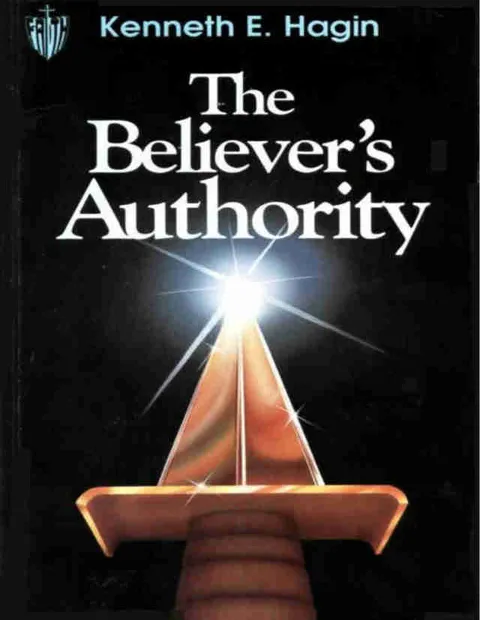
The Believer's Authority
Understanding The Anointing

The Life That Wins
The Beginners Guide To Spiritual Gifts
The Spirit Within & The Spirit Upon

Everybody’s Normal Till You Get To Know Them
When The Many Are One

Armed And Dangerous By John Ramirez

Overcoming Compulsive Desires
Victory In The Wilderness
About the Book
"The Believer's Authority" by Kenneth E. Hagin is a powerful guide that explores the concept of spiritual authority and how believers can access and operate in this authority. The book emphasizes that Christians have been given authority by God to overcome challenges, resist evil forces, and live victorious lives. Through insights from the Bible and personal experiences, Hagin encourages readers to walk in their God-given authority and experience transformation in all areas of their lives.
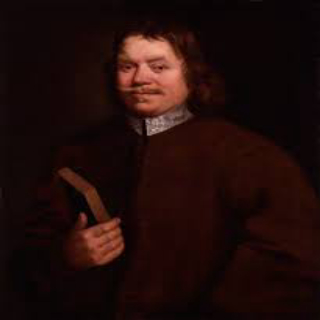
William Tyndale
William Tyndale (1494 – 1536) was a scholar and theologian who made one of the first printed translations of the Bible in English. Executed for heresy, his English translations would later be published and form a significant part of modern Bible translations.
“I had perceived by experience, how that it was impossible to stablish the lay people in any truth, except the scripture were plainly laid before their eyes in their mother tongue, that they might see the process, order, and meaning of the text.”
William Tyndale was born in 1494 in Gloucestershire, England. In 1506 he began studying at Magdalen Hall (later Hertford College), Oxford University. After gaining a B.A. and M.A., Tyndale was able to study the subject which most interested him – Theology. But, he was highly critical of the idea that one had to study for a long time before actually being allowed to study the Bible. During his time at Oxford, he sought to create Bible study groups with like-minded friends.
William Tyndale was a gifted linguist and scholar, and known as a man of virtue and good character. However, influenced by ideas of the Reformation, he increasingly became known as a man of unorthodox and radical religious views. In particular, Tyndale was keen to translate the New Testament into English. He believed this would help ordinary people understand scripture directly and not through the filter of the church. In this, Tyndale was influenced by the reformation ideas of Martin Luther. Tyndale would claim that the Bible did not support the church’s view that they were the body of Christ on earth.
After studying at Oxford, he also went to Cambridge where he added to his growing range of languages and became a leading professor of Greek.
After leaving Cambridge in 1521, he became a chaplain in Little Sodbury, but he was soon criticised by fellow churchmen for his radical viewpoints. In 1523, he left for London hoping to translate the Bible into English. However, he struggled to receive any support or backing, and so he left for the continent.
During his time on the continent, he visited Martin Luther and wrote extensively on scriptures and continued his translations of the Bible.
“I never altered one syllable of God’s Word against my conscience, nor would do this day, if all that is in earth, whether it be honor, pleasure, or riches, might be given me.”
In 1525, a first English translation was published in Worms. By 1526, copies had been smuggled into England where they were soon denounced as heretical and even burnt in public. Cardinal Wolsey denounced Tyndale as a heretic in 1529.
In 1530, he wrote a treatise critical of Henry VIII’s divorce. When the English King found out, he was furious and sought his extradition.
After being in hiding for several years, in 1535, Tyndale was betrayed and handed over to the imperial authorities in Belgium. After being held in a castle in Brussels, he was tried and convicted of heresy. He was strangled and his body burnt at the stake. His last words were reported to be:
“Lord! Open the King of England’s eyes”
Tyndale is best remembered for his hope that the Bible would be translated into English to allow the common people to be able to read the Holy Scriptures.
His translations also proved to be quite popular, becoming the basis of key future Bible translations. It is estimated that around 80% of the King James Bible is Tyndale’s work.
Four years after his death, King Henry VIII asked for English translations of the Bible to be published. These were heavily based on Tyndale’s original translations.
Tyndale introduced new phrases and words into the English translations. When criticised for his translations, Tyndale replied that he sought to translate the essence and spirit of the original Greek versions and avoid the tendency to follow the dogma of the church.
Citation: Pettinger, Tejvan. “Biography of William Tyndale”, Oxford, UK – www.biographyonline.net. Published 5 August 2014. Last updated 7 February 2018.
Phrases from Tyndale’s Bible
lead us not into temptation but deliver us from evil
knock and it shall be opened unto you
fashion not yourselves to the world
seek and you shall find
ask and it shall be given you
judge not that you not be judged
the word of God which liveth and lasteth forever
let there be light
the powers that be
my brother’s keeper
the salt of the earth
a law unto themselves
filthy lucre
it came to pass
gave up the ghost
the signs of the times
the spirit is willing, but the flesh is weak
Our God Listens
You have been invited to speak to the God of the universe, the Almighty. Not just the mightiest, but the all-mighty. All power is his, and under his control. And he is the one who made you, and keeps you in existence. This God, the one God — almighty, creator, rescuer — speaks to us to reveal himself, that we might genuinely know him, but he doesn’t only speak. In one of the great wonders in all the world and history, this God listens. First he speaks, and bids us respond. Then he pauses. He stoops. He bends his ear toward his people. And he hears us in this marvel we so often take for granted, and so flippantly call prayer. What Comes Before Prayer The wonder of prayer might lead us to rush past a critical reality before we start “dialing up” the God of heaven. There is an order to his speaking and listening, and to ours. He is God; we are not. Mark it well every day, and forever. He speaks first, then listens. We first listen, then speak. “He is God; we are not. Mark it well every day, and forever. He speaks first, then listens. We first listen, then speak.” Prayer is not a conversation we start. Rather, God takes the initiative. First, he has spoken. He has revealed himself to us in his world, and in his word, and in the Word. And through his word, illumined by his Spirit, he continues to speak. “See that you do not refuse him who is speaking” (Hebrews 12:25). His word is not dead and gone but “living and active, sharper than any two-edged sword, piercing to the division of soul and of spirit, of joints and of marrow, and discerning the thoughts and intentions of the heart” (Hebrews 4:12). And in his word, and by his Word, he extends to us this stunning offer: to have his ear. Golden Scepter When Esther learned of Haman’s plot to destroy the Jews, a great barrier stood before her. Mordecai directed her “to go to the king to beg his favor and plead with him on behalf of her people” (Esther 4:8). Easier said than done. Esther knew these were life-and-death stakes, not just for the Jews but for her: “If any man or woman goes to the king inside the inner court without being called, there is but one law — to be put to death, except the one to whom the king holds out the golden scepter so that he may live.” And she knew the threat that lay before her: “But as for me, I have not been called to come in to the king these thirty days” (Esther 4:11). Yet in the end, in faith and courage, she resolved, “I will go to the king, though it is against the law, and if I perish, I perish” (Esther 4:16). One does not simply saunter into the presence of a great king “without being called.” And all the more with God Almighty. Not simply because it’s a great risk, as with an earthly king, but with God it’s not even physically possible. He is no man on earth, that one might slip past the palace guards and approach him. He is utterly unapproachable — “without being called.” Yet in Christ, the throne of heaven has taken the initiative, and now holds out the golden scepter. Why We Can Come Near The two great bookends (4:14–16; 10:19–25) of the heart of the epistle to the Hebrews (chapters 5–10) make clear why we can draw near and how. Hebrews is set against the backdrop of God’s first covenant with his people, through Moses. What Exodus, Leviticus, and Numbers say about “drawing near” or “coming near” to God is sobering. For one, the tabernacle, and the whole system of worship given at Mount Sinai, taught the people of their distance from God, with barriers between them, because of their sin. The people must stay back, lest God’s righteous anger break out against their sin (Exodus 19:22, 24). First, Moses alone is permitted to come near (Exodus 24:2), and then Moses’s brother, Aaron, and his sons, serving as priests, may “come near” (Exodus 28:43; 30:20). No outsider may come near (Numbers 1:51; 3:10), nor any priest with a blemish (Leviticus 21:18, 21). Only the ordained priests may “draw near to the altar” to make atonement for themselves and for the people (Leviticus 9:7) — and only in the way God has instructed, as memorably taught in the horrors of Nadab and Abihu (Leviticus 10) and Korah’s rebellion (Numbers 16; also 17:13; 18:3–4, 7, 22). “It is almost too good to be true — almost — that we have access to God.” But now, in Christ, “we have a great high priest who has passed through the heavens, Jesus, the Son of God” (Hebrews 4:14). In him, “we have a great priest over the house of God,” a priest who is ours by faith, and so we “enter the holy places by the blood of Jesus, by the new and living way that he opened for us through the curtain, that is, through his flesh” (Hebrews 10:19–21). Not only does Christ enter God’s presence on our behalf, but he welcomes us in his wake. He is our pioneer, who blazes our trail. We now may “draw near” to God, “come near” to heaven’s throne of grace, because of Christ’s achievements for us, in his life and death and resurrection. How We Can Come Near Then, to add wonder to wonder, we not only draw near to God himself in Christ, but we are invited, indeed expected, to do so with confidence — with boldness and full assurance. Since we have such a high priest as Christ, “let us then with confidence draw near to the throne of grace, that we may receive mercy and find grace to help in time of need” (Hebrews 4:16). In him, “we have confidence to enter the holy places by the blood of Jesus” (Hebrews 10:19). Not by our own value, status, or achievements, but his. We “draw near with a true heart in full assurance of faith” (Hebrews 10:22), a faith looking outside ourselves to ask not “Am I worthy?” to approach God’s throne, but “Is Jesus worthy?” Wait No Longer It is almost too good to be true — almost — that we have access to God (Ephesians 2:18) and “access with confidence” at that (Ephesians 3:12). In Christ, the King of the universe holds out the golden scepter. The question is no longer whether we can come, but will we, and how often? We have access. God expects us to take hold on his Son by faith, and approach his throne with confidence. Our God listens. He hears our prayers. What are you waiting for? Article by David Mathis