
Others like thanksgiving praise and worship Features >>
The Power Of Praise And Worship
The Purpose And Power Of Praise And Worship
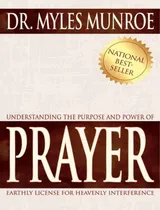
Understanding The Purpose And Power Of Prayer

Mary’s Prayers And Martha’s Recipes

High Level Warfare
-160.webp)
The Circle Maker. Dream Big. Pray Hard. Think Long
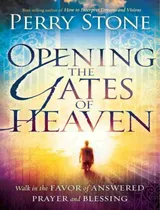
Opening The Gates Of Heaven
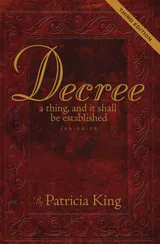
Decree
-160.webp)
Intimacy With God: Walk In The Holy Spirit
-160.webp)
Carriers Of The Glory (Becoming A Friend Of The Holy Spirit)
About the Book
"Thanksgiving Praise And Worship" by Derek Prince explores the power of thanksgiving in worship and how expressing gratitude to God can bring about breakthroughs and transformation in our lives. The book emphasizes the importance of cultivating a heart of thanksgiving and offers practical insights on how to incorporate praise and thanksgiving into our daily lives. Overall, it serves as a guide to deepening one's relationship with God through the practice of gratitude and worship.
Rich Mullins
 Born Richard Wayne Mullins on October 21, 1955, in Richmond, IN; died on September 19, 1997, in La Salle County, IL; son of John and Neva Mullins. Education: Attended Friends University, Wichita, KS, late 1980s.
The talents of Contemporary Christian singer/songwriter Rich Mullins and his work with the group Zion were first noticed by Christian music superstar Amy Grant. The inclusion of his song "Sing Your Praise to the Lord" on Grant's Age to Age album in 1982 soon lead to deals with Reunion Records and the start of a successful career as a songwriter and singer. With nearly ten albums and numerous Contemporary Christian hit songs to his credit, Mullins's career was cut short by an automobile accident that took his life on September 19, 1997, in Illinois.
Raised near Richmond, Indiana, Mullins began writing songs in his head as he drove a tractor over the fields of his family's farm. He taught himself to play the piano at age four and soon mastered a number of other instruments as well, including the guitar and hammered dulcimer. Long before his birth, however, factors over which he had no control were beginning to shape the world in which he would grow up. In Rich Mullins: An Arrow Pointing to Heaven by James Bryan Smith, the singer tells of some family history and how it came to affect his life: "My dad grew up back and forth between Kentucky and Virginia because his father was a coal miner. And when my dad was 14 my grandpa came home and told my grandma to load up the truck 'cause they were gonna move.... And my grandpa said, 'Well, Rose, we're going to Detroit.' And she said, 'Why in the world are we going to Detroit?' And he said, 'Because I don't want my boys to grow up to be coal miners.' And so they got as far as Indiana and ran out of gas--and that's how I got here."
As a boy, Mullins was known as Wayne, his middle name. Although he went by Richard when he went off to college and shortened that to Rich when he launched his music career, he preferred to be known as Wayne by his family. Mullins was particularly close to his mother, Neva, who was raised a Quaker. He admits, however, to having been somewhat embarrassed by his father, who was raised in the heart of Appalachia, "which is a very polite way to say that he was a hillbilly," Mullins told Smith. Mullins said that it was not until he was nearing the end of high school that he began to understand the true meaning of the biblical injunction to "honor thy father and mother." In Smith's book Mullins is quoted: "[I]f you cannot honor your father and mother, then you can't honor anybody. Until you come to terms with your heritage, you'll never be at peace with yourself. That was a real breakthrough moment for me. So, what I needed to do was come to understand the Appalachian life, so that I could know more about my father, who had been a stranger to me all my life."
In 1974, after finishing high school, Mullins attended Cincinnati Bible College in Ohio, working as a youth minister in a local church. A couple of years into college, he formed a band of his own. The band only stayed together for about a year, and during that time it performed Christian music at schools and colleges throughout the Cincinnati area. In the late 1970s Mullins left college to work with Zion Ministries and perform with their band, aptly named Zion. In the summer of 1981 a copy of an album recorded by Zion--made up mostly of songs written by Mullins--found its way to Christian singer Amy Grant. The up-and-coming Grant and her managers were impressed by Mullins's "Sing Your Praise to the Lord" and decided to include it on Grant's next album, Age to Age, released in 1982. Mike Blanton, an adviser to Grant and founder of Reunion Records, signed Mullins to his first publishing deal as well as his first artist deal.
Mullins's first album for Reunion, self-titled, was released in 1986 and includes such songs as "Place to Stand," "Elijah," and "Few Good Men." He followed that in 1987 with Pictures in the Sky, which includes "When You Love," "Be with You," and "Verge of a Miracle." Winds of Heaven, Stuff of Earth, Mullins's third album for Reunion, was released in 1989 and features "Awesome God," "Other Side of the World," and "If I Stand." Also hitting music stores in 1989 was Never Picture Perfect, which includes the singles "I Will Sing," "While the Nations Rage," and "First Family."
In 1988 Mullins moved to Wichita, Kansas, to study music education at Friends University, a nondenominational Christian institution. While studying at Friends, he continued to record and perform whenever he could. In 1991 and 1992, he released two volumes of a compilation entitled World As Best As I Remember It. After completing his studies at Friends, Mullins joined a Compassion International mission to the vast Navajo Reservation in Arizona to teach music to the local children and spread the Christian gospel to whomever he could reach. As part of his work in the Navajo Nation, he formed a music club for some of the younger residents. In May of 1995, he moved to the Navajo Nation, settling into a trailer adjacent to the reservation. He lived there with fellow musician Mitch McVicker, and the two were involved in a project to collect musical instruments for the children of the reservation.
Throughout his career, Mullins has been nominated a total of 12 times for Dove Awards, presented each year to the best in Contemporary Christian music. He never received the award, but close friend Doris Howard told Release magazine that he probably didn't mind. "Nashville didn't own Rich, but then, he cared nothing for the things of this world."
On September 19, 1997, the Jeep in which Mullins and McVicker were traveling from Chicago to Wichita overturned on Interstate 39 in La Salle County, Illinois. Both men were thrown onto the road from their vehicle. A tractor trailer following close behind swerved to miss the Jeep but instead hit Rich, killing him instantly. McVicker, though injured critically, recovered.
Rich Mullins's Career
Joined Christian group Zion, late 1970s; released self-titled album for Reunion Records, 1986; recorded total of nine albums of Christian music for Reunion, 1986-96; wrote several Contemporary Christian hits, including "Awesome God" and "Sing Your Praise to the Lord"; studied music education, devoted time to relief efforts among Navajo Indians of the Southwest, mid-1990s.
Born Richard Wayne Mullins on October 21, 1955, in Richmond, IN; died on September 19, 1997, in La Salle County, IL; son of John and Neva Mullins. Education: Attended Friends University, Wichita, KS, late 1980s.
The talents of Contemporary Christian singer/songwriter Rich Mullins and his work with the group Zion were first noticed by Christian music superstar Amy Grant. The inclusion of his song "Sing Your Praise to the Lord" on Grant's Age to Age album in 1982 soon lead to deals with Reunion Records and the start of a successful career as a songwriter and singer. With nearly ten albums and numerous Contemporary Christian hit songs to his credit, Mullins's career was cut short by an automobile accident that took his life on September 19, 1997, in Illinois.
Raised near Richmond, Indiana, Mullins began writing songs in his head as he drove a tractor over the fields of his family's farm. He taught himself to play the piano at age four and soon mastered a number of other instruments as well, including the guitar and hammered dulcimer. Long before his birth, however, factors over which he had no control were beginning to shape the world in which he would grow up. In Rich Mullins: An Arrow Pointing to Heaven by James Bryan Smith, the singer tells of some family history and how it came to affect his life: "My dad grew up back and forth between Kentucky and Virginia because his father was a coal miner. And when my dad was 14 my grandpa came home and told my grandma to load up the truck 'cause they were gonna move.... And my grandpa said, 'Well, Rose, we're going to Detroit.' And she said, 'Why in the world are we going to Detroit?' And he said, 'Because I don't want my boys to grow up to be coal miners.' And so they got as far as Indiana and ran out of gas--and that's how I got here."
As a boy, Mullins was known as Wayne, his middle name. Although he went by Richard when he went off to college and shortened that to Rich when he launched his music career, he preferred to be known as Wayne by his family. Mullins was particularly close to his mother, Neva, who was raised a Quaker. He admits, however, to having been somewhat embarrassed by his father, who was raised in the heart of Appalachia, "which is a very polite way to say that he was a hillbilly," Mullins told Smith. Mullins said that it was not until he was nearing the end of high school that he began to understand the true meaning of the biblical injunction to "honor thy father and mother." In Smith's book Mullins is quoted: "[I]f you cannot honor your father and mother, then you can't honor anybody. Until you come to terms with your heritage, you'll never be at peace with yourself. That was a real breakthrough moment for me. So, what I needed to do was come to understand the Appalachian life, so that I could know more about my father, who had been a stranger to me all my life."
In 1974, after finishing high school, Mullins attended Cincinnati Bible College in Ohio, working as a youth minister in a local church. A couple of years into college, he formed a band of his own. The band only stayed together for about a year, and during that time it performed Christian music at schools and colleges throughout the Cincinnati area. In the late 1970s Mullins left college to work with Zion Ministries and perform with their band, aptly named Zion. In the summer of 1981 a copy of an album recorded by Zion--made up mostly of songs written by Mullins--found its way to Christian singer Amy Grant. The up-and-coming Grant and her managers were impressed by Mullins's "Sing Your Praise to the Lord" and decided to include it on Grant's next album, Age to Age, released in 1982. Mike Blanton, an adviser to Grant and founder of Reunion Records, signed Mullins to his first publishing deal as well as his first artist deal.
Mullins's first album for Reunion, self-titled, was released in 1986 and includes such songs as "Place to Stand," "Elijah," and "Few Good Men." He followed that in 1987 with Pictures in the Sky, which includes "When You Love," "Be with You," and "Verge of a Miracle." Winds of Heaven, Stuff of Earth, Mullins's third album for Reunion, was released in 1989 and features "Awesome God," "Other Side of the World," and "If I Stand." Also hitting music stores in 1989 was Never Picture Perfect, which includes the singles "I Will Sing," "While the Nations Rage," and "First Family."
In 1988 Mullins moved to Wichita, Kansas, to study music education at Friends University, a nondenominational Christian institution. While studying at Friends, he continued to record and perform whenever he could. In 1991 and 1992, he released two volumes of a compilation entitled World As Best As I Remember It. After completing his studies at Friends, Mullins joined a Compassion International mission to the vast Navajo Reservation in Arizona to teach music to the local children and spread the Christian gospel to whomever he could reach. As part of his work in the Navajo Nation, he formed a music club for some of the younger residents. In May of 1995, he moved to the Navajo Nation, settling into a trailer adjacent to the reservation. He lived there with fellow musician Mitch McVicker, and the two were involved in a project to collect musical instruments for the children of the reservation.
Throughout his career, Mullins has been nominated a total of 12 times for Dove Awards, presented each year to the best in Contemporary Christian music. He never received the award, but close friend Doris Howard told Release magazine that he probably didn't mind. "Nashville didn't own Rich, but then, he cared nothing for the things of this world."
On September 19, 1997, the Jeep in which Mullins and McVicker were traveling from Chicago to Wichita overturned on Interstate 39 in La Salle County, Illinois. Both men were thrown onto the road from their vehicle. A tractor trailer following close behind swerved to miss the Jeep but instead hit Rich, killing him instantly. McVicker, though injured critically, recovered.
Rich Mullins's Career
Joined Christian group Zion, late 1970s; released self-titled album for Reunion Records, 1986; recorded total of nine albums of Christian music for Reunion, 1986-96; wrote several Contemporary Christian hits, including "Awesome God" and "Sing Your Praise to the Lord"; studied music education, devoted time to relief efforts among Navajo Indians of the Southwest, mid-1990s.
a place to eat, sleep, and watch: emptiness in the modern household
I wondered if the editors at The New York Times realized the irony in the title “The Pandemic Created a Child-Care Crisis. Mothers Bore the Burden.” Working mothers, who once bore their children in the womb, were forced by the pandemic to now bear what was called the burden of their children’s care. In response to this “child-care crisis,” the author writes, mothers “became the default solution.” Forced from work back into the home, “forgotten and shunted to the sidelines,” these women waited for their kids to get vaccinated before returning them to daycares and schools. The milestone reached in January 2019 — when women outnumbered men in the workforce for the first time in American history — crumbled before the triumph could be fully enjoyed: Men, once again, hold the majority. Only 56 percent of women are working for pay — the lowest since the mid-eighties. At stake for these working mothers, the author claims, is not simply a paycheck, but self-determination, self-reliance, and the survival of their complex selves. As this childcare crisis lingered over weeks and months, “the shock turned to despair at the drudgery of the days, the loss of their professional purpose, the lack of choice in it all.” Some of the women interviewed for the article expressed sentiments like, “I love everything about motherhood, and yet it doesn’t feel fair that I should have to sacrifice my career.” Others asked, “We think we’ve progressed so much, and then this pandemic happens and we all just revert back to these traditional behaviors. . . . And this is a good moment to reflect, why do we do that?” Have we arrived at the bottom when the Times sees nothing amiss in including the example of a mother who walks dogs professionally, wanting out of full-time mothering in preference to being “out and dirty with animals”? Rather outside with dogs than inside with her kids. Much is amiss in our society and our families, as the article displays without realizing it. But instead of criticizing the disagreeable, I would actually like to defend these women and some of their sense of misfortune. The loss is greater than they suppose, and it includes us all, for it includes the household. Productive Women Have you ever considered how industrious and productive the Proverbs 31 woman is — how much work she has accomplished? Over the course of a lifetime, this woman not only has raised admiring children in the instruction of the Lord, but has sought wool and flax, and worked with willing hands; brought her family food from afar; considered fields and bought them; planted a vineyard; dressed herself in strength; considered her merchandise with regard to profit; labored throughout the night; made bed coverings and clothes for winter; sold homemade garments and linens; contributed to the needs of the poor; labored such that her husband was respected in public; and not bowed to idleness or inactivity. Was she a stay-at-home mother or a working woman? Yes. “The modern home, in many respects, is hollow.” Her duties toward the people of her home required production for her home. She was not forced to choose between them. Her ideal was to love her husband and children and to contribute her gifts and ingenuity to the production of the household. She did not replace Dad as primary worker, but she did work alongside him, in different ways in different seasons, to help build and manage their realm. When we read of women who express a distaste for confinement to the realm of the household, thinking of it as a sort of dungeon, we can hear in their complaint a groan that the household is not what it is supposed to be. The productivity, the ingenuity, the purposefulness — for mother and all members involved — no longer exists as it once did within the household. The modern home, in many respects, is hollow. Though filled with more goods than ever, it has been emptied of purpose. Place to Eat, Sleep, and Watch The modern family can be described, simplistically, in terms of the household after the Industrial Revolution. During the mechanization and technological advancement of the world, work left the home — and men with it. This transition dealt a severe blow to the household as containing family business, as a productive realm. C.R. Wiley writes, We don’t think of our households as centers of productive work. That’s because the economy has largely moved out of the house. During the industrial revolution steady work in factories replaced the home economy, and many people were forced to leave home to make a living. In the process the household was reduced to what we think of today — a haven in a heartless world — a place to sleep and eat and maybe watch television. ( Man of the House , 31) In the preface to Wiley’s book The Household and the War for the Cosmos , Nancy Pearcey describes some of the effects that followed the exodus of men and work from the home: Education moved from the home to schools. Care of the elderly and sick went from the home to institutions. Grandparents and singles moved out to separate houses and apartments. Recreation allured beyond family bounds or became a privatized enjoyment. Family devotions, even, migrated from the home to churches and youth groups. The home grew thin. Its functions that tied members together were outsourced. People were emptied (extended family, singles, sick, and school-aged children), productivity left (home industry, education of children, good works in the community), and with it all, much of its purpose fled. What remained for mothers? Housework and early childcare. Of course, neither housework nor childcare is a small matter — especially not childcare. Chesterton was exactly right not to pity Mrs. Jones, the former teacher and now stay-at-home mother, for the “smallness” of taking care of her children: How can it be a large career to tell other people’s children about the Rule of Three, and a small career to tell one’s own children about the universe? How can it be broad to be the same thing to everyone, and narrow to be everything to someone? No; a woman’s function is laborious, but because it is gigantic, not because it is minute. I will pity Mrs. Jones for the hugeness of her task; I will never pity her for its smallness. ( What’s Wrong with the World? 95) Nevertheless, as production, people, and purpose have been outsourced to specialists — including ever-growing Father State — a loss has occurred. The modern mother has fallen from homeschool educator, industrious worker, healthcare provider, helper of the poor and elderly, and host to doing good for those in the community, to being tempted to insignificance and invited to send even her infant children out of the home and into daycare. Emptiness We All Feel Not just the mother has been affected. The father went from the head leading a body, engaged in the education of children, the care of the elderly, the production of a family business, the passing on of a family trade, the shepherding of souls, the defense of the community, the regulating of relations between members, and the representation of the family in society, to the one who spends vast time away from his home, working for another’s household (a corporation or the government), giving what little he has left to his family when he returns. The son went from heir of the family business, steward of the household responsibilities, co-laborer with his brothers, and recipient of discipleship from his father, to one who plays video games and charts his own path in his late teens. The daughter went from early preparation for marriage, learning from a mother how to be self-controlled, pure, working at home, kind, strong in her various realms of competency, building the household with her mother and siblings, being what Chesterton called the great universalist, competent in many different things, to being trained as a specialist away from her mother. The elderly went from honored and provided for to regularly forgotten. Singles went from their father’s house to their own, often greeted nightly by loneliness. The orphan and widow became dependent on the state. Learning from the Past I do not mean to idealize the ancient family or say that the modern family is in every way inferior. The pages of Scripture include records of deep brokenness in premodern families, even in families of great men and women of faith. Nor am I suggesting that a return to the past is possible (or even desirable). But I am suggesting that our frantic, detached, emptied, individualistic ideals of what a family should be stand to learn from times past. Ancient ideals can be reforged and remembered and reappropriated to match the new times and new challenges of today. The family can be bonded by more than mere sentiment and consumption, but by meaningful mission and output. One of the benefits of our modern situation, in fact, is how quickly reformation can happen. While a robust vision of reformation would require far more space, here are a few ways I’ve seen others (or tried myself) to bring people, production, and purpose back into the home. People. Guard family rhythms like eating dinner together and going to church together. Schedule routine times to have neighbors, family, or church members in your home. For those who are able, consider living near (or with) your parents and extended family. Consider how you can be a blessing to them in their old age. Other ideas include inviting singles and widows over for family meals, trying homeschooling or hand-in-hand structures that leave responsibility with the parents as well as teachers, and having the father work some from home if possible. And of course, the most obvious way to fill your home with people is to have children. “Perhaps the pandemic didn’t so much create a childcare crisis as expose a household one.” Production. Consider the talents and passions in the home (especially of the wife and young adults), and dream together about a family business. I know a family who has a T-shirt printing company in their garage, a family who does Airbnb, a family who gives music lessons, and a family who grows a vegetable garden and sells the produce. If you have sons, consider something like lawn mowing or snow shoveling. Consider bigger investments, such as real estate. Consider foremost how you can invest riches in heaven through creative ways of blessing your local church and those in your community. Purpose. Consider developing a family creed to give direction to decisions. Consider family goals for now, later, and beyond. Establish the priorities of the home and how each member fits into them. Limit screen time and awaken the lost discipline of family worship. Envision how your family can strengthen your local church and serve missionaries overseas. New purpose can invigorate the Christian family to address the fact that perhaps the pandemic didn’t so much create a childcare crisis as expose a household one and gave us a fresh opportunity to find solutions.