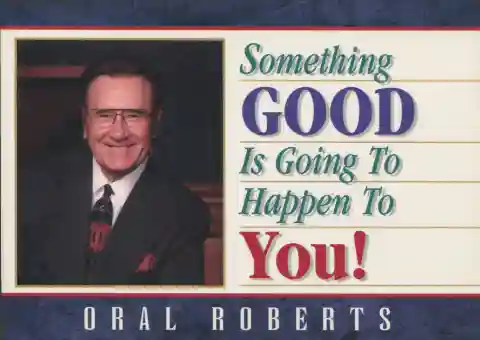

Something Good Is Going To Happen To You Order Printed Copy
- Author: Oral Roberts
- Size: 1.14MB | 136 pages
- |
Others like something good is going to happen to you Features >>



About the Book
"SOMETHING GOOD IS GOING TO HAPPEN TO YOU" by Oral Roberts is a motivational book that encourages readers to have faith, believe in themselves, and expect positive outcomes in their lives. Through personal anecdotes and biblical teachings, Roberts emphasizes the power of positive thinking and the importance of having a positive outlook on life in order to attract blessings and achieve success.
Keith Green
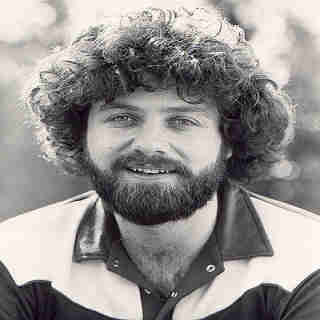 Born on October 21, 1953, in Sheepshead Bay, NY; died on July 28, 1982, in Lindale, TX; married Melody Steiner, 1973; children: Josiah (deceased), Keith, Bethany (deceased), Rebekah. Addresses: Record company--Sparrow Records, P.O. Box 5085, Brentwood, TN 37024. Website--Keith Green Official Website: http://www.lastdaysministries.org.
Known for his uncompromising approach to both his faith and his music, Keith Green has become a legendary figure in Contemporary Christian music since his death in 1982. Taking on the role of a modern-day prophet, he earned a fervent following thanks to his explicit evangelical message and buoyant brand of pop-rock. Green was a critic both of secular society and of commercial tendencies within the Christian community. Since his passing, he has been the subject of several tribute albums and was inducted into the Gospel Music Hall of Fame in 2001.
From early childhood onward, it seemed certain that Green would become a musician. Born in New York, he relocated to the San Fernando Valley area of California with his family not long after. At age eight, he began to perform in stage musicals, appearing in such notable roles as Kurt Von Trapp in a local production of The Sound of Music. In 1965 he published his first song, "The Way I Used to Be," and became the youngest member of the American Society of Composers, Authors, and Publishers. That same year he signed a five-year recording contract with Decca Records and released his first single, "Cheese and Crackers."
Though Green was groomed to be a teenage idol, he never quite achieved success. The late 1960s found him experimenting with drugs and dabbling in various Eastern religions. His life began to turn around after he met (and eventually married) songwriter Melody Steiner in the early 1970s. Under Steiner's guidance, Green began to explore fundamentalist Christianity. Before fully embracing the faith, he began keeping company with singer/songwriters Larry Norman and Randy Stonehill, two of Southern California's best-known Christian rock artists. His skills as a singer and composer began to develop as he edged closer to religious conversion. Finally, in 1975 he became a committed Christian after becoming involved with the Vineyard, a well-known San Fernando Valley church. With a convert's fervor, Green became involved in a series of Christian music projects, including the band Good News and the stage musical Firewind. He also began writing spiritually themed songs, among them "Your Love Broke Through," which went on to become a Christian pop standard recorded by Randy Stonehill, Phil Keaggy, and others.
Dedicating his reawakened creativity to glorifying God, Green founded Last Days Ministries in 1977. He and his followers evangelized to young rock music fans, street people, and others not being reached by conventional churches. At the same time, he made his debut as a Christian recording artist, signing with Sparrow Records and releasing the album For Him Who Has Ears to Hear. This song collection displays the essentials of Green's musical style: exuberant singing, piano-based melodies, and well-crafted pop/rock production. Among the best-known tracks on Green's first album are "You Put This Love in My Heart," "No One Believes Me Anymore," and "Your Love Broke Through." Balancing the warm-hearted testimony of these tunes are some humorous moments, including "No One Believes Me Anymore," a mock lament sung from the Devil's point of view. Overall, For Him Who Has Ears to Hear introduced Green to the Christian music market as a gifted musical evangelist of enormous potential.
As his audience grew, Green made clear that his focus was on spreading Christian teaching rather than providing entertainment. He sought to challenge the assumptions of his fellow believers, criticizing Christians who took their faith for granted. Some compared him with the Old Testament prophet Ezekiel, who decried the loose morals and weak faith of his generation. A number of the songs on Green's 1978 album No Compromise were addressed to the spiritually lazy. Most important among these is "Asleep at the Light," a ringing call for Christian activism sung by Green with palpable emotion. Less intense but still effective is the playful "Dear John (Letter to the Devil)" and the country-tinged "Soften Your Heart." All three of these songs received considerable airplay on Christian music stations.
Green was uneasy in his role as an emerging celebrity. He spoke out against the Christian music industry's increasing tendency to imitate secular show business ways. "Why do we idolize Christian singers and speakers?," he asked in a statement issued through Last Days Ministries. "We go from glorifying musicians in the world, to glorifying Christian musicians. It's all idolatry! ... It's true that there are many men and women of God who are greatly anointed to call down the Spirit of God on His people and the unsaved. But Satan is getting a great victory as we seem to worship these ministers on tapes and records...."
Turning away from the California Christian music scene, Green relocated to Lindale, a small east Texas community, in 1978. In addition to maintaining Last Days Ministries, he decided to launch his own record company, Pretty Good Records. Through this label, he released his next album, So You Wanna Go Back to Egypt, in 1980. This eclectic effort pokes fun at weak-spirited believers in its title track and offers a personal confession of need in "I Want to Be More Like Jesus." The most enduringly popular track proved to be "Oh Lord You're Beautiful," a powerful hymn that became a favorite at Christian worship services. In a bold move, Green announced that So You Wanna Go Back to Egypt would be sold for a variable price, even given away for free to those unable to pay. This decision sent shock waves through the Christian music industry, causing other artists to reconsider their album and concert pricing policies. An estimated 200,000 copies of the album were eventually distributed on a "pay what you can afford" basis.
Unlike some of his Christian music peers, Green showed little desire to dilute his message in hopes of reaching a wider audience. His 1982 album Songs to the Shepherd concentrates on worshipful material, praising the Lord in musical settings ranging from uplifting pop ("You Are the One") to blues-seasoned rock ("O God Our Lord") to old-fashioned country ("Draw Me"). While these songs were little-heard outside the Christian community, they helped fire Green's already-committed audience to a greater level of devotion. Fusing his work as a performer and evangelist, he toured actively during the early 1980s, mixing personal testimonials and heartfelt exhortations in between his musical numbers.
Green's life was cut short just as he began to hit his stride as a musician and minister. On July 28, 1982, he boarded a small Cessna aircraft for a brief sightseeing flight around his property in Lindale. Also on board were his son Josiah and daughter Bethany, along with the pilot and eight other passengers. Overloaded, the plane crashed shortly after takeoff, killing everyone on board. Recovering from her loss, Melody Green decided to carry on with Last Days Ministries and Pretty Good Records. Recordings of her husband's music were released posthumously, beginning with Prodigal Son and Jesus Commands Us to Go in 1983. Though lacking the cohesiveness of the albums released during his lifetime, both these song collections capture Green in strong creative moments. Prodigal Son's dramatic title track is a particular highpoint.
Melody Green continued to guide Last Days Ministries through the coming years and, in 1985, also took on the directorship of Americans against Abortion. Green's musical legacy remained vital as well, with many of his best-known recordings repackaged in compilation albums by Sparrow during the 1980s and 1990s. Multi-artist tribute albums also began to appear, starting with 1992's No Compromise: Remembering the Music of Keith Green. 2001 saw the release of Start Right Here: Remembering the Life of Keith Green, featuring spirited interpretations of his songs by such notable Christian rock acts as MxPx, Joy Electric, and Starflyer 59. Your Love Broke Through: The Worship Songs of Keith Greencontains covers of Green tunes by Michael W. Smith, Twila Paris, Rebecca St. James, and other top-rank Christian pop/rock talents.
On November 27, 2001, Green was inducted into the Gospel Music Hall of Fame. The honor served as an acknowledgment of his continuing influence in Contemporary Christian music some 20 years after his death. Green's intensity and dedication have continued to make him a role model for younger Christian performers, such as Rebecca St. James, who paid tribute to him in a Sparrow Records press biography. "I think what touches me most about him was that he was so committed to loving God and living for Him," she said of Green. "I know he was very strong-willed and people were sometimes offended at what he did and said, but it all came out of a pure motive of trying to be committed to Him in every part of his life. He wasn't going to back down just because of what people thought of him. That, to me, says that he was more focused on pleasing God than on pleasing man, something I think we should all try to focus on."
Keith Green's Career
Began career as child stage actor and composer, early 1960s; signed with Decca, released debut single, "Cheese and Crackers," 1965; began writing Christian songs, mid-1970s; founded Last Days Ministries, released first album, For Him Who Has Ears to Hear, 1977; founded Pretty Good Records, released album So You Wanna Go Back to Egypt, 1980.
Keith Green's Awards
Induction (posthumous), Gospel Music Hall of Fame, 2001.
Famous Works
For Him Who Has Ears To Hear , Sparrow, 1977.
No Compromise , Sparrow, 1978.
So You Wanna Go Back to Egypt , Pretty Good, 1980.
The Keith Green Collection , Sparrow, 1981.
Songs for the Shepherd , Pretty Good, 1982.
The Prodigal Son , Pretty Good, 1983.
Jesus Commands Us to Go , Pretty Good, 1984.
Because of You--Songs of Testimony , Sparrow, 1998.
Here I Am, Send Me--Songs of Evangelism , Sparrow, 1998.
Oh Lord, You're Beautiful--Songs of Worship , Sparrow, 1998.
Make My Life a Prayer to You--Songs of Devotion , Sparrow, 1998.
Born on October 21, 1953, in Sheepshead Bay, NY; died on July 28, 1982, in Lindale, TX; married Melody Steiner, 1973; children: Josiah (deceased), Keith, Bethany (deceased), Rebekah. Addresses: Record company--Sparrow Records, P.O. Box 5085, Brentwood, TN 37024. Website--Keith Green Official Website: http://www.lastdaysministries.org.
Known for his uncompromising approach to both his faith and his music, Keith Green has become a legendary figure in Contemporary Christian music since his death in 1982. Taking on the role of a modern-day prophet, he earned a fervent following thanks to his explicit evangelical message and buoyant brand of pop-rock. Green was a critic both of secular society and of commercial tendencies within the Christian community. Since his passing, he has been the subject of several tribute albums and was inducted into the Gospel Music Hall of Fame in 2001.
From early childhood onward, it seemed certain that Green would become a musician. Born in New York, he relocated to the San Fernando Valley area of California with his family not long after. At age eight, he began to perform in stage musicals, appearing in such notable roles as Kurt Von Trapp in a local production of The Sound of Music. In 1965 he published his first song, "The Way I Used to Be," and became the youngest member of the American Society of Composers, Authors, and Publishers. That same year he signed a five-year recording contract with Decca Records and released his first single, "Cheese and Crackers."
Though Green was groomed to be a teenage idol, he never quite achieved success. The late 1960s found him experimenting with drugs and dabbling in various Eastern religions. His life began to turn around after he met (and eventually married) songwriter Melody Steiner in the early 1970s. Under Steiner's guidance, Green began to explore fundamentalist Christianity. Before fully embracing the faith, he began keeping company with singer/songwriters Larry Norman and Randy Stonehill, two of Southern California's best-known Christian rock artists. His skills as a singer and composer began to develop as he edged closer to religious conversion. Finally, in 1975 he became a committed Christian after becoming involved with the Vineyard, a well-known San Fernando Valley church. With a convert's fervor, Green became involved in a series of Christian music projects, including the band Good News and the stage musical Firewind. He also began writing spiritually themed songs, among them "Your Love Broke Through," which went on to become a Christian pop standard recorded by Randy Stonehill, Phil Keaggy, and others.
Dedicating his reawakened creativity to glorifying God, Green founded Last Days Ministries in 1977. He and his followers evangelized to young rock music fans, street people, and others not being reached by conventional churches. At the same time, he made his debut as a Christian recording artist, signing with Sparrow Records and releasing the album For Him Who Has Ears to Hear. This song collection displays the essentials of Green's musical style: exuberant singing, piano-based melodies, and well-crafted pop/rock production. Among the best-known tracks on Green's first album are "You Put This Love in My Heart," "No One Believes Me Anymore," and "Your Love Broke Through." Balancing the warm-hearted testimony of these tunes are some humorous moments, including "No One Believes Me Anymore," a mock lament sung from the Devil's point of view. Overall, For Him Who Has Ears to Hear introduced Green to the Christian music market as a gifted musical evangelist of enormous potential.
As his audience grew, Green made clear that his focus was on spreading Christian teaching rather than providing entertainment. He sought to challenge the assumptions of his fellow believers, criticizing Christians who took their faith for granted. Some compared him with the Old Testament prophet Ezekiel, who decried the loose morals and weak faith of his generation. A number of the songs on Green's 1978 album No Compromise were addressed to the spiritually lazy. Most important among these is "Asleep at the Light," a ringing call for Christian activism sung by Green with palpable emotion. Less intense but still effective is the playful "Dear John (Letter to the Devil)" and the country-tinged "Soften Your Heart." All three of these songs received considerable airplay on Christian music stations.
Green was uneasy in his role as an emerging celebrity. He spoke out against the Christian music industry's increasing tendency to imitate secular show business ways. "Why do we idolize Christian singers and speakers?," he asked in a statement issued through Last Days Ministries. "We go from glorifying musicians in the world, to glorifying Christian musicians. It's all idolatry! ... It's true that there are many men and women of God who are greatly anointed to call down the Spirit of God on His people and the unsaved. But Satan is getting a great victory as we seem to worship these ministers on tapes and records...."
Turning away from the California Christian music scene, Green relocated to Lindale, a small east Texas community, in 1978. In addition to maintaining Last Days Ministries, he decided to launch his own record company, Pretty Good Records. Through this label, he released his next album, So You Wanna Go Back to Egypt, in 1980. This eclectic effort pokes fun at weak-spirited believers in its title track and offers a personal confession of need in "I Want to Be More Like Jesus." The most enduringly popular track proved to be "Oh Lord You're Beautiful," a powerful hymn that became a favorite at Christian worship services. In a bold move, Green announced that So You Wanna Go Back to Egypt would be sold for a variable price, even given away for free to those unable to pay. This decision sent shock waves through the Christian music industry, causing other artists to reconsider their album and concert pricing policies. An estimated 200,000 copies of the album were eventually distributed on a "pay what you can afford" basis.
Unlike some of his Christian music peers, Green showed little desire to dilute his message in hopes of reaching a wider audience. His 1982 album Songs to the Shepherd concentrates on worshipful material, praising the Lord in musical settings ranging from uplifting pop ("You Are the One") to blues-seasoned rock ("O God Our Lord") to old-fashioned country ("Draw Me"). While these songs were little-heard outside the Christian community, they helped fire Green's already-committed audience to a greater level of devotion. Fusing his work as a performer and evangelist, he toured actively during the early 1980s, mixing personal testimonials and heartfelt exhortations in between his musical numbers.
Green's life was cut short just as he began to hit his stride as a musician and minister. On July 28, 1982, he boarded a small Cessna aircraft for a brief sightseeing flight around his property in Lindale. Also on board were his son Josiah and daughter Bethany, along with the pilot and eight other passengers. Overloaded, the plane crashed shortly after takeoff, killing everyone on board. Recovering from her loss, Melody Green decided to carry on with Last Days Ministries and Pretty Good Records. Recordings of her husband's music were released posthumously, beginning with Prodigal Son and Jesus Commands Us to Go in 1983. Though lacking the cohesiveness of the albums released during his lifetime, both these song collections capture Green in strong creative moments. Prodigal Son's dramatic title track is a particular highpoint.
Melody Green continued to guide Last Days Ministries through the coming years and, in 1985, also took on the directorship of Americans against Abortion. Green's musical legacy remained vital as well, with many of his best-known recordings repackaged in compilation albums by Sparrow during the 1980s and 1990s. Multi-artist tribute albums also began to appear, starting with 1992's No Compromise: Remembering the Music of Keith Green. 2001 saw the release of Start Right Here: Remembering the Life of Keith Green, featuring spirited interpretations of his songs by such notable Christian rock acts as MxPx, Joy Electric, and Starflyer 59. Your Love Broke Through: The Worship Songs of Keith Greencontains covers of Green tunes by Michael W. Smith, Twila Paris, Rebecca St. James, and other top-rank Christian pop/rock talents.
On November 27, 2001, Green was inducted into the Gospel Music Hall of Fame. The honor served as an acknowledgment of his continuing influence in Contemporary Christian music some 20 years after his death. Green's intensity and dedication have continued to make him a role model for younger Christian performers, such as Rebecca St. James, who paid tribute to him in a Sparrow Records press biography. "I think what touches me most about him was that he was so committed to loving God and living for Him," she said of Green. "I know he was very strong-willed and people were sometimes offended at what he did and said, but it all came out of a pure motive of trying to be committed to Him in every part of his life. He wasn't going to back down just because of what people thought of him. That, to me, says that he was more focused on pleasing God than on pleasing man, something I think we should all try to focus on."
Keith Green's Career
Began career as child stage actor and composer, early 1960s; signed with Decca, released debut single, "Cheese and Crackers," 1965; began writing Christian songs, mid-1970s; founded Last Days Ministries, released first album, For Him Who Has Ears to Hear, 1977; founded Pretty Good Records, released album So You Wanna Go Back to Egypt, 1980.
Keith Green's Awards
Induction (posthumous), Gospel Music Hall of Fame, 2001.
Famous Works
For Him Who Has Ears To Hear , Sparrow, 1977.
No Compromise , Sparrow, 1978.
So You Wanna Go Back to Egypt , Pretty Good, 1980.
The Keith Green Collection , Sparrow, 1981.
Songs for the Shepherd , Pretty Good, 1982.
The Prodigal Son , Pretty Good, 1983.
Jesus Commands Us to Go , Pretty Good, 1984.
Because of You--Songs of Testimony , Sparrow, 1998.
Here I Am, Send Me--Songs of Evangelism , Sparrow, 1998.
Oh Lord, You're Beautiful--Songs of Worship , Sparrow, 1998.
Make My Life a Prayer to You--Songs of Devotion , Sparrow, 1998.
Too Afraid to Say Nothing
On a steamy Saturday in July, I dropped off our son at a local community college to take the ACT. Earlier that morning, before leaving the house, we paused for prayer. I knew how nervous he was, how much he hates a timed test. I remembered my own anxiety and apprehension as a high schooler, realizing that part of your future rests on a few hours in a room full of strangers. So, I prayed for him not to be afraid. Fear is a curious and powerful emotion. It can debilitate. Fear can stop our mind, shut our mouth, and stay our hand. Yet fear can also set us into action. As much as fear keeps us from taking risks and being effective, fear can also be an incredible motivator. In a way, fear is what’s made our son an excellent student thus far. It’s what kept him up studying late at night, and it’s why he willingly walked into that testing room. The right kind of fear is also one of the best motivators for our evangelism. Fear That Freezes Evangelism When it comes to evangelism, Christians tend to view fear as purely negative. Many of us have come to believe that fear is the primary factor that keeps us from speaking the gospel to others. Fear freezes us. When we sense the Spirit leading us to talk with our neighbor, friend, or family member, we get the same feeling that many of us experienced on a Friday algebra exam. We struggle to focus. Our hands perspire. We don’t even know where to begin. Some of that physical response comes from a fear of failure. Like when taking a test, we don’t want to mess up. We don’t want to give someone the wrong answer. So, churches often respond by providing evangelism training. Education is the solution. We help people prepare, supply them with resources, and even give them, as it were, the opportunity for practice tests. And this information is truly important. We must be able to proclaim the gospel clearly and truthfully. Such an approach in evangelism training, however, might assume that the way we address fear in evangelism is primarily through increasing our accuracy and ability. But I’m not convinced, because I believe the fear that freezes us would more accurately be labeled as shame (Luke 12:8–9; 2 Timothy 1:8–12). The Fear of Rejection I suspect the greatest hindrance to bold witness is not the fear of getting it wrong; it’s the fear of being rejected. We don’t want to be ostracized or shunned. We don’t want our friends to think we’re narrow-minded, unscientific, bigoted, intolerant, or just uncool. If we’re honest, we’re often too embarrassed to evangelize. We’re ashamed of Christ. Education will never overcome that kind of fear. Instead, we need to encourage bold witness by dealing with the emotional and social dynamics of shame. Shame’s power is its ability to disgrace and divide. Shame humiliates and separates from others. Which means the antidote to shame is glory and community — and we find those in the gospel. The good news of Jesus promises us both honor and a home (Matthew 10:32; John 14:1–3). Only when Christians recognize this will they be able to overcome the shame that silences their witness. Because they’ll be more confident in the praise and glory that God himself promises them on the final day (1 Peter 1:7; Romans 2:7). They’ll fear rejection less, because they’ll have experienced the welcome of Christian fellowship, the earthly foretaste of the heavenly home that God gives his chosen exiles. Fear That Fuels Evangelism Realizing the social and emotional dynamics of fear can also help us see how it can be a positive motivator for mission. In recent years, there’s been such an experiential increase in a particular kind of fear that the phenomenon has been given a pop-culture label: FOMO — the fear of missing out. FOMO is understood as people’s anxiety, largely fueled by viewing social media, that they’ll miss out on some exciting event, important relationship, or salacious news. But this particular fear doesn’t generally stifle people. It drives them to constantly check their phones. It leads them to follow more people, make more friends, be more active. Now, I’m not suggesting that FOMO leads to positive or healthy behavior. What is helpful to see, though, is how fear can powerfully move us into action. If we experience a fear similar to FOMO with regard to evangelism, we can see how it could lead us to pursue our neighbors and open our mouths with the gospel. Once we have tasted of God’s goodness in the gospel, we will want others to experience the same. We will fear them missing out on the glories of heaven, the wonders of Christ, and the most spectacular news of all. Such fear is not antithetical to love; it’s a demonstration of Christ’s compassion for them (2 Corinthians 5:14). But there’s more to understanding how fear should fuel our evangelism. Jesus said, “Whoever is ashamed of me and of my words, of him will the Son of Man be ashamed when he comes in his glory and the glory of the Father and of the holy angels” (Luke 9:26). There it is. The solution to the shame that silences our witness is our fear of missing out on glory and honor with the heavenly host. If we are embarrassed of Christ and his gospel, if we avoid evangelism as a way to protect our reputation and maintain our relationships, we will lose the honor he promises. We will miss out on the community of glory, with the Father and all his holy angels. More Fear, Not Less This means that fear is not the greatest hindrance to evangelism. Our lack of fear is. Instead of being ashamed before others, we need to be concerned about being ashamed before Christ at his coming (1 John 2:28). Instead of fearing what others will say about us or do to us, we need to fear God, the one “who can destroy both soul and body in hell” (Matthew 10:28). Shame isn’t purely negative. “Knowing the fear of the Lord, we persuade others” (2 Corinthians 5:11). Fear can be a positive force. My son realized that taking the ACT is the means to college admission, a potential scholarship, and a future career. The results also have a profound emotional and social dimension — just wait until the scores come back! He knows the stakes are high. But recognizing the weight can be a motivating factor, and not necessarily a debilitating one. So it can be for us. As we grow in an appropriate fear of God and for others’ eternal well-being, we will be moved to speak the gospel with more urgency and care. And as we sense the honor and home that God promises us in Christ, we will fear less the humiliation and rejection of others. We will not be ashamed of the gospel. Article by Elliot Clark