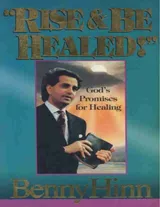

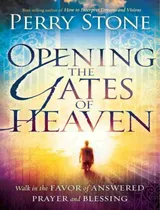
Others like shaking the heavens Features >>
About the Book
"Shaking The Heavens" by Ana Mendez is a spiritual guide that explores the power of prayer and fasting in breaking through spiritual barriers and bringing about radical transformation in individuals and nations. Mendez shares personal experiences and biblical principles to encourage readers to engage in spiritual warfare and reach new levels of intimacy with God. The book emphasizes the importance of perseverance, faith, and obedience in shaking the heavens and seeing God's kingdom manifest on earth.
Steven Curtis Chapman
Steven Curtis Chapman is an American Christian musician, singer, song writer, record producer, actor, author and social activist. He is the only artist in the history of music to have won 56 Gospel Music Association Dove Awards and is also a proud receiver of 5 Grammy Awards. His music is known for being a unique cross between country music, soft rock and orchestrated pop, which made him a prominent artist in the contemporary Christian music circuit of the 1980s. Chapman grew up in a humble environment where he found his calling for music, owing to his fatherâs inclination towards country music. He learnt to play instruments like guitar and piano just by hanging around in his fatherâs music store, listening to him play along with his friends. He took up music seriously when he moved to Nashville and got recognized by Sparrow Records, a company he stayed with for a long period in his career. He has released 19 studio albums and has sold over 10 million albums until now. Chapman is a family oriented person just like his father and has a big family comprising of his wife Mary Beth and 3 biological and 2 adopted children. He is a vocal advocate for adoption and has worked socially to eradicate the problem of youth violence.
Childhood & Early Life
Steven Curtis Chapman was born on November 21, 1962 in Paducah, Kentucky, to Herb and Judy Chapman. His father was a country singer and songwriter, who turned down opportunities to become a successful singer to concentrate on his family. His mother was a stay-at-home mom.
His father owned a music store, a business he managed from his basement and used to play music with his friends. Such creative environment at home influenced Chapmanâs life from very early on and he bought his first guitar at 6.
Chapman joined as a pre-med student at Georgetown College in Kentucky but after few semesters he moved to Anderson College, Indiana. But he ultimately dropped the idea of studying and went to Nashville to pursue his first love, music.
During 1980s, he wrote a song âBuilt to Lastâ, which gained huge popularity after getting recorded by a gospel group âThe Imperialsâ. The success of the song fetched Chapman a songwriting deal with Sparrow Records.
Career
Chapmanâs first official album âFirst Handâ was released in 1987. The album was an instant hit with singles like âWeak Daysâ and topped at number 2 on the Contemporary Christian Music chart. The album had a mix of country music with soft rock and pop.
In 1988, following the success of his first album, Chapman released âReal Life Conversationsâ. Its hit single âHis Eyesâ received the âContemporary Recorded Song of the Yearâ award from the âGospel Music Associationâ. He co-wrote it with James Isaac Elliot.
After a few years, he made a swift turn to mainstream music with his album âThe Great Adventureâ in 1992. It earned him two Grammy awards for the album and for the title song of the album.
After gaining consistent success with albums like âHeaven in the Real World (1994), âSigns of Life (1996) and âSpeechless (1999), Chapmanâs next great album âDeclarationâ came out in 2001, for which he toured 70 cities.
In 2003, âAll About Loveâ was released and it ranked at Top 15 on the Christian Music charts. It was released under Sparrow Records and Chapman very humbly credited his wife Mary Beth for being the inspiration for his album.
âAll Things Newâ was released in 2004 and the album added another Grammy to Chapmanâs proud award collection. This time he received it in the category of Best Pop/Contemporary Gospel Album. It was also nominated for the Dove Award.
In 2005, âAll I Really Want for Christmasâ was released, which was Chapmanâs another successful Christmas album after âThe Music of Christmasâ. It had traditional holiday tunes and favorites like âGo Tell It on the Mountainâ and Silver Bellsâ.
Chapman took his music to greater levels by taking his concert to South Korea for the U.S. troops who were serving there in 2006. It was the first Christian concert that ever performed for the American army in that country.
In 2007, he released âThis Momentâ which included hit singles like âCinderellaâ, for which he was chosen for WOW Hits 2009. He also went on his âWinter Jamâ tour and took his sonsâ, Caleb and Willâs band along.
âBeauty Will Riseâ, Chapmanâs seventeenth album, was released in 2009. It is said that he wrote the songs of the album after getting inspired by his daughter Maria Sueâs sad and untimely demise. It included songs like âMeant to Beâ and âRe:creationâ.
In 2012, Chapman finally parted ways with Sparrow Records, the record company that he remained loyal to for so many years. He was signed on by Sonyâs Provident Label Group and came out with a Christmas album called âJOYâ.
âThe Glorious Unfoldingâ was released in 2013 under Reunion Records and it peaked on number 27 on the Billboard 200 and was number 1 Top Christian Album. The album was produced by Chapman himself and Brent Milligan.
Major Works
Chapmanâs âThe Great Adventureâ in 1992 was a turning point in his musical career because until now he was making soft and contemporary country music but with âThe Great Adventureâ he targeted the mainstream audience and tasted huge commercial success for the first time.
Awards & Achievements
Chapman is the winner of five Grammy awards for albums like âFor the Sake of the Callâ âThe Great Adventureâ âThe Live Adventureâ, âSpeechlessâ and âAll Things Newâ. He has also received 56 Gospel Music Association Dove Awards, more than any other artist.
Personal Life & Legacy
Chapman got married to Mary Beth in 1984 after they first met at Anderson University in Indiana. They have three biological children: Emily, Caleb and Will and three adopted children: Shaohannah, Stevey and Maria, together.
In 2008, Chapmanâs youngest son Will ran over his car by accident on his adopted daughter Maria Sue Chunxi Chapman. She was running towards him to meet him but he did not see her and she was pronounced dead on arrival at the hospital.
Trivia
Chapmanâs wife Mary Beth Chapman has written and released a book about losing her youngest daughter called âChoosing to SEE: A Journey of Struggle and Hopeâ.
Chapman and his wife have written three children's books with adoption themes: âShaoey And Dot: Bug Meets Bundleâ (2004), âShaoey and Dot: The Christmas Miracleâ (2005), and âShaoey and Dot: A Thunder and Lightning Bug Storyâ (2006).
He has received an Honorary Doctorate of Music from Anderson University.
âhappy wife, happy lifeâ - and other misleading advice to young husbands
The title read, âHow Do I Get My Husband to Be Less Passive?â Click. The author, a wife and clinical psychologist, addressed the common complaint that women of various ages bring to her: their husbands lacked passion for anything but the couch and the screen. These wives wanted to know how to get their men to do something other than stare at the television, laptop, or smartphone, and how to get them to initiate something other than physical intimacy. They wanted their men to plan dates, start conversations, play with the kids, stand up for themselves (at work) and for their wife (with the in-laws), or to show concern for daily decisions. The manly intentionality that had pursued these women during dating had dwindled in marriage. Age-Old Problem The complaint, of course, is nothing new. Paradise was lost when the first man took the easy path of appeasement in his marriage. The serpent hissed lies in her ear; he stood silently by. Instead of an uncomfortable moment with his wife, and then crushing the skull of her deceiver, he watched as she took a bite. Compromise bore twins, and he ate too (Genesis 3:6). âLasting joy in our marriages is found in living out the drama of Christ and his bride, not Adam and his.â And we see Adamâs passivity echoed in countless marriages today. The temptation to be emotionally and spiritually absent, when physically present, has merely changed hairstyles over time. The same unmanly repose still beckons men to recline in the passengerâs seat. God calls out to husbands today with the same question he asked in the garden: âAdam, where are you?â And where are we? Too often giving into the scheme that affords less responsibility and more opportunity to watch the game. Masculinity that leads through loving sacrifice  can feel like an endangered species. And some of the mantras given to me as a newly married man may have hurt, instead of helped, my enlistment into the active-duty husbandry put on display in Jesus Christ. Consider four naive, and easily misunderstood, words of counsel given to new husbands, even from well-meaning Christian brothers. âHappy Wife, Happy Lifeâ The advice could be redeemable. The husband should lavish his queen with love, finding a great deal of his joy in hers. And one could say it from an eternal perspective: Happy wife (in the Lord), happy life. But what is most often meant by this phrase cannot be missed: a manâs life is less miserable when his woman gets her way. Such deferment is tempting: no conflict, no unhappy bride, no blame. Just letting her have her way is much more comfortable than making unpopular decisions on weighty matters, that you think (and pray) are spiritually best for her and your family: Whether they be where your children go to school, what church you join, where you live next, when to have children, or countless difficult choices that require spiritual energy, courage, and faith. But Christ created men to initiate and bear responsibility. His glory is to sacrifice. His mission is to lead his wife and his family from the front, on his knees. Although his charge includes the flourishing of the wife, the health of our leadership does not depend solely upon the daily undulations of our brideâs earthly happiness, but on the consistency with which we obey our Master. You can have a happy, governing wife resulting in a shallow, resistance-free life, and end up with an unhappy Lord. In the end, a nearsighted âhappy wife, happy lifeâ mentality throws the toys in the closet to go outside and play. Happy wife, easier life  does not lead to happiness, but to a closet full of regret, bitterness, and selfishness, which we all must open eventually. It backfires on us, leaving even a growing number of unbelievers wondering how to get their men to be less passive. Lasting joy in our marriages is found in living out the drama of Christ and his bride, not Adam and his. âYour Spouse Is Your Best Friendâ âYou can have a happy, governing wife resulting in a shallow, resistance-free life, and end up with an unhappy Lord.â She is not just your BFF because marriage is not simply friendship . It isnât a symmetrical partnership in which the relational patterns are interchangeable. The elegance of the dance consists in the man leading assertively, lovingly, thoughtfully, and the woman following fearlessly, receptively, joyfully â which is much more than mere friendship. The dance is improper when the husband attempts to follow. Now, if we mean that she is the one person with whom you confide most, the one earthly person you treasure most, the one person with whom a day spent doing menial tasks is anything but wasted, then, yes, this is a glory. But our marriages are more than a flat partnership. The glory of a spouse is more than the glory of a friend. The miraculous event of God joining husband and wife together in a bond that none can break is a rose not to be hidden, even in the beautiful tulip-garden of friendship. The marriage drama enacts that of the Great Romance. This flower, by any other name, must smell distinctly sweet. To ballet is not to waltz. The moon is not the sun. The companion is not the spouse. âBe a Servant Leaderâ For sure, an aspect of this is incredibly right: Jesus came not to be served but to serve and give his life for many (Mark 10:45). That the husband should be like Jesus in such self-giving sacrifice is without question or asterisk. Being a servant leader is  great advice â when both words are kept together. Often, however, they are not. The paradox of servant leader  devolves, in some minds, into merely meaning servant : You sacrifice your convictions for any and all of her ambitions. You take on her calling, not because of exceptional circumstance but only because you wanted to lay your aspirations down for hers. You coddle her, never asking her to do anything that she does not already want to do â even if you think it best for her ultimate joy in the Lord. The good-intentioned servant (non)leader, in an honest attempt to love and serve his wife well, abdicates to a kind of service that undermines his call to be a husband and bear responsibility, take initiative, and feel the burden of the hardest decisions. I prefer sacrificial  leadership instead: âHusbands, love your wives, as Christ loved the church and gave himself up  for herâ (Ephesians 5:25). It is a leadership that, while not relinquishing its responsibility or apologizing for its authority, sees leadership as a calling to inconvenience self first for the good of oneâs family and neighbor. âMarriage Is 50/50â Marriage, for the man especially, is not 50/50. Manhood doesnât require her to scratch your back before youâll scratch hers. Headship doesnât keep score. You donât go so far, and no farther, until she catches up. You donât limit your patience, kindness, gentleness, and goodness until she matches. A husbandâs love doesnât bear all things, believe all things, hope all things, endure all things only half the time . Husbands donât wait for reciprocation to initiate. âThe marriage drama enacts that of the Great Romance. This flower, by any other name, must smell distinctly sweet.â Jesus didnât wait for his bride to meet him halfway. His spouse didnât take half of the scourging or half of the cross. He, manly he, sacrificed all for her well-being â while she was yet a sinner. He gave all his life for hers. Nothing 50/50 about it. And sacrificial leadership is so happy in this love of Christ that we lay down our lives like he did â even when she isnât âholding up her end of things.â Husbands, love your wives as Christ loved the church.  We do not bring home the paycheck and expect the wife to pick up the remaining fifty percent of the relational tab with the kids. Marriages that start 50/50, often end 50/50 â splitting half of oneâs assets in divorce. Play the Man You Are âWhy did you wish me milder? Would you have me false to my nature? Rather say I, play the man I am.â âCoriolanus Our feminist-influenced, Bible-ignoring, headship-shaming society wishes real men to be milder. They wish you passive. They wish you silent. But God entrusts you to speak, to sacrifice, to crush serpents. He calls you to be true to your nature â the one he gave you â and play the man that you are. And that man is not timid, not unassertive, not feeble in the faith: âBe watchful, stand firm in the faith, act like men , be strongâ (1 Corinthians 16:13). It cannot be asked of that man, âHow can I get my husband to be less passive?â That man, as C.S. Lewis depicts, goes into battle first and retreats last. He, for truthâs and honorâs sake, âstands fast and suffers long.â God calls you to increasingly be this man, and provides the strength for you to be him when you feel weak. Stand upright, then, be strong, after the true strength and example of Jesus Christ. For your King, your wife, and your future kin.