.webp)

Others like sex is not the problem (lust is) Features >>







About the Book
In his book "Sex is Not the Problem (Lust is)," author Joshua Harris explores the damaging effects of lust on relationships and offers practical advice on how to overcome it. He emphasizes the importance of understanding the difference between healthy sexuality and destructive lust, urging readers to seek true intimacy and connection rather than fleeting pleasures. Harris encourages readers to cultivate self-discipline, accountability, and a strong relationship with God to overcome lust and experience fulfillment in their relationships.
Oral Roberts
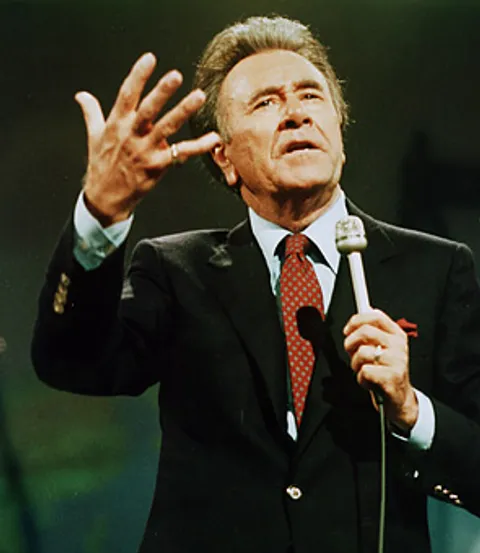 Granville Oral Roberts was born January 24, 1918 in Pontotoc County, near Ada, in Oklahoma. His parents were deeply religious. His father was a farmer who also preached the gospel and established Pentecostal Holiness churches. His mother regularly prayed for the sick and led people to Christ. While she was still pregnant, Robert's mother committed Oral to God's service. Even though Oral had a very strong stutter his mother would tell him that one day God would heal his tongue and he would speak to multitudes.
The Roberts family was desperately poor. When Roberts was 16 he moved away from home, hoping for a better life. He rejected God and his upbringing. He started living a wild life and his health collapsed. Roberts had contracted tuberculosis. He returned home and eventually dropped to 120 pounds. He was a walking skeleton. God spoke to his older sister, Jewel, and told her that He was going to heal Oral. During this same time Oral turned his heart back to God and gave his life to Christ. A traveling healing evangelist named George Moncey came to Ada and held meetings in a tent. Oral's elder brother was touched when he saw friends of his healed in the meeting. He decided that he should get Oral and bring him to be healed. On the way to the meeting God spoke to Oral and said "Son, I'm going to heal you and you are to take my healing power to your generation. You are to build me a University and build it on My authority and the Holy Spirit." Once at the meeting Oral waited until the very end. He was too sick to get up and receive prayer, and so had to wait for Moncey to come to him. At 11:00 at night his parents lifted him so he could stand. When Moncey prayed for him the power of God hit him and he was instantly healed. Not only that but every bit of his stutter was gone!
After Roberts was healed he began to travel the evangelistic circuit. He met and married Evelyn Lutman, a school teacher from the same Holiness Pentecostal background as Roberts. They had their first child Rebecca and then the entire family began traveling as ministers. In 1942 they left the evangelistic field for a while and Roberts became a pastor. He also returned to college to further his education. While a pastor he prayed for a church member whose foot was crushed. The foot was instantly healed. God continued to speak to Roberts about his call to the multitudes. God called him to an unusual fast. Roberts was to read the four gospels and the book of Acts three times consecutively, while on his knees, for thirty days. God began to reveal Jesus as the healer in a new way. God also began to give Roberts dreams where he would see people's needs as God saw them. God called him to hold a healing meeting in his town. A woman was dramatically healed, several people were saved and Roberts' ministry changed overnight.
Roberts resigned his church in 1947 and began an itinerant ministry. Notable healings began to occur. One man tried to shoot Roberts. God used the story to bring him media attention, which expanded his ministry very quickly. Roberts felt called to purchase a tent and take his evangelistic ministry to larger cities. His first tent held 3,000 but he quickly exchanged it for a tent that held 12,000. In July 1948 The Oral Roberts Evangelistic Association was established. Oral began traveling continuously throughout the United States. Like many of his Pentecostal brethren Roberts held inter-racial meetings. This brought him a lot of negative attention from groups who didn't like his stand. He even received death threats for not holding segregated meetings. In 1956 Roberts was invited to Australia. He held meetings in Sydney and Melbourne. In Melbourne there were outright physical attacks and destructive gangs. He was literally driven out of the city for praying for the sick. Often when people discuss the healing revival of the 1950s Oral Roberts and William Branham are listed as the most widely recognized leaders of the movement. Others came along side and many emulated them, but they were the most widely recognized personalities.
Roberts was a man who understood and used the media for his benefit. Roberts began publishing a magazine almost immediately upon starting his ministry. He grasped the power of radio and television. In 1954 Roberts began filming his crusades. He began playing his sermons on radio and then airing the crusade tapes during evening television prime time. Unfortunately there is some evidence that healing meetings were scripted ahead of time, and not all healings were genuine. People began writing to the Ministry headquarters by the thousands. They were accepting Christ as their savior after seeing a person healed on TV. By 1957 the ministry was receiving 1,000 letters a day and he was getting thousands of phone calls. He established a round the clock prayer team to answer calls and pray for people who contacted the ministry. In 1957 Roberts claimed 1,000,000 salvations. Between 1947 and 1968 Roberts conducted over 300 major Crusades. Money was flowing into the organization at an unprecedented rate.
In the late 1950s the healing movement was waning and ministries were under attack for their lack of financial accountability. Roberts began to move on the vision God gave him to build a University. It was chartered in 1963 and became open to students in 1965. Roberts was having a significant national impact in the late 1950s and early 1960s. For several years his named appeared in the Top 100 list of the nation's most respected people. Although Roberts continued to hold healing meetings his focus shifted to the University and the television programs.
The 1970s and 80s brought many crises to the Roberts family. Their daughter Rebecca and son-in-law Marshall were killed in a plane crash. Their son Ronnie struggled with depression after serving in Vietnam and also declaring himself gay. He grew despondent after losing his job and committed suicide. Richard Roberts got a divorce. After Richard remarried he and his wife lost a new born son within two days. Roberts began teaching a doctrine of "seed faith" where he claimed that if you gave to his ministry then God would pay you back in multiplied ways. The television ministry received heavy criticism for the constant requests for money. The Roberts were living an extravagance lifestyle while many of their supporters were not wealthy. Financial questions were raised in how Roberts used University endowment funds to purchase personal homes and cars.
In 1977 Roberts had a vision to build a hospital where people not only received care but received healing prayer. It was to be called City of Faith. Roberts put his heart and soul into the project, believing that God would build it as He had the University. The hospital struggled along and Roberts called his followers to give to the project, believing he had a vision from God to raise the money. Roberts even claimed twice that if money didn't come in that Jesus would "take him home." The hospital was built, but never succeeded financially, and finally closed in 1989. Financial giving was plummeting for both the Oral Roberts Evangelistic Association and Oral Roberts University.
Roberts retired in 1993, at the age of 75. Roberts, with his wife Evelyn, moved to California to live near the coast. Evelyn died in May 2005. Although Roberts influence waned after the problems of the 1970s and 1980s, he was still recognized for his pioneering work on the "sawdust trail", television evangelism, and building a Christian University. He often appeared on religious broadcasting networks as a recognized leader in the healing movement of the last half century. He died December 15, 2009 at the age of 91.
Oral Roberts' legacy is a mixed one. Roberts brought the truth of God's healing to the public in a way that few others accomplished in his lifetime. His financial and personal issues and increasingly extravagant claims eventually brought his ministry into disrepute. The University he established continued to have financial crises under the leadership of his son Richard Roberts. It was only after Richard stepped down in 2009 and new leadership took over the University that it stabilized financially. The University is no longer connected to the Oral Roberts Evangelistic Association.
Granville Oral Roberts was born January 24, 1918 in Pontotoc County, near Ada, in Oklahoma. His parents were deeply religious. His father was a farmer who also preached the gospel and established Pentecostal Holiness churches. His mother regularly prayed for the sick and led people to Christ. While she was still pregnant, Robert's mother committed Oral to God's service. Even though Oral had a very strong stutter his mother would tell him that one day God would heal his tongue and he would speak to multitudes.
The Roberts family was desperately poor. When Roberts was 16 he moved away from home, hoping for a better life. He rejected God and his upbringing. He started living a wild life and his health collapsed. Roberts had contracted tuberculosis. He returned home and eventually dropped to 120 pounds. He was a walking skeleton. God spoke to his older sister, Jewel, and told her that He was going to heal Oral. During this same time Oral turned his heart back to God and gave his life to Christ. A traveling healing evangelist named George Moncey came to Ada and held meetings in a tent. Oral's elder brother was touched when he saw friends of his healed in the meeting. He decided that he should get Oral and bring him to be healed. On the way to the meeting God spoke to Oral and said "Son, I'm going to heal you and you are to take my healing power to your generation. You are to build me a University and build it on My authority and the Holy Spirit." Once at the meeting Oral waited until the very end. He was too sick to get up and receive prayer, and so had to wait for Moncey to come to him. At 11:00 at night his parents lifted him so he could stand. When Moncey prayed for him the power of God hit him and he was instantly healed. Not only that but every bit of his stutter was gone!
After Roberts was healed he began to travel the evangelistic circuit. He met and married Evelyn Lutman, a school teacher from the same Holiness Pentecostal background as Roberts. They had their first child Rebecca and then the entire family began traveling as ministers. In 1942 they left the evangelistic field for a while and Roberts became a pastor. He also returned to college to further his education. While a pastor he prayed for a church member whose foot was crushed. The foot was instantly healed. God continued to speak to Roberts about his call to the multitudes. God called him to an unusual fast. Roberts was to read the four gospels and the book of Acts three times consecutively, while on his knees, for thirty days. God began to reveal Jesus as the healer in a new way. God also began to give Roberts dreams where he would see people's needs as God saw them. God called him to hold a healing meeting in his town. A woman was dramatically healed, several people were saved and Roberts' ministry changed overnight.
Roberts resigned his church in 1947 and began an itinerant ministry. Notable healings began to occur. One man tried to shoot Roberts. God used the story to bring him media attention, which expanded his ministry very quickly. Roberts felt called to purchase a tent and take his evangelistic ministry to larger cities. His first tent held 3,000 but he quickly exchanged it for a tent that held 12,000. In July 1948 The Oral Roberts Evangelistic Association was established. Oral began traveling continuously throughout the United States. Like many of his Pentecostal brethren Roberts held inter-racial meetings. This brought him a lot of negative attention from groups who didn't like his stand. He even received death threats for not holding segregated meetings. In 1956 Roberts was invited to Australia. He held meetings in Sydney and Melbourne. In Melbourne there were outright physical attacks and destructive gangs. He was literally driven out of the city for praying for the sick. Often when people discuss the healing revival of the 1950s Oral Roberts and William Branham are listed as the most widely recognized leaders of the movement. Others came along side and many emulated them, but they were the most widely recognized personalities.
Roberts was a man who understood and used the media for his benefit. Roberts began publishing a magazine almost immediately upon starting his ministry. He grasped the power of radio and television. In 1954 Roberts began filming his crusades. He began playing his sermons on radio and then airing the crusade tapes during evening television prime time. Unfortunately there is some evidence that healing meetings were scripted ahead of time, and not all healings were genuine. People began writing to the Ministry headquarters by the thousands. They were accepting Christ as their savior after seeing a person healed on TV. By 1957 the ministry was receiving 1,000 letters a day and he was getting thousands of phone calls. He established a round the clock prayer team to answer calls and pray for people who contacted the ministry. In 1957 Roberts claimed 1,000,000 salvations. Between 1947 and 1968 Roberts conducted over 300 major Crusades. Money was flowing into the organization at an unprecedented rate.
In the late 1950s the healing movement was waning and ministries were under attack for their lack of financial accountability. Roberts began to move on the vision God gave him to build a University. It was chartered in 1963 and became open to students in 1965. Roberts was having a significant national impact in the late 1950s and early 1960s. For several years his named appeared in the Top 100 list of the nation's most respected people. Although Roberts continued to hold healing meetings his focus shifted to the University and the television programs.
The 1970s and 80s brought many crises to the Roberts family. Their daughter Rebecca and son-in-law Marshall were killed in a plane crash. Their son Ronnie struggled with depression after serving in Vietnam and also declaring himself gay. He grew despondent after losing his job and committed suicide. Richard Roberts got a divorce. After Richard remarried he and his wife lost a new born son within two days. Roberts began teaching a doctrine of "seed faith" where he claimed that if you gave to his ministry then God would pay you back in multiplied ways. The television ministry received heavy criticism for the constant requests for money. The Roberts were living an extravagance lifestyle while many of their supporters were not wealthy. Financial questions were raised in how Roberts used University endowment funds to purchase personal homes and cars.
In 1977 Roberts had a vision to build a hospital where people not only received care but received healing prayer. It was to be called City of Faith. Roberts put his heart and soul into the project, believing that God would build it as He had the University. The hospital struggled along and Roberts called his followers to give to the project, believing he had a vision from God to raise the money. Roberts even claimed twice that if money didn't come in that Jesus would "take him home." The hospital was built, but never succeeded financially, and finally closed in 1989. Financial giving was plummeting for both the Oral Roberts Evangelistic Association and Oral Roberts University.
Roberts retired in 1993, at the age of 75. Roberts, with his wife Evelyn, moved to California to live near the coast. Evelyn died in May 2005. Although Roberts influence waned after the problems of the 1970s and 1980s, he was still recognized for his pioneering work on the "sawdust trail", television evangelism, and building a Christian University. He often appeared on religious broadcasting networks as a recognized leader in the healing movement of the last half century. He died December 15, 2009 at the age of 91.
Oral Roberts' legacy is a mixed one. Roberts brought the truth of God's healing to the public in a way that few others accomplished in his lifetime. His financial and personal issues and increasingly extravagant claims eventually brought his ministry into disrepute. The University he established continued to have financial crises under the leadership of his son Richard Roberts. It was only after Richard stepped down in 2009 and new leadership took over the University that it stabilized financially. The University is no longer connected to the Oral Roberts Evangelistic Association.
the spiritual gift of a closed door
Sometimes God makes us wait for doors to open in ministry because unwanted waiting is some of the best preparation for ministry. By the fall of 2008, I already knew I wanted to be a pastor. It was my senior year at Wake Forest University. I had wondered whether I might be a high school teacher, so I had tried a couple of education classes. Thinking I might go into ministry, though, I also signed up for one memorable course in the divinity school, on the apostle Paul and his letters. The course was taught by a universalist lesbian. On the last day of class, she handed back our final papers and told me she thought I should consider Christian ministry. It was almost enough to convince me not to. No, very much despite my experience in the divinity school, I still wanted to be pastor, largely because I had watched teenagers’ eyes light up, again and again, while we read about Jesus in the Gospel of John together. I came to faith through the ministry of Young Life, and then volunteered with the ministry throughout college. I spent much of my free time at East Forsyth High School, watching JV soccer games, playing ping pong, and telling 14- and 15-year-olds what God had done for me. I never felt more alive than when I was watching God use something in his word to set the filaments of their minds on fire. After that one class, I stayed plenty clear of the divinity school, and decided to major in business with a minor in ancient Greek (probably the only one in my class to do that). When I graduated in 2008, I knew I needed more training to learn how to handle the Bible faithfully, so I went straight to Bethlehem College & Seminary, where I graduated in 2012. Now ten years later, I’m still not a pastor. Humility in Ministry Now, to say I’m not yet a pastor is not to say that God hasn’t opened real doors for ministry. He clearly has. This article itself is but one sweet and unexpected evidence. But I’m not yet leading in the ways I thought I would be by now, which has given me a chance to reflect on why that might be. Why might God give me an ambition to lead, and bring solid confirmation of character and ability, and yet withhold certain opportunities to lead? Because sometimes unwanted waiting is some of the best preparation for ministry. “How many men have been given too much authority, too soon, and fallen headlong into the hands of hell?” When the apostle Paul laid out what kind of man a pastor must be, he wrote, “An overseer, as God’s steward, must be above reproach. He must not be arrogant . . .” (Titus 1:7). Does arrogance feel spiritually dangerous, even ruinous, to you? Paul said the same to young Timothy: “He must not be a recent convert, or he may become puffed up with conceit and fall into the condemnation of the devil” (1 Timothy 3:6). Is anything more dangerous to a ministry — or to a soul — than unchecked pride? How many men have been given too much authority, too soon, and fallen headlong into the hands of hell? The priceless gift of unwanted waiting in ministry is humility. A ministry without humility may seem to flourish for a time, but (as we’ve witnessed again and again) it ultimately harms those it claims to serve. Pride slowly erodes a ministry until it suddenly collapses on all involved. How kind of God, then, to save churches, families, and souls, by making some men wait until they can kneel low enough to lead well? Cheerful in the Shadows One of the best ways we can steward a season of waiting to shepherd is to learn to be a model sheep. Pastors worth following, after all, are always examples worth imitating. “Shepherd the flock of God that is among you,” the apostle Peter writes, “exercising oversight, not under compulsion, but willingly, as God would have you; not for shameful gain, but eagerly; not domineering over those in your charge, but being examples to the flock ” (1 Peter 5:2–3). So what kind of example are you becoming? Bobby Jamieson offers this counsel to aspiring leaders like me along these lines: What good deeds do you do that are seen by few or none? When did you last volunteer for a menial task? Which title means more to you, “brother,” which you are, or “pastor,” which you hope to be? Is being a servant your idea of greatness? One of the best things an aspiring pastor can do is serve outside the spotlight. Give elderly members rides to church. Serve in the nursery. Teach children Sunday school. Volunteer to serve food at, and clean up after, the wedding reception of a couple of church members you barely know. Everybody wants to be a servant until they get treated like one. Pastors not only are servants; they get treated like servants. Prepare yourself now for both the work and its reception by serving others. The best preparation for the spiritual trials of the spotlight is serving cheerfully in the shadows. ( The Path to Being a Pastor , 134) “One of the best ways we can steward a season of waiting to shepherd is to learn to be a model sheep.” How are you stewarding the shadows? If we could see how well these days were preparing us for the darker days of ministry ahead, we’d treasure the quiet, hidden work God is doing in and through us while we wait. Keep the Room Clean As I traveled with John Piper during the years I was his ministry assistant, I heard him tell some version of one particular story many times. Each time, the scene captivated and humbled me. A significant reason I chose to come to Bethlehem College & Seminary was to sit under and learn from him. His preaching class was all I hoped for, and more. As you might imagine, he came each day brimming with some fresh insight from his devotions, eager to wrestle with us over something God had said. He had (and has) a relentless appetite for uncovering reality in Scripture and pressing it into human hearts, especially his own. Those hours were intense and refreshing, serious and exciting. I came away wanting to see all he could see in God’s word. So, having had him as a teacher, and having admired him as a teacher, and having wanted to be a teacher like him, I leaned in all the more when he would tell this particular story. When I was in seminary, I said to John McClure, the head of the youth department at Lake Avenue Congregational Church, “I’m available, and I’ll do whatever you want me to do.” And he said, “Well, we need a seventh-grade boys Sunday school teacher this year.” I said, “Count me in.” I poured my life into those boys. There were about nine of them. . . . Four hours every Saturday afternoon I worked on my lesson. And at the end of that year, I said, “Now what do you want me to do, the same thing?” He said, “No, now we need a ninth-grade teacher.” So I said, “Okay,” and I jumped over a class and taught ninth grade. Midway through that year, the Galilean Sunday School Class of young married couples said, “We would like you to teach our class if they can do without you teaching the youth.” This is the way it’s gone my whole life. My dad said, “Keep the room clean where you are, son, and he’ll open the door when the next one’s ready.” I would pay to watch those nine 12-year-old boys under the waterfall of a young Piper’s love for Jesus. The story sticks with and sobers me because of how much someone as gifted as he is poured into just a few kids week after week. Hours of thinking, praying, and preparing for a tiny crowd of preteens (who could probably care less how much time he spent). I can picture what those lessons were like — John, with all he had, trying hard to creatively capture their wandering attention with the beauty and worth of God. Am I that faithful in the quiet, secret ministries God has given me? The story inspires me, though, because it reminds me that greater fruitfulness and responsibility in ministry often grow out of faithfulness in secret places. Are You Faithful in Little? While I traced the threads of humility, leadership, and waiting in Scripture, it dawned on me that, in one sense, our entire lives are one brief season of training for an eternity of ministry. Listen to how Jesus explains the parable of the talents: It will be like a man going on a journey, who called his servants and entrusted to them his property. To one he gave five talents, to another two, to another one, to each according to his ability. . . . Now after a long time the master of those servants came and settled accounts with them. And he who had received the five talents came forward, bringing five talents more, saying, “Master, you delivered to me five talents; here, I have made five talents more.” His master said to him, “Well done, good and faithful servant. You have been faithful over a little; I will set you over much. Enter into the joy of your master.” (Matthew 25:14–21) At the end of the age, he’ll say, “You have been faithful over a little; I will set you over much.” Not , “You have been faithful over a little, and I have nothing else for you to do,” but, “You have been faithful over a little in this life, and I have so much more for you to do in the next.” Even the largest, most well-known ministries are small and brief next to all Jesus will one day entrust to us — if we’re faithful with the talents we have. So, while you wait for some door to open, be as faithful as you can be with whatever work, however seemingly small, God has entrusted to you for now.