-by-sharon-garlough-brown.webp)










About the Book
"Remember Me" is a novella that explores themes of grief, loss, and healing. The story follows Elizabeth who is struggling to come to terms with the death of her husband and the challenges of raising a teenage daughter alone. Through unexpected encounters and profound conversations with a mysterious stranger, Elizabeth begins to find hope and healing as she learns to remember her past with gratitude and embrace the future with faith.
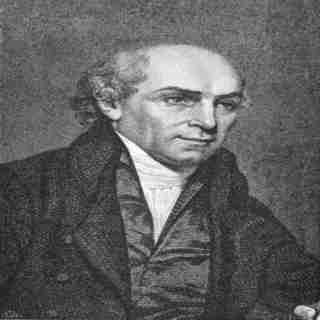
William Carey
 "Expect great things; attempt great things."
At a meeting of Baptist leaders in the late 1700s, a newly ordained minister stood to argue for the value of overseas missions. He was abruptly interrupted by an older minister who said, "Young man, sit down! You are an enthusiast. When God pleases to convert the heathen, he'll do it without consulting you or me."
That such an attitude is inconceivable today is largely due to the subsequent efforts of that young man, William Carey.
Plodder Carey was raised in the obscure, rural village of Paulerpury, in the middle of England. He apprenticed in a local cobbler's shop, where the nominal Anglican was converted. He enthusiastically took up the faith, and though little educated, the young convert borrowed a Greek grammar and proceeded to teach himself New Testament Greek.
When his master died, he took up shoemaking in nearby Hackleton, where he met and married Dorothy Plackett, who soon gave birth to a daughter. But the apprentice cobbler's life was hard—the child died at age 2—and his pay was insufficient. Carey's family sunk into poverty and stayed there even after he took over the business.
"I can plod," he wrote later, "I can persevere to any definite pursuit." All the while, he continued his language studies, adding Hebrew and Latin, and became a preacher with the Particular Baptists. He also continued pursuing his lifelong interest in international affairs, especially the religious life of other cultures.
Carey was impressed with early Moravian missionaries and was increasingly dismayed at his fellow Protestants' lack of missions interest. In response, he penned An Enquiry into the Obligations of Christians to Use Means for the Conversion of the Heathens. He argued that Jesus' Great Commission applied to all Christians of all times, and he castigated fellow believers of his day for ignoring it: "Multitudes sit at ease and give themselves no concern about the far greater part of their fellow sinners, who to this day, are lost in ignorance and idolatry."
Carey didn't stop there: in 1792 he organized a missionary society, and at its inaugural meeting preached a sermon with the call, "Expect great things from God; attempt great things for God!" Within a year, Carey, John Thomas (a former surgeon), and Carey's family (which now included three boys, and another child on the way) were on a ship headed for India.
Stranger in a strange land
Thomas and Carey had grossly underestimated what it would cost to live in India, and Carey's early years there were miserable. When Thomas deserted the enterprise, Carey was forced to move his family repeatedly as he sought employment that could sustain them. Illness racked the family, and loneliness and regret set it: "I am in a strange land," he wrote, "no Christian friend, a large family, and nothing to supply their wants." But he also retained hope: "Well, I have God, and his word is sure."
He learned Bengali with the help of a pundit, and in a few weeks began translating the Bible into Bengali and preaching to small gatherings.
When Carey himself contracted malaria, and then his 5-year-old Peter died of dysentery, it became too much for his wife, Dorothy, whose mental health deteriorated rapidly. She suffered delusions, accusing Carey of adultery and threatening him with a knife. She eventually had to be confined to a room and physically restrained.
"This is indeed the valley of the shadow of death to me," Carey wrote, though characteristically added, "But I rejoice that I am here notwithstanding; and God is here."
Gift of tongues
In October 1799, things finally turned. He was invited to locate in a Danish settlement in Serampore, near Calcutta. He was now under the protection of the Danes, who permitted him to preach legally (in the British-controlled areas of India, all of Carey's missionary work had been illegal).
Carey was joined by William Ward, a printer, and Joshua and Hanna Marshman, teachers. Mission finances increased considerably as Ward began securing government printing contracts, the Marshmans opened schools for children, and Carey began teaching at Fort William College in Calcutta.
In December 1800, after seven years of missionary labor, Carey baptized his first convert, Krishna Pal, and two months later, he published his first Bengali New Testament. With this and subsequent editions, Carey and his colleagues laid the foundation for the study of modern Bengali, which up to this time had been an "unsettled dialect."
Carey continued to expect great things; over the next 28 years, he and his pundits translated the entire Bible into India's major languages: Bengali, Oriya, Marathi, Hindi, Assamese, and Sanskrit and parts of 209 other languages and dialects.
He also sought social reform in India, including the abolition of infanticide, widow burning (sati), and assisted suicide. He and the Marshmans founded Serampore College in 1818, a divinity school for Indians, which today offers theological and liberal arts education for some 2,500 students.
By the time Carey died, he had spent 41 years in India without a furlough. His mission could count only some 700 converts in a nation of millions, but he had laid an impressive foundation of Bible translations, education, and social reform.
His greatest legacy was in the worldwide missionary movement of the nineteenth century that he inspired. Missionaries like Adoniram Judson, Hudson Taylor, and David Livingstone, among thousands of others, were impressed not only by Carey's example, but by his words "Expect great things; attempt great things." The history of nineteenth-century Protestant missions is in many ways an extended commentary on the phrase.
"Expect great things; attempt great things."
At a meeting of Baptist leaders in the late 1700s, a newly ordained minister stood to argue for the value of overseas missions. He was abruptly interrupted by an older minister who said, "Young man, sit down! You are an enthusiast. When God pleases to convert the heathen, he'll do it without consulting you or me."
That such an attitude is inconceivable today is largely due to the subsequent efforts of that young man, William Carey.
Plodder Carey was raised in the obscure, rural village of Paulerpury, in the middle of England. He apprenticed in a local cobbler's shop, where the nominal Anglican was converted. He enthusiastically took up the faith, and though little educated, the young convert borrowed a Greek grammar and proceeded to teach himself New Testament Greek.
When his master died, he took up shoemaking in nearby Hackleton, where he met and married Dorothy Plackett, who soon gave birth to a daughter. But the apprentice cobbler's life was hard—the child died at age 2—and his pay was insufficient. Carey's family sunk into poverty and stayed there even after he took over the business.
"I can plod," he wrote later, "I can persevere to any definite pursuit." All the while, he continued his language studies, adding Hebrew and Latin, and became a preacher with the Particular Baptists. He also continued pursuing his lifelong interest in international affairs, especially the religious life of other cultures.
Carey was impressed with early Moravian missionaries and was increasingly dismayed at his fellow Protestants' lack of missions interest. In response, he penned An Enquiry into the Obligations of Christians to Use Means for the Conversion of the Heathens. He argued that Jesus' Great Commission applied to all Christians of all times, and he castigated fellow believers of his day for ignoring it: "Multitudes sit at ease and give themselves no concern about the far greater part of their fellow sinners, who to this day, are lost in ignorance and idolatry."
Carey didn't stop there: in 1792 he organized a missionary society, and at its inaugural meeting preached a sermon with the call, "Expect great things from God; attempt great things for God!" Within a year, Carey, John Thomas (a former surgeon), and Carey's family (which now included three boys, and another child on the way) were on a ship headed for India.
Stranger in a strange land
Thomas and Carey had grossly underestimated what it would cost to live in India, and Carey's early years there were miserable. When Thomas deserted the enterprise, Carey was forced to move his family repeatedly as he sought employment that could sustain them. Illness racked the family, and loneliness and regret set it: "I am in a strange land," he wrote, "no Christian friend, a large family, and nothing to supply their wants." But he also retained hope: "Well, I have God, and his word is sure."
He learned Bengali with the help of a pundit, and in a few weeks began translating the Bible into Bengali and preaching to small gatherings.
When Carey himself contracted malaria, and then his 5-year-old Peter died of dysentery, it became too much for his wife, Dorothy, whose mental health deteriorated rapidly. She suffered delusions, accusing Carey of adultery and threatening him with a knife. She eventually had to be confined to a room and physically restrained.
"This is indeed the valley of the shadow of death to me," Carey wrote, though characteristically added, "But I rejoice that I am here notwithstanding; and God is here."
Gift of tongues
In October 1799, things finally turned. He was invited to locate in a Danish settlement in Serampore, near Calcutta. He was now under the protection of the Danes, who permitted him to preach legally (in the British-controlled areas of India, all of Carey's missionary work had been illegal).
Carey was joined by William Ward, a printer, and Joshua and Hanna Marshman, teachers. Mission finances increased considerably as Ward began securing government printing contracts, the Marshmans opened schools for children, and Carey began teaching at Fort William College in Calcutta.
In December 1800, after seven years of missionary labor, Carey baptized his first convert, Krishna Pal, and two months later, he published his first Bengali New Testament. With this and subsequent editions, Carey and his colleagues laid the foundation for the study of modern Bengali, which up to this time had been an "unsettled dialect."
Carey continued to expect great things; over the next 28 years, he and his pundits translated the entire Bible into India's major languages: Bengali, Oriya, Marathi, Hindi, Assamese, and Sanskrit and parts of 209 other languages and dialects.
He also sought social reform in India, including the abolition of infanticide, widow burning (sati), and assisted suicide. He and the Marshmans founded Serampore College in 1818, a divinity school for Indians, which today offers theological and liberal arts education for some 2,500 students.
By the time Carey died, he had spent 41 years in India without a furlough. His mission could count only some 700 converts in a nation of millions, but he had laid an impressive foundation of Bible translations, education, and social reform.
His greatest legacy was in the worldwide missionary movement of the nineteenth century that he inspired. Missionaries like Adoniram Judson, Hudson Taylor, and David Livingstone, among thousands of others, were impressed not only by Carey's example, but by his words "Expect great things; attempt great things." The history of nineteenth-century Protestant missions is in many ways an extended commentary on the phrase.
When Our Waiting Will Be Over
My favorite songs are ones that make my heart burn with longing. They’re songs that have unusual power to, as C.S. Lewis put it, rip open my “inconsolable secret” — the secret “which pierces with such sweetness,” yet is so hard to capture in words, since “it is a desire for something that has never actually appeared in our experience” (The Weight of Glory, 29–30). Which is why among my favorites is a song written by Bob and Jordan Kauflin, “When We See Your Face.” The song taps into subterranean longings and triggers profound emotions in me. I am not one to cry easily, but I rarely can listen to it without tears. So, I usually listen to it alone, sparing others the awkwardness of a weeping middle-aged man. Lest it appear suspicious to anyone, let me say up front that I was not asked to promote this song. I asked permission to write about it, receiving no benefit beyond what the song itself delivers — which is a benefit more precious than gold. For my soul very much needs this song’s reminder, especially as another year passes and I am another year older, still fighting against the relentless darkness, still waiting, still desiring something that has never actually appeared in my experience. Not yet. It remains a desire for a promised appearing — an appearing I’m growing to increasingly love (2 Timothy 4:8). I share this song because I assume you also need its precious reminder. And perhaps it will tap into your piercing, sweet, inconsolable secret too. Though the Dark Is Overwhelming Though the dark is overwhelming And the brightest lights grow dim Though the Word of God Is trampled on by foolish men Though the wicked never stumble And abound in every place We will all be humbled when we see Your face It doesn’t take reaching our middle or elder years to know just how dark the world can be. But I can attest now to a cumulative effect it has upon the soul the longer one lives here. And I do not claim to have suffered greatly — yet. Prolonged exposure to confounding darkness is a wearisome experience (Psalm 73:16). It is not merely the physical effects of aging that tempt many of us to retreat from action as we enter the older demographic columns. It’s also the spiritual and psychological effects of prolonged dealing with evil that infects and harms our families, friendships, churches, vocations, societies, and nations. We probably thought ourselves more a match for it in the optimistic bloom of youth, but experience put us in our place. The evil is beyond our strength and our comprehension. Hope can take a beating in the relentless battle against darkness. Until we remember. Until we remember that one day all oppressive darkness will be banished from the experience of the saints (Revelation 22:5), and that even now, even as the darkness rages (Revelation 12:12), it is passing away as the true light shines (1 John 2:8). We remember that we were never supposed to know and understand the evil we face (Genesis 3:7) — of course it’s a wearisome task! Only the Omniscient and Omnipotent can comprehend it and not grow weary (Isaiah 40:28). We remember that he promised us, “In the world you will have tribulation. But take heart; I have overcome the world” (John 16:33). We remember that our great task, the one way we truly conquer darkness, is to trust him (Proverbs 3:5–6) and obey him (John 14:15). And the great day that will end all night — the day of the joyful humbling of the redeemed righteous and the horrible humbling of the condemned wicked (Philippians 2:10–11) — will be inaugurated when we see the face of Jesus (1 Corinthians 13:12). All Our Sins Will Be Behind Us And the demons we’ve been fighting Those without and those within Will be underneath our feet To never rise again All our sins will be behind us Through the blood of Christ erased And we’ll taste Your kindness when we see Your face I’m so sick of Satan and his wretched wraiths that I don’t even want to give them the attention of a mention — except to say that one day (hear this, you horrid hoard!), the almighty foot of the Son of Man will come down once for all upon the heads of the great dragon and all his infernal snakes, and we will wrestle them no more (Ephesians 6:12; Revelation 20:10). But we also remember something far, far sweeter — and growing sweeter every year we grow older and come more to terms with just how intractable and entwined our demon-like indwelling sin is in the very members of our bodies (Romans 7:23). We remember that our sin will someday be behind us. Oh, we know that Jesus has paid our ransom in full (1 Timothy 2:6) and that by God’s grace through faith (Ephesians 2:8) we have been clothed in Christ’s righteousness (Philippians 3:9), so that God even now sees us justified, as if we had never sinned and always obeyed (Romans 3:26). It is, for now, an almost incomprehensibly glorious thing. But one day, our blood-bought innocence, our holy purity, will cease to be primarily a forensic reality we embrace by faith. On that day we will fully experience what it’s like to be righteous in every atom of our resurrected bodies and every dimension of our eternal, immaterial souls. We will have no more sin. No more tainted motives, no more illicit desires, no more damned selfish ambition. We will know in every part of our being what it’s like to fully obey the Great Commandment as if it’s the most natural thing in the world — for it will be! And we will worship the Lamb who was slain for us with unclouded minds and hearts bursting with joy. We will taste this unfathomably gracious kindness of Jesus when we see his face. All the Waiting Will Be Over All the waiting will be over Every sorrow will be healed All the dreams it seemed Could never be will all be real And You’ll gather us together In Your arms of endless grace As Your Bride forever when we see Your face The waiting will be over. I can’t write that sentence with dry eyes. Most of our Christian experience in this dark valley is hopeful waiting for what we so long to see (Romans 8:25). And much of that waiting is accompanied by hopeful groaning (Romans 8:20): groaning in illness, groaning in grief, groaning in disappointment and perplexity over the terrible, violent brokenness of the world and the inscrutable purposes of our only wise God (Romans 16:27), whose ways are not our ways (Isaiah 55:8). And we hopefully groan, like a bride, with longing for the consummate intimacy of knowing the Lover of our souls, even as we have been fully known (1 Corinthians 13:12). But one day — our Groom has promised it will be “soon” (Revelation 22:20) — the waiting will be over. And he will come, our Hero, of which all legendary heroes are but copies and shadows, and he will save us to the uttermost (Isaiah 35:4; Hebrews 7:25). And all that is dark and diseased and damaged and destroyed will pass away like a bad dream and become the shadows of the great yesterday (Psalm 90:4–5), serving only to heighten our savoring of the bright, eternal today (Revelation 22:5). And of all the light in which we delight, the fairest will be his face. We’ll Be Yours Forevermore We will see, we will know Like we’ve never known before We’ll be found, we’ll be home We’ll be Yours forevermore Having once been lost, we will fully know just how found we are (Luke 19:10). Having once known our Savior in such a small part, we will fully know him — as much as the finite can fully know the Infinite (1 Corinthians 13:12). We will be fully his and fully home — forever. Home. That is our inconsolable secret, isn’t it? That piercing sweetness, that desire for what has never actually appeared in our experience, yet somehow we know it is where we truly belong. I think that’s what this song taps into: our homesickness for a place we’ve not been, and a sense of alienation in the very places we were born. We don’t belong here, where it’s dark, depraved, and demonic, and where our sweetest experience is the blessed hope we taste in the future promises we trust. We long for home. For home is where we will meet the One we have loved, though we have not seen him (1 Peter 1:8). Home is where we will see his face. Article by Jon Bloom