
Praying God's Will For Your Life Order Printed Copy
- Author: Stormie Omartian
- Size: 569KB | 131 pages
- |
Others like praying god's will for your life Features >>
-160.webp)






About the Book
"Praying God's Will For Your Life" by Stormie Omartian explores the power of prayer and how it can align our lives with God's purpose. The book provides practical guidance on how to pray effectively, surrendering to God's plan and seeking His will in all aspects of our lives. Through personal anecdotes and scriptures, Omartian encourages readers to trust in God's timing and direction, leading to a more fulfilling and purposeful life.
John Alexander Dowie
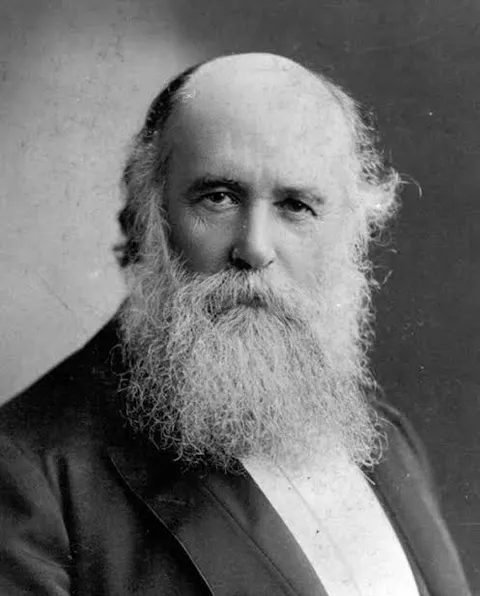 By John Alexander Dowie (1847 – 1907)
I sat in my study in the parsonage of the Congregational Church at Newtown, a suburb of the beautiful city of Sydney, Australia. My heart was very heavy, for I had visited the sick and dying beds of more than thirty of my flock, and I had cast the dust to its kindred dust into more than forty graves within a few weeks. Where, oh where, was He Who used to heal His suffering children? No prayer for healing seemed to reach His ear, and yet I knew His hand had not been shortened. Still it did not save from death even those for whom there was so much in life to live for God and others. Strong men, fathers, good citizens, and more than all, true Christians sickened with a putrid fever, suffered nameless agonies, passed into delirium, sometimes with convulsions, and then died.
Oh, what aching voids were left in many a widowed or orphaned heart. There were many homes where, one by one, the little children, the youths and the maidens lay stricken, and after a hard struggle with the foul disease, they too, lay cold and dead. It seemed sometimes as if I could almost hear the triumphant mockery of evil ringing in my ear whilst I spoke to the bereaved ones the words of Christian hope and consolation. Disease, the foul offspring of its father, Satan, and its mother Sin, was defiling and destroying the earthly temples of God’s children and there was no deliverance.
There I sat with sorrow-bowed head for my afflicted people, until the bitter tears came to relieve my burning heart. Then I prayed for some message, and oh, how I longed to hear some words from Him Who wept and sorrowed for the suffering long ago, a Man of Sorrows and Sympathies. The words of the Holy Ghost inspired In Acts 10:38, stood before me all radiant with light, revealing Satan as the Defiler, and Christ as the Healer. My tears were wiped away, my heart strong, I saw the way of healing, and the door thereto was opened wide, so I said, “God help me now to preach the Word to all the dying around, and tell them how Satan still defiles, and Jesus still delivers, for He is just the same today.”
A loud ring and several raps at the outer door, a rush of feet, and there at my door stood two panting messengers who said, “Oh, come at once, Mary is dying; come and pray. “With just a feeling as a shepherd has who hears that his sheep are being torn from the fold by a cruel wolf, I rushed from my house, ran without my hat down the street, and entered the room of the dying maiden. There she lay groaning and grinding her clenched teeth in the agony of the conflict with the destroyer. The white froth, mingled with her blood, oozing from her pale and distorted mouth. I looked at her and then my anger burned. “Oh,” I thought, “for some sharp sword of heavenly temper keen to slay this cruel foe who is strangling that lovely maiden like an invisible serpent, tightening his deadly coils for a final victory.”
In a strange way, It came to pass; I found the sword I needed was in my hands, and in my hand I hold it still and never will I lay It down. The doctor, a good Christian man, was quietly walking up and down the room, sharing the mother’s pain and grief. Presently he stood at my side and said, “Sir, are not God’s ways mysterious?” Instantly the sword was flashed in my hand, the Spirit’s sword, the Word of God. “God’s way?!” I said, pointing to the scene of conflict, “How dare you call that God’s way of bringing His children home from earth to Heaven? No sir, that is the devil’s work and it is time we called on Him Who came to destroy the work of the devil, to slay that deadly foul destroyer, and to save this child. Can you pray, Doctor, can you pray the prayer of faith that saves the sick?” At once, offended at my words, my friend was changed, and saying,” You are too much excited, sir, it is best to say ‘God’s will be done,’” and he left the room.
Excited?! The word was quite inadequate for I was almost frenzied with divinely imparted anger and hatred of that foul destroyer, disease, which was doing Satan’s will. “It is not so,” I exclaimed, “no will of God sends such cruelty, and I shall never say ‘God’s will be done’ to Satan’s works, which God’s own Son came to destroy, and this is one of them.” Oh, how the Word of God was burning in my heart: “Jesus of Nazareth went about doing good, and healing all that were oppressed of the devil; for God was with Him.” And was not God with me? And was not Jesus there and all His promises true? I felt that it was even so, and turning to the mother I inquired,” Why did you send for me?” To which she answered, “Do pray, oh pray for her that God may raise her up.” So we prayed.
What did I say? It may be that I cannot recall the words without mistake, but words are in themselves of small importance. The prayer of faith may be a voiceless prayer, a simple heartfelt look of confidence into the face of Christ. At such moment, words are few, but they mean much, for God is looking at the heart. Still, I can remember much of that prayer unto this day, and asking God to aid, I will attempt to recall it. I cried, “Our Father, help! and Holy Spirit, teach me how to pray. Plead Thou for us, oh, Jesus, Savior, Healer, Friend, our Advocate with God the Father. Hear and heal, Eternal One! From all disease and death, deliver this sweet child of yours. I rest upon the Word. We claim the promise now. The Word is true, ‘I am the Lord that heals thee.’ Then heal her now. The Word is true, ‘I am the Lord, I change not.’ Unchanging God, then prove Yourself the healer now. The Word is true. ‘These signs shall follow them that believe in My Name, they shall lay hands on the sick, and they shall recover.’ And I believe and I lay hands in Jesus’ Name on her and claim this promise now. Your Word is true. ‘The prayer of faith shall save the sick. Trusting in You alone. I cry. Oh, save her now, for Jesus’ sake. Amen!”
Then, the maid lay in sleep so deep and sweet that the mother asked in a low whisper, “Is she dead?” “No,” I answered, in a whisper lower still. “Mary will live; the fever is gone. She is perfectly well and sleeping as an infant sleeps.” I was smoothing the long dark hair from her now peaceful brow, and feeling the steady pulsation of her heart and cool moist hands. I saw that Christ had heard, and that once more, as long ago in Peter’s house, “He touched her and the fever left her.” Turning to the nurse, I said, “Get me at once, please, a cup of cocoa and several slices of bread and butter.” Beside the sleeping maid we sat quietly and almost silently until the nurse returned, and then I bent over her and snapping my fingers called, “Mary!”
Instantly she woke, smiled and said, “Oh, sir, when did you come? I have slept so long;” then stretching her arms out to meet her mother’s embrace, she said, “Mother, I feel so well.” “And hungry, too?” I asked, pouring some of the cocoa in a saucer and offering it to her when cooled by my breath. “Yes, hungry too,” she answered with a little laugh, and drank and ate again, and yet again until all was gone. In a few minutes, she fell asleep, breathing easily and softly. Quietly thanking God. We left her bed and went to the next room where her brother and sister also lay sick of the same fever. With these two, we prayed and they were healed too. The following day all three were well and in a week or so they brought me a little letter and a gift of gold, two sleeve links with my monogram, which I wore for many years. As I went away from the home where Christ as the Healer had been victorious, I could not but have somewhat in my heart of the triumphant song that rang through Heaven, and yet I was not a little amazed at my own strange doings, and still more at my discovery that He is just the same today.
Excerpt from the Sermons of John Alexander Dowie Champions of Faith by Gordon Lindsay
By John Alexander Dowie (1847 – 1907)
I sat in my study in the parsonage of the Congregational Church at Newtown, a suburb of the beautiful city of Sydney, Australia. My heart was very heavy, for I had visited the sick and dying beds of more than thirty of my flock, and I had cast the dust to its kindred dust into more than forty graves within a few weeks. Where, oh where, was He Who used to heal His suffering children? No prayer for healing seemed to reach His ear, and yet I knew His hand had not been shortened. Still it did not save from death even those for whom there was so much in life to live for God and others. Strong men, fathers, good citizens, and more than all, true Christians sickened with a putrid fever, suffered nameless agonies, passed into delirium, sometimes with convulsions, and then died.
Oh, what aching voids were left in many a widowed or orphaned heart. There were many homes where, one by one, the little children, the youths and the maidens lay stricken, and after a hard struggle with the foul disease, they too, lay cold and dead. It seemed sometimes as if I could almost hear the triumphant mockery of evil ringing in my ear whilst I spoke to the bereaved ones the words of Christian hope and consolation. Disease, the foul offspring of its father, Satan, and its mother Sin, was defiling and destroying the earthly temples of God’s children and there was no deliverance.
There I sat with sorrow-bowed head for my afflicted people, until the bitter tears came to relieve my burning heart. Then I prayed for some message, and oh, how I longed to hear some words from Him Who wept and sorrowed for the suffering long ago, a Man of Sorrows and Sympathies. The words of the Holy Ghost inspired In Acts 10:38, stood before me all radiant with light, revealing Satan as the Defiler, and Christ as the Healer. My tears were wiped away, my heart strong, I saw the way of healing, and the door thereto was opened wide, so I said, “God help me now to preach the Word to all the dying around, and tell them how Satan still defiles, and Jesus still delivers, for He is just the same today.”
A loud ring and several raps at the outer door, a rush of feet, and there at my door stood two panting messengers who said, “Oh, come at once, Mary is dying; come and pray. “With just a feeling as a shepherd has who hears that his sheep are being torn from the fold by a cruel wolf, I rushed from my house, ran without my hat down the street, and entered the room of the dying maiden. There she lay groaning and grinding her clenched teeth in the agony of the conflict with the destroyer. The white froth, mingled with her blood, oozing from her pale and distorted mouth. I looked at her and then my anger burned. “Oh,” I thought, “for some sharp sword of heavenly temper keen to slay this cruel foe who is strangling that lovely maiden like an invisible serpent, tightening his deadly coils for a final victory.”
In a strange way, It came to pass; I found the sword I needed was in my hands, and in my hand I hold it still and never will I lay It down. The doctor, a good Christian man, was quietly walking up and down the room, sharing the mother’s pain and grief. Presently he stood at my side and said, “Sir, are not God’s ways mysterious?” Instantly the sword was flashed in my hand, the Spirit’s sword, the Word of God. “God’s way?!” I said, pointing to the scene of conflict, “How dare you call that God’s way of bringing His children home from earth to Heaven? No sir, that is the devil’s work and it is time we called on Him Who came to destroy the work of the devil, to slay that deadly foul destroyer, and to save this child. Can you pray, Doctor, can you pray the prayer of faith that saves the sick?” At once, offended at my words, my friend was changed, and saying,” You are too much excited, sir, it is best to say ‘God’s will be done,’” and he left the room.
Excited?! The word was quite inadequate for I was almost frenzied with divinely imparted anger and hatred of that foul destroyer, disease, which was doing Satan’s will. “It is not so,” I exclaimed, “no will of God sends such cruelty, and I shall never say ‘God’s will be done’ to Satan’s works, which God’s own Son came to destroy, and this is one of them.” Oh, how the Word of God was burning in my heart: “Jesus of Nazareth went about doing good, and healing all that were oppressed of the devil; for God was with Him.” And was not God with me? And was not Jesus there and all His promises true? I felt that it was even so, and turning to the mother I inquired,” Why did you send for me?” To which she answered, “Do pray, oh pray for her that God may raise her up.” So we prayed.
What did I say? It may be that I cannot recall the words without mistake, but words are in themselves of small importance. The prayer of faith may be a voiceless prayer, a simple heartfelt look of confidence into the face of Christ. At such moment, words are few, but they mean much, for God is looking at the heart. Still, I can remember much of that prayer unto this day, and asking God to aid, I will attempt to recall it. I cried, “Our Father, help! and Holy Spirit, teach me how to pray. Plead Thou for us, oh, Jesus, Savior, Healer, Friend, our Advocate with God the Father. Hear and heal, Eternal One! From all disease and death, deliver this sweet child of yours. I rest upon the Word. We claim the promise now. The Word is true, ‘I am the Lord that heals thee.’ Then heal her now. The Word is true, ‘I am the Lord, I change not.’ Unchanging God, then prove Yourself the healer now. The Word is true. ‘These signs shall follow them that believe in My Name, they shall lay hands on the sick, and they shall recover.’ And I believe and I lay hands in Jesus’ Name on her and claim this promise now. Your Word is true. ‘The prayer of faith shall save the sick. Trusting in You alone. I cry. Oh, save her now, for Jesus’ sake. Amen!”
Then, the maid lay in sleep so deep and sweet that the mother asked in a low whisper, “Is she dead?” “No,” I answered, in a whisper lower still. “Mary will live; the fever is gone. She is perfectly well and sleeping as an infant sleeps.” I was smoothing the long dark hair from her now peaceful brow, and feeling the steady pulsation of her heart and cool moist hands. I saw that Christ had heard, and that once more, as long ago in Peter’s house, “He touched her and the fever left her.” Turning to the nurse, I said, “Get me at once, please, a cup of cocoa and several slices of bread and butter.” Beside the sleeping maid we sat quietly and almost silently until the nurse returned, and then I bent over her and snapping my fingers called, “Mary!”
Instantly she woke, smiled and said, “Oh, sir, when did you come? I have slept so long;” then stretching her arms out to meet her mother’s embrace, she said, “Mother, I feel so well.” “And hungry, too?” I asked, pouring some of the cocoa in a saucer and offering it to her when cooled by my breath. “Yes, hungry too,” she answered with a little laugh, and drank and ate again, and yet again until all was gone. In a few minutes, she fell asleep, breathing easily and softly. Quietly thanking God. We left her bed and went to the next room where her brother and sister also lay sick of the same fever. With these two, we prayed and they were healed too. The following day all three were well and in a week or so they brought me a little letter and a gift of gold, two sleeve links with my monogram, which I wore for many years. As I went away from the home where Christ as the Healer had been victorious, I could not but have somewhat in my heart of the triumphant song that rang through Heaven, and yet I was not a little amazed at my own strange doings, and still more at my discovery that He is just the same today.
Excerpt from the Sermons of John Alexander Dowie Champions of Faith by Gordon Lindsay
The Secret to Job Satisfaction
Many Christians work in jobs we would not necessarily choose for ourselves. I have before — maybe you are now. We did choose it at some point along the way, but just for less inspiring reasons. I have to pay my rent. I have an engineering degree. I only received one offer. We start jobs for money and a hundred other reasons. After a few years (or months, or even weeks), the satisfying security of the paycheck wears off, and we’re left wondering if we settled too soon and missed “the one.” We start dreaming about something different — different, more comfortable pay; different, more empowering boss; different, more fulfilling responsibilities. Our Vocational Anthems Meanwhile, the culture’s choir sings beautiful harmony to our melancholy melody: Find a job where you get to do what you love to do most. Follow your heart. Don’t settle for any job you’re not passionate about. The songs and slogans are sold by the millions, but for those willing to be honest about our work, at least three realities set in over time: That dream job simply does not exist for many. If it does, it either does not pay enough to cover the rent, or we are not qualified for it. An awful lot of work has to be done that no one dreams about, which means an awful lot of the available jobs are not dream jobs. The hard reality is that we can’t glorify God in the job we want (at least not yet). But we can glorify God in the job we have. Modern Bondservants I wonder how the songs we Millennials hear most about our careers would have landed on Christian slaves in Ephesus? The apostle Paul writes, Bondservants, obey your earthly masters with fear and trembling, with a sincere heart, as you would Christ, not by the way of eye-service, as people-pleasers, but as bondservants of Christ, doing the will of God from the heart, rendering service with a good will as to the Lord and not to man, knowing that whatever good anyone does, this he will receive back from the Lord, whether he is a bondservant or is free. (Ephesians 6:5–8) Paul writes to “bondservants” about their work, not to support the institution of slavery, but to strengthen faith and inspire joy among the enslaved. To be clear, such slavery was not the brutal and dehumanizing chattel slavery in American history, but these men and women were not as free as we are in America today, either (Ephesians 6:8). If Paul could write these self-denying, countercultural, other-worldly words to slaves about their livelihood, could he write them to us about our jobs? If so, here are three ways we can glorify God in our job, whether we are working the dream, or dreading our work. 1. The work is for God, regardless of who we report to. Bondservants, obey your earthly masters with fear and trembling . . . as bondservants of Christ. (Ephesians 6:5–6) Your tax forms may say you work for the government, or a business, or even for yourself, but Paul says you work for God. You are always first and foremost an employee for Christ. Every task you complete comes underneath his lordship. You may never be paid to share or apply the gospel, but it still hangs high over everything else you are paid to do. Work as if Christ were your superior — with holy fear and trembling, and with sincerity. Why? Bosses can cheat us, mistreat us, even fire us, but Christ can do far worse — and far better. He not only sees our every move at work, but knows our every thought — nothing ever gets by him. And he can send us to hell. If your boss monitored you all day every day, would you work differently? Your almighty Savior and Judge sits even closer than that. If we go about our everyday work with greater seriousness and joy, people will ask about our boss. And if there’s nothing remarkable about our boss, they just might ask about our God. 2. The standard is not mere excellence, but heartfelt service. Bondservants, obey your earthly masters . . . with a sincere heart, as you would Christ, not by the way of eye-service, as people-pleasers, but . . . doing the will of God from the heart. (Ephesians 6:5–6) Some will hear “doing the will of God from the heart” and hear “work as much and as hard as you possibly can.” But that is more American than Christian. Men and women chasing the American dream love to be told to work harder and achieve more. They work from the heart — it’s just a heart in love with money, or recognition, or control, or themselves. Christians dream about our jobs differently. When we work from the heart, we work from a passion for Jesus. We don’t spend time counting all the things we can have or achieve here on earth. No, we “count everything as loss” — paychecks, promotions, progress, retirement — “because of the surpassing worth of knowing Christ” (Philippians 3:8). “For his sake [we suffer] the loss of all things and count them as rubbish, in order that [we] may gain Christ and be found in him” (Philippians 3:8–9). We never have to fake joy in our jobs because our joy does not come from our jobs. We work from full hearts, not striving to fill our hearts. That kind of heart — not mere excellence — makes our work distinctly Christian. That does not mean Christians should not do their work excellently. We should, as if we were completing our work for Christ. But excellence can easily be mistaken for Christlikeness, when in and of itself, it says nothing about Christ. Lots of doctors, teachers, engineers, and mothers do their work excellently and hate Jesus. The quality of our work might punctuate what we believe, but no one is saved by commas or periods. Something else must set our excellence apart from every other kind of excellence, and that something else happens in our hearts before it ever reaches our hands. 3. The goal is not another paycheck here, but treasure in heaven. Bondservants, obey your earthly masters . . . knowing that whatever good anyone does, this he will receive back from the Lord, whether he is a bondservant or is free. (Ephesians 6:5, 8) Do you think about your job primarily in terms of what it will reap in this life, or in the next? The work these slaves did each day may have led to many things — favor with their master, financial or circumstantial gain, maybe even precious freedom — but Paul says the most important outcome could not be had or achieved here on earth. No, the work they were doing was mainly about storing up treasure in heaven. As Jesus says, “Do not lay up for yourselves treasures on earth, where moth and rust destroy and where thieves break in and steal, but lay up for yourselves treasures in heaven, where neither moth nor rust destroys and where thieves do not break in and steal. For where your treasure is, there your heart will be also.” (Matthew 6:19–21) Another paycheck may feel like our most immediate need, but it is another grain of sand compared with all God will give us in eternity. Paychecks are so objective and predictable and tradable next to the overwhelming unknowns of “this he will receive back from the Lord.” But the adrenaline high and false security runs out so fast. And every one of those paychecks will bounce in paradise. Instead of settling for a few higher numbers on a tiny piece of paper (that we’ll probably spend before the month runs out), let’s work like those who are waiting and working for more than we could ever imagine for ourselves (1 Corinthians 2:9). Better Than Your Dream Job None of this means we should pass on a job opportunity that would employ more of our gifts, or a job that we would enjoy more, or one that would free us up to do more ministry. But it has everything to do with how we work when God does not open that door, maybe for months, maybe years, maybe decades. Do we know the secret of job satisfaction? Paul says elsewhere, I have learned in whatever [job I have] to be content. I know how to be brought low, and I know how to abound. In any and every circumstance, I have learned the secret of facing plenty and hunger, abundance and need. I can do all things through him who strengthens me. (Philippians 4:11–13) Paul knew the secret. He passed it along to the bondservants in Ephesus. And he wanted you to carry it with you to your job each day. Work for God, from your joy in him, for treasure far greater than money, recognition, or comfort. Bring those dreams to your day job, instead of looking for happiness in your dream job. Article by Marshall Segal