
Others like mentoring Features >>

Today Matters

Resolving Everyday Conflict

Coaching, Mentoring & Managing

Becoming A Person Of Influence - Talent Is Never Enough

101 Crucial Lessons They Don't Teach You In Business School
-160.webp)
Die Empty: Unleash Your Best Work Every Day

Everyone Communicates, Few Connect
-160.webp)
The Gifts Of Imperfection: Embrace Who You Are

Essential Dictionary Of Music Notation

How To Buy A Business With No Money Down
About the Book
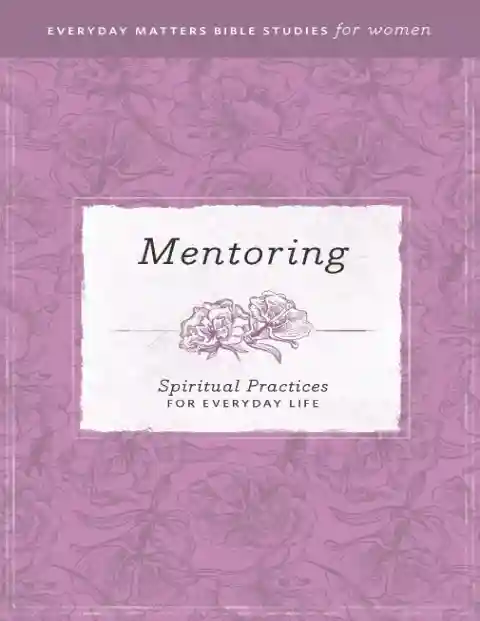
"Mentoring" by Everyday Matters is a comprehensive guidebook that explores the benefits and best practices of mentoring relationships. The book covers topics such as finding a mentor, building a successful mentoring relationship, and maximizing the impact of mentorship on personal and professional growth. It offers practical advice, tips, and strategies for both mentors and mentees to create meaningful and impactful mentoring experiences.
James Petigru Boyce
5 Important Heart Lessons from the Woman at the Well
At times, we may need to have a heart-to-heart with someone we love. Those conversations can be difficult. We may be afraid to say what’s needed because we don’t know how the other person might react when we get the courage to speak up. Maybe we don’t want to hurt their feelings, but we can’t continue without change in some way. The longest one-on-one conversation Jesus had with someone in the Bible was with a woman. She went to the well to draw water and Jesus was waiting there. Like many of us, she didn’t know him very well. She’d heard of the Messiah but didn’t realize He was right there with her. Her daily duties were keeping her occupied and he appeared in her life out of left field. She wasn’t expecting him to show up and she sure didn’t expect him to change her life. But He was expecting her. He had plans she knew nothing about. He used her powerfully even though her life was far from picturesque. It’s an encouraging story and beautiful. Encouraging to us because God allows us to participate in His work here on earth. It doesn’t matter where we’ve been or what we’ve done in the past. He can use us and will for His purposes. It’s beautiful because when we have a personal relationship with Him, He gives us what we deeply need – the satisfying, living water to quench our spiritual thirst. Here are 5 heart lessons we can learn from the woman at the well in the Bible: 1. We might find Jesus waiting for us. Now he had to go through Samaria. So he came to a town in Samaria called Sychar, near the plot of ground Jacob had given to his son Joseph. Jacob’s well was there, and Jesus, tired as he was from the journey, sat down by the well. It was about noon. When a Samaritan woman came to draw water, Jesus said to her, “Will you give me a drink?” John 4:7 The woman at the well was doing a routine chore – drawing water from the well. Nothing was out of the ordinary, except for who was sitting at the well, resting – waiting for her. I love how the Scripture mentions that Jesus is tired. I’m sure He’s been exhausted with my own spiritual immaturity, rebellion, and stubbornness at times. But He patiently waits for us. He wants us to be honest with him about our life. He waits until the perfect time to work things for good or to change us in some way for the better. 2. When we know Him – we’ll love Him. The Samaritan woman said to him, “You are a Jew and I am a Samaritan woman. How can you ask me for a drink?” (For Jews do not associate with Samaritans.) Jesus answered her, “If you knew the gift of God and who it is that asks you for a drink, you would have asked him and he would have given you living water.” John 4:9-10 Jesus doesn’t even acknowledge her comment about their differences but goes straight to the heart of the matter. She doesn’t know him. It’s one thing to know who Jesus is but it’s the real deal when we know Him in our hearts. Then it’s love. I’ll never forget figuring out I was ‘in love’ with Jesus. (I didn’t even realize we could fall in love with Him. I’d never heard anything about that in the church I grew up in.) I couldn’t stop thinking about Him. For years. Everything reminded me of Him, and I saw God in creation everywhere I looked. Why do I think about God 24/7? We think of someone constantly for years and can’t get them out of our thoughts because we’re in love. When we truly know Jesus, we will love Him. 3. Sometimes, we don’t believe. “Sir,” the woman said, “you have nothing to draw with and the well is deep. Where can you get this living water? Are you greater than our father Jacob, who gave us the well and drank from it himself, as did his sons and his livestock?” Jesus answered, “Everyone who drinks this water will be thirsty again, but whoever drinks the water I give them will never thirst. Indeed, the water I give them will become in them a spring of water welling up to eternal life.” The woman said to him, “Sir, give me this water so that I won’t get thirsty and have to keep coming here to draw water.” John 4:11-15 She must be wondering how something as natural as water can become something that seems impossible. Living water? It doesn’t make sense. Jesus is about to transform her natural way of thinking into spiritual drinking. They’re alone when this intimate relationship begins. We may discover our own relationship with Him requires alone time, too. He works best in us when we’re not distracted by the world. Maybe we’re in a hospital bed or down on our backs with nothing else but Him to keep us company. It’s in these moments, he gets our attention and speaks to our spirit, making his presence known and drawing us close. 4. Jesus opens our eyes to see the truth clearly. He told her, “Go, call your husband and come back.” “I have no husband,” she replied. Jesus said to her, “You are right when you say you have no husband. The fact is, you have had five husbands, and the man you now have is not your husband. What you have just said is quite true.” “Sir,” the woman said, “I can see that you are a prophet. Our ancestors worshiped on this mountain, but you Jews claim that the place where we must worship is in Jerusalem.” “Woman,” Jesus replied, “believe me, a time is coming when you will worship the Father neither on this mountain nor in Jerusalem. You Samaritans worship what you do not know; we worship what we do know, for salvation is from the Jews. Yet a time is coming and has now come when the true worshipers will worship the Father in the Spirit and in truth, for they are the kind of worshipers the Father seeks. God is spirit, and his worshipers must worship in the Spirit and in truth.” The woman said, “I know that Messiah” (called Christ) “is coming. When he comes, he will explain everything to us.” Then Jesus declared, “I, the one speaking to you – I am he.” John 16-26 It didn’t take her long to realize Jesus was telling the truth. Her eyes were opened, and his words helped her know Him better. The same is true for us. It can take a long time to truly get to know someone. He shows us who He is as we go through the troubles of life. We get to know Him better as we go along putting our trust in Him through life’s difficulties. Jesus will replace natural thought with spiritual insight. He takes lies we believe and gives us truth through His word. Helping us worship Him in spirit and in truth. 5. Don’t linger in a place you should leave. Just then his disciples returned and were surprised to find him talking with a woman. But no one asked, “What do you want?” or “Why are you talking with her?” Then, leaving her water jar, the woman went back to the town and said to the people, “Come, see a man who told me everything I ever did. Could this be the Messiah?” They came out of the town and made their way toward him. Many of the Samaritans from that town believed in him because of the woman’s testimony, “He told me everything I ever did.” So when the Samaritans came to him, they urged him to stay with them, and he stayed two days. And because of his words many more became believers. They said to the woman, “We no longer believe just because of what you said; now we have heard for ourselves, and we know that this man really is the Savior of the world.” John 4:27-30, 39-42 She didn’t linger when it was time to leave. Her water jar was left behind as evidence of what she forgot about when she met Jesus at the well. Literally leading others to Jesus with her powerful testimony. They went to him and asked Jesus to come stay with them. And (my favorite part) because of his words many more became believers. It can be hard to distinguish God’s direction when we’re not in a close relationship with Him. But when we spend time with him in prayer, reading the Bible, and surrendered in obedience, we will act out of our personal relationship. We’ll want to share what He’s done for us with others. We want everyone to know Jesus the way we do. As Jesus rested by the well, waiting for the woman, He’s patiently waiting for us, too. He knows us quite well even if we don’t really know Him. He wants to have a heart-to-heart conversation with us, as well. Open your eyes and see Him. Know Him. Your heart will never be the same. Melinda Eye Cooper Crosswalk.com Contributing Writer