
GIP Library icon

LOG IN TO REVIEW
About the Book


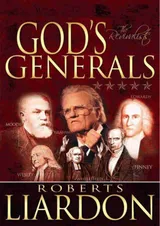
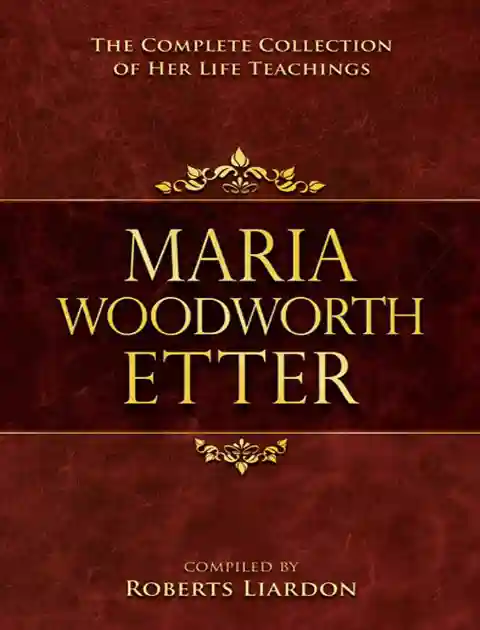
"MARIA WOODWORTH-ETTER" by Roberts Liardon is a biography of the pioneering female evangelist Maria Woodworth-Etter. The book chronicles her life and ministry, highlighting her powerful preaching, miraculous healing, and unshakeable faith. Woodworth-Etter's impact on the Pentecostal movement and her dedication to spreading the Gospel are celebrated in this inspiring account of her life.

Reinhard Bonnke

Reinhard Bonnke Reinhard Bonnke (19 April 1940 - 7 December 2019) was a German-American Pentecostal evangelist, principally known for his gospel missions throughout Africa. Bonnke had been an evangelist and missionary in Africa since 1967. In Nigeria’s city, Lagos, in 2000, a single service is believed to have been attended by 1.6 million people. Christ for all Nations (CFAN), an organisation founded by Bonnke, claims he preached Christ to more than 79 million non believers. Early life Reinhard Bonnke was born on 19 April 1940, in the city of Königsberg, East Prussia, Germany, the fifth son of Hermann Bonnke, an army logistics officer in the Reichswehr who fought on the Eastern Front; his paternal grandfather was August Bonnke, the owner of a windmill in Trunz, East Prussia (now Milejewo, Poland), who was healed of an unknown ailment by the evangelist Luis Graf in 1922, but died during the evacuation of East Prussia in 1945. His mother was Metaa Bonnke (nĂ©e Scheffler). Bonnke had six siblings: Martin, Gerhard, Jurgen, Peter and Felicitas, his only younger sibling and his only sister. With his mother and siblings, he was taken to Denmark during the evacuation of East Prussia and spent some years in a displaced persons centre before settling in Gluckstadt, West Germany. After his own war service, his father became a pastor in the village of Krempe. He became a born-again Christian at the age of nine after his mother spoke with him about a sin that he had committed. He sensed a call from God to serve as a missionary in Africa from the age of 10 and said that he had the experience of baptism in the Holy Spirit. Bonnke studied at the Bible College of Wales in Swansea, Wales, UK, where he was inspired by the director, Samuel Rees Howells. In one meeting Howells spoke of answered prayer; after this meeting, Bonnke prayed, "Lord, I also want to be a man of faith. I want to see your way of providing for needs." Passing through London, he had a chance meeting with the preacher George Jeffreys. As he walked, he came across a house with a nameplate on the front that said “George Jeffreys”. He wondered if it could be the great George Jeffreys who had founded the Elim Pentecostal churches in Ireland and England. He prayed for the young student and imparted grace to him. After graduation, he pastored in Germany for seven years, including establishing a congregation in Flensburg which met in a former rum factory. African mission His work in Africa began in 1967. He arrived in South Africa and almost immediately encountered the apartheid system, which he developed an antipathy towards, which in turn caused friction between him and the minister who oversaw him in South Africa. Bonnke subsequently accepted a position to oversee three churches in Lesotho, but began again from scratch after he discovered that unbiblical practices had emerged in the congregations he was to oversee. In the first few years of his work, Bonnke encountered poor results from his evangelistic efforts and felt frustrated at the pace of his ministry. Then he had a recurring dream featuring a picture of the map of Africa being splattered with blood and heard the voice of God crying "Africa Shall Be Saved". This ultimately led him to adopt large-scale evangelism, rather than the traditional small-scale missionary approach. He rented a stadium in Gaborone, Botswana, and preached with little cooperation from local churches. The first meetings saw about 100 people attending, but this number grew swiftly. In 1974, Bonnke founded the mission organisation Christ for all Nations (CfaN). Originally based in Johannesburg, South Africa, the headquarters were relocated to Frankfurt, Germany, in 1986. This was done primarily to distance the organisation from South Africa's apartheid policy at the time.[9] Today CfaN has 9 offices across 5 continents. Bonnke began his ministry holding tent meetings that accommodated large crowds. According to an account published by the Christian Broadcasting Network, in 1984 he commissioned the construction of what was claimed to be the world's largest mobile structure - a tent capable of seating 34,000; this was destroyed in a wind storm just before a major meeting and therefore the team decided to hold the event in the open air instead. According to this account, the event was subsequently attended by over 100,000 people which is far greater than the 34,000 seating capacity the tents could have contained. For various reasons, usually due to insufficient capacity, the 34,000-seat tent was only used once, in Harare, Zimbabwe, in 1986. In addition to South Africa, Bonnke would also hold many campaigns in other African countries including Nigeria and Kenya and became known as "the Billy Graham of Africa." In the 5 February 2001 edition of Graham's Christianity Today, journalist Corrie Cutrer stated that Bonnke had set "record-breaking attendances" at recent events he held in Nigeria. Bonnke announced his "farewell gospel crusade" to be held in Lagos, Nigeria, in November 2017. Lagos is also the location of a gospel crusade held in 2000 which, according to CfaN, is the organization's largest to date, drawing an attendance of six million people in a 5-night crusade, and as much as 1.6 million attendance in one day. In 2009 Bonnke appointed his successor, Daniel Kolenda who continues to lead the ministry. In 2020, following Bonnke's death, Christ for all Nations launched the CfaN Evangelism Bootcamp. In 2022 Schools of Evangelism were started in South Africa, and Europe and Fire Camps were launched in dozens of nations on six continents. Today, more than 4,000 evangelists have been trained by Christ for all Nations and more than 91-million decisions for Christ have been counted. In 2024, in the 50th year of the ministry, CfaN is conducting 50 gospel crusades throughout the African continent. Persecution Kano riots, subsequent expulsion from Nigeria, and return to the country In 1991, during Bonnke's visit to Kano in Nigeria, there were riots in the city as Muslims protested over remarks he had reportedly made about Islam in the city of Kaduna on his way to Kano. A rumour was spread that Bonnke was planning to "lead an invasion" into Kano. Muslim youths gathered at the Kofar Mata Eide-ground where they were addressed by several clerics who claimed that Bonnke was going to blaspheme Islam. About 8,000 youths gathered at the Emir's palace and after noon prayers the riots ensued, during which many Christians sustained various injuries and several churches were burned. Official reports state that at least eight people were killed, although other research and reports place the number as being as much as 500 as many of the Christians who were killed were thrown into wells and the attacks were spread between multiple locations. Despite the state governor absolving Bonnke of any blame for the incident, Bonnke's subsequent attempts to return to Nigeria were denied, as the Nigerian Embassy refused his visa applications. In 2000, a new civilian government in Nigeria was elected to power, and President Olusegun Obasanjo, a Christian, invited Reinhard Bonnke to return to the country. Bonnke returned to Nigeria and held a crusades in Benin City in the south. He would deny reports that the Northern Region of Nigeria's Council of Ulamas banned him from entering northern Nigeria. Bonnke held many crusades in Nigeria after 2000, and conversion rates were significantly higher than in many other African nations, with one campaign achieving a conversion of 1.1 million people. Nigeria would be where his final international crusade would be held, in Lagos in 2017. Personal life After graduating from the Bible College of Wales and returning to Germany, Bonnke led a series of meetings in Rendsburg. He began receiving speaking invitations from all around Germany and the rest of the world. Bonnke met Anni Suelze at a gospel music festival and admired the grace which she showed when a mistake led to her losing a music competition. He offered to preach at the church she attended and over time they fell in love. They married in 1964 and had three children: Kai-Uwe Friedrich, known as "Freddy", Gabrielle and Suzanne. Death Bonnke died on 7 December 2019. The month before, he had announced on his official Facebook page that he had undergone femur surgery and needed time to "learn how to walk again". Nigerian President Muhammadu Buhari, who is Muslim, praised Bonnke for his frequent visits to Nigeria and described his death as a "great loss to Nigeria". His appointed successor is the evangelist Daniel Kolenda. He would be buried in Gotha, Florida's Woodlawn Memorial Park, with his memorial stone being shaped to resemble Africa.

We Need More Holy Fools

A man is trapped in a car, rushing down a hill toward a cliff. The doors are locked. The brakes are out. The steering barely works. Far ahead, he can see other cars hurtling into the abyss. How far they fall, he does not know. What they find at the bottom, he cannot imagine. But he does not seek to know; he does not try to imagine. Instead, he paints the windshield, climbs into the back seat, and puts in his headphones. This image, adapted from Peter Kreeft, captures my life in January 2008, as I walked down a college sidewalk in Colorado. The car was my body; the hill, time; the cliff, death. I was, as we all are, rushing toward the moment when my pulse would stop. And though unsure of what would come afterward, I found a thousand ways to look away. “The Lord looks down from heaven on the children of man, to see if there are any who understand, who seek after God” (Psalm 14:2). Like so many other children of men, I neither understood nor sought, I neither asked nor knocked, but let myself tumble through time without a thought of eternity. I was a “fool,” to put it bluntly (Psalm 14:1). And I desperately needed another kind of fool to wake me up. Puncturing the Daydream Few people, perhaps, would look at a normal Western life like mine — busy, successful, spiritually indifferent — and say, “folly.” But could it be because the folly is socially acceptable? Might we modern Western men and women have made a silent pact to ignore eternity? “Might we modern Western men and women have made a silent pact to ignore eternity?” Blaise Pascal, seventeenth-century Christian polymath, thought so. When Pascal looked round at his modern country, neighbors, and self, he saw a collective pathology, a shared insanity: “Man’s sensitivity to little things and insensitivity to the greatest things are marks of a strange disorder,” he said ( Christianity for Modern Pagans , 203). We cultivate hobbies, and follow celebrities, and read the news without knowing why we exist. We stumble through an unthinkably vast cosmos, circled round by unthinkably intricate wonders, too distracted to ask, “Who made this?” We develop firm opinions about politics, and care not whether souls live forever, and where. We look often into our mirrors and seldom into our deep and fallen hearts. A strange disorder indeed. And so, Pascal walked around with needles in hand, seeking to puncture the daydream of secular or religiously nominal apathy to eternity. His unfinished book  PensĂ©es  (abridged and explained in Kreeft’s masterful  Christianity for Modern Pagans ) may have been his sharpest needle. What Is a Life ‘Well-Lived’? Our lives here are hemmed in by mystery and uncertainty. We live on a small rock in an immense universe. We know little about where we came from or where we’re going. We struggle even to understand ourselves. But a few matters remain clear and unmistakable, including the great fact that, one day, we will die. Our car hurtles down the hill, lower today than yesterday. The abyss awaits. And what then? For secular or nominally religious countrymen like Pascal’s, and ours, the options are two: “the inescapable and appalling alternative of being annihilated or wretched throughout eternity” (191). Either Christianity is false, and our flickering candle goes out forever — or Christianity is true, and, awakening to life’s meaning too late, we fall “into the hands of a wrathful God” (193). A society like ours would lead us to believe that eighty years “well lived” (whatever that means) filled with “personal meaning” (whatever that means) makes for a good life; we need seek no more. To Pascal, those were the words of one who had painted the windshield black. Death, rightly reckoned with, functions like the final scene of a tragic play: it reaches its fingers back into all of life, disfiguring every moment, darkly witnessing that all is not well. “The last act is bloody, however fine the rest of the play,” Pascal writes. “They throw earth over your head and it is finished forever” (144). Stand above the hole in the ground, the dust from which we came and to which we’ll return (Genesis 3:19), and consider: “That is the end of the world’s most illustrious life” (191). “We ourselves are an enigma, wrapped in a world of mystery, headed inevitably for the grave.” We ourselves are an enigma, wrapped in a world of mystery, headed inevitably for the grave. Such a dire plight might send us searching for wisdom, if it weren’t for our insane “solution.” Insanity of Our ‘Solutions’ How do we — mortal men and women, nearing the cliff’s edge — typically respond to our plight? “We run heedlessly into the abyss after putting something in front of us to stop us seeing it” (145). We deny. We divert. We distract. Until one day we die. Of course, no one ever says, “I will distract myself because I don’t want to consider my death and what may come afterward.” We suppress the truth more subconsciously than that (Romans 1:18). Instinctively, we avoid the “house of mourning,” or else dress it with euphemisms, for fear of facing, terribly and unmistakably, that “this is the end of all mankind” — that this is  our  end (Ecclesiastes 7:2). Summarizing Pascal, Kreeft writes, If you are typically modern, your life is like a rich mansion with a terrifying hole right in the middle of the living-room floor. So you paper over the hole with a very busy wallpaper pattern to distract yourself. You find a rhinoceros in the middle of your house. The rhinoceros is wretchedness and death. How in the world can you hide a rhinoceros? Easy: cover it with a million mice. Multiply diversions. (169) Eighty years may seem like a long time to distract yourself from the most fundamental questions of life and death. But with hearts like ours, in a world like ours, it is not too long. Make a career. Raise a family. Build wealth. Plan vacations. Get promoted. Watch movies. Collect sports cards. Read the news. Play golf. Resist uncomfortable questions. We hang a curtain over the cliff’s edge that keeps us from seeing the abyss. But not from rushing into it. Sanest People in the World Our chosen “solution,” then, only aggravates our dire plight. Our distractions sedate us on the way to death rather than sending us searching for some escape. Which means the world has a desperate need for people like Pascal, men and women whom we might call (to use a phrase from church history)  holy fools . The term  holy fools  drips with the same irony Paul used when he spoke of “the foolishness of God” (1 Corinthians 1:25) and said, “We are fools for Christ” (1 Corinthians 4:10). In truth, holy fools are the world’s sanest people. They have felt the sting of sin and death. They have found deliverance in Jesus Christ. And now they are trying to tell the world. With Pascal, they see that “there are only two classes of people who can be called reasonable: those who serve God with all their heart because they know him and those who seek him with all their heart because they do not know him” (195). And so, holy fools call people into the “folly” that is our only sanity. They come to those caught in distraction, lost in diversion, and they serve, love, persuade, and prod. They risk reputation and comfort, willing to look foolish in the eyes of a wayward world. They bring eternity into everyday conversations with cashiers, neighbors, and other parents at the park. Boldly and patiently, courageously and graciously, they say, “See your death. See your sin. And seek him with all your heart.” To those bent on diversion, holy fools may seem imbalanced, extreme, awkward, pushy. But not to everyone. Some, as they hear of the Christ these fools preach, will catch a glimmer of “the power of God and the wisdom of God” (1 Corinthians 1:24). And they will become another fool for him. Give Us More Fools for Christ Pascal (and the apostle Paul) make me feel that I am not yet the fool I ought to be. Too often, I prefer social decorum to holy discomfort, this-worldly niceness to next-worldly boldness. But they also make me feel a keen gratitude for the holy fools among us, and a longing to be more like them. For I owe my life to one. In January 2008, as my little car rushed down the hill, and as I did what I could to cover my eyes, someone stopped me on the sidewalk. I would later learn that he belonged to a campus ministry widely known for sharing Jesus with students — widely known, but not widely loved. Their message was, to most, foolishness — and their way of stopping others on the sidewalk, a stumbling block. But to me that day, by grace, it looked like the wisdom of God. In time, I would realize that my various diversions could not deliver me from death. Nor could a life “well lived” forgive my sins or undig my grave. Only Jesus could. It took a holy fool to make me sane, and oh how the world needs more.

Feedback
Suggestionsuggestion box
x