
-160.webp)
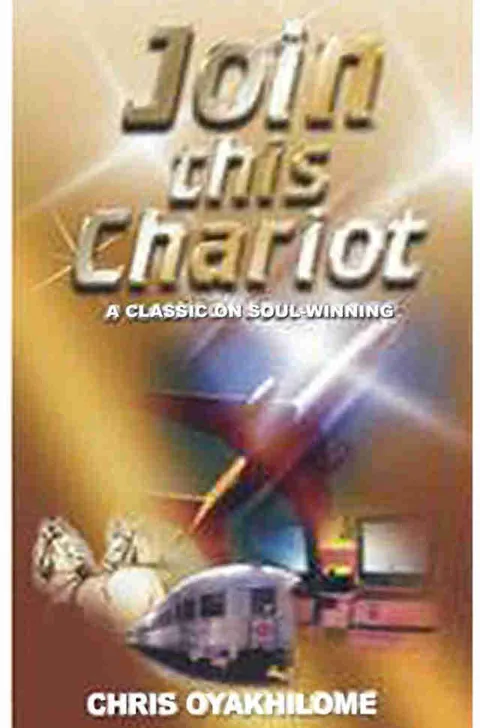
About the Book
"Join this Chariot" by Chris O. is a practical guide that outlines key principles for achieving success in life and leadership, drawing inspiration from the biblical story of Philip and the Ethiopian eunuch. The book emphasizes the importance of personal development, effective communication, and pursuing one's purpose in order to fulfill God's plan for one's life. It serves as a valuable resource for individuals seeking to grow spiritually, professionally, and personally.
A.W. Tozer (Aiden Wilson Tozer)
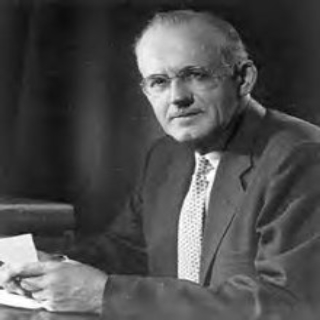 Early life
Tozer hailed from a tiny farming community in western La Jose, Pennsylvania. He was converted to Christianity as a teenager in Akron, Ohio: While on his way home from work at a tire company, he overheard a street preacher say, "If you don't know how to be saved ... just call on God, saying, 'Lord, be merciful to me a sinner.'" Upon returning home, he climbed into the attic and heeded the preacher's advice.
Pastor
In 1919, five years after his conversion and without formal education in Christian theology, Tozer accepted an offer to serve as pastor of his first church. That began 44 years of ministry associated with the Christian and Missionary Alliance (C&MA), a Protestant Evangelical denomination, 33 of them serving as a pastor in several different congregations (his first, a small storefront church in Nutter Fort, West Virginia). Later, he served thirty years (1928 to 1959) as the pastor of Southside Alliance Church in Chicago; the final years of his life he spent as pastor of Avenue Road Church in Toronto, Ontario, Canada. Observing contemporary Christian living, Tozer felt that the church was on a dangerous course toward compromising with "worldly" concerns.
Born into poverty, Tozer was self-educated and taught himself what he missed in high school and university.
Author
Tozer began writing in 1931 for the denominational magazine of the Christian and Missionary Alliance, Alliance Weekly (now Alliance Life), which became the platform from which his writing career emerged. He later wrote the monthly column “There’s Truth in It” (1936–37) and “A Word in Season” (1944–46). In May 1950, he became the editor of the Alliance Weekly, a position he filled until his death in 1963.
At the urging of David W. Fant, publications secretary of the C&MA, Tozer wrote biographies of A. B. Simpson (1943) and Robert A. Jaffray (1947). It was the publication of his third book, The Pursuit of God (1948), that made Tozer a household name among evangelicals. In addition to the 12 books he published in his lifetime, more than 40 other books have been compiled from his magazine features, editorials, and transcribed sermons.
During his lifetime, Tozer’s works were published by Christian Publications, Inc., the denominational press operated by the C&MA. The publishing house declared bankruptcy in 2006 and was purchased by WingSpread Publishers of Camp Hill, Pennsylvania.[8] In November 2013, Moody Publishers acquired Wingspread from parent company Zur Ltd., a transaction that included more than 60 Tozer books and pamphlets. Some of Tozer’s works are now in the public domain and have been issued by multiple publishers.
Personal life
Tozer had seven children, six sons and a daughter. Living a simple and non-materialistic lifestyle, he and his wife, Ada Cecelia Pfautz, never owned a car, preferring bus and train travel. Even after becoming a well-known Christian author, Tozer signed away much of his royalties to those who were in need.
Prayer was of vital personal importance for Tozer. "His preaching as well as his writings were but extensions of his prayer life," comments his biographer, James L. Snyder, in the book In Pursuit of God: The Life Of A.W. Tozer. "He had the ability to make his listeners face themselves in the light of what God was saying to them," writes Snyder.
Death and legacy
Tozer died on May 13, 1963, after suffering a heart attack. He was buried in Chicago, and later the family had his remains reinterred at Ellet Cemetery, Akron, Ohio. A simple marker reads: A. W. Tozer—A Man of God. The Alliance Weekly ran a memorial issue with numerous tributes and excerpts. The same issue also featured “God’s Greatest Gift to Man," a transcription of his final sermon. A few months prior to his death, Tozer had submitted the manuscript to The Christian Book of Mystical Verse, which was released in 1964 as his final book. His official publisher, Christian Publications, released many titles after his death, based on his magazine articles and sermon transcriptions. These continue in print with Moody Publishers. Several other publishers have released his public domain works.
In 2000, The Pursuit of God was named to Christianity Today’s list of 100 “Books of the Century.” In 2006, Knowledge of the Holy was named in “The Top 50 Books That Have Shaped Evangelicals.” Contemporary Christian music artist Lauren Barlow of BarlowGirl later published a compilation of stories told by 59 artists, writers, and leaders about A.W. Tozer’s personal inspiration.
Early life
Tozer hailed from a tiny farming community in western La Jose, Pennsylvania. He was converted to Christianity as a teenager in Akron, Ohio: While on his way home from work at a tire company, he overheard a street preacher say, "If you don't know how to be saved ... just call on God, saying, 'Lord, be merciful to me a sinner.'" Upon returning home, he climbed into the attic and heeded the preacher's advice.
Pastor
In 1919, five years after his conversion and without formal education in Christian theology, Tozer accepted an offer to serve as pastor of his first church. That began 44 years of ministry associated with the Christian and Missionary Alliance (C&MA), a Protestant Evangelical denomination, 33 of them serving as a pastor in several different congregations (his first, a small storefront church in Nutter Fort, West Virginia). Later, he served thirty years (1928 to 1959) as the pastor of Southside Alliance Church in Chicago; the final years of his life he spent as pastor of Avenue Road Church in Toronto, Ontario, Canada. Observing contemporary Christian living, Tozer felt that the church was on a dangerous course toward compromising with "worldly" concerns.
Born into poverty, Tozer was self-educated and taught himself what he missed in high school and university.
Author
Tozer began writing in 1931 for the denominational magazine of the Christian and Missionary Alliance, Alliance Weekly (now Alliance Life), which became the platform from which his writing career emerged. He later wrote the monthly column “There’s Truth in It” (1936–37) and “A Word in Season” (1944–46). In May 1950, he became the editor of the Alliance Weekly, a position he filled until his death in 1963.
At the urging of David W. Fant, publications secretary of the C&MA, Tozer wrote biographies of A. B. Simpson (1943) and Robert A. Jaffray (1947). It was the publication of his third book, The Pursuit of God (1948), that made Tozer a household name among evangelicals. In addition to the 12 books he published in his lifetime, more than 40 other books have been compiled from his magazine features, editorials, and transcribed sermons.
During his lifetime, Tozer’s works were published by Christian Publications, Inc., the denominational press operated by the C&MA. The publishing house declared bankruptcy in 2006 and was purchased by WingSpread Publishers of Camp Hill, Pennsylvania.[8] In November 2013, Moody Publishers acquired Wingspread from parent company Zur Ltd., a transaction that included more than 60 Tozer books and pamphlets. Some of Tozer’s works are now in the public domain and have been issued by multiple publishers.
Personal life
Tozer had seven children, six sons and a daughter. Living a simple and non-materialistic lifestyle, he and his wife, Ada Cecelia Pfautz, never owned a car, preferring bus and train travel. Even after becoming a well-known Christian author, Tozer signed away much of his royalties to those who were in need.
Prayer was of vital personal importance for Tozer. "His preaching as well as his writings were but extensions of his prayer life," comments his biographer, James L. Snyder, in the book In Pursuit of God: The Life Of A.W. Tozer. "He had the ability to make his listeners face themselves in the light of what God was saying to them," writes Snyder.
Death and legacy
Tozer died on May 13, 1963, after suffering a heart attack. He was buried in Chicago, and later the family had his remains reinterred at Ellet Cemetery, Akron, Ohio. A simple marker reads: A. W. Tozer—A Man of God. The Alliance Weekly ran a memorial issue with numerous tributes and excerpts. The same issue also featured “God’s Greatest Gift to Man," a transcription of his final sermon. A few months prior to his death, Tozer had submitted the manuscript to The Christian Book of Mystical Verse, which was released in 1964 as his final book. His official publisher, Christian Publications, released many titles after his death, based on his magazine articles and sermon transcriptions. These continue in print with Moody Publishers. Several other publishers have released his public domain works.
In 2000, The Pursuit of God was named to Christianity Today’s list of 100 “Books of the Century.” In 2006, Knowledge of the Holy was named in “The Top 50 Books That Have Shaped Evangelicals.” Contemporary Christian music artist Lauren Barlow of BarlowGirl later published a compilation of stories told by 59 artists, writers, and leaders about A.W. Tozer’s personal inspiration.
10 Times Denzel Washington was Candid about His Christian Faith
Throughout his career, actor Denzel Washington has been open about his faith. Most recently, Washington reportedly offered some Biblical-inspired wisdom to actor Will Smith after he slapped comedian Chris Rock at the 2022 Oscars. Here's a look at 10 times Washington has talked about faith and its impact on his life and career. Denzel Washington, Washington shares his supernatural experience coming to Christ 1. Oscars 2022 on Smith-Rock Incident "Denzel said to me a few minutes ago, he said, 'At your highest moment, be careful— that's when the devil comes for you,'" Smith said during the Oscars while accepting his award. Smith was referring to the commercial break when Washington approached Smith after Smith rushed on stage to slap Rock for joking about Smith's wife. Washington's statement to Smith refers to 1 Peter 5:8, which says, "Be alert and of sober mind. Your enemy the devil prowls around like a roaring lion looking for someone to devour." 2. Showtime's Desus & Mero Podcast 2022 on talent "One of the most important lessons in life that you should know is to remember to have an attitude of gratitude, of humility, understand where the gift comes from," Washington said. "It's not mine, it's been given to me by the grace of God." 3. New York Times 2021 Interview on spiritual warfare "This is spiritual warfare. So, I'm not looking at it from an earthly perspective," Washington told the New York Times. "If you don't have a spiritual anchor, you'll be easily blown by the wind, and you'll be led to depression. "The enemy is the inner me," Washington added. "The Bible says in the last days – I don't know if it's the last days, it's not my place to know – but it says we'll be lovers of ourselves. The number one photograph today is a selfie, 'Oh, me at the protest.' 'Me with the fire.' 'Follow me.' 'Listen to me.'" 4. 2021 "The Better Man Event" on the role of a man "The John Wayne formula is not quite a fit right now. But strength, leadership, power, authority, guidance, [and] patience are God's gift to us as men. We have to cherish that, not abuse it. "I hope that the words in my mouth and the meditation of my heart are pleasing in God's sight, but I'm human. I'm just like you," he said. 5. 2021 Religion News Service Interview on how his faith impacted his film, "Journal for Jordan" "The spirit of God is throughout the film. Charles is an angel. I'm a believer. Dana's a believer. So that was a part of every decision, hopefully, that I tried to make. I wanted to please God, and I wanted to please Charles, and I wanted to please Dana." "I am a member, also a member of the (Cultural Christian Center) out here in New York. I have more than one spiritual leader in my life. So there's different people I talk to, and I try to make sure I try to put God first in everything. I was reading something this morning in my meditation about selfishness and how the only way to true independence is complete dependence on the Almighty." 6. Instagram Live with Pastor A.R. Bernard of Christian Cultural Center on his salvation "I was filled with the Holy Ghost, and it scared me. I said, 'Wait a minute, I didn't want to go this deep, I want to party,'" Washington said of the time he gave his life to Christ. "I went to church with Robert Townsend, and when it came time to come down to the altar, I said, 'You know this time, I'm just going to go down there and give it up and see what happens. I went in the prayer room and gave it up and let go and experienced something I've never experienced in my life." 7. 2017 The Christian Post Interview on advice for millennials "I would say to your generation – find a way to work together because this is a very divisive, angry time you're living in, unfortunately, because we didn't grow up like that," he said. "I pray for your generation," he added. "What an opportunity you have! Don't be depressed by it because we have to go through this, we're here now. You can't put that thing back in the box." 8. 2017 Screen Actors Guild Awards "I'm a God-fearing man. I'm supposed to have faith, but I didn't have faith," he said, according to Faith Wire. "God bless you all, all you other actors." 9. 2015 Church of God in Christ's Charity Banquet "Through my work, I have spoken to millions of people. In 2015, I said I'm no longer just going to speak through my work. I'm going to make a conscious effort to get up and speak about what God has done for me." 10. 2007 Reader's Digest Interview on his faith "I read the Bible every day. I'm in my second pass-through now, in the Book of John. My pastor told me to start with the New Testament, so I did, maybe two years ago. Worked my way through it, then through the Old Testament. Now I'm back in the New Testament. It's better the second time around." Amanda Casanova ChristianHeadlines.com Contributor