-480.webp)

How To Hug A Porcupine (101 Ways To Love The Most Difficulty People In Your Life) Order Printed Copy
- Author: Debbie Joffe Ellis
- Size: 1.7MB | 150 pages
- |
Others like how to hug a porcupine (101 ways to love the most difficulty people in your life) Features >>

You Shall Not Be Barren

A Ceremony Of Marriage

Preparing For Marriage

How To Really Love Your Child

Shaping Your Child's Spiritual Future

Loving Your Spouse When You Feel Like Walking Away

What Husbands Wish Their Wives Knew About Men
-160.webp)
Marriage Matters (Extraordinary Change Through Ordinary Moments)
-160.webp)
52 Uncommon Dates: A Couple's Adventure Guide For Praying, Playing, And Staying Together

A Couple After Gods Own Heart
About the Book
"How to Hug a Porcupine" provides practical tips and advice on how to navigate challenging relationships with difficult people, such as those with negative attitudes or toxic behaviors. The book offers 101 strategies for approaching these individuals with empathy, understanding, and compassion, ultimately fostering healthier and more positive connections.
William Chalmers Burns
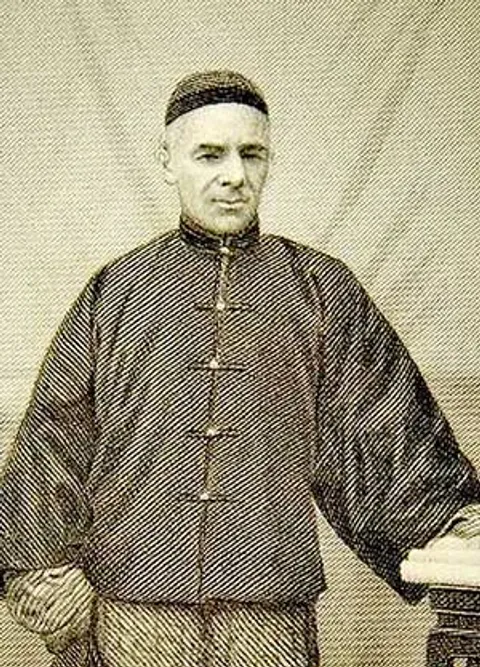 William Chalmers Burns was born in the Manse of Dun, in Angus, on April Ist, 1815. He was the third son of the Parish Church minister there. After leaving school, he went to Edinburgh to be apprenticed with an uncle to the legal profession. His eldest sister, a gay young lady, was converted to God, and became a bright witness for the Lord Jesus in 1831, and it was by means of her decided testimony that William was first awakened to a sense of his need of salvation, and led to put his trust in the Son of God, as his Redeemer and Saviour.
It was shortly after his conversion that he walked into the manse of Kilsyth, where the family then resided, having walked on foot the thirty-six miles from Edinburgh, to tell his mother and his sisters the glad news of his conversion, and to say that his desire now was to relinquish his study of law, and devote himself entirely to the preaching of the Gospel of God’s grace to his fellowmen.
And this he did heartily and with all his might, first in the neglected Parts of Scotland, and latterly among many heathen millions of the great Chinese Empire, then scarcely touched by the feet of God’s messengers of peace.
Mr. Burns’s name came into prominence in connection with a wonderful work of grace in Dundee, while he was preaching for Robert Murray M’Cheyne, then on a visit to Palestine, for the evangelization of the Jews. During Mr. Burns’s preaching in Dundee, a remarkable awakening took place; thousands were aroused to their condition in the sight of God, truly converted, and set on the heavenward way.
Remarkable scenes were witnessed in the old church of St. Peter’s, near to which M’Cheyne’s body now lies, awaiting the first resurrection. It was on the evening of a Lord’s Day in Kilsyth, after preaching to a crowded congregation, that Mr. Burns felt constrained to intimate to the people that he would preach to the people in the open air, before returning to Dundee the following day.
Deeply burdened with the souls of the people, he went into the village and invited the people, who thronged into the old church, until every seat and passage was filled. And the Lord helped His servant to preach straight to the people with great power, with the result that the whole congregation became melted under the message, many weeping aloud and crying to God for mercy. A glorious work of conversion followed.
Meetings for prayer and preaching of the Gospel continued in the churchyard, the market-place and elsewhere for weeks, while Mr. Burns returned to Dundee to resume his ministry. The work progressed in Dundee with increased interest, until the return of Mr. M’Cheyne, who greatly rejoiced in all that the Lord had done during his absence, through the ministry of His servant.
There was no jealousy, but the deepest gratitude, and these two true ministers of Christ rejoiced together over the Lord’s doings, which were indeed marvellous in their eyes.
From that time onward, until the Lord’s call came to go to China, Mr. Burns gave himself almost wholly to itinerant Gospel preaching, through Perthshire, up as far north as Aberdeen, preaching in barns, on market-places, and wherever the people could be gathered together to hear the Word. His message was plain, and to the point; thousands were awakened and many saved. But the adversary opposed. Time and again Mr. Burns was stoned, and bore the marks of these brands of the enemy for many days.
Believing it to be the call of the Lord, he went forth to China as the first missionary of the Presbyterian Church of England, in June, 1847. When questioned by those interested in his out-going, how long it would take him to prepare for the voyage, he replied with all simplicity, “I will be ready to go to-morrow.”
On a brief visit to his home, to take farewell of his sister, he silently wrung her hand, took a last glance around their old home, and with a small bag in his hand and his mother’s plaid across his arm, went forth, in the Name of the Lord with the Gospel to China’s benighted people, of whom it was said “a million a month” were dying without having once heard the Gospel.
For years this solitary witness toiled alone, at times with a few helpers, in the great heathen land, amid overwhelming hindrances, but his faith in God never faltered. On and on he went, sowing the seed which others would reap, until he reached the borders of the great kingdom of Manchuria, where, in a small, comfortless room in Nieu-chang, wearied and worn in labours abundant, he fell asleep on April 4th, 1868, his last audible words being, “For Thine is the Kingdom and the Power and the Glory.”
It is of this great land that the story of grace related in the following pages is told, and those who saw and shared in its joyful results, say that it was no doubt part of the result of William Burns’s sowing, in his earlier years in China.
William Chalmers Burns was born in the Manse of Dun, in Angus, on April Ist, 1815. He was the third son of the Parish Church minister there. After leaving school, he went to Edinburgh to be apprenticed with an uncle to the legal profession. His eldest sister, a gay young lady, was converted to God, and became a bright witness for the Lord Jesus in 1831, and it was by means of her decided testimony that William was first awakened to a sense of his need of salvation, and led to put his trust in the Son of God, as his Redeemer and Saviour.
It was shortly after his conversion that he walked into the manse of Kilsyth, where the family then resided, having walked on foot the thirty-six miles from Edinburgh, to tell his mother and his sisters the glad news of his conversion, and to say that his desire now was to relinquish his study of law, and devote himself entirely to the preaching of the Gospel of God’s grace to his fellowmen.
And this he did heartily and with all his might, first in the neglected Parts of Scotland, and latterly among many heathen millions of the great Chinese Empire, then scarcely touched by the feet of God’s messengers of peace.
Mr. Burns’s name came into prominence in connection with a wonderful work of grace in Dundee, while he was preaching for Robert Murray M’Cheyne, then on a visit to Palestine, for the evangelization of the Jews. During Mr. Burns’s preaching in Dundee, a remarkable awakening took place; thousands were aroused to their condition in the sight of God, truly converted, and set on the heavenward way.
Remarkable scenes were witnessed in the old church of St. Peter’s, near to which M’Cheyne’s body now lies, awaiting the first resurrection. It was on the evening of a Lord’s Day in Kilsyth, after preaching to a crowded congregation, that Mr. Burns felt constrained to intimate to the people that he would preach to the people in the open air, before returning to Dundee the following day.
Deeply burdened with the souls of the people, he went into the village and invited the people, who thronged into the old church, until every seat and passage was filled. And the Lord helped His servant to preach straight to the people with great power, with the result that the whole congregation became melted under the message, many weeping aloud and crying to God for mercy. A glorious work of conversion followed.
Meetings for prayer and preaching of the Gospel continued in the churchyard, the market-place and elsewhere for weeks, while Mr. Burns returned to Dundee to resume his ministry. The work progressed in Dundee with increased interest, until the return of Mr. M’Cheyne, who greatly rejoiced in all that the Lord had done during his absence, through the ministry of His servant.
There was no jealousy, but the deepest gratitude, and these two true ministers of Christ rejoiced together over the Lord’s doings, which were indeed marvellous in their eyes.
From that time onward, until the Lord’s call came to go to China, Mr. Burns gave himself almost wholly to itinerant Gospel preaching, through Perthshire, up as far north as Aberdeen, preaching in barns, on market-places, and wherever the people could be gathered together to hear the Word. His message was plain, and to the point; thousands were awakened and many saved. But the adversary opposed. Time and again Mr. Burns was stoned, and bore the marks of these brands of the enemy for many days.
Believing it to be the call of the Lord, he went forth to China as the first missionary of the Presbyterian Church of England, in June, 1847. When questioned by those interested in his out-going, how long it would take him to prepare for the voyage, he replied with all simplicity, “I will be ready to go to-morrow.”
On a brief visit to his home, to take farewell of his sister, he silently wrung her hand, took a last glance around their old home, and with a small bag in his hand and his mother’s plaid across his arm, went forth, in the Name of the Lord with the Gospel to China’s benighted people, of whom it was said “a million a month” were dying without having once heard the Gospel.
For years this solitary witness toiled alone, at times with a few helpers, in the great heathen land, amid overwhelming hindrances, but his faith in God never faltered. On and on he went, sowing the seed which others would reap, until he reached the borders of the great kingdom of Manchuria, where, in a small, comfortless room in Nieu-chang, wearied and worn in labours abundant, he fell asleep on April 4th, 1868, his last audible words being, “For Thine is the Kingdom and the Power and the Glory.”
It is of this great land that the story of grace related in the following pages is told, and those who saw and shared in its joyful results, say that it was no doubt part of the result of William Burns’s sowing, in his earlier years in China.
Men of Faith Are Men Who Fight
Men professing faith in Christ have been walking away from him since the church began. “Some have made shipwreck of their faith,” the apostle Paul reports in his first letter to Timothy. In fact, the language of leaving is all over 1–2 Timothy: men were wandering away from the faith, departing from the faith, swerving from the faith, being disqualified from the faith (1 Timothy 1:19; 4:1; 5:12; 6:10, 20–21; 2 Timothy 3:8). There seemed to be something of a small exodus already happening in the first century, perhaps not unlike the wave of deconversions we’re seeing online today. We shouldn’t be surprised; Jesus told us it would be so: “As for what fell among the thorns, they are those who hear, but as they go on their way they are choked by the cares and riches and pleasures of life, and their fruit does not mature” (Luke 8:14). Those same thorns are still sharp and threatening to faith in our day. In fact, with the ways we use technology, we’re now breeding thorns in our pockets, drawing them even closer than before. This context gives the charge in 1 Timothy 6:11–12 all the more meaning and power, both for Timothy’s day and for ours: As for you, O man of God, flee these things. Pursue righteousness, godliness, faith, love, steadfastness, gentleness. Fight the good fight of the faith. Take hold of the eternal life to which you were called and about which you made the good confession in the presence of many witnesses. “Men professing faith in Christ have been walking away from him since the church began.” Who are the men who will fight the good fight of faith? Who will stay and battle while others fall away? In the words of 1 Timothy 4:12, which young men will step up and set an example for the believers in faith? Fight of Faith That faith is a fight means believing will not be easy. It won’t always feel natural, organic, or effortless. We could never earn the love of Christ, but following him will often be harder than we expect or want. “If anyone would come after me,” Jesus says in Luke 9:23, “let him deny himself and take up his cross” — and not the light and charming crosses some wear around their necks, but the pain and heartache of following a crucified King in the world that killed him. If we declare our love for Jesus, God tells us, suffering will expose and refine us (1 Peter 4:12), people will despise, slander, and disown us (John 15:18), Satan and his demons will assault us (John 10:10), and our own sin will seek to ruin us from within (1 Peter 2:11). If we refuse to fight, we won’t last. The ships of our souls will inevitably drift, and then crash, take on water, and sink. The verses before 1 Timothy 6:12 give us examples of specific threats we will face in the fight of faith, and each still threatens men today. ENEMY OF PRIDE When Paul describes the men who had walked away from Jesus, specifically those who had been teaching faithfully but had now embraced false teaching, he points first to their pride. These men, he says, were “puffed up with conceit” (1 Timothy 6:4). Instead of being laid low by the grace and mercy of God, they used the gospel to feel better about themselves. Like Adam and Eve in the garden, they seized on the love of God to try to make themselves God. Many of us do not last in faith because we simply cannot submit to any god but ourselves, because we do not see pride — our instinct to put ourselves above others, even God — as an enemy of our souls. ENEMY OF DISTRACTION Pride was not the only enemy these men faced, however. Paul says they also had “an unhealthy craving for controversy and for quarrels about words, which produce envy, dissension, slander, evil suspicions, and constant friction among people” (1 Timothy 6:4–5). It’s almost hard to believe the apostle wasn’t writing about the twenty-first century. Were these distractions really problems thousands of years before Twitter, before the Internet, before even the printing press? Apparently so. And yet the temptation explains so much of our dysfunction today. In our sin, we often nurture an unhealthy craving for controversy. Faithfulness doesn’t sell ads; friction does. As you scroll through your feeds or watch the evening news or even monitor your casual conversation, ask how much of what you’re allowing into your soul falls into 1 Timothy 6:4–5. How much of our attention has been intentionally, even relentlessly, steered into passing controversies and vain debates? How much have we been fed suspicion, envy, and slander as “news,” not realizing how poisonous this kind of diet is to our faith? ENEMY OF MORE Greed is a threat we know exists, and often see in others, but rarely see in ourselves — especially in a greed-driven society like ours in America. The insatiable craving for more, however, can leave us spiritually dull and penniless. Those who desire to be rich fall into temptation, into a snare, into many senseless and harmful desires that plunge people into ruin and destruction. For the love of money is a root of all kinds of evils. It is through this craving that some have wandered away from the faith and pierced themselves with many pangs. (1 Timothy 6:9–10) When you read “those who desire to be rich,” don’t think elaborate mansions in tropical places with pools beside the ocean; think “those who crave more than they need.” In other words, this isn’t a rare temptation, but a pervasive one, especially in wealthier nations. The temptation may be subtle, but the consequences are not. These cravings, the apostle warns, “plunge people into ruin and destruction.” Their life is choked out not by pain or sorrow or fear, but by the pleasures of life (Luke 8:14) — things to buy, shows to watch, meals to eat, places to visit. “The more we see how much threatens our walk with Jesus, the less surprising it is that so many walk away.” Do we still wonder why Paul would call faith a fight? The more we see how much threatens our walk with Jesus, the less surprising it is that so many walk away. What’s more surprising is that some men learn to fight well and then keep fighting while others bow out of the war. How to Win the War If we see our enemies for what they are, how do we wage war against them? In 1 Timothy 6:11–12, Paul gives us four clear charges for the battlefield: Flee. Pursue. Fight. Seize. FLEE First, we flee. Some have been puffed up by pride, others have been distracted by controversy, and still others have fallen in love with this world — “but as for you, O man of God, flee these things” (1 Timothy 6:11). Spiritual warfare is not fight or flight; it is fight and flight. We prepare to battle temptation, but we also do our best to avoid temptation altogether. As far as it depends on us, we “make no provision for the flesh, to gratify its desires” (Romans 13:14). If necessary, we cut off our hand or gouge out our eye (Matthew 5:29–30), meaning we go to extraordinary lengths to flee the sin we know would ruin us. PURSUE Spiritual warfare, however, is not only fight and flight, but also pursuit. “Pursue righteousness, godliness, faith, love, steadfastness, gentleness” (1 Timothy 6:11). We could linger over each of the six qualities Paul exhorts us to pursue here, but for now let’s focus briefly on faith. Are you pursuing faith in Jesus — not just keeping faith, but pursuing faith? Are you making time each day to be alone with God through his word? Are you weaving prayer into the unique rhythms of your life? Are you committed to a local church, and intentionally looking for ways to grow and serve there? Are you asking God to show you other creative ways you might deepen your spiritual strength and joy? FIGHT Third, we fight. “Fight the good fight of the faith” (1 Timothy 6:12). We avoid temptation as much as we can, but we cannot avoid temptation completely. Whatever wise boundaries and tools we put in place, we still carry our remaining sin, which means we bring the war with us wherever we go. And too many of us go to war unarmed. Without the armor of God — the belt of truth, the breastplate of righteousness, the shield of faith, the helmet of salvation, the sword of the Spirit — we will be helpless against the spiritual forces of evil (Ephesians 6:11–12). But having taken our enemies seriously and strapping on our weapons daily, “we wage the good warfare” (1 Timothy 1:18). SEIZE Lastly, men of God learn to seize the new life God has given them. “Take hold of the eternal life to which you were called” (1 Timothy 6:12). This is the opposite of the spiritual passivity and complacency so common among young men — men who want out of hell, but have little interest in God. Those men, however, who see reality and eternity more clearly, know that the greater treasure is in heaven, so they live to have him (Matthew 13:43–44). Their driving desire is to see more of Christ, and to become more like Christ. They may look like fools now, but they will soon be kings. They wake up on another normal Wednesday, and seize the grace that God has laid before them. Some men will lay down their weapons before the war is over, even some you know and love. But make no mistake: this is a war worth fighting to the end. As you watch others flag and fail and leave the church, let their withdrawal renew your vigilance and fuel your advance. Learn to fight the good fight of faith. Article by Marshall Segal