
GIP Library icon

LOG IN TO REVIEW
About the Book


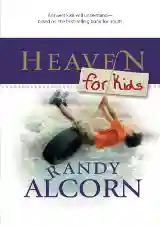
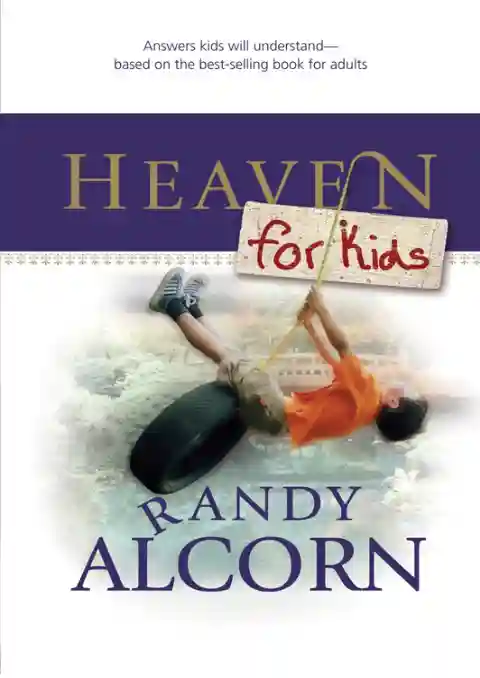
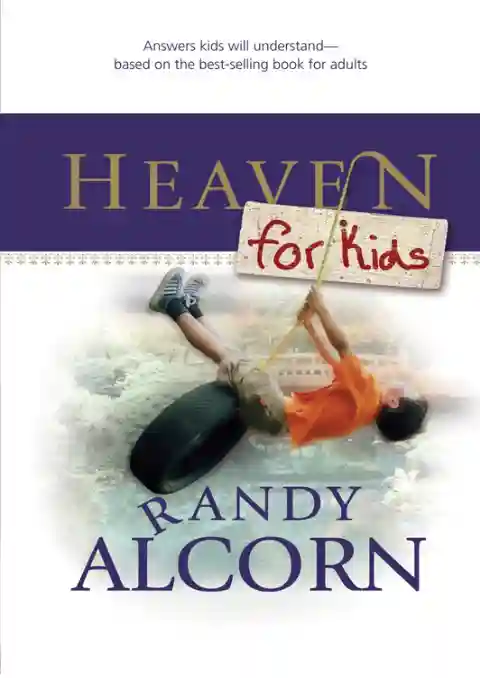
"Heaven For Kids" by Randy Alcorn provides a kid-friendly introduction to the concept of heaven, answering questions about what heaven is like, who will be there, and how to get there. The book presents the idea of heaven in a clear, engaging way that helps young readers understand and look forward to the promise of eternity with God.

Lecrae Moore

Lecrae Moore Lecrae Devaughn Moore, or simply Lecrae, is an American Christian rapper, songwriter, and record producer who performs both as a solo artist and as the leader of a group named ‘116 Clique’. He had a troubled beginning in life but all that changed after he found his faith at 19. Heavily influenced by 2Pac Shakur, and motivated by his new found faith, he ventured into a musical career. He and his friend Ben Washer set up their own independent record label ‘Reach Records’ and through it, he released his debut album ‘Real Talk’ in 2004. In the following years, he brought out six more studio albums, three mix tapes, and two EPs as a solo artist and three studio albums, one remix album, and one EP with his group. He has received six ‘GMA Dove Awards’, two Grammys, two ‘BET Awards’ and more. Lecrae is very active in the community and in 2005, he established ‘ReachLife Ministries’, the mission of which was to “bridge the gap between biblical truth and the urban context”. He is a vocal supporter of the preservation of responsibility and believes that fatherhood should be considered as a value to be installed among men in the United States. He has authored several op-ed articles on race relations in the modern-day America which were published by ‘Billboard’. Childhood & Early Life Lecrae Devaughn Moore was born on October 9, 1979, in Houston, Texas, USA. His father had always been absent from his life and later became a drug addict. He was raised by his poor but hardworking mother and grandmother. He attended services with them at their local church but the initial response to religion was indifferent at best. Growing up, he lived in San Diego, Denver, and Dallas. He suffered sexual molestation at the hands of a female baby sitter when he was eight, and according to Lecrae, it left a long-term negative impact on his views on sexuality. In a life full of abuse and violence, hip hop provided him with a refuge. Besides 2Pac who he admired for his rapping skills, he also looked up to his uncle who introduced him to a life of crime. He began doing drugs at 16 and soon started dealing as well. He kept a Bible with him that his grandmother had given him as a good luck charm. The turning point in his life came when he was arrested for drug possession. The officer let him go upon Lecrae’s promising that he would read and follow the Bible. He thus started visiting the church again. Upon an invitation from a friend, he also started attending Bible studies. He was once involved in an accident where he wrecked his car but he himself came out unscathed. This incident further strengthened his belief in Christ and he devoted his life fully to his faith. He returned to his college, the ‘University of North Texas’ and volunteered and sang at a juvenile detention centre. Career Six years after his conversion, Lecrae Moore released the album ‘Real Talk’ (2004) through ‘Reach Records’, a label he had founded with his friend Ben Washer. It reached #29 spot on the ‘Billboard Gospel Album’ chart after being re-released in 2005 by ‘Cross Movement Records’. In 2005, he formed ‘116 Clique’ with other artists who had signed with ‘Reach Records’. The group owes its name to the Bible Verse ‘Romans 1:16’. They debuted with ‘The Compilation Album’ in the same year. They have since released three more albums, ‘The Compilation Album: Chopped & Screwed’ (remix, 2006), ‘13 Letters’ (2007), and ‘Man Up’ (2011), and one EP, ‘Amped’ (2007). He was nominated for a ‘Stellar Award’ for the ‘Rap/Hip-Hop/Gospel CD of the Year’ for his second solo album ‘After the Music Stops’ (2006). In 2008, he put out his third studio album ‘Rebel’. In his fourth studio album, ‘Rehab’ (2010), Lecrae talks about freedom from inhibiting addictions and habits. Both Lecrae and his album received accolades in the 2010 ‘Rapzilla.com staff picks’, being hailed as the ‘Artist of the Year’ and the ‘Album of the Year’, respectively. His fifth studio album, ‘Rehab: The Overdose’ (2011) was a direct follow-up to ‘Rehab’, both being highly conceptual works. While ‘Rehab’ was about the victory over addiction, ‘Rehab: The Overdose’ focused on attaining "grace, love, peace and hope" in Jesus. He won his first two Doves because of this album, one for the ‘Rap/Hip Hop Album of the Year’ and the other for the ‘Rap/Hip Hop Recorded Song of the Year’ for the track, ‘Hallelujah’. ’Gravity’, released on September 4, 2012, was his sixth studio album and had 15 songs with a total runtime of 57 minutes. It peaked on the ‘Rap Albums’, ‘Christian Albums’, ‘Gospel Albums’, and ‘Independent Albums’ charts. Lecrae released his first mixtape ‘Church Clothes’ on May 10, 2012, through digital download for free. It was followed by ‘Church Clothes 2’ (November 7, 2013), and ‘Church Clothes 3’ (January 15, 2016). He has also released two Extended Plays till date, the EP version of ‘Church Clothes’, and ‘Gravity: The Remix EP’, both released in 2012. He has collaborated with the likes of Trip Lee, Tedashii, Canon, Mali Music, and Ty Dolla Sign. ‘Columbia Records’ signed him in May 2016, in a contract between them and his label. His most recent work, a track named ‘Hammer Time’, which is a collaborative effort with 1k Phew, was released on June 23, 2017. On May 3, 2016, he published his memoir titled ‘Unashamed’ through ‘Broadman & Holman Publishers’. It debuted at #19 spot on the ‘New York Times Best Sellers’ list. Philanthropic Works In 2011, Lecrae, through ‘116 Clique’ and the ‘ReachLife Ministries’, instigated the campaign ‘Man Up’, focused on providing guidance to young urban males on fatherhood and Biblical manhood. In March 2015, ReachLife was deactivated and ‘116 Clique’ shifted its attention to contribute to ‘Peace Preparatory Academy’, a Christian school in Atlanta. In May 2013, he worked alongside several other celebrities on a media initiative named ‘This is Fatherhood’. Jay Z, Barack Obama, Joshua DuBois, Lecrae himself, and others have appeared in the initiative’s promotional public service announcement videos. Major Works In a career marked by successful artistic ventures and awards, Lecrae’s greatest musical achievement is unarguably his seventh and the latest studio album ‘Anomaly’, released on September 9, 2014. It was the first album in history to debut at #1 on both ‘Billboard 200’ and ‘Top Gospel Albums’ charts. It was also certified Gold by the RIAA. Awards & Achievements Lecrae Moore received a Grammy in 2013 for the ‘Best Gospel Album’ for his sixth studio album ‘Gravity’. He won his second Grammy in 2015 for the ‘Best Contemporary Christian Music Performance/Song’ for the track ‘Messengers’ which also featured the Christian pop band ‘For King & Country’. He was named the best gospel artist at the ‘2015 BET Awards’. In 2017, he was the recipient of the ‘BET Best Gospel/ Inspirational Award’ for the song ‘Can’t Stop Me Now (Destination)’. On March 14, 2016, he was conferred with an honorary doctorate from ‘Canada Christian College’. Personal Life & Legacy Lecrae Moore met his wife Darragh at a Bible study when they were both teenagers. They have three children together, two sons and a daughter. The family resides in Atlanta, Georgia. In 2002, he was informed by his then girlfriend that she was pregnant with his child. The couple had an abortion, a decision which he has regretted since. The incident was the subject of the song ‘Good, Bad, Ugly’ from ‘Anomaly’. Trivia Lecrae portrayed the character Dr. Darnall Malmquist in the 2014 independent film ‘Believe Me’.

enjoy your possessions before they possess you

Take an inventory of your life. What do you own right now? Whatever possessions you have are no accident, and not a product of mere happenstance. At the micro level, Jesus promises to care for even the minutest everyday details, like pocket money and food and clothes. As we see in Scripture, in these small possessions, God calls us to live with moral standards because we are susceptible to sinning our way into big problems (like unreasonable consumer debt). God calls us to be wise with money and to work and live economically fruitful lives, and to be careful with our possessions. At the macro level, all wealth distribution and re-distribution is the work of our sovereign God (Ecclesiastes 5:18–6:2). All of our possessions are his, and he gives (and takes away) as he sees fit. God makes the poor and he makes the rich (1 Samuel 2:7). So how does God decide to distribute wealth in the lives of his creatures? This plays out in many different ways. God may give you many possessions, but not give you the power to enjoy those gifts — a great tragedy (Ecclesiastes 6:1–2). God may give you accumulated wealth, and give you the power to enjoy those gifts — a great blessing (Ecclesiastes 5:19, Proverbs 10:22). God may give you possessions, but through future persecution, he may take all those possessions away from you in the end (Hebrews 10:34). God may call you to a life of unalleviated poverty (2 Corinthians 6:10; 8:9). God may give you a life of wealth (2 Chronicles 32:29). God may give you a life in the middle — neither poverty nor wealth (Proverbs 30:8). God may bless you with great wealth, then take it all away and reduce your portfolio to ash, and then restore you with doubled wealth (Job). God may make you wealthy and then call you to voluntary poverty in order to show the world that he is your greatest treasure (Matthew 19:21; Mark 10:21; Luke 18:22). None of these situations is normative, if God sovereignly dispenses possessions to us as he sees fit (which he does). When it comes to possessions, our experiences will vary greatly. But no matter how much (or how little) we possess, there are four things that will help us rightly enjoy the gifts God has given us. 1. Money is temporary. Money existed before us, and it will exist after us, too. The streams of commerce have been flowing for millennia, and one day we will be gone and the currents of economic stimulus will flow to the next generation. We exist in time with money and possessions, but everything of value we own will be passed on to others. Which means in a very real sense, money is temporary. It carries the face of a Caesar or a president to remind us its value is as temporary as world rulers and the rise and fall of nations. So give back to Caesar what is Caesar’s. In other words, the Christian is called to possess all things as though we don’t possess anything (1 Corinthians 7:30). Hold the money, use the money, save the money, steward the money. But also recognize the cash in our wallets is the Monopoly money of this present age. The cash itself has no eternal face value. We entered this life with empty hands, we leave it with empty hands, and to live in the middle with a lust for cash is like holding a sharp dagger backwards and gutting our own souls (1 Timothy 6:6–10). This is true of cars and houses, too. C.S. Lewis said the secret to genuinely delighting in one’s own house is through sacrifice, through a certain crucifixion of the self’s relationship to it. We sacrifice our house, we release our grip on it, and then it becomes an object of joy. When it comes to possessions, true delight is found on the other side of disinterest (Letters 2.788). The takeaway: We don’t boast in our possessions; we boast that God possesses us (Jeremiah 9:23–24). Here our stewardship comes into focus. Material blessing is our temporary stewardship, but delighting in God and his gifts is our true and eternal vocation. 2. Enjoy your possessions now. As we have seen, we don’t always know what God is doing in our lives when it comes to our material possessions. He has different plans for us all. But he intends all of his children to enjoy the gifts he has given us. If you have pants, a shirt, and a sandwich you can be content in life, and if you can be content with a little, you can enjoy God’s goodness to you in every one of the millions of simple gifts he gives to you every day (1 Timothy 6:8). In fact, few things in this life are better than to enjoy your life and the good gifts from God in a spirit of fear and obedience and faith toward God (Ecclesiastes 8:15; 9:7–10; 10:19; 12:13). If you are prone to grumble more than express gratitude, pray and ask that God would give you the power to enjoy his gifts rightly — a gift in itself. As the book of Ecclesiastes makes clear: One of the rarest and most precious gifts is the gift of enjoying our daily gifts. 3. Enjoy your possessions by sharing them. The man who cannot enjoy God’s good gifts every day is often the man who wrongly thinks he must own gifts before enjoying them. We don’t have to own something to find joy in it. Beautiful art is intended to be shared in museums and galleries, not to be locked in the secluded basement of a billionaire. The delight of exclusivity is a delusion — a false delight. Christians get this. The delight of sharing is what drove the early church to share everything they owned (Acts 2:45; 4:32; 1 John 3:17). They gave money. They cared for the poor. They helped the missionaries. A group of wealthy women funded gospel work (Luke 8:2–3). There is a special delight in our possessions when we don’t think of them as “mine” but make use of them to increase the delight of others. 4. Enjoy what you do not own. Finally — and perhaps the whole reason why I wrote this article in the first place — God calls us to enjoy what we can never possess. I cannot  own  many of the greatest gifts God has given me. I do not own my wife; I do not own my kids; I don’t own my time, or the oceans, or the rain, or the sunshine, or the majestic mountain ranges — certainly not in any sense in which I  own  my minivan (my name is on the title). The man who loves the ocean so much that he sells all that he has and buys a beachfront property with his own private sand and closes it off from others so that he can exclusively use it is the man whose joy will die by exclusivity. He cannot enjoy possessions because the possessions possess him. On the other hand, the man who buys beachfront property in order to freely share that property with his friends and family will find his joy doubled. By his seaside generosity, this man will bless many others in great ways. But perhaps the most blessed of all is the man who doesn’t need to own beachfront property at all. He has learned to enjoy every beach in the world for its sheer beauty. He is freed from the desire to enjoy only what he possesses. This seems to be the way Romans 1 pushes us to contemplate. To be truly human is to express a Godward gratitude in the delights of creation. And if that is true, then we discover that what it means to delight in this world is a category that explodes all the categories of what the world promises us in possession. Old Tom Bombadil The beautiful literary example of a man who delights in what he doesn’t possess is found in the character Tom Bombadil, tucked into the early storyline of Tolkien’s The Lord of the Rings. In the epic unfolding storyline, Tom Bombadil is a mysterious figure who is quick to laughter and who seems to live in a blessed state of joy. But his life also bears no impact on the central drama that is unfolding around him. (Thus, Tom Bombadil never appears in the movies.) Tom’s role in the overall story is subtle and easy to miss. Early in the journey, Frodo and company wander into his lands, into a respite of joy in stark contrast to the darkness they would soon face. “Who is Tom Bombadil?” a curious Frodo later asks Tom’s wife, Goldberry. “He is the Master of wood, water, and hill.” “Then all this strange land belongs to him?” “No, indeed!” No, indeed! The woods, the water, and the hills that fill Tom Bombadil with delight are not his to possess — they are his to tend and to enjoy. To be sure, Tom is not an allegory against owning property, nor is he an allegory for passivism. As Tolkien also makes clear, it will take warfare against Sauron to stop the encroaching evil in order to preserve the lifestyle that Tom and Goldberry enjoy. As if we need the confirmation, Tolkien makes it clear in his letters that Tom is an intentional enigma. Tom incarnates a contrast. Tom represents a soul that has been freed from the greed of possession in order to delight in created beauty. He has renounced control and therefore finds the means of power to be valueless, too. As a result, Tom Bombadil can hold Frodo’s great ring of power with no danger to himself or anyone else. The ring wields no power over Tom because Tom has no interest in possessing the power of the ring. When the lust for possession is broken, when gratitude takes its place, and when one can simply delight in the glories of creation, then some of evil’s darkest schemes in the human heart are broken. Tom Bombadil is a model of delighting in what we do not possess, and then of sharing what we do possess — like dinner fellowship around the yellow cream, honeycomb, white bread and butter at his table. May we shine like such glad-hearted, grateful enigmas in our own world.

Feedback
Suggestionsuggestion box
x