

William Carey
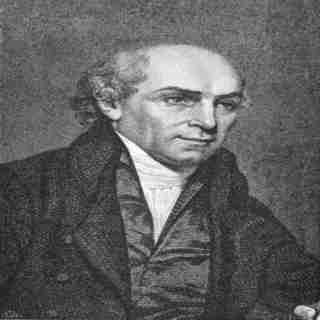 "Expect great things; attempt great things."
At a meeting of Baptist leaders in the late 1700s, a newly ordained minister stood to argue for the value of overseas missions. He was abruptly interrupted by an older minister who said, "Young man, sit down! You are an enthusiast. When God pleases to convert the heathen, he'll do it without consulting you or me."
That such an attitude is inconceivable today is largely due to the subsequent efforts of that young man, William Carey.
Plodder Carey was raised in the obscure, rural village of Paulerpury, in the middle of England. He apprenticed in a local cobbler's shop, where the nominal Anglican was converted. He enthusiastically took up the faith, and though little educated, the young convert borrowed a Greek grammar and proceeded to teach himself New Testament Greek.
When his master died, he took up shoemaking in nearby Hackleton, where he met and married Dorothy Plackett, who soon gave birth to a daughter. But the apprentice cobbler's life was hard—the child died at age 2—and his pay was insufficient. Carey's family sunk into poverty and stayed there even after he took over the business.
"I can plod," he wrote later, "I can persevere to any definite pursuit." All the while, he continued his language studies, adding Hebrew and Latin, and became a preacher with the Particular Baptists. He also continued pursuing his lifelong interest in international affairs, especially the religious life of other cultures.
Carey was impressed with early Moravian missionaries and was increasingly dismayed at his fellow Protestants' lack of missions interest. In response, he penned An Enquiry into the Obligations of Christians to Use Means for the Conversion of the Heathens. He argued that Jesus' Great Commission applied to all Christians of all times, and he castigated fellow believers of his day for ignoring it: "Multitudes sit at ease and give themselves no concern about the far greater part of their fellow sinners, who to this day, are lost in ignorance and idolatry."
Carey didn't stop there: in 1792 he organized a missionary society, and at its inaugural meeting preached a sermon with the call, "Expect great things from God; attempt great things for God!" Within a year, Carey, John Thomas (a former surgeon), and Carey's family (which now included three boys, and another child on the way) were on a ship headed for India.
Stranger in a strange land
Thomas and Carey had grossly underestimated what it would cost to live in India, and Carey's early years there were miserable. When Thomas deserted the enterprise, Carey was forced to move his family repeatedly as he sought employment that could sustain them. Illness racked the family, and loneliness and regret set it: "I am in a strange land," he wrote, "no Christian friend, a large family, and nothing to supply their wants." But he also retained hope: "Well, I have God, and his word is sure."
He learned Bengali with the help of a pundit, and in a few weeks began translating the Bible into Bengali and preaching to small gatherings.
When Carey himself contracted malaria, and then his 5-year-old Peter died of dysentery, it became too much for his wife, Dorothy, whose mental health deteriorated rapidly. She suffered delusions, accusing Carey of adultery and threatening him with a knife. She eventually had to be confined to a room and physically restrained.
"This is indeed the valley of the shadow of death to me," Carey wrote, though characteristically added, "But I rejoice that I am here notwithstanding; and God is here."
Gift of tongues
In October 1799, things finally turned. He was invited to locate in a Danish settlement in Serampore, near Calcutta. He was now under the protection of the Danes, who permitted him to preach legally (in the British-controlled areas of India, all of Carey's missionary work had been illegal).
Carey was joined by William Ward, a printer, and Joshua and Hanna Marshman, teachers. Mission finances increased considerably as Ward began securing government printing contracts, the Marshmans opened schools for children, and Carey began teaching at Fort William College in Calcutta.
In December 1800, after seven years of missionary labor, Carey baptized his first convert, Krishna Pal, and two months later, he published his first Bengali New Testament. With this and subsequent editions, Carey and his colleagues laid the foundation for the study of modern Bengali, which up to this time had been an "unsettled dialect."
Carey continued to expect great things; over the next 28 years, he and his pundits translated the entire Bible into India's major languages: Bengali, Oriya, Marathi, Hindi, Assamese, and Sanskrit and parts of 209 other languages and dialects.
He also sought social reform in India, including the abolition of infanticide, widow burning (sati), and assisted suicide. He and the Marshmans founded Serampore College in 1818, a divinity school for Indians, which today offers theological and liberal arts education for some 2,500 students.
By the time Carey died, he had spent 41 years in India without a furlough. His mission could count only some 700 converts in a nation of millions, but he had laid an impressive foundation of Bible translations, education, and social reform.
His greatest legacy was in the worldwide missionary movement of the nineteenth century that he inspired. Missionaries like Adoniram Judson, Hudson Taylor, and David Livingstone, among thousands of others, were impressed not only by Carey's example, but by his words "Expect great things; attempt great things." The history of nineteenth-century Protestant missions is in many ways an extended commentary on the phrase.
"Expect great things; attempt great things."
At a meeting of Baptist leaders in the late 1700s, a newly ordained minister stood to argue for the value of overseas missions. He was abruptly interrupted by an older minister who said, "Young man, sit down! You are an enthusiast. When God pleases to convert the heathen, he'll do it without consulting you or me."
That such an attitude is inconceivable today is largely due to the subsequent efforts of that young man, William Carey.
Plodder Carey was raised in the obscure, rural village of Paulerpury, in the middle of England. He apprenticed in a local cobbler's shop, where the nominal Anglican was converted. He enthusiastically took up the faith, and though little educated, the young convert borrowed a Greek grammar and proceeded to teach himself New Testament Greek.
When his master died, he took up shoemaking in nearby Hackleton, where he met and married Dorothy Plackett, who soon gave birth to a daughter. But the apprentice cobbler's life was hard—the child died at age 2—and his pay was insufficient. Carey's family sunk into poverty and stayed there even after he took over the business.
"I can plod," he wrote later, "I can persevere to any definite pursuit." All the while, he continued his language studies, adding Hebrew and Latin, and became a preacher with the Particular Baptists. He also continued pursuing his lifelong interest in international affairs, especially the religious life of other cultures.
Carey was impressed with early Moravian missionaries and was increasingly dismayed at his fellow Protestants' lack of missions interest. In response, he penned An Enquiry into the Obligations of Christians to Use Means for the Conversion of the Heathens. He argued that Jesus' Great Commission applied to all Christians of all times, and he castigated fellow believers of his day for ignoring it: "Multitudes sit at ease and give themselves no concern about the far greater part of their fellow sinners, who to this day, are lost in ignorance and idolatry."
Carey didn't stop there: in 1792 he organized a missionary society, and at its inaugural meeting preached a sermon with the call, "Expect great things from God; attempt great things for God!" Within a year, Carey, John Thomas (a former surgeon), and Carey's family (which now included three boys, and another child on the way) were on a ship headed for India.
Stranger in a strange land
Thomas and Carey had grossly underestimated what it would cost to live in India, and Carey's early years there were miserable. When Thomas deserted the enterprise, Carey was forced to move his family repeatedly as he sought employment that could sustain them. Illness racked the family, and loneliness and regret set it: "I am in a strange land," he wrote, "no Christian friend, a large family, and nothing to supply their wants." But he also retained hope: "Well, I have God, and his word is sure."
He learned Bengali with the help of a pundit, and in a few weeks began translating the Bible into Bengali and preaching to small gatherings.
When Carey himself contracted malaria, and then his 5-year-old Peter died of dysentery, it became too much for his wife, Dorothy, whose mental health deteriorated rapidly. She suffered delusions, accusing Carey of adultery and threatening him with a knife. She eventually had to be confined to a room and physically restrained.
"This is indeed the valley of the shadow of death to me," Carey wrote, though characteristically added, "But I rejoice that I am here notwithstanding; and God is here."
Gift of tongues
In October 1799, things finally turned. He was invited to locate in a Danish settlement in Serampore, near Calcutta. He was now under the protection of the Danes, who permitted him to preach legally (in the British-controlled areas of India, all of Carey's missionary work had been illegal).
Carey was joined by William Ward, a printer, and Joshua and Hanna Marshman, teachers. Mission finances increased considerably as Ward began securing government printing contracts, the Marshmans opened schools for children, and Carey began teaching at Fort William College in Calcutta.
In December 1800, after seven years of missionary labor, Carey baptized his first convert, Krishna Pal, and two months later, he published his first Bengali New Testament. With this and subsequent editions, Carey and his colleagues laid the foundation for the study of modern Bengali, which up to this time had been an "unsettled dialect."
Carey continued to expect great things; over the next 28 years, he and his pundits translated the entire Bible into India's major languages: Bengali, Oriya, Marathi, Hindi, Assamese, and Sanskrit and parts of 209 other languages and dialects.
He also sought social reform in India, including the abolition of infanticide, widow burning (sati), and assisted suicide. He and the Marshmans founded Serampore College in 1818, a divinity school for Indians, which today offers theological and liberal arts education for some 2,500 students.
By the time Carey died, he had spent 41 years in India without a furlough. His mission could count only some 700 converts in a nation of millions, but he had laid an impressive foundation of Bible translations, education, and social reform.
His greatest legacy was in the worldwide missionary movement of the nineteenth century that he inspired. Missionaries like Adoniram Judson, Hudson Taylor, and David Livingstone, among thousands of others, were impressed not only by Carey's example, but by his words "Expect great things; attempt great things." The history of nineteenth-century Protestant missions is in many ways an extended commentary on the phrase.
keep him from his knees
My Dear Globdrop, Most regretfully did I receive your last letter. Slumped over at my desk for nearly the entire day, I failed to detect the slightest evidence of rational thought. You coughed and sneezed all over the page and still thought to send it, did you? Next time you desire to unclutter the pockets of your mind, rifle through the lint and half-gnawed bones with one of your peers instead of your superior officer. The only nugget I found (and I admit to having slogged through only half of the small booklet you called a letter) was the bit about your man’s resolves to “give more time to prayer.” I hope, for your sake, that you have not applied standard protocol to such a vile practice. In other pursuits, we consider it sport to let the game run free for a bit. We allow the patients to exercise new levels of self-control, discipline, purity, and the like. The joy they feel when they assume themselves finally free heightens our fun when, to their horror and despair, we recapture them in old habits. And this is not just for entertainment: The last state becomes worse than the first. The merry-go-round of failure weakens their will to fight back, and soon, they won’t attempt to run free even when the door is flung open. Their fresh starts make for more bitter endings. But we do not trifle with prayer, ever . Have you forgotten that one stands on the other side of them, listening ? Keep the Prey from Prayer This ought to be painfully apparent. Would you allow an all-but-conquered army, surrounded and besieged, to send out even one letter pleading for reinforcements? Would you not hunt that messenger down, put arrows in his back, and burn the letter? It is bad enough that our bitter Enemy — I have it on credible report — actually wants to help them. No, silence toward the Enemy is hell’s only policy. You must silence him as soon as possible. A few pointers. 1. Distract him in his closet. This first step is almost too simple to be devious: show him his surroundings. When he has time to sit and observe — something he otherwise would rarely do — show him everything. The more bothersome, the better. Let him hear that horrid Mr. Snoodle bark at a squirrel down the street. Let him see the mailman walk irreverently across his yard. Let him notice the chipped paint upon the windowsill, the small crack in the ceiling fan, the children’s play toys left disobediently about on the carpet. Once he is divided, end the affair promptly with something he can quickly do — he should clean the dishes or vacuum the carpet. Assure him, of course, that this will only be a temporary detour that will allow for greater focus. Send him away after anything and everything. 2. Remind him of righteous deeds to do. Now, don’t be afraid to use even — and my pen recoils to write it — “righteous distractions.” This, I hope you can finally begin to appreciate, reveals how much we loathe the time he spends upon his knees — that place where all horrid events begin. Get him to say, as one of their generals has said, You wouldn’t believe how many good things keep me from praying — not sin. Sin does not keep me from praying; righteousness keeps me from praying: answering holy emails or just checking out one more piece of relevant news to pray about. . . . It’s not evil that keeps us from praying; it’s good things. So — only in times of deepest desperation, mind you — suggest a million fine deeds he could otherwise be doing: a friend could use an encouraging text message. The elderly man next store could use his driveway shoveled. Perhaps he ought to call and check in with that sister who is struggling. We can destroy those resolves in due time. The act at hand, the speaking directly with the Enemy, stands priority. Without refueling, they can only get only so far. 3. Remind him how little he has prayed. Perhaps you naively assume that this misses the point — why remind a starving man that he has not eaten enough bread? But this squanders an opportunity. If he is set on yelping to the Enemy, prostrating himself on the floor like a spaniel, two courses of action can proceed: either he gets fed and returns to the banquet over and over again — and we lose him — or we spoil the bread in his mouth by inducing a sense of guilt . Instead of allowing him to begin where he is — one meal at a time, as it were — suggest all the ways he falls short of where he should be by now . As he finally begins to intercede for his sister, ask, Why have you waited so long? Should he pray for our humans to follow the Enemy, inquire, Why were you unbothered by their plight till now? If he begins that wretched way he taught them, “My Father,” let the name turn to guilt before he finishes: Do other sons fail so much at prayer? Ten minutes of prayer seems like such a weak window for someone who has been a Christian so long. A steady diet of shame turns prayer inward ¬— a gaze into the mirror at imperfections, not a gaze at the Enemy or his alleged perfections. Make prayer a reminder of everything your man is not, rather than a communing with all the Enemy is. Press blame upon him, and he soon may return to his unencumbered, guilt-free starvation. 4. Remind him that he is free from taking prayer too seriously. Label all prayer habits as legalism. Planning to spend thirty minutes in prayer a day? That is law, not grace. Where — be sure to ask him — does the Bible say he needs to wake up at 6:30 in the morning? Anyone who tells him he must spend time communing with the Enemy doesn’t know what freedom the Enemy affords. Tell them that he is perfectly free to be prayerless before the Enemy — of course, by this we mean that he is free to stand clueless, weaponless, and defenseless before us. Let him be regular in checking social media, regular in watching his shows, regular in playing Ultimate Frisbee and going to concerts, regular in walking the dog, eating, sleeping, and playing the saxophone — but make the idea that he might be regular in prayer works based . Keep him from prayer, and he shall surely become prey. 5. Remind him of tomorrow. He works hard after all. Working two jobs. Busy with countless Christian activities. What does the Enemy really expect of him? The Enemy’s Son sought to rouse his drowsy disciples to their prayer posts on the night everything changed, but he couldn’t . They were too tired to “watch and pray that they may not enter into temptation.” The spirit may have been willing, but the flesh was weak. We licked our lips as their eyelids drooped. You can always pray tomorrow morning was our lullaby. A little sleep, a little slumber, a little tapping of the alarm clock, and we shall come upon them like a thief in the night. Lead Them into Temptation The Enemy instructs them to pray that they might not enter into temptation — I hope you see the seriousness by now. He even commands them to pray daily with the wretched words, “Lead us not into temptation.” Keep them from all of this. Leave them over-busy and exhausted, pushing prayer to the bookends of their days until it is little more than a half-conscious moan or sigh. At all costs, do not let them truly believe that God is and, most of all, that he rewards those who seek him — with himself. Your tried and tempted uncle, Grimgod