
Others like has christianity failed you Features >>
-160.webp)





About the Book
"Has Christianity Failed You" by Ravi Zacharias explores the intersection of faith and doubt, addressing common questions and criticisms about Christianity. Zacharias argues that the failures of individuals or institutions within the Christian faith do not negate the truth of Christianity itself. He urges readers to seek a deeper understanding of their faith and trust in God, despite the challenges they may face.
Jack Coe
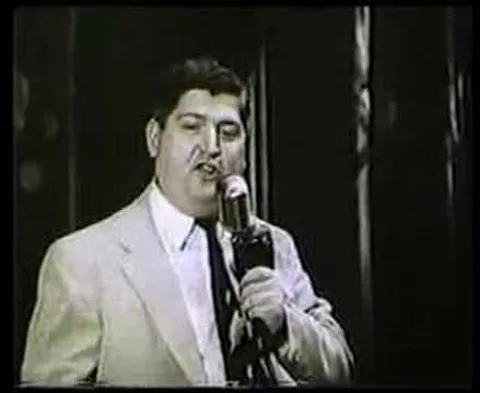 Jack G. Coe was born on March 11, 1918 in Oklahoma City, Oklahoma. His father, George, was a gambler and an alcoholic. His parents, although having been Christians, did not attend church. His grandparents, on his father's side were Christians but they were not able to influence their son's behavior. The couple had seven children in all. When Jack was five his father gambled away all their furniture and their house, leaving his mother Blanche destitute with seven children. They were devastated. His mother tried to make a new life by moving to Pennsylvania, but it was too hard. When Coe's father came to her house promising to change she agreed to reunite. The change did not last, however, and George went back to gambling.
Blanche left George for good, but only took her daughter with her this time. The boys were left with their father, which meant they were essentially left on their own. Often they did not have food to eat. Blanche did return to claim them, but could not care for them on her own. When Jack was nine he and his twelve year old brother was turned over to an orphanage. His older brother ran away, but was hit by a car and died. Jack struggled with rejection and abandonment. At seventeen he left the orphanage and began to drink, becoming an alcoholic like his father. He drank so much he had ulcers and his heart became enlarged. The doctor told him that if he didn't quit drinking he was going to die. Not knowing where else to go he moved to California to be near his mother. When he thought he was near death he promised God he would turn his life around and he was healed for a while. The family moved to Texas and he was drinking again. This time he heard God's voice "This is your last chance". The following Sunday he went to a Nazarene church and accepted Christ. He was radically changed. He went to church meetings almost every night, prayed, and read the Word constantly. After a year and a half he went to a Pentecostal meeting and was filled with the Holy Spirit and had a vision of Jesus.
Jack felt called to the ministry and went to and Assembly of God school called Southwestern Bible Institute, led by P.C. Nelson. He left in 1941 to join the army after the bombing of Pearl Harbor. He was so committed to God's purposes that he went to church every night. His sergeant sent him for psychiatric evaluation This happened several times while he was in the army. One day he was reading a book by P.C. Nelson on Healing when he fell asleep. He had a dream where he saw his sister close to death in a hospital but he saw a bright light come into her room and she was healed. He left immediately to see her and everything was as he'd seen it in a dream. She was healed and he was changed forever.
In 1944 Coe became ill with malaria. He was sent home because the doctors felt they could not help him. He sought the Lord who told him "preach the gospel". God healed him. He went out to preach and three people were saved. That year he was ordained as an Assembly of God minister. His healing experiences caused him to seek God about the gifts of healing. In 1945 he felt God called him to have a healing meeting. He went to Texas and announced in a church that God was going to heal the sick, cause the blind to see, and the deaf to hear. Those were bold words indeed! A woman received her sight that night. His ministry was launched. He began traveling over the country.
In 1946 God spoke to Coe and his wife Juanita to sell their house and start an itinerant ministry. They purchased a beat up truck and a ministry tent and began to live on the road. In 1948 God spoke to Coe to go to Redding, California. A woman, whose leg was about to be amputated, was healed and the news spread throughout the city. God blessed the couple and for the first time had enough money to be ahead on their finances. Healings and miracles regularly occurred in his meetings.
There were some very controversial things about Jack Coe. He believed that he should have a larger tent than other evangelists and went and measured Oral Roberts tent, then he ordered one larger. His style was dramatic and he often hit, slapped, or jerked people. He also would pull people out of wheelchairs. His speaking style was aggressive as he challenged people to believe God. He suggested that people who stood against him would be "struck dead by God". He was anti-medicine and told people not to go to doctors. He also encouraged interracial meetings.
In 1950 Coe began publishing the Herald of Healing magazine. Within six years it was being sent to over 350,000 people. God began to speak to Coe about opening an orphanage. He collected money for the project at every meeting. He sold his own home and began to build the children's home. His own family moved into the partially finished building so they would have a place to live. Coe eventually bought 200 acres outside of Dallas and built four dormitories and established a home farm. They could support 200 abandoned children.
In 1952 Coe began a radio ministry, which eventually was carried on over 100 radio stations. He also began having trouble with the Assembly of God organization. Although initially responsive to suggestions, he felt their goal was to limit the ministry. He suggested that the Assembly of God leadership had lost the belief in the miraculous and felt that they should be replaced. Needless to say this aggravated the situation. In 1953 Coe was expelled from the Assembly of God church. They felt that he was independent, extreme, prone to exaggeration, and they weren't sure about his ministry style. Coe felt that it was an attack against his success. He told people that "one of the officials made the remark to me that he would not rest until every man that was preaching divine healing in a deliverance ministry, separated from the General Council of the Assembly of God."
In 1953 Coe started his own church in Dallas. It was called the Dallas Revival Center. God spoke to him that it was important for those not getting healed to receive teaching about healing from the Word. In 1954 Coe opened a faith home, where people could stay for extended periods of time to receive prayer for healing. Teaching and prayer were given daily. 1956 was a pivotal year. While Coe was preaching in Miami he was arrested for practicing medicine without a license. This brought national attention to him and the ministry, both positive and negative. He was acquitted of practicing medicine without a license when the trial went to court.
At the end of 1956 Coe became ill. He had pushed himself night and day for years. He had poor eating habits and was overweight. He thought it was exhaustion but it was bulbar polio, a form of polio that affects the nerves. He became paralyzed, developed pneumonia, and died December 16, 1956.
Jack G. Coe was born on March 11, 1918 in Oklahoma City, Oklahoma. His father, George, was a gambler and an alcoholic. His parents, although having been Christians, did not attend church. His grandparents, on his father's side were Christians but they were not able to influence their son's behavior. The couple had seven children in all. When Jack was five his father gambled away all their furniture and their house, leaving his mother Blanche destitute with seven children. They were devastated. His mother tried to make a new life by moving to Pennsylvania, but it was too hard. When Coe's father came to her house promising to change she agreed to reunite. The change did not last, however, and George went back to gambling.
Blanche left George for good, but only took her daughter with her this time. The boys were left with their father, which meant they were essentially left on their own. Often they did not have food to eat. Blanche did return to claim them, but could not care for them on her own. When Jack was nine he and his twelve year old brother was turned over to an orphanage. His older brother ran away, but was hit by a car and died. Jack struggled with rejection and abandonment. At seventeen he left the orphanage and began to drink, becoming an alcoholic like his father. He drank so much he had ulcers and his heart became enlarged. The doctor told him that if he didn't quit drinking he was going to die. Not knowing where else to go he moved to California to be near his mother. When he thought he was near death he promised God he would turn his life around and he was healed for a while. The family moved to Texas and he was drinking again. This time he heard God's voice "This is your last chance". The following Sunday he went to a Nazarene church and accepted Christ. He was radically changed. He went to church meetings almost every night, prayed, and read the Word constantly. After a year and a half he went to a Pentecostal meeting and was filled with the Holy Spirit and had a vision of Jesus.
Jack felt called to the ministry and went to and Assembly of God school called Southwestern Bible Institute, led by P.C. Nelson. He left in 1941 to join the army after the bombing of Pearl Harbor. He was so committed to God's purposes that he went to church every night. His sergeant sent him for psychiatric evaluation This happened several times while he was in the army. One day he was reading a book by P.C. Nelson on Healing when he fell asleep. He had a dream where he saw his sister close to death in a hospital but he saw a bright light come into her room and she was healed. He left immediately to see her and everything was as he'd seen it in a dream. She was healed and he was changed forever.
In 1944 Coe became ill with malaria. He was sent home because the doctors felt they could not help him. He sought the Lord who told him "preach the gospel". God healed him. He went out to preach and three people were saved. That year he was ordained as an Assembly of God minister. His healing experiences caused him to seek God about the gifts of healing. In 1945 he felt God called him to have a healing meeting. He went to Texas and announced in a church that God was going to heal the sick, cause the blind to see, and the deaf to hear. Those were bold words indeed! A woman received her sight that night. His ministry was launched. He began traveling over the country.
In 1946 God spoke to Coe and his wife Juanita to sell their house and start an itinerant ministry. They purchased a beat up truck and a ministry tent and began to live on the road. In 1948 God spoke to Coe to go to Redding, California. A woman, whose leg was about to be amputated, was healed and the news spread throughout the city. God blessed the couple and for the first time had enough money to be ahead on their finances. Healings and miracles regularly occurred in his meetings.
There were some very controversial things about Jack Coe. He believed that he should have a larger tent than other evangelists and went and measured Oral Roberts tent, then he ordered one larger. His style was dramatic and he often hit, slapped, or jerked people. He also would pull people out of wheelchairs. His speaking style was aggressive as he challenged people to believe God. He suggested that people who stood against him would be "struck dead by God". He was anti-medicine and told people not to go to doctors. He also encouraged interracial meetings.
In 1950 Coe began publishing the Herald of Healing magazine. Within six years it was being sent to over 350,000 people. God began to speak to Coe about opening an orphanage. He collected money for the project at every meeting. He sold his own home and began to build the children's home. His own family moved into the partially finished building so they would have a place to live. Coe eventually bought 200 acres outside of Dallas and built four dormitories and established a home farm. They could support 200 abandoned children.
In 1952 Coe began a radio ministry, which eventually was carried on over 100 radio stations. He also began having trouble with the Assembly of God organization. Although initially responsive to suggestions, he felt their goal was to limit the ministry. He suggested that the Assembly of God leadership had lost the belief in the miraculous and felt that they should be replaced. Needless to say this aggravated the situation. In 1953 Coe was expelled from the Assembly of God church. They felt that he was independent, extreme, prone to exaggeration, and they weren't sure about his ministry style. Coe felt that it was an attack against his success. He told people that "one of the officials made the remark to me that he would not rest until every man that was preaching divine healing in a deliverance ministry, separated from the General Council of the Assembly of God."
In 1953 Coe started his own church in Dallas. It was called the Dallas Revival Center. God spoke to him that it was important for those not getting healed to receive teaching about healing from the Word. In 1954 Coe opened a faith home, where people could stay for extended periods of time to receive prayer for healing. Teaching and prayer were given daily. 1956 was a pivotal year. While Coe was preaching in Miami he was arrested for practicing medicine without a license. This brought national attention to him and the ministry, both positive and negative. He was acquitted of practicing medicine without a license when the trial went to court.
At the end of 1956 Coe became ill. He had pushed himself night and day for years. He had poor eating habits and was overweight. He thought it was exhaustion but it was bulbar polio, a form of polio that affects the nerves. He became paralyzed, developed pneumonia, and died December 16, 1956.
3 Trials Every Marriage Will Face
When I was married at the age of twenty-three, I wasn’t naïve. I knew marriage was going to be difficult. I knew it was going to take dedication and work. I knew there would be challenges and trials. Sometimes, I don’t know that we give our young married couples credit due to them when they enter into a union. We assume they see marriage as all roses and fairy tales, but I think most young adults are aware that trials are an inevitable part of marriage. What I’m not sure they—or I—realized is that there is a set of trials that every marriage will face. Every marriage? Yes. Every marriage. Are there any exceptions to this rule? Perhaps, but you’ll have to provide compelling evidence for me to believe that a marriage could possibly escape these trials. “Every” is an all-encompassing word. There are no exceptions to the rule, and therefore, all will be affected. Knowing about these impending trials may give us some insight into how to handle them when they come. 1. The Trial of Identity No matter how unified we are in our marriage relationship, there will come a time when we struggle to find ourselves within our relationship. Some spouses are very content to identify as a couple, while others find friction in being recognized as the “spouse of.” For the spouses who are content to identify as a couple and, in a sense, forgo their individual and independent identities, the trial can become when their “oneness” is threatened. When life intercepts the unity and threatens to take them in separate directions—whether in conviction, opinion, leading, etc. At some point, the one path will threaten to split into two. This doesn’t mean divorce or separation. In fact, nothing so dramatic as that, necessarily. But, there will come a time when the oneness is challenged because, while you are a union, you also have two minds, two souls, and two very individual ways of processing. For the spouses who prefer to maintain their independence and not be identified by their spouse, the trial of identity can come in an opposite way. Often, the quest to not lose their own personage will create a wedge and a separation in the marriage because they want to be seen as their own person so badly. In essence, they will sacrifice elements of oneness to remain single-but-married. This sounds a bit extreme to some, but the reality is that nothing in culture today inspires us to let go of ourselves and become intermeshed with another so deeply that we can’t tell where we end and they begin. Culture encourages us to find self-care and self-identify, which can create conflict within a marriage. The trial of identity has two extreme ends, but we’ll often find ourselves somewhere in the middle. The reality is, there is a fine balance to being a union of two into one and also managing our own unique identities, wills, thought processes, and persons. Be prepared to forge through this trial together. It will polish your marriage if handled with sacrificial love. 2. The Trial of Differences We are truly fooling ourselves if we enter into marriage believing that our differences will be small. Humor and comedy often come into play with the scripts of toothpaste tube squeezing at the end of the middle, TP rolling over the top or beneath, socks folded or piled, bed made or not, etc. Will there be these differences in marriage? Absolutely. But differences don’t limit themselves to the trivial. No matter how much you prepare before you’re married, differences will continue to rise throughout your marriage. They may come in the form of beliefs. For example, you may find that you and your spouse agreed on the significant points of your faith/doctrine, but as you delve into the application of faith and daily life, you both approach life and your faith walks differently. You may find that you didn’t address doctrinal differences nearly as much as you thought, and suddenly one of you believes in the idea of free will while the other believes God predestines those who will follow Him. Your differences may come in the form of goals and dreams. You may have a lifelong dream you agree on initially, but after years of pursuing it, one spouse may simply be done, while the other believes it may still happen. When children come into the equation, you probably will find that you have different parenting skills simply because you were raised differently. This will inevitably cause friction—and probably a lot of it- if you haven’t stopped identifying the major differences areas. Differences will rear their heads constantly throughout your marriage. It’s a trial that is both inevitable and will never go away. Be prepared, not scared. Be open to communicating, setting aside personal feelings, discussing them rationally, and being willing to make compromises. 3. The Trial of Insecurities Men and women have vastly different insecurities. Granted, there are stereotypes of women being super emotional and insecure, while men tend to need to exert their dominance and strength in order to feel confident. Interestingly, I’ve known couples who are the exact opposites of that. I’ve known very sensitive men, and when their wife is displeased with them, it hurts them to the core and makes them question if they’re doing their role as husbands correctly. I’ve known women to feel as though they’ve been diminished into the subservient role of a wife and have no value outside of dishwashing and child-rearing (both of which are highly important for different reasons!). Facts don’t lie. We all have insecurities. Nothing brings out these insecurities like marriage because it’s within marriage that we are the most vulnerable. Our questioning of ourselves becomes evident, and when a spouse questions those very elements, we can experience insecurity like none we’ve faced before. You will battle insecurities within marriage. It is an assured promise that they will come. They will come in various forms. Insecurities you didn’t know you had may come to the surface. Perhaps you’ll develop new insecurities. Circumstances can influence you, push you into dark places you’re not prepared for, and leave you feeling exposed. The trial of insecurity is a big one. You can either choose to be together and work through them, seeking trust and reliance and respect, or those insecurities can fester and become deep wounds of mistrust that eventually lead to rifts in marriage that can take years to heal. Don’t let these trials frighten you. The fact is, difficulties are inevitable. Knowing these are some that are sure to come can help you be proactive in preparing. This means communicating with each other and respecting the other’s position even if you don’t understand or agree. It means seeking the Lord in prayer together so that while you’re your own individuals, you can also have a unity that will continue to grow during these difficulties. Marriage is a guaranteed trial. But as Proverbs says, two are better than one, and three strands are not easily broken; binding both of your hearts around the central Person of Christ will strengthen you for the troubled days ahead. Jaime Jo Wright Crosswalk.com Contributing Writer