-480.webp)

Others like god's medicine of faith: the word Features >>

God's Law Of Attraction
-160.webp)
Love Not The World
God's Will Is The Holy Spirit
God's Timing For Your Life
Developing Faith For The Working Of Miracles
Holding To The Word Of The Lord

Courage To Conquer: Passing The Sword To The Last Generation

Seize Your Kairos Moment
Healing The Orphan Spirit
Putting On The Mind Of Christ
About the Book
"God's Medicine of Faith: The Word" by Norvel Hayes provides insights into the power of faith and how the word of God can be used as a healing tool for physical, emotional, and spiritual ailments. The book emphasizes the importance of declaring God's promises and standing firm in faith to receive healing and restoration in all areas of life. Hayes offers practical advice and encouragement for readers to strengthen their faith and trust in God's healing power.
A.W. Tozer (Aiden Wilson Tozer)
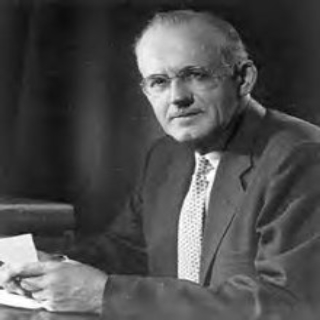 Early life
Tozer hailed from a tiny farming community in western La Jose, Pennsylvania. He was converted to Christianity as a teenager in Akron, Ohio: While on his way home from work at a tire company, he overheard a street preacher say, "If you don't know how to be saved ... just call on God, saying, 'Lord, be merciful to me a sinner.'" Upon returning home, he climbed into the attic and heeded the preacher's advice.
Pastor
In 1919, five years after his conversion and without formal education in Christian theology, Tozer accepted an offer to serve as pastor of his first church. That began 44 years of ministry associated with the Christian and Missionary Alliance (C&MA), a Protestant Evangelical denomination, 33 of them serving as a pastor in several different congregations (his first, a small storefront church in Nutter Fort, West Virginia). Later, he served thirty years (1928 to 1959) as the pastor of Southside Alliance Church in Chicago; the final years of his life he spent as pastor of Avenue Road Church in Toronto, Ontario, Canada. Observing contemporary Christian living, Tozer felt that the church was on a dangerous course toward compromising with "worldly" concerns.
Born into poverty, Tozer was self-educated and taught himself what he missed in high school and university.
Author
Tozer began writing in 1931 for the denominational magazine of the Christian and Missionary Alliance, Alliance Weekly (now Alliance Life), which became the platform from which his writing career emerged. He later wrote the monthly column “There’s Truth in It” (1936–37) and “A Word in Season” (1944–46). In May 1950, he became the editor of the Alliance Weekly, a position he filled until his death in 1963.
At the urging of David W. Fant, publications secretary of the C&MA, Tozer wrote biographies of A. B. Simpson (1943) and Robert A. Jaffray (1947). It was the publication of his third book, The Pursuit of God (1948), that made Tozer a household name among evangelicals. In addition to the 12 books he published in his lifetime, more than 40 other books have been compiled from his magazine features, editorials, and transcribed sermons.
During his lifetime, Tozer’s works were published by Christian Publications, Inc., the denominational press operated by the C&MA. The publishing house declared bankruptcy in 2006 and was purchased by WingSpread Publishers of Camp Hill, Pennsylvania.[8] In November 2013, Moody Publishers acquired Wingspread from parent company Zur Ltd., a transaction that included more than 60 Tozer books and pamphlets. Some of Tozer’s works are now in the public domain and have been issued by multiple publishers.
Personal life
Tozer had seven children, six sons and a daughter. Living a simple and non-materialistic lifestyle, he and his wife, Ada Cecelia Pfautz, never owned a car, preferring bus and train travel. Even after becoming a well-known Christian author, Tozer signed away much of his royalties to those who were in need.
Prayer was of vital personal importance for Tozer. "His preaching as well as his writings were but extensions of his prayer life," comments his biographer, James L. Snyder, in the book In Pursuit of God: The Life Of A.W. Tozer. "He had the ability to make his listeners face themselves in the light of what God was saying to them," writes Snyder.
Death and legacy
Tozer died on May 13, 1963, after suffering a heart attack. He was buried in Chicago, and later the family had his remains reinterred at Ellet Cemetery, Akron, Ohio. A simple marker reads: A. W. Tozer—A Man of God. The Alliance Weekly ran a memorial issue with numerous tributes and excerpts. The same issue also featured “God’s Greatest Gift to Man," a transcription of his final sermon. A few months prior to his death, Tozer had submitted the manuscript to The Christian Book of Mystical Verse, which was released in 1964 as his final book. His official publisher, Christian Publications, released many titles after his death, based on his magazine articles and sermon transcriptions. These continue in print with Moody Publishers. Several other publishers have released his public domain works.
In 2000, The Pursuit of God was named to Christianity Today’s list of 100 “Books of the Century.” In 2006, Knowledge of the Holy was named in “The Top 50 Books That Have Shaped Evangelicals.” Contemporary Christian music artist Lauren Barlow of BarlowGirl later published a compilation of stories told by 59 artists, writers, and leaders about A.W. Tozer’s personal inspiration.
Early life
Tozer hailed from a tiny farming community in western La Jose, Pennsylvania. He was converted to Christianity as a teenager in Akron, Ohio: While on his way home from work at a tire company, he overheard a street preacher say, "If you don't know how to be saved ... just call on God, saying, 'Lord, be merciful to me a sinner.'" Upon returning home, he climbed into the attic and heeded the preacher's advice.
Pastor
In 1919, five years after his conversion and without formal education in Christian theology, Tozer accepted an offer to serve as pastor of his first church. That began 44 years of ministry associated with the Christian and Missionary Alliance (C&MA), a Protestant Evangelical denomination, 33 of them serving as a pastor in several different congregations (his first, a small storefront church in Nutter Fort, West Virginia). Later, he served thirty years (1928 to 1959) as the pastor of Southside Alliance Church in Chicago; the final years of his life he spent as pastor of Avenue Road Church in Toronto, Ontario, Canada. Observing contemporary Christian living, Tozer felt that the church was on a dangerous course toward compromising with "worldly" concerns.
Born into poverty, Tozer was self-educated and taught himself what he missed in high school and university.
Author
Tozer began writing in 1931 for the denominational magazine of the Christian and Missionary Alliance, Alliance Weekly (now Alliance Life), which became the platform from which his writing career emerged. He later wrote the monthly column “There’s Truth in It” (1936–37) and “A Word in Season” (1944–46). In May 1950, he became the editor of the Alliance Weekly, a position he filled until his death in 1963.
At the urging of David W. Fant, publications secretary of the C&MA, Tozer wrote biographies of A. B. Simpson (1943) and Robert A. Jaffray (1947). It was the publication of his third book, The Pursuit of God (1948), that made Tozer a household name among evangelicals. In addition to the 12 books he published in his lifetime, more than 40 other books have been compiled from his magazine features, editorials, and transcribed sermons.
During his lifetime, Tozer’s works were published by Christian Publications, Inc., the denominational press operated by the C&MA. The publishing house declared bankruptcy in 2006 and was purchased by WingSpread Publishers of Camp Hill, Pennsylvania.[8] In November 2013, Moody Publishers acquired Wingspread from parent company Zur Ltd., a transaction that included more than 60 Tozer books and pamphlets. Some of Tozer’s works are now in the public domain and have been issued by multiple publishers.
Personal life
Tozer had seven children, six sons and a daughter. Living a simple and non-materialistic lifestyle, he and his wife, Ada Cecelia Pfautz, never owned a car, preferring bus and train travel. Even after becoming a well-known Christian author, Tozer signed away much of his royalties to those who were in need.
Prayer was of vital personal importance for Tozer. "His preaching as well as his writings were but extensions of his prayer life," comments his biographer, James L. Snyder, in the book In Pursuit of God: The Life Of A.W. Tozer. "He had the ability to make his listeners face themselves in the light of what God was saying to them," writes Snyder.
Death and legacy
Tozer died on May 13, 1963, after suffering a heart attack. He was buried in Chicago, and later the family had his remains reinterred at Ellet Cemetery, Akron, Ohio. A simple marker reads: A. W. Tozer—A Man of God. The Alliance Weekly ran a memorial issue with numerous tributes and excerpts. The same issue also featured “God’s Greatest Gift to Man," a transcription of his final sermon. A few months prior to his death, Tozer had submitted the manuscript to The Christian Book of Mystical Verse, which was released in 1964 as his final book. His official publisher, Christian Publications, released many titles after his death, based on his magazine articles and sermon transcriptions. These continue in print with Moody Publishers. Several other publishers have released his public domain works.
In 2000, The Pursuit of God was named to Christianity Today’s list of 100 “Books of the Century.” In 2006, Knowledge of the Holy was named in “The Top 50 Books That Have Shaped Evangelicals.” Contemporary Christian music artist Lauren Barlow of BarlowGirl later published a compilation of stories told by 59 artists, writers, and leaders about A.W. Tozer’s personal inspiration.
Our God Listens
You have been invited to speak to the God of the universe, the Almighty. Not just the mightiest, but the all-mighty. All power is his, and under his control. And he is the one who made you, and keeps you in existence. This God, the one God — almighty, creator, rescuer — speaks to us to reveal himself, that we might genuinely know him, but he doesn’t only speak. In one of the great wonders in all the world and history, this God listens. First he speaks, and bids us respond. Then he pauses. He stoops. He bends his ear toward his people. And he hears us in this marvel we so often take for granted, and so flippantly call prayer. What Comes Before Prayer The wonder of prayer might lead us to rush past a critical reality before we start “dialing up” the God of heaven. There is an order to his speaking and listening, and to ours. He is God; we are not. Mark it well every day, and forever. He speaks first, then listens. We first listen, then speak. “He is God; we are not. Mark it well every day, and forever. He speaks first, then listens. We first listen, then speak.” Prayer is not a conversation we start. Rather, God takes the initiative. First, he has spoken. He has revealed himself to us in his world, and in his word, and in the Word. And through his word, illumined by his Spirit, he continues to speak. “See that you do not refuse him who is speaking” (Hebrews 12:25). His word is not dead and gone but “living and active, sharper than any two-edged sword, piercing to the division of soul and of spirit, of joints and of marrow, and discerning the thoughts and intentions of the heart” (Hebrews 4:12). And in his word, and by his Word, he extends to us this stunning offer: to have his ear. Golden Scepter When Esther learned of Haman’s plot to destroy the Jews, a great barrier stood before her. Mordecai directed her “to go to the king to beg his favor and plead with him on behalf of her people” (Esther 4:8). Easier said than done. Esther knew these were life-and-death stakes, not just for the Jews but for her: “If any man or woman goes to the king inside the inner court without being called, there is but one law — to be put to death, except the one to whom the king holds out the golden scepter so that he may live.” And she knew the threat that lay before her: “But as for me, I have not been called to come in to the king these thirty days” (Esther 4:11). Yet in the end, in faith and courage, she resolved, “I will go to the king, though it is against the law, and if I perish, I perish” (Esther 4:16). One does not simply saunter into the presence of a great king “without being called.” And all the more with God Almighty. Not simply because it’s a great risk, as with an earthly king, but with God it’s not even physically possible. He is no man on earth, that one might slip past the palace guards and approach him. He is utterly unapproachable — “without being called.” Yet in Christ, the throne of heaven has taken the initiative, and now holds out the golden scepter. Why We Can Come Near The two great bookends (4:14–16; 10:19–25) of the heart of the epistle to the Hebrews (chapters 5–10) make clear why we can draw near and how. Hebrews is set against the backdrop of God’s first covenant with his people, through Moses. What Exodus, Leviticus, and Numbers say about “drawing near” or “coming near” to God is sobering. For one, the tabernacle, and the whole system of worship given at Mount Sinai, taught the people of their distance from God, with barriers between them, because of their sin. The people must stay back, lest God’s righteous anger break out against their sin (Exodus 19:22, 24). First, Moses alone is permitted to come near (Exodus 24:2), and then Moses’s brother, Aaron, and his sons, serving as priests, may “come near” (Exodus 28:43; 30:20). No outsider may come near (Numbers 1:51; 3:10), nor any priest with a blemish (Leviticus 21:18, 21). Only the ordained priests may “draw near to the altar” to make atonement for themselves and for the people (Leviticus 9:7) — and only in the way God has instructed, as memorably taught in the horrors of Nadab and Abihu (Leviticus 10) and Korah’s rebellion (Numbers 16; also 17:13; 18:3–4, 7, 22). “It is almost too good to be true — almost — that we have access to God.” But now, in Christ, “we have a great high priest who has passed through the heavens, Jesus, the Son of God” (Hebrews 4:14). In him, “we have a great priest over the house of God,” a priest who is ours by faith, and so we “enter the holy places by the blood of Jesus, by the new and living way that he opened for us through the curtain, that is, through his flesh” (Hebrews 10:19–21). Not only does Christ enter God’s presence on our behalf, but he welcomes us in his wake. He is our pioneer, who blazes our trail. We now may “draw near” to God, “come near” to heaven’s throne of grace, because of Christ’s achievements for us, in his life and death and resurrection. How We Can Come Near Then, to add wonder to wonder, we not only draw near to God himself in Christ, but we are invited, indeed expected, to do so with confidence — with boldness and full assurance. Since we have such a high priest as Christ, “let us then with confidence draw near to the throne of grace, that we may receive mercy and find grace to help in time of need” (Hebrews 4:16). In him, “we have confidence to enter the holy places by the blood of Jesus” (Hebrews 10:19). Not by our own value, status, or achievements, but his. We “draw near with a true heart in full assurance of faith” (Hebrews 10:22), a faith looking outside ourselves to ask not “Am I worthy?” to approach God’s throne, but “Is Jesus worthy?” Wait No Longer It is almost too good to be true — almost — that we have access to God (Ephesians 2:18) and “access with confidence” at that (Ephesians 3:12). In Christ, the King of the universe holds out the golden scepter. The question is no longer whether we can come, but will we, and how often? We have access. God expects us to take hold on his Son by faith, and approach his throne with confidence. Our God listens. He hears our prayers. What are you waiting for? Article by David Mathis